A simple voltage like 12.6V doesn’t tell you if your battery is healthy, because it masks internal issues like cell imbalance or capacity loss. Relying solely on pack voltage can hide problems that lead to reduced performance or safety hazards. Advanced monitoring systems track individual cell health, temperature, and capacity, providing a clearer picture of your battery’s true state. Keep exploring to discover how modern tech can help keep your battery at its best.
Key Takeaways
- A 12.6V reading indicates a fully charged, healthy lead-acid cell but doesn’t reveal individual cell health or internal issues.
- Voltage alone can mask cell imbalance, degradation, or hotspots that affect overall battery performance.
- Cell-level monitoring and advanced diagnostics are essential for early detection of weak or failing cells.
- Relying solely on voltage ignores temperature effects and capacity loss, risking undetected internal damage.
- Real-time data and AI fault prediction provide a comprehensive view, ensuring accurate assessment beyond just voltage levels.
Understanding Battery Pack Voltage and Its Limitations
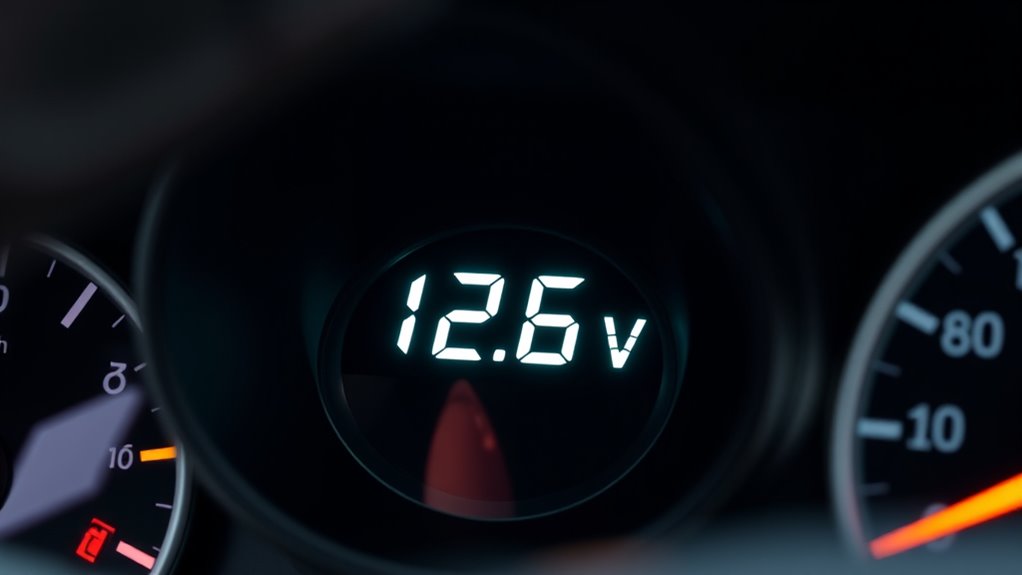
While measuring the total voltage of a battery pack provides a quick snapshot of its overall charge level, it doesn’t tell the full story. The total voltage reflects the combined voltage of all cells, but it can hide underlying issues. For example, if some cells are weak or imbalanced, the pack’s voltage might still read near full charge, even though the overall capacity has diminished. Additionally, voltage levels can be misleading if the battery is resting, cold, or recently charged. It doesn’t reveal individual cell health or temperature variations that could cause problems later. Relying solely on pack voltage can lead you to overlook hidden problems like cell degradation or imbalances, which impact performance and safety over time. That’s why extensive monitoring is essential. European cloud innovation emphasizes the importance of comprehensive data collection to ensure optimal performance and security, highlighting the need for advanced monitoring systems to detect subtle issues early. Furthermore, understanding the limitations of voltage measurement is crucial for maintaining battery longevity and safety over the long term. Incorporating cell-level analysis can provide deeper insights into individual cell performance, preventing potential failures before they occur.
The Role of Cell-Level Monitoring in Battery Health

Cell-level monitoring plays a critical role in maintaining overall battery health by providing detailed insights into each individual cell’s voltage, temperature, and current. This detailed data helps you identify weak or malfunctioning cells before they cause broader issues. By tracking voltage, the system detects imbalances that can lead to uneven charging or discharging, which degrade the battery over time. Monitoring temperature ensures cells stay within safe limits, preventing overheating or freezing that could damage the pack. Current measurements reveal how each cell responds during charge and discharge cycles, highlighting potential faults. With accurate, real-time data from each cell, your Battery Management System (BMS) can balance cells, prevent failures, and extend the lifespan of your battery, ensuring reliable performance and safety.
How State of Charge and State of Health Affect Performance
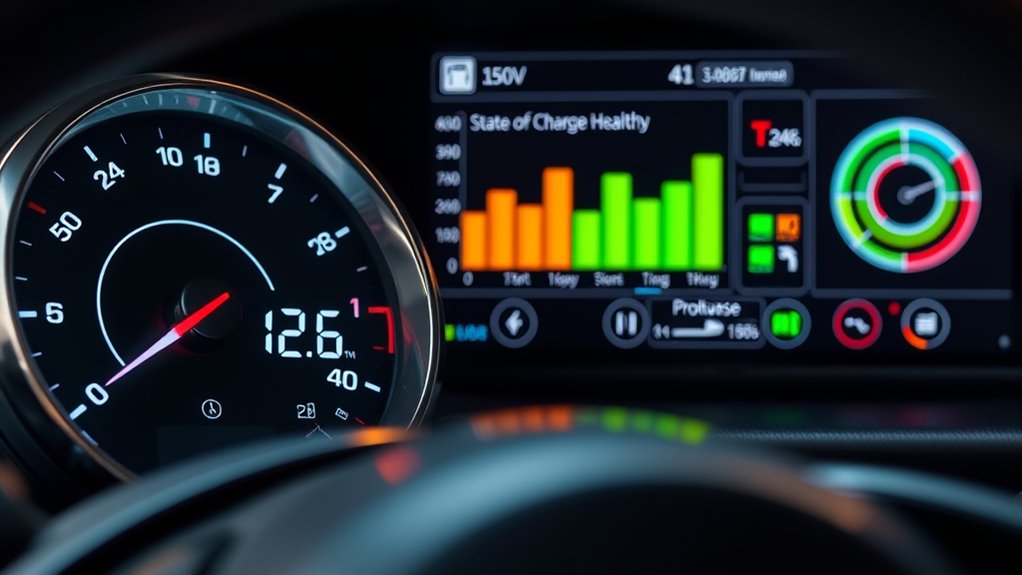
Your vehicle’s performance depends heavily on accurate SOC and SOH readings. When these metrics decline, your range shortens, and the battery’s overall lifespan decreases. Understanding their impact helps you better manage your battery’s health and driving efficiency. Battery bed’s potential can be maximized by proper monitoring, ensuring you get the most out of every trip.
SOC vs. Actual Capacity
Understanding the difference between State of Charge (SOC) and Actual Capacity is crucial for evaluating battery performance. SOC indicates how much charge remains relative to the battery’s full capacity at a given moment, often shown as a percentage. Actual Capacity, however, reflects the true amount of energy the battery can store and deliver, which declines over time due to aging and wear. Even if your SOC shows 50%, the battery might only have 70% of its original capacity left, meaning it can’t power your vehicle as long as it used to. This discrepancy can lead to misjudging your range and performance. A healthy battery might show a high SOC, but if the capacity has degraded, your vehicle’s actual runtime and efficiency will suffer, emphasizing the importance of monitoring both metrics.
SOH and Battery Longevity
State of Health (SOH) directly impacts your battery’s performance and longevity by indicating its overall capacity and ability to deliver power as designed. When SOH declines, your battery can’t hold as much charge or supply consistent power, even if the voltage reading seems normal. This hidden deterioration can lead to unexpected failures. To maintain ideal performance, you should:
- Monitor cell imbalances that reduce effective capacity
- Detect temperature anomalies that accelerate wear
- Identify weak cells that threaten overall health
- Track residual capacity to forecast replacement needs
- Be aware of Youngster Choice that may influence battery performance over time
Regularly rechecking the battery’s performance metrics helps catch early signs of degradation, allowing you to prevent costly replacements and maintain vehicle reliability.
Impact on Vehicle Range
The vehicle’s driving range considerably depends on both the State of Charge (SOC) and the State of Health (SOH) of the battery. If your SOC drops, you’ll notice a reduced distance before needing a recharge, as less energy remains available. However, even with a high SOC, poor SOH can limit your range because degraded capacity means the battery can’t deliver its full potential. Weak or imbalanced cells can cause uneven discharge, reducing efficiency. Temperature fluctuations and internal cell issues also impact performance. When your SOH declines, the battery’s ability to hold and supply energy diminishes, further shrinking your range. Accurate monitoring by the BMS helps you understand these factors, ensuring you plan your trips more reliably and avoid unexpected power loss. Additionally, battery management systems play a crucial role in maintaining optimal performance and longevity of the battery. Proper battery testing and diagnostics can identify early signs of degradation, helping you take preventative measures before problems become severe.
Common Misconceptions About Voltage Readings
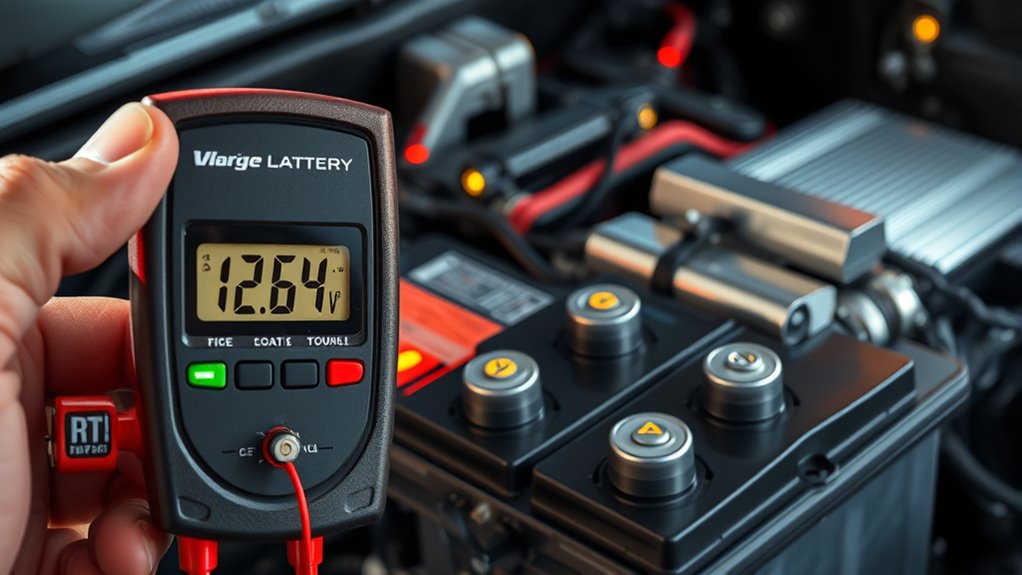
Many people assume that a single voltage reading accurately reflects a battery’s overall health or remaining capacity, but this isn’t always the case. A voltage reading alone can be misleading because it doesn’t reveal underlying issues like cell imbalance or capacity loss. For example:
- Multiple cells can have uneven charge levels, despite the total voltage seeming normal.
- A healthy-looking voltage may hide weak or degraded cells not yet indicating failure.
- Temperature fluctuations affect voltage readings, making them unreliable without context.
- Voltage doesn’t show if the battery is experiencing internal damage or SOH decline. Additionally, understanding the Free Floating nature of certain battery types can influence how voltage readings are interpreted, since they are more susceptible to environmental factors.
- Battery composition significantly influences voltage readings, so understanding the specific characteristics of your battery type is essential for accurate assessment. Additionally, factors like state of health and usage history can alter how voltage correlates to actual capacity and performance.
- Without considering cell balance, voltage readings can give a false sense of security about the battery’s condition. Relying solely on voltage oversimplifies battery health. To truly understand your battery’s condition, you need extensive monitoring that considers cell balance, temperature, and capacity metrics.
Advanced Monitoring Technologies and Their Benefits
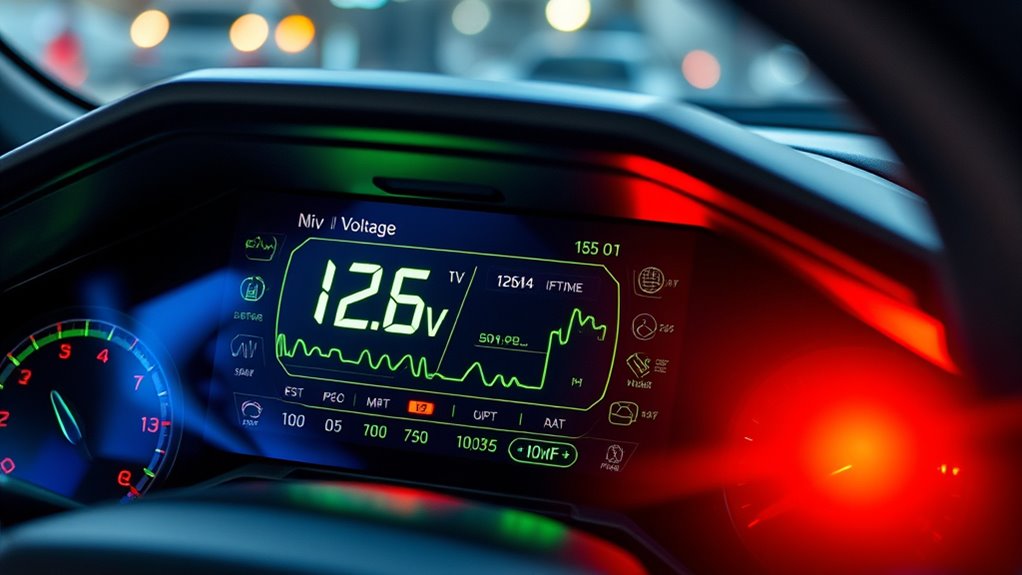
Advanced monitoring technologies allow you to track each cell’s voltage, temperature, and current in real time, giving you a clear picture of your battery’s health. With AI-powered fault prediction, you can identify potential issues before they cause failures, enhancing safety and reliability. Cloud data integration guarantees you have ongoing access to detailed reports and alerts, helping you optimize your battery’s performance. Additionally, implementing preventive maintenance strategies based on these insights can significantly extend your battery’s lifespan and efficiency. Incorporating real-time data analysis enables more precise adjustments and early detection of anomalies, further safeguarding your system’s integrity. Modern battery management systems also utilize connected devices to facilitate remote monitoring and control, making maintenance more efficient and accessible. Leveraging advanced diagnostics can also help you quickly identify and rectify specific issues, reducing downtime and repair costs. Furthermore, using industry-standard protocols ensures compatibility and seamless integration with existing systems, streamlining your monitoring setup.
Real-Time Cell Tracking
Real-time cell tracking uses sophisticated monitoring technologies to continuously assess individual battery cell conditions during operation. This allows you to detect issues like imbalanced cells, temperature hotspots, or voltage drops before they cause failures. With precise data, your BMS can take immediate action to prevent damage and ensure safety. You benefit from:
- Monitoring individual cell voltages for early imbalance detection
- Tracking temperature fluctuations to avoid overheating or freezing
- Recording current flow and capacity for accurate SOC and SOH calculations
- Identifying weak or failing cells to prevent uneven charge levels and extend battery life which is essential for maintaining optimal performance and safety. Additionally, integrating advanced monitoring technologies enhances the overall reliability of the system by providing real-time alerts and diagnostics. Incorporating automated alert systems further ensures that potential issues are addressed promptly, minimizing downtime and costly repairs. Implementing comprehensive monitoring can also help in maintaining the health of the entire battery pack over its lifespan. Furthermore, real-time data analysis supports proactive maintenance strategies, reducing the risk of unexpected failures.
AI Fault Prediction
Have you ever wondered how vehicle batteries can predict faults before they happen? AI fault prediction uses advanced algorithms to analyze real-time data from your battery management system. By monitoring parameters like cell voltage, temperature, current, and state of health, AI models identify patterns indicating potential issues. These systems learn from historical data, recognizing signs of weak cells, overheating, or imbalance that might lead to failure. When an anomaly is detected, the AI alerts you or the vehicle control system, allowing preventative measures before a breakdown occurs. This proactive approach reduces unexpected failures, extends battery life, and enhances safety. AI fault prediction transforms traditional reactive maintenance into a predictive process, ensuring your vehicle’s battery remains healthy and reliable longer. Incorporating reliable connections and accurate data collection is crucial for effective fault detection and diagnosis.
Cloud Data Integration
Integrating cloud data into vehicle battery management systems enhances monitoring capabilities by enabling centralized analysis and remote access to critical information. This connection allows you to track battery health, usage patterns, and anomalies from anywhere. You can receive real-time alerts on issues like overheating or cell imbalance, speeding up maintenance responses. Cloud integration also facilitates data-driven decision-making, optimizing battery performance and lifespan. Additionally, it supports predictive analytics, helping forecast potential failures before they occur. With cloud connectivity, you benefit from:
- Continuous, remote monitoring of all battery parameters
- Automated alerts for abnormal conditions
- Historical data analysis for trend identification
- Simplified firmware updates and system upgrades
This technology makes your battery management smarter, more efficient, and less prone to unexpected failures.
Signs of Hidden Battery Issues Beyond Voltage Measurements
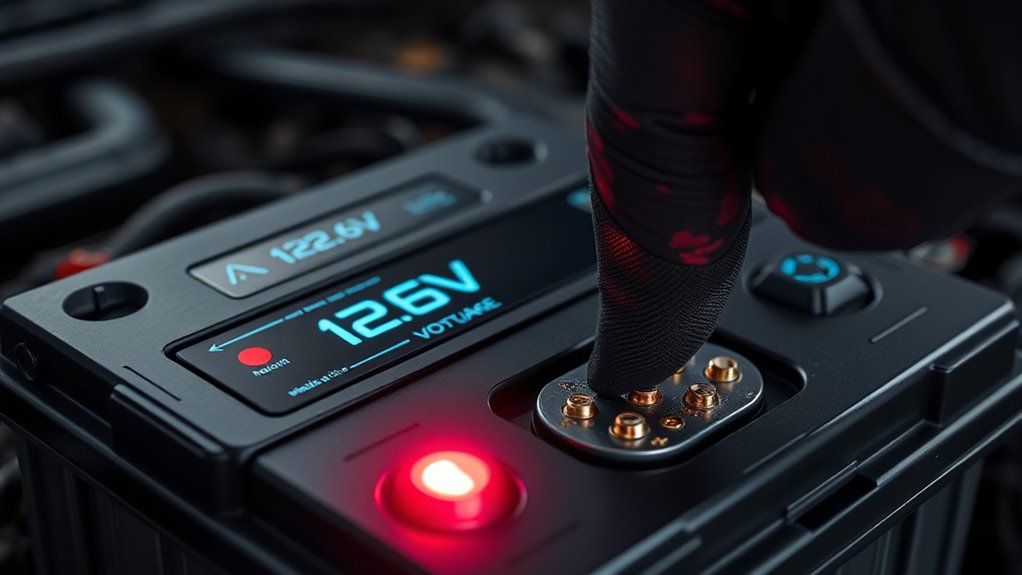
Even if your battery’s voltage seems normal, hidden issues can still be lurking within the cells. You might notice your vehicle starts fine, but underlying problems like weak or damaged cells aren’t reflected in voltage readings alone. Look out for uneven temperature readings across the pack, which can signal cell imbalance or thermal issues. If your battery seems to drain faster than expected or shows inconsistent performance, it might indicate declining capacity or internal resistance. Pay attention to irregular charging cycles or unexpected behavior during regenerative braking. Additionally, if your vehicle’s monitoring system flags warnings or logs show discrepancies in state of health metrics, these are signs of hidden deterioration. Regular diagnostics beyond voltage checks help uncover these concealed issues before they cause major failures.
Frequently Asked Questions
How Does Temperature Affect Battery Voltage Readings?
Temperature directly impacts your battery’s voltage readings. When it’s cold, your battery’s voltage drops because chemical reactions slow down, making it seem less charged. Conversely, heat can temporarily increase voltage but risks damaging the battery or causing thermal runaway. You need to watch for these fluctuations, as they can hide true state of charge or health. Your BMS monitors temperature closely to make certain accurate readings and safe operation.
Can a Battery Appear Healthy While Having Internal Damage?
Think of a person with a hidden injury—they might seem fine outwardly, but internal damage is unseen. Similarly, your battery can appear healthy with a full charge, yet have weakened cells or internal damage that’s not detectable by voltage alone. This hidden issue can cause reduced capacity or failure later. Your BMS monitors not just voltage but temperature, internal resistance, and cell balance, revealing problems before they become apparent.
What Is the Impact of Cell Imbalance on Overall Battery Life?
Cell imbalance reduces your battery’s overall lifespan because weak or overcharged cells strain the entire pack. When some cells aren’t balanced, the system works harder to compensate, increasing stress and heat. Over time, this accelerates capacity loss and can cause premature failure. You might think your battery’s fine based on total voltage, but imbalance silently damages the pack, shortening its life and reducing performance.
How Often Should BMS Perform Health Diagnostics?
You should have your BMS perform health diagnostics at least once a month or more frequently if you notice performance issues. Regular checks help detect weak cells, temperature anomalies, or capacity loss early, preventing potential failures. Keep in mind that more frequent diagnostics can be beneficial if your vehicle undergoes heavy usage or extreme conditions, ensuring your battery stays in peak condition and prolongs its lifespan.
Are There Indicators Other Than Voltage for Impending Battery Failure?
You should look for indicators like temperature spikes, inconsistent cell voltages, rapid capacity loss, or abnormal current flows. Your BMS monitors these parameters in real time, alerting you to potential issues before voltage drops. Pay attention to warning alerts about overheating or uneven cell performance. These signs often signal impending battery failure, allowing you to take proactive measures and prevent unexpected breakdowns or safety hazards.
Conclusion
While a 12.6V reading might seem okay, it doesn’t tell the whole story about your battery’s health. Advanced monitoring can reveal hidden issues like cell imbalance or aging that voltage alone can’t detect. Don’t rely solely on simple readings—invest in better diagnostics to prevent unexpected failures. This proactive approach might cost more upfront, but it saves you money and stress in the long run by keeping your vehicle’s battery reliable and safe.