Your MAF and MAP sensors are crucial for controlling engine power and fuel efficiency. The MAF measures the air entering the engine, helping the ECU adjust fuel for best combustion. The MAP detects intake pressure, indicating engine load and guiding fuel delivery and timing. Properly functioning sensors ensure your engine runs smoothly, with good power and economy. If you want to understand how they work together and how to keep them calibrated, keep exploring.

Get garage and car supplies delivered free — and shop member deals
- Fast, free delivery on millions of items
- Access to Prime Big Deal Days deals on October 6–7
- Prime Video, Amazon Music and more included
Key Takeaways
- MAF sensors measure actual airflow to adjust fuel delivery, impacting engine power and efficiency.
- MAP sensors detect intake pressure, helping the ECU determine engine load and optimize fueling.
- Proper calibration of both sensors ensures accurate data, preventing power loss and poor fuel economy.
- Malfunctioning sensors cause hesitation, rough idling, and increased fuel consumption.
- Together, MAF and MAP sensors enable precise air-fuel mixture control for optimal engine performance.
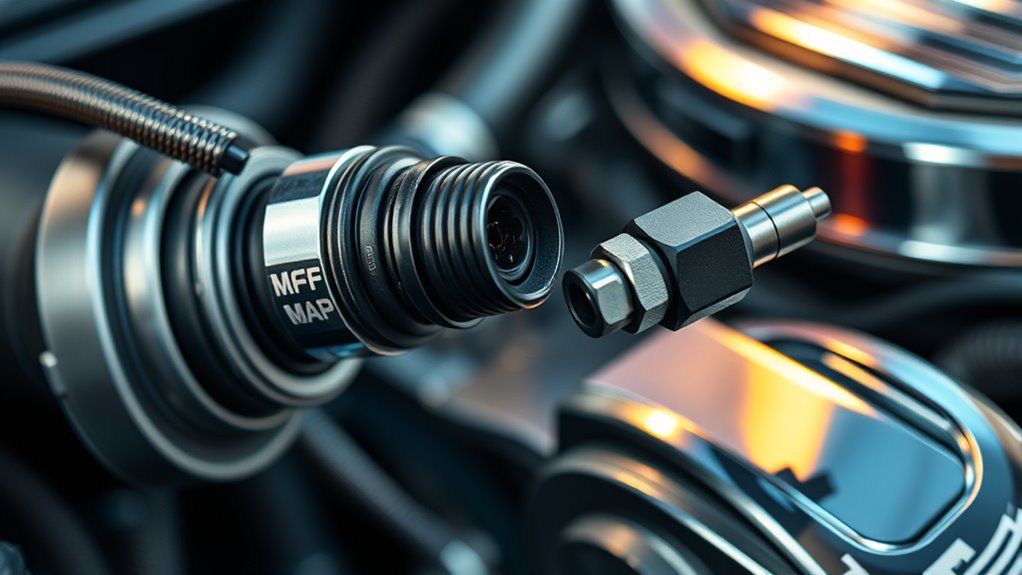
Have you ever wondered how your vehicle’s engine manages to run smoothly and efficiently? It all comes down to the sensors that monitor and adjust crucial parameters in real time. Two key sensors that influence your engine’s performance are the MAF (Mass Air Flow) and MAP (Manifold Absolute Pressure) sensors. Understanding how these sensors work helps you grasp how your car maintains power, fuel efficiency, and emissions. At the core of their function are processes like sensor calibration and the management of air intake dynamics. Proper calibration ensures that these sensors provide accurate data, which is essential for your engine control unit (ECU) to make correct adjustments.
Understanding MAF and MAP sensors is essential for optimal engine performance and efficiency.
Sensor calibration is vital because even a slight misread can lead to poor fuel economy, rough idling, or loss of power. MAF sensors measure the actual amount of air entering the engine, often using a hot wire or film that responds to airflow. When calibrated correctly, this sensor offers precise readings, allowing the ECU to determine the right amount of fuel to inject. MAP sensors, on the other hand, measure the air pressure within the intake manifold. This data indicates engine load and helps the ECU adjust fuel delivery accordingly. Both sensors work together to balance air intake dynamics, which is crucial for optimal engine performance. Maintaining these sensors and their calibration is essential for the longevity and efficiency of your vehicle.
Air intake dynamics refer to how air flows into your engine and how it’s measured and managed. The MAF sensor directly gauges this airflow, providing real-time data on how much air is entering the combustion chambers. Meanwhile, the MAP sensor offers insight into pressure changes within the manifold, which fluctuate based on throttle input and engine load. When these sensors are functioning properly and are well-calibrated, they help your engine respond smoothly to changing driving conditions. For example, during acceleration, increased airflow and pressure are accurately detected, allowing the ECU to enrich the fuel mixture for better power. Conversely, during steady cruising, the sensors help maintain a leaner mixture to improve fuel efficiency. Proper maintenance and calibration of these sensors can prevent common issues like hesitation and increased fuel consumption.
If either sensor malfunctions or becomes uncalibrated, the air intake dynamics are misread, leading to performance issues. You might notice hesitation, poor acceleration, or increased fuel consumption. That’s why regular maintenance and sensor checks are essential. Ensuring proper calibration involves verifying that the sensors’ readings match actual airflow and pressure conditions, which can sometimes require professional service. When everything’s calibrated correctly, your engine can breathe and operate as intended, delivering the power you need while conserving fuel. In essence, these sensors serve as your engine’s eyes and ears, continuously adjusting to keep your vehicle running at its best. Accurate sensor calibration is crucial for optimal engine operation and longevity.
As an affiliate, we earn on qualifying purchases.
Frequently Asked Questions
How Do MAF and MAP Sensors Differ in Detecting Air Intake?
You’ll find that MAF and MAP sensors differ mainly in airflow measurement; the MAF directly measures the amount of air entering your engine, while the MAP estimates air intake based on manifold pressure. Proper sensor calibration guarantees accurate readings, which is vital for ideal fueling and performance. By understanding these differences, you can better troubleshoot issues and maintain your vehicle’s efficiency, guaranteeing smooth operation and reliable power delivery.
Can Faulty Sensors Cause Engine Stalling or Misfires?
Faulty MAF or MAP sensors can definitely cause engine stalling or misfires. When sensors aren’t properly calibrated or malfunction, they send incorrect data to the engine control unit, disrupting fuel delivery and ignition timing. You should run diagnostic procedures to check sensor signals and verify they’re functioning correctly. Replacing or recalibrating the sensors often resolves these issues, restoring smooth engine operation and preventing stalling or misfires.
Are MAF and MAP Sensors Interchangeable?
Did you know that nearly 30% of engine issues stem from sensor problems? MAF and MAP sensors aren’t interchangeable because they measure different parameters—airflow versus manifold pressure. You can’t swap them without proper sensor calibration, which guarantees accurate readings. Also, wiring diagnostics are essential; faulty wiring can mimic sensor failure. Always check these components before replacing parts to avoid unnecessary repairs and ensure your engine runs smoothly.
What Are the Signs of a Failing MAF Sensor?
You’ll notice a failing MAF sensor through symptoms like rough idling, poor acceleration, or stalling. Your vehicle might also have increased fuel consumption or fail emissions tests. These signs often stem from incorrect sensor readings, affecting sensor calibration. To confirm, perform diagnostic procedures using an OBD-II scanner to check for related error codes. Replacing or cleaning the sensor can restore proper function and improve your vehicle’s performance.
How Do Sensor Issues Impact Fuel Economy?
Sensor issues can substantially impact your fuel economy because faulty sensors disrupt accurate airflow measurement and calibration. When your sensor isn’t working properly, your engine may receive incorrect data, causing it to burn more fuel than necessary. This inefficiency means you’ll spend more at the pump. Regularly checking and maintaining sensor calibration ensures precise airflow measurement, helping your vehicle run smoothly and efficiently, saving you money over time.
As an affiliate, we earn on qualifying purchases.
Conclusion
Understanding the dance between MAF and MAP sensors is like mastering a delicate symphony—each note influencing your engine’s heartbeat. When these sensors work in harmony, your vehicle breathes smoothly, fueling your journey with precision. But if one falls silent or misreads, the melody turns chaotic, leaving power stranded. By tuning into their whispers, you keep your engine’s song vibrant and strong, ensuring every ride feels like a perfectly orchestrated performance on the open road.
As an affiliate, we earn on qualifying purchases.
As an affiliate, we earn on qualifying purchases.
Fall Picks
fall essentials
As an affiliate, we earn on qualifying purchases.