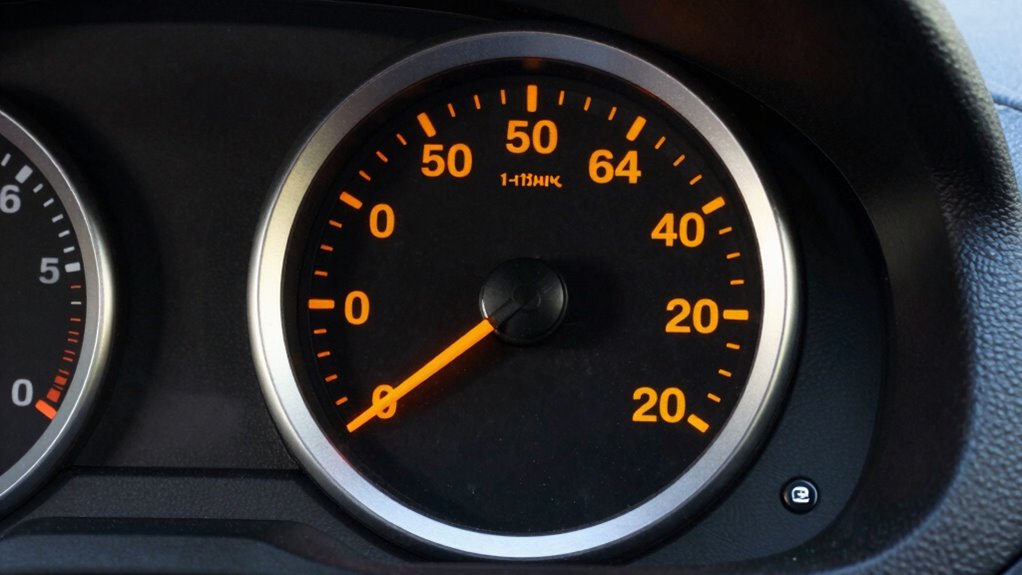

Your transmission temperature typically stays between 175°F and 220°F for normal operation. If it exceeds 240°F, it’s a sign your transmission is overheating, which can cause damage and reduce lifespan. Keep an eye on your gauges or warning lights, especially during heavy towing or city driving. Staying within the ideal range helps maintain smooth performance. Want to learn how to manage and prevent overheating? Continue to discover essential tips and insights.
Key Takeaways
- Normal transmission temperature typically ranges between 175°F to 200°F (80°C to 93°C).
- Temperatures above 220°F (105°C) indicate overheating and require immediate attention.
- Consistently high temperatures can cause fluid breakdown, leading to transmission damage.
- Regular monitoring with gauges or sensors helps detect abnormal temperature rises early.
- Cooling measures, such as reducing load or stopping to let the transmission cool, are essential when overheating occurs.

Understanding transmission temperature is fundamental because it directly impacts your vehicle’s performance and longevity. When your transmission runs too hot, it can cause serious damage and lead to costly repairs. One of the key ways your transmission stays healthy is through fluid cooling, which helps dissipate heat generated during operation. If your transmission fluid isn’t properly cooled, it can quickly become overheated, leading to slipping gears, rough shifts, or even complete transmission failure. That’s why paying attention to overheating warnings is essential—modern vehicles often have sensors that alert you when the transmission temperature exceeds safe limits. Recognizing these signals early can save you from expensive repairs and breakdowns.
Monitoring transmission temperature is crucial for vehicle health and avoiding costly repairs.
Your transmission fluid acts like a lubricant and a coolant, absorbing heat as the transmission works. When the fluid reaches high temperatures, it loses its lubricating properties and can’t effectively protect internal components. This is when fluid cooling becomes critical. Many vehicles are equipped with transmission fluid coolers, similar to radiators, that help maintain proper temperature levels. If you notice your transmission temperature gauge rising rapidly or if your dashboard lights up with overheating warnings, it’s a sign that the fluid isn’t cooling effectively or that the transmission is under excessive stress. Ignoring these warnings can lead to fluid breakdown, which accelerates wear and tear on transmission parts.
Driving habits also influence transmission temperature. Heavy towing, stop-and-go city driving, or consistently high speeds generate more heat, pushing the limits of your transmission’s cooling system. When you notice your transmission running hotter than usual, it’s wise to take steps like reducing load, shifting into a lower gear, or pulling over to let it cool down. Regular maintenance, including fluid checks and replacements, plays a key role in fluid cooling efficiency. Fresh, clean transmission fluid helps absorb and dissipate heat better, reducing the risk of overheating.
Ultimately, understanding what normal transmission temperature looks like and recognizing overheating warnings can help you avoid major issues. Keep an eye on your gauges, heed dashboard alerts, and stay proactive with maintenance. When your transmission stays within the ideal temperature range, it operates smoothly, shifting effortlessly and lasting longer. Proper fluid cooling ensures your transmission remains in peak condition, even under demanding conditions. By paying close attention to temperature levels and acting promptly when warnings appear, you extend your vehicle’s lifespan and keep it running reliably for miles to come.
Frequently Asked Questions
How Often Should I Check My Transmission Fluid Temperature?
You should check your transmission fluid temperature during routine fluid checks, ideally every few months or when you’re experiencing shifting issues. Regular temperature monitoring helps catch overheating early, preventing damage. If you tow heavy loads or drive in extreme heat, check more often. Keep an eye on the fluid condition and temperature to guarantee your transmission stays within safe limits, maintaining ideal performance and extending its lifespan.
Can High Transmission Temperature Cause Long-Term Damage?
Yes, high transmission temperature can cause long-term damage by degrading transmission fluid viscosity, which reduces lubrication and increases wear. Overheating can also harm internal components, leading to costly repairs. To prevent this, you should maintain your cooling system properly and monitor transmission temperature regularly. Keeping temperatures in the normal range guarantees ideal transmission performance and longevity, avoiding the risks associated with excessive heat.
What Are the Best Ways to Cool a Hot Transmission?
To cool a hot transmission, you should check your transmission fluid level and quality regularly, as clean fluid helps keep temperatures down. Installing an auxiliary transmission cooler or upgrading your cooling system can markedly improve heat dissipation. Avoid heavy towing or aggressive driving when temperatures are high, and guarantee your vehicle’s cooling system is functioning properly. Proper maintenance of transmission fluid and cooling components keeps your transmission running smoothly and prevents overheating.
Does Ambient Temperature Affect Transmission Temperature Readings?
Ambient temperature has a huge influence on transmission temperature readings, like the sun blazing down on a desert. When it’s hot outside, your transmission’s temperature sensors will show higher readings, making it seem like it’s overheating even if it’s not. Conversely, cooler weather helps keep those readings down. So, always consider ambient influence when checking your transmission temperature, especially during extreme weather, to get an accurate picture of your vehicle’s health.
Are There Specific Vehicle Models More Prone to Transmission Overheating?
Yes, some vehicle models are more prone to transmission overheating due to transmission design and vehicle usage. You’ll find that models with smaller cooling systems or less robust transmission components tend to be more susceptible. Additionally, vehicles built for heavy towing or hauling are at higher risk. Knowing your vehicle’s susceptibility helps you take preventative measures, like regular maintenance and avoiding excessive loads, to keep your transmission running cool and prolong its lifespan.
Conclusion
So, next time your transmission’s running hotter than your summer BBQ, remember—it’s not just a fancy gauge, it’s your car’s way of whispering, “Hey, I’m working hard here.” Ignore it, and you might end up cooking more than just the engine. Keep an eye on that temp, or you’ll be stuck pushing a boat anchor instead of cruising down the highway. Because, really, who doesn’t want their transmission to be the hottest thing on the road?