
When using OBD2, focus on key sensors like RPM, coolant temp, MAF or MAP, oxygen sensors, and fuel trims, as they reveal engine health and emissions issues. Avoid relying heavily on less useful data like vehicle speed or ambient air temperature, which don’t reflect engine performance. To get accurate insights, you need to interpret live data carefully—understanding normal ranges and how sensors work. Keep going to learn which signals truly matter for diagnosing your vehicle efficiently.

Get business pricing on garage and car supplies
- Business-only prices and quantity discounts
- Tax-exempt purchasing
- Multiple users, one account, clear invoices
Key Takeaways
- Focus on engine RPM, coolant temperature, intake air temp, MAF/MAP, and fuel trims for accurate engine health insights.
- Prioritize O2 sensors, EGR, and catalytic converter data to assess emissions system performance.
- Watch throttle position, ignition timing, and knock sensor data to diagnose drivability and power issues.
- Be cautious with lower-value sensors like vehicle speed, ambient air temp, and battery voltage, which can be misleading.
- Cross-reference related PIDs and monitor sensor behavior patterns to interpret live data effectively.
Key Engine Monitoring PIDs and Their Significance
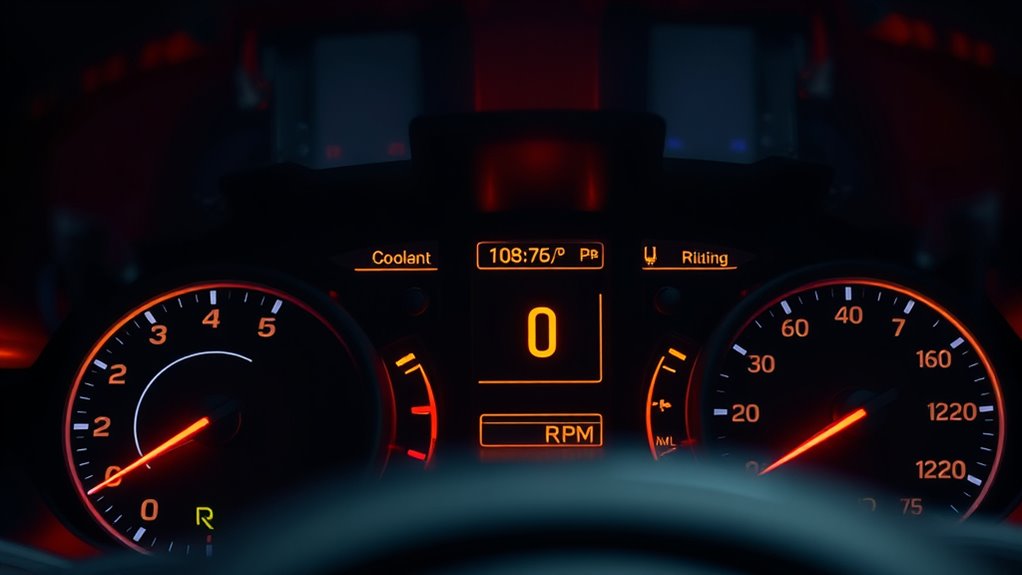
Understanding key engine monitoring PIDs is essential for diagnosing and maintaining engine health. These PIDs reveal real-time data that can pinpoint issues before they become serious. Start with Engine RPM; it shows how fast your engine runs and helps identify misfires or load problems. The Engine Coolant Temperature (ECT) tells you if the cooling system is functioning correctly—rapid temp rises or high readings signal cooling issues. Intake Air Temperature (IAT) affects fueling; abnormal readings might indicate sensor faults or leaks. Mass Air Flow (MAF) or Manifold Absolute Pressure (MAP) measures incoming air, and deviations can impact fuel economy and drivability. Fuel trims (STFT and LTFT) show how the ECU adjusts fuel delivery—large swings typically indicate leaks or sensor errors. Monitoring these PIDs helps you catch problems early and keep your engine running smoothly. Understanding real-time data is crucial for proactive engine maintenance, including recognizing how sensor accuracy influences overall engine performance. In addition, dynamic data analysis allows for better interpretation of fluctuations in sensor readings, leading to more accurate diagnostics. Recognizing sensor types and their specific functions enhances your ability to troubleshoot effectively.
Emissions-Related Sensors and What They Reveal
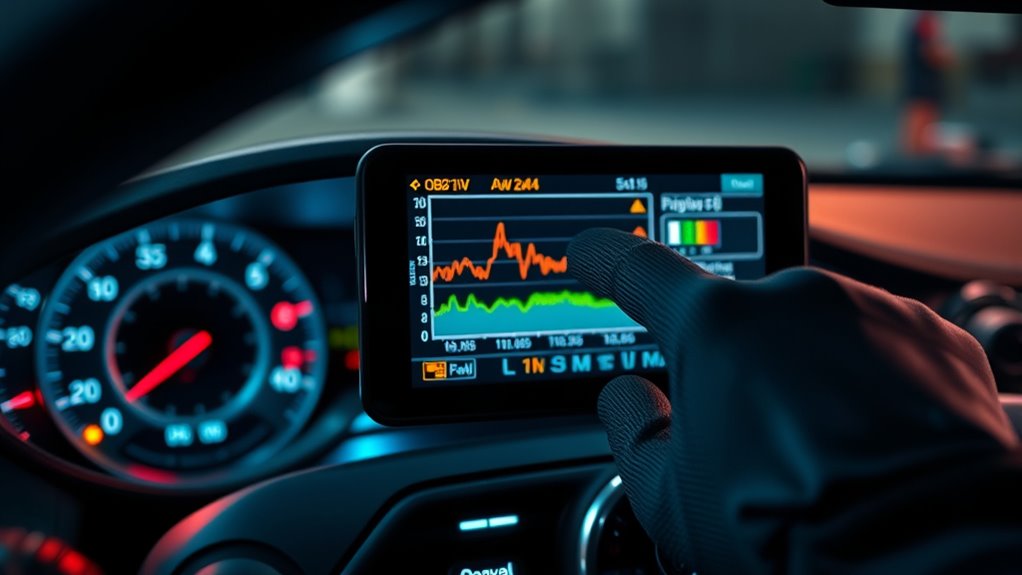
Emissions-related sensors provide critical insights into your vehicle’s exhaust system and overall emissions performance. Monitoring upstream O2 sensors helps you verify proper catalytic converter function; rapid switching between lean and rich indicates healthy operation, while slow or steady signals potential sensor failure. Downstream O2 sensors or catalytic efficiency monitors reveal converter health—steady voltages suggest inefficiency or sensor faults. EGR sensors, if available, show flow abnormalities linked to rough idle and NOx increases. Persistent imbalances in long-term fuel trims across banks point to injector or intake leaks affecting emissions. Catalytic converter temperature or efficiency readings highlight potential clogging or failure, which can raise emissions and trigger check engine lights. Keeping an eye on these sensors helps you diagnose exhaust system issues before they escalate.
Drivability and Performance Data to Prioritize
Focusing on key drivability and performance data helps you quickly identify issues that directly affect how your vehicle runs. Monitoring the Throttle Position Sensor (TPS) ensures smooth throttle response; erratic readings can cause surging or stalling. Comparing accelerator pedal position to TPS readings reveals drive-by-wire faults. Ignition timing or advance data indicates power loss or misfire risks; irregular timing suggests ignition or sensor problems. Knock sensor counts show if engine knocking is affecting performance, prompting you to check fueling or mechanical health. Boost pressure or MAP readings under load reveal turbo or wastegate issues that diminish power. Prioritizing these PIDs helps you diagnose drivability symptoms early, preventing costly repairs and improving your driving experience. Keep an eye on these essential parameters for reliable, responsive engine operation. Monitoring critical sensors is essential for a comprehensive understanding of your vehicle’s health and ensuring optimal performance.
Lower-Value Sensors That Can Be Deceptive
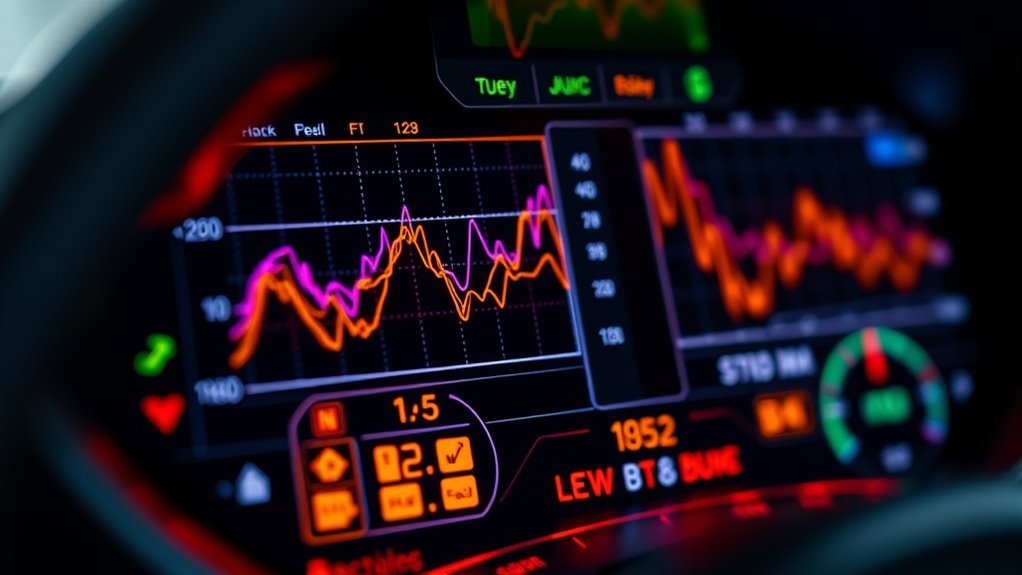
While lower-value sensors are often monitored during diagnostics, they can sometimes be misleading because they don’t always directly reflect the engine’s true condition. For example, vehicle speed from wheel sensors is useful for ABS, but it doesn’t indicate engine health. Ambient air temperature helps the ECU compensate but isn’t a sign of engine issues. Battery voltage readings can seem normal yet hide transient electrical problems. Fuel pressure, if not directly available as a PID, offers limited insight, so relying solely on fuel trims is better. Some OEM-specific PIDs may display misleading data if your scanner isn’t calibrated correctly. Keep in mind that these sensors may suggest normal operation even when underlying problems exist, so don’t overinterpret their readings without correlating other live data. Additionally, understanding the Free Floating system can help you interpret sensor data more accurately, avoiding false diagnostics.
Tips for Interpreting Live Data Effectively

Interpreting live data accurately requires careful observation and cross-referencing multiple parameters to avoid false diagnoses. Start by understanding normal ranges and behavior for each PID. For example, check if coolant temperature rises steadily within a few minutes—slow warm-up hints at cooling system issues. Cross-check related data like MAF readings and engine RPM; inconsistent values can signal sensor faults. Pay attention to fuel trims; if they exceed ±10–20%, investigate possible leaks or airflow problems. Watch for O2 sensor switching frequency—steady voltage suggests a fault, while rapid switching indicates healthy operation. Always interpret data in context: a single abnormal reading isn’t conclusive. Allow the engine to warm up and stabilize before drawing conclusions, and compare multiple parameters to confirm issues. Additionally, understanding the sensor accuracy and how it affects data reliability is crucial for accurate diagnostics. Recognizing the sensor calibration status can also help distinguish between genuine faults and sensor drift over time.
Frequently Asked Questions
How Often Should I Monitor Live Data During a Diagnostic Session?
You should monitor live data continuously, but avoid polling too fast. Aim for a delay of about 300–500 milliseconds between requests to prevent dropped responses and guarantee accurate readings. This approach helps you observe real-time changes without overloading the ECU. Keep an eye on correlated PIDs, especially during key driving moments like acceleration or deceleration, to diagnose issues effectively and gather reliable data for troubleshooting.
Can Live Data Diagnose All Engine Problems Accurately?
Live data can’t diagnose all engine problems accurately on its own. It provides real-time clues about sensor performance, fuel trims, and operating conditions, but some issues need further testing or mechanical inspection. Relying solely on live data may lead to misdiagnosis, so you should combine it with other diagnostic methods, such as visual inspections, test drives, and specialized tools, for a thorough assessment of your engine’s health.
What Are Common Signs of Sensor Failure in Live Data?
You’ll notice sensor failures in live data when readings are inconsistent, stuck, or outside normal ranges. For example, a coolant temp sensor stuck at a low or high value, or a MAF sensor showing erratic fluctuations, signals a problem. Abnormal fuel trims, irregular throttle responses, or flat O2 sensor voltages also point to sensor issues. Keep an eye on these signs to identify failing sensors early and prevent driveability issues.
How Do I Differentiate Between a Sensor Fault and a Systemic Issue?
You can tell a sensor fault from a systemic issue by looking for clues that scream “sensor problem!” like inconsistent readings that bounce all over the place or values that don’t match other data. If multiple sensors related to the same system show weird, uncorrelated data, it’s likely a systemic problem. Cross-check related PIDs and see if the issue persists across different conditions—this helps you avoid blaming the sensor for everything!
Is It Necessary to Clear DTCS Before Checking Live Data?
No, you don’t need to clear DTCs before checking live data. Clearing codes resets the stored fault history, which can help identify new issues or confirm repairs. However, if you’re troubleshooting or monitoring ongoing problems, it’s better to view live data with existing DTCs present. Just remember, some sensor faults might still show up, but clearing codes can sometimes temporarily hide symptoms or reset adaptive learning.
Conclusion
By focusing on the right sensors, you can catch issues early and keep your vehicle running smoothly. Did you know that monitoring key PIDs can help detect problems up to 50% faster? Prioritize the sensors that matter most, like engine load and coolant temperature, to make your diagnostics more effective. Remember, not all data is equally useful—knowing what to watch saves you time and hassle on the road.
Halloween Picks
halloween
As an affiliate, we earn on qualifying purchases.