When diagnosing a misfire, focus on key data points like fuel system performance, ignition timing, and spark plug condition, as these directly impact engine smoothness. Check fuel pressure and injector condition to identify clogs or leaks, guarantee ignition timing is precise, and examine spark plugs for wear. Monitoring these areas helps pinpoint the cause quickly. Keep exploring to discover more essential diagnostics that can save you time and money on repairs.

Get business pricing on garage and car supplies
- Business-only prices and quantity discounts
- Tax-exempt purchasing
- Multiple users, one account, clear invoices
Key Takeaways
- Focus on fuel pressure consistency and injector performance to identify fuel delivery issues causing misfires.
- Verify ignition timing accuracy with a timing light to ensure proper spark timing.
- Inspect spark plugs and coil packs for wear or damage affecting ignition.
- Conduct compression tests to detect internal engine problems contributing to misfire.
- Analyze sensor signals and engine data to identify underlying electronic or control system faults.
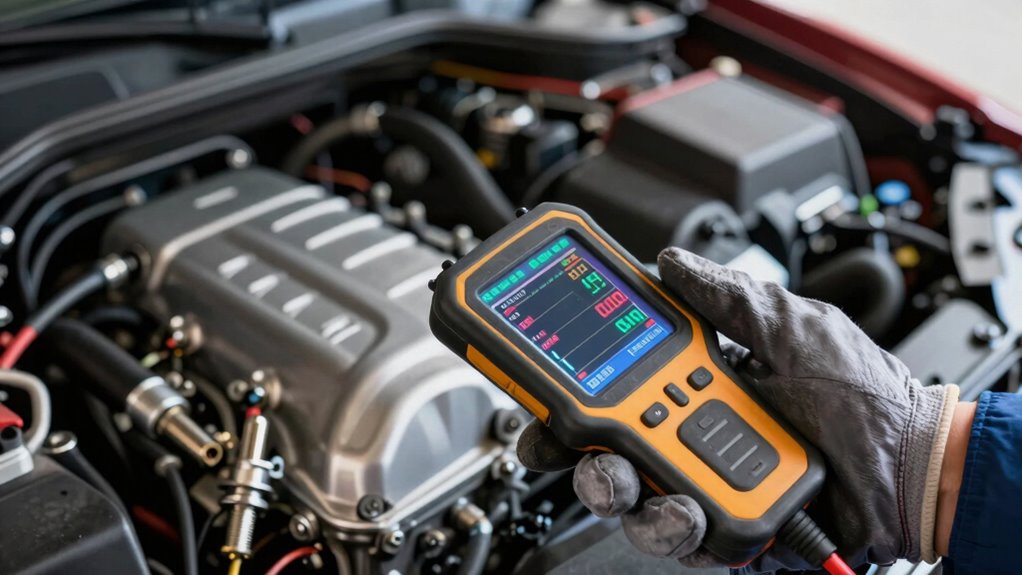
Have you ever experienced a rough engine idle or sudden power loss? These symptoms often point to misfire issues that can stem from various sources. When diagnosing a misfire, it’s essential to focus on the data points that truly matter, rather than just guessing or replacing parts blindly. Two critical areas to check are the fuel system and ignition timing, as problems in these systems frequently cause misfires.
Rough engine idle or power loss? Focus on fuel system and ignition timing diagnostics to identify the true cause.
The fuel system supplies the necessary fuel for combustion, and if it’s not functioning properly, your engine can misfire. Clogged fuel injectors, a failing fuel pump, or a dirty fuel filter can restrict fuel flow, leading to inconsistent combustion. When the fuel delivery is interrupted or uneven, the engine struggles to maintain a smooth, steady power output. Using diagnostic tools like a fuel pressure gauge helps determine whether fuel pressure remains within specifications under load. If pressure drops, you’ll know to focus on the fuel pump or filter. Also, inspecting the fuel injectors for clogs or leaks can reveal issues that disrupt the proper fuel-air mixture, causing misfires. Additionally, understanding the fuel system components and their roles can help you better interpret diagnostic data and pinpoint problems more accurately.
Ignition timing is another key factor. If the spark occurs too early or too late, the combustion process becomes unbalanced, resulting in misfire symptoms. Modern engines rely on precise ignition timing, controlled by the engine control unit (ECU), but mechanical issues like a worn timing belt or a malfunctioning distributor can throw off this delicate timing. Using a timing light, you can verify whether the ignition timing aligns with the manufacturer’s specifications. If not, adjusting the timing or replacing worn components can restore proper firing order, eliminating misfire problems. Remember, ignition timing issues often manifest as rough idling or hesitation, so paying close attention to the timing data can pinpoint the root cause. Additionally, understanding the importance of engine data points can further enhance diagnostic accuracy and efficiency. Moreover, paying attention to other sensor signals can help identify subtle issues affecting engine performance. Recognizing how these signals interact provides a more comprehensive view of engine health and can prevent misdiagnoses.
While these are critical data points, don’t forget to check for other factors like spark plug condition, compression, and sensor signals. However, focusing your diagnostics on the fuel system and ignition timing saves time and prevents unnecessary part replacements. By systematically gathering and analyzing these key data points, you gain a clear understanding of what’s causing the misfire. This targeted approach not only speeds up the repair process but also guarantees your engine runs smoothly and reliably once again.
As an affiliate, we earn on qualifying purchases.
Frequently Asked Questions
Can Misfires Cause Long-Term Engine Damage?
Yes, misfires can cause long-term engine damage if left unaddressed. When your engine misfires, it disrupts engine performance and reduces fuel efficiency, which can strain engine components over time. Continuous misfires lead to increased wear on pistons, valves, and spark plugs, potentially causing more severe damage and costly repairs. So, addressing misfires promptly helps maintain ideal engine performance and preserves fuel efficiency.
How Often Should I Check for Misfires?
You should check for misfires whenever you notice rough running, reduced fuel efficiency, or engine hesitation. Regularly inspect your ignition system and fuel injectors, especially if you experience performance issues. It’s a good idea to perform diagnostics every 6,000 to 10,000 miles or during routine maintenance. Promptly addressing misfires helps prevent engine damage and keeps your vehicle running smoothly, saving you time and money in the long run.
Are Misfires More Common in Certain Vehicle Models?
Yes, misfires are more common in certain vehicle models, especially older cars or those with high mileage. Poor vehicle maintenance can worsen engine performance, increasing misfire risks. Some models with complex ignition systems or specific fuel injectors may also be prone. You should regularly check your vehicle’s spark plugs, wires, and fuel system components to prevent misfires and keep engine performance ideal. Proper maintenance helps reduce misfire chances in any vehicle.
Can Poor Fuel Quality Lead to Misfires?
Yes, poor fuel quality can lead to misfires. When your fuel contains impurities or lacks proper additives, it hampers engine performance, causing inconsistent combustion. Using fuel additives can improve fuel quality, clean injectors, and stabilize combustion, reducing misfire risk. So, if you notice engine hesitation or rough running, consider upgrading to better fuel or adding quality additives to maintain smooth engine performance and prevent misfires.
What Tools Are Best for Diagnosing Misfires?
You might find that diagnostic tools like an OBD-II scanner are your best allies, revealing misfire codes and sensor calibration issues. It’s no coincidence; these tools help you check ignition timing and sensor data, pinpointing the root cause. Using a scope to observe ignition system signals can uncover irregularities, guiding precise repairs. Trust these tools—they’re essential for accurate misfire diagnosis and restoring your engine’s performance.
As an affiliate, we earn on qualifying purchases.
Conclusion
So, next time your engine coughs or stalls, remember these data points—ignore them, and you might end up stranded in the middle of nowhere, waving a wrench like a lost explorer. Master these clues, and you’ll be the superhero of your driveway, saving the day before your engine throws a full-blown tantrum. Don’t let misfires turn your ride into a ticking time bomb—decode the data, and keep your engine singing like a rockstar!
As an affiliate, we earn on qualifying purchases.
As an affiliate, we earn on qualifying purchases.
Halloween Picks
halloween
As an affiliate, we earn on qualifying purchases.