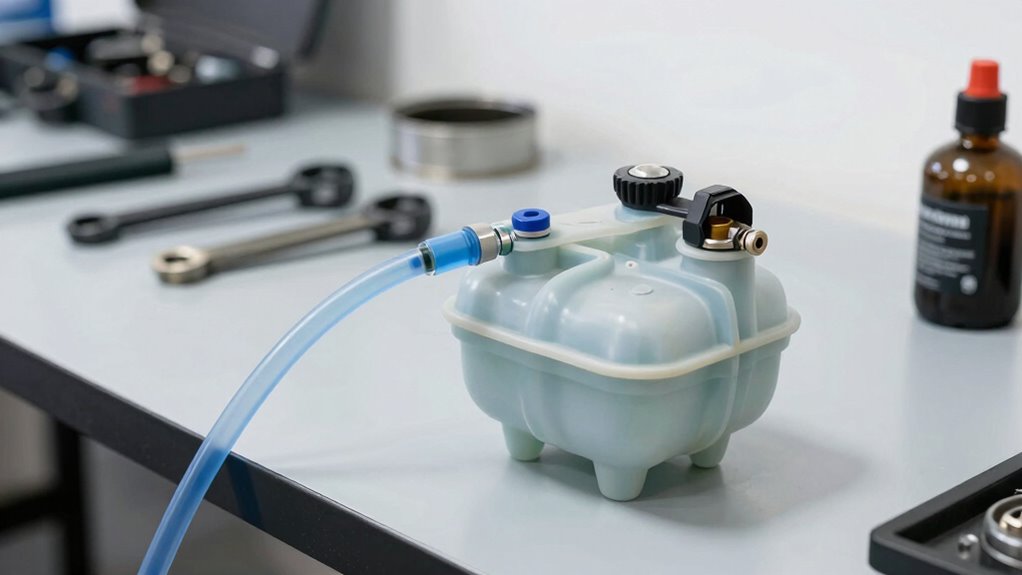
For a no-drama brake bleeding setup, gather a clear hose, wrench, catch container, and fresh brake fluid. Make sure the vehicle is on a level surface and the engine is off. Remove the wheel for easy access. Attach the hose to the bleeder valve and loosen it slightly. Have a helper slowly press the brake pedal while you open and close the valve to release air. Keep an eye on the fluid level and tighten everything securely. If you keep these steps in mind, you’ll have a solid foundation for a smooth, fuss-free brake bleed.

Get business pricing on garage and car supplies
- Business-only prices and quantity discounts
- Tax-exempt purchasing
- Multiple users, one account, clear invoices
Key Takeaways
- Use a clear hose and catch container to prevent mess and ensure proper air removal.
- Have a helper press and hold the brake pedal steadily during bleeding.
- Loosen and tighten bleeder valves gradually to avoid introducing more air.
- Keep brake fluid reservoir topped up to prevent air from re-entering the system.
- Start bleeding from the wheel farthest from the master cylinder for efficiency.
Ever wonder why your brakes feel spongy or less responsive? The most common reason is trapped air bubbles inside the brake system. When air gets into the hydraulic fluid, it compresses under pressure, unlike the fluid itself, which is incompressible. This compression causes a soft or spongy brake pedal. To fix this, you need to bleed the brakes—removing air bubbles from the hydraulic system and replacing old or contaminated hydraulic fluid.
Air in the brake system causes a spongy pedal; bleeding removes bubbles and refreshes the hydraulic fluid.
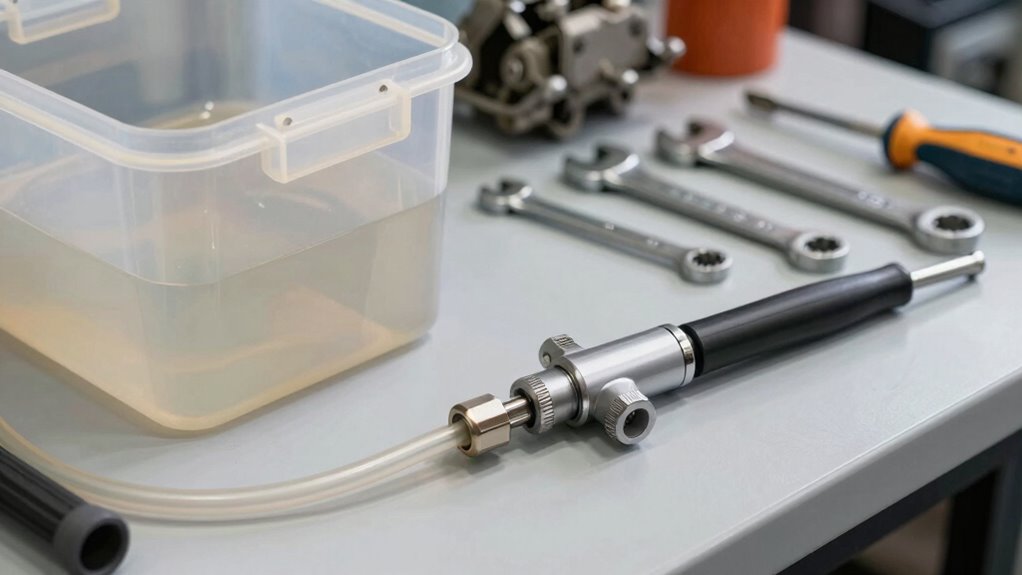
A “no-drama” setup for brake bleeding means approaching the task calmly and methodically, without rushing or making it more complicated than it needs to be. Start by gathering all necessary tools: a clear hose, a wrench, a catch container, and fresh hydraulic fluid suitable for your vehicle. Make sure the engine is off, and the vehicle is parked on a level surface. Remove the wheel to access the brake components easily. Before you begin, check the brake fluid reservoir and top it up to the maximum level with fresh hydraulic fluid. If the fluid looks dark or contaminated, replace it entirely.
Next, locate the bleeder valve on each brake caliper or wheel cylinder. Attach the clear hose to the valve, submerging the other end in a container of brake fluid to prevent air from re-entering. With your wrench, loosen the bleeder valve slightly—enough to allow fluid and air bubbles to escape but not so much that fluid leaks excessively. Have a helper press the brake pedal slowly and firmly, then hold it down. While they do that, open the bleeder valve briefly, allowing any trapped air and hydraulic fluid to escape through the hose. Close the valve before the helper releases the brake pedal. Repeat this process until you see a steady flow of hydraulic fluid with no air bubbles in the transparent hose.
Throughout the process, keep an eye on the brake fluid reservoir, topping it up as needed to prevent it from running dry. Proper venting the brake system ensures that no air remains trapped, leading to more reliable braking performance. Understanding hydraulic principles involved can help troubleshoot issues more effectively during bleeding. Using proper techniques can significantly reduce the likelihood of introducing additional air into the system. Additionally, familiarizing yourself with common brake system issues can prepare you for troubleshooting if problems arise. Properly bleeding the brakes is crucial for maintaining a safe driving experience. Once you see a consistent stream of bubble-free fluid, tighten all bleeder valves securely. Double-check the brake pedal feel—if it’s firm and responsive, you’ve successfully bled the brakes. This straightforward approach minimizes stress and guarantees you get a safe, dependable brake system without unnecessary drama.
As an affiliate, we earn on qualifying purchases.
Frequently Asked Questions
What Tools Are Essential for a No-Drama Brake Bleed?
You’ll need a clear, fresh container for brake fluid, a wrench suited for your brake caliper types, and a transparent hose to connect to the caliper. Make certain to have the right brake fluid types specified for your vehicle. A brake bleeder kit can simplify the process, helping you avoid air bubbles. Using these tools guarantees a smooth, no-drama brake bleed, regardless of the caliper or fluid type.
How Do I Identify Air Bubbles in the Brake Lines?
You identify air bubbles in brake lines by watching the brake fluid color and listening for brake system noise. If the fluid appears foamy or dark, air might be trapped. When you press the brake pedal, a spongy feel or unusual noise indicates air presence. Carefully inspect the lines for bubbles or inconsistent fluid flow, and keep an eye on fluid clarity to guarantee all air is removed for safe braking performance.
Can I Bleed Brakes Without a Partner?
You can absolutely bleed brakes without a partner, but it takes some finesse. Start by choosing the right brake fluid type for your vehicle, and keep the brake pedal feel firm by regularly topping off the master cylinder. Use a one-man brake bleeding kit or a transparent hose with a container to create a self-bleeding system. Remember, patience is key; you’re turning a one-man job into a smooth ride.
How Often Should I Perform Brake Bleeding Maintenance?
You should perform brake bleeding maintenance every 2 to 3 years or whenever you notice spongy brakes or reduced stopping power. Follow your vehicle’s brake fluid type and consider your brake system design; some systems require more frequent bleeding, especially if they have ABS. Regularly checking fluid levels and quality helps prevent air from entering the system, ensuring safe, reliable braking performance.
What Are Common Mistakes to Avoid During Brake Bleeding?
You should avoid common mistakes like contaminating the brake fluid, which can happen if you don’t keep the reservoir clean or use the wrong fluid. Also, watch out for master cylinder issues, such as leaks or air bubbles, that can compromise your brake system. Always make certain you bleed in the correct order and don’t let the reservoir run dry. Proper technique prevents contamination and master cylinder problems, ensuring a safe, effective brake bleed.
As an affiliate, we earn on qualifying purchases.
Conclusion
Think of brake bleeding as tending a delicate garden. With patience and the right tools, you slowly remove the weeds—air bubbles—that threaten to choke your plant’s growth. Keep a steady hand, follow the steps, and soon your brake system will flourish with smooth, reliable stopping power. Just like a well-tended garden, your brakes will reward your care with safety and confidence on every drive. Stay calm, be thorough, and enjoy the ride ahead.
As an affiliate, we earn on qualifying purchases.
As an affiliate, we earn on qualifying purchases.
Halloween Picks
halloween
As an affiliate, we earn on qualifying purchases.