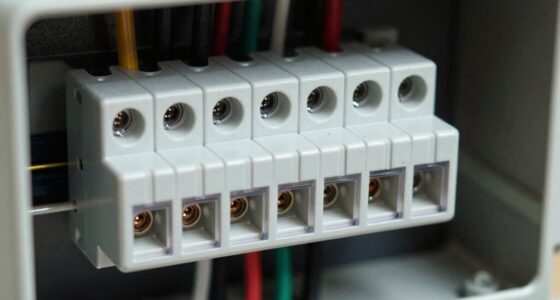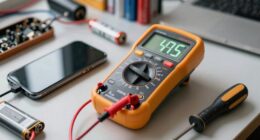

To fix alternator whine in your audio system, make certain all ground connections are solid and shared at a single point. Avoid multiple grounding points and painted or rusty surfaces, as these create ground loops and noise. Use a common grounding wire that ties all components together securely at an unpainted metal spot. Proper grounding eliminates voltage differences and electromagnetic interference, reducing the whine. Keep in mind, applying these tips can make a big difference—exploring further offers more effective solutions.
Key Takeaways
- Ensure all audio and power ground connections are tied to a single, unpainted metal point to prevent ground loops.
- Use a ground loop isolator in the audio signal path to break electromagnetic interference cycles.
- Keep power and audio cables separated and away from each other to reduce electromagnetic coupling.
- Verify that all ground points are free of paint, rust, or grease for solid electrical contact.
- Consider upgrading to high-quality power cables and avoiding multiple grounding points to minimize noise.
Alternator whine is a common issue that can disrupt your audio experience, but often it can be fixed with proper grounding techniques. This persistent high-pitched noise usually stems from ground loop issues or power supply noise, both of which create unwanted interference in your audio system. When your audio components aren’t properly grounded, they can form loops that pick up electromagnetic interference, translating into that annoying whine you hear. Understanding how to identify and correct these grounding problems is key to restoring clear sound.
Ground loop issues occur when there’s more than one grounding point in your setup, causing a difference in ground potentials. This voltage difference results in a loop that acts like an antenna, capturing electromagnetic signals from nearby electrical devices or the vehicle’s electrical system. Power supply noise, on the other hand, arises from fluctuations or disturbances in your vehicle’s electrical system, which then propagates through your audio wiring, producing the whine. These issues are often interconnected, as improper grounding can exacerbate both phenomena.
Multiple grounding points cause voltage differences, creating loops that pick up electromagnetic interference and produce whine.
To address ground loop issues, start by inspecting all your connections. Make sure your ground wires are securely attached to a clean, unpainted metal surface on your vehicle chassis. Avoid using paint, rust, or grease as grounding points, as these can increase resistance and lead to noise. It’s best to create a single, solid ground point for your entire audio system, ensuring all components share a common ground reference. If you’re using multiple devices, consider connecting their grounds together at a single point rather than daisy-chaining them across different locations.
Sometimes, the problem isn’t just about where you ground your equipment but how. Using a ground loop isolator can effectively break the loop, eliminating the noise. These devices are inserted into the audio signal path and work by isolating the ground connection, which stops the loop from forming. Additionally, ensure your power supply connections are clean and stable. Using high-quality power cables, avoiding extensions or adapters that may introduce interference, and keeping power wires away from audio cables can drastically reduce power supply noise. Proper grounding practices are essential for minimizing unwanted noise and interference in your system.
Another helpful step is to check your vehicle’s electrical system for any underlying issues. A weak or failing alternator can produce electrical noise that manifests as whine. Upgrading your alternator or installing a noise filter can help, but most of the time, proper grounding and shielding will resolve the issue. By systematically inspecting and correcting grounding points and minimizing interference sources, you’ll greatly reduce or eliminate the alternator whine, enjoying a clean, crisp audio experience every time you hit the road.

Cantonape 3000W Power Inverter 12V to 110V/120V DC to AC with LCD Display, Remote Controller 4 x AC Outlets and 4 x 3.1A USB Car Adapter for Car Truck Boat RV Solar System
POWERFUL OUTPUT: Convert power of DC 12V to AC 110V/120V 60Hz. Provides 3000 Watts continuous modified sine wave...
As an affiliate, we earn on qualifying purchases.
Frequently Asked Questions
Can Alternator Whine Occur in All Vehicle Audio Systems?
Yes, alternator whine can occur in all vehicle audio systems. It often results from poor grounding techniques or insufficient noise suppression, causing electrical interference to enter your audio setup. To fix it, check your grounding connections and improve them if needed. Using noise suppression devices can also help reduce or eliminate the whine. Proper grounding ensures your system stays quiet and clear, no matter your vehicle’s make or model.
Are There Specific Ground Types Better for Reducing Alternator Noise?
Yes, using high-quality ground wires and choosing a solid grounding point can considerably reduce alternator noise. Opt for a thick, well-insulated ground wire to guarantee a good connection. Select a grounding point on the vehicle’s chassis that’s free of paint or corrosion, ideally close to your audio system components. Proper grounding enhances signal clarity and minimizes alternator whine, creating a cleaner, more reliable audio experience.
How Long Does a Typical Grounding Fix Take to Implement?
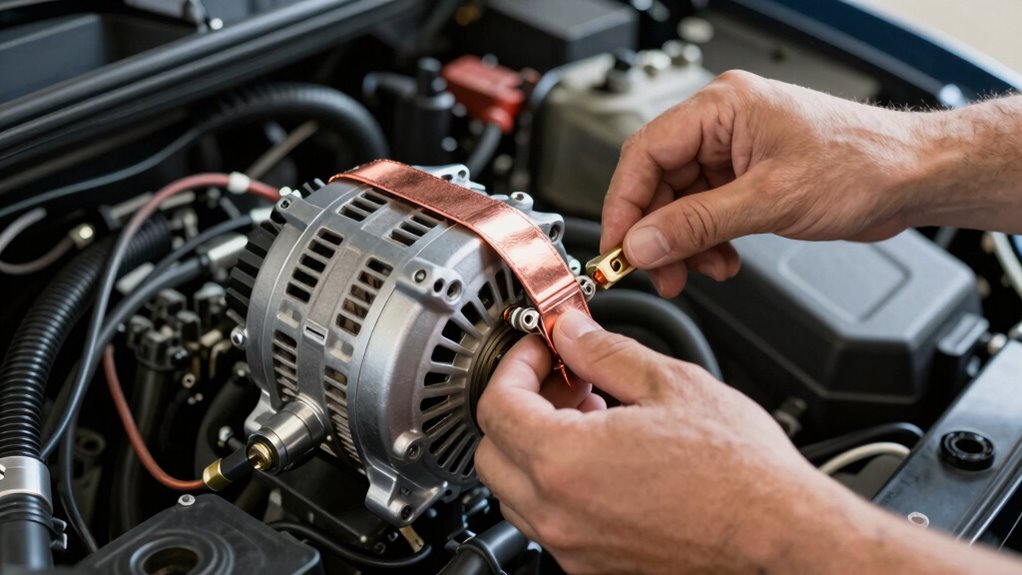
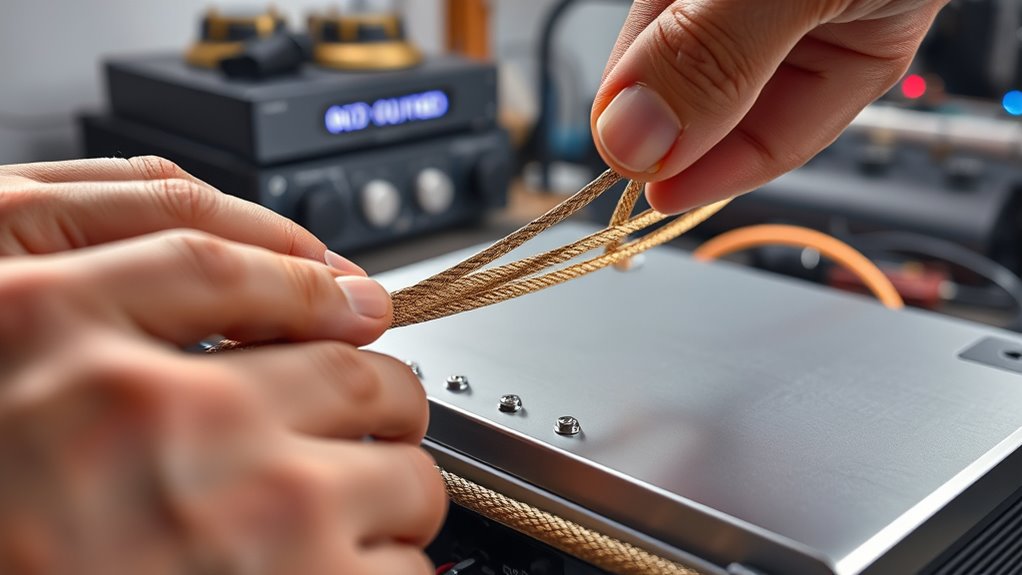
You can usually complete a grounding fix in about an hour or two, depending on your experience. Imagine diving into your car’s wiring, selecting quality grounding materials like braided copper straps or grounding wires, and carefully installing them. The installation time varies with your familiarity, but with the right tools and patience, you’ll reduce that annoying noise quickly. Just plan for some troubleshooting if needed, and you’ll be done in no time.
Is Professional Installation Necessary for Grounding Fixes?
You don’t necessarily need professional installation for grounding fixes, but it’s recommended if you lack experience. Using quality grounding materials and proper techniques guarantees effective results. DIY installation can save you on installation costs, but improper grounding might cause additional issues. If you’re unsure, consulting a professional helps guarantee the fix is done right, saving you time and potential future expenses.
Can Aftermarket Audio Components Influence Grounding Effectiveness?
You might be surprised, but yes—aftermarket audio components can substantially impact grounding effectiveness. These parts often have different grounding requirements or inferior shielding, which can introduce or worsen ground loops. To prevent this, use proper grounding techniques like dedicated ground wires and secure connections. Carefully consider the quality of your aftermarket components and verify they’re installed correctly, because even small missteps can cause that persistent alternator whine.

Pro Chaser 400W Power Inverters for Vehicles - DC 12v to AC 110v Car Inverter Converter, 6.2A Dual USB Charging Ports, Dual AC Adapter for Laptops Air Compressor
【Pro Chaser Power Inverter Basics】: This inverter provides a steady 400W of DC to AC power with a...
As an affiliate, we earn on qualifying purchases.
Conclusion
By applying these grounding fixes, you’ll notice a clear reduction or even elimination of alternator whine. It’s funny how something as simple as proper grounding can make such a big difference—sometimes, the solution is right under your nose. When you take the time to double-check your connections, you often find the culprit hiding in plain sight. So, don’t overlook these easy fixes—they might just be the coincidence your audio system needs for noise-free sound.

OLTEANP 1000 Watt Power Inverter 12V DC to 110V/120V AC Car Inverter with LCD Screen Display, 2 AC Outlets, 36W Type-C Port, 5V/3A USB Port, Car Power Converter for Truck, Home, Vehicles, Laptop, Trip
【2024 NEW UPGRADED POWERFUL 1000W CAR POWER INVERTER】- The OLTEANP Power Inverter offers a continuous DC to AC...
As an affiliate, we earn on qualifying purchases.

BESTEK Power Inverter DC 12V to AC 110V - 300W Car Plug Adapter Outlet with 4.8A Dual USB Fast Charging Port - Car Charger Cigarette Lighter Adapter for Phone, Laptop on Road Trip - Aluminum Housing
BESTEK Advantage Upgraded: Bestek is power inverter patents owner, America's leading power inverter brand. Our inverter tech upgraded...
As an affiliate, we earn on qualifying purchases.