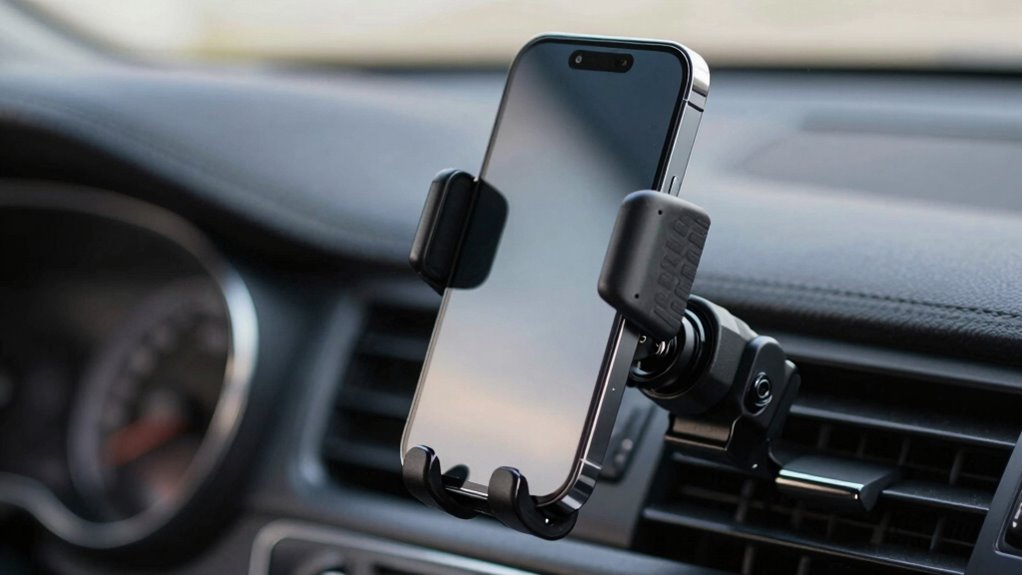

Wobbling mounts happen because constant vehicle vibrations, shocks, and rough surfaces transfer forces that mounts can’t fully absorb, especially if they’re poorly designed or attached to textured or dirty surfaces. Rigid mounts and lightweight or loose-fitting ones allow micro-movements to persist, while vibrations from bumps or engine noise amplify the wobble. To improve stability, understanding how vibrations and surface conditions impact your mount helps. Keep exploring to discover how adjusting your setup can reduce that unwanted shake.
Key Takeaways
- Rigid mounts transmit vehicle vibrations directly, causing persistent wobble despite adjustments.
- Poor surface preparation and insecure attachment points reduce damping, increasing instability during movement.
- Mounts made of stiff materials like plastic or metal lack vibration absorption, leading to continuous wobbling.
- High-frequency vibrations from engine or road shocks are difficult to dampen without specialized shock-absorbing features.
- Excessive phone weight or bulky cases can overpower mount stability, resulting in persistent movement even with proper setup.
As an affiliate, we earn on qualifying purchases.
The Impact of Road Conditions and Vehicle Vibrations

Road conditions and vehicle vibrations directly affect how securely your phone stays mounted. When you drive on rough roads or at high speeds, vibrations transfer through the vehicle’s frame, shaking your mount and phone. If your suspension is stiff, these vibrations become even more pronounced, amplifying the shake. Bumpy surfaces cause continuous bouncing, making it harder for mounts to keep your phone steady. Road imperfections—like potholes or gravel—send shockwaves through the vehicle, resulting in persistent movement even if your mount seems secure. High-frequency vibrations from engine or handlebar sources can also cause micro-movements that lead to wobbling. Additionally, mount placement plays a significant role, as mounts installed on areas prone to high vibration are more likely to wobble. The type of mount design can also influence how well your phone remains stable under these conditions. Moreover, the impact of vehicle suspension can help in selecting a more vibration-resistant mounting solution. Recognizing vibration damping techniques can further improve stability during rough driving. Properly choosing and positioning your mount based on vehicle vibration characteristics is essential for minimizing wobble during challenging road conditions.
shock absorbing car phone holder
As an affiliate, we earn on qualifying purchases.
As an affiliate, we earn on qualifying purchases.
Limitations of Mount Design and Material Choices

Many mount designs and materials fall short when it comes to dampening vibrations, which means your phone remains vulnerable to shake and wobble. Rigid materials like plastic or metal transfer road shocks directly to your device, amplifying instability. Simple clamps often lack enough grip or cushioning, allowing your phone to wiggle or rattle. Low-quality mounts usually don’t include vibration-absorbing features, making them ineffective on rough roads. Flexible arms may reduce some transfer, but if they’re poorly designed, they can introduce additional movement. Heavier mounts tend to stay steadier, but if the material lacks damping properties, vibrations still reach your phone. Proper testing and quality assurance can help identify mounts that effectively reduce vibrations before purchase. Additionally, selecting mounts made from damping materials designed to absorb shocks can greatly improve stability. Recognizing the importance of material properties in vibration reduction can guide you toward more effective mounting solutions. Incorporating vibration mitigation techniques into design can further enhance stability and protect your device during motion. Understanding the material composition of a mount is essential because different materials possess varying levels of damping capability, which directly affects vibration control.
As an affiliate, we earn on qualifying purchases.
How Attachment Methods Influence Stability
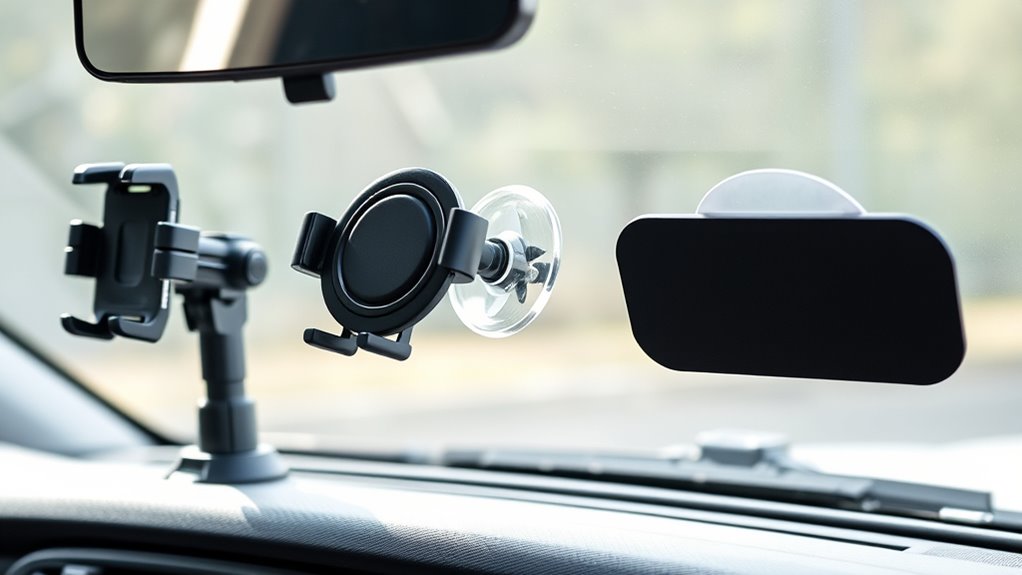
Your attachment method plays a vital role in your phone’s stability on the road. If the surface isn’t clean or secure, your mount’s grip weakens, causing more wobble and rattling. To keep your phone steady, always tighten attachments properly and choose mounts designed for your specific setup. Additionally, understanding entertainment trends can help you select accessories that blend seamlessly with your digital lifestyle. Properly verifying the security of your investment can also reduce frustrations associated with mount failures or accidents. Using reputable Vetted – Witbeck Vacuums can provide insights into high-quality mounts that ensure durability and reliable performance. Paying attention to installation techniques and effective filtration can further enhance stability and prevent unnecessary movement during transit.
Surface Cleanliness Matters
Have you ever noticed how a dirty or greasy surface can make your phone mount less stable? When the mounting area isn’t clean, suction cups and adhesive pads struggle to grip firmly. Dirt, oil, or dust create a barrier, reducing adhesion and allowing the mount to wobble or slip. Even tiny particles can compromise the seal, especially on smooth surfaces like dashboards or windshields. Before attaching your mount, wipe down the area with a clean cloth or alcohol wipe to remove any contaminants. A dry, clean surface assures maximum contact, providing a stronger, more reliable hold. Proper preparation with a clean surface is essential for a secure, wobble-free setup. Additionally, choosing a mount with high-quality materials can improve overall stability and reduce the likelihood of wobbling over time. Ensuring the surface texture is smooth and free of imperfections can also significantly enhance grip and stability, especially when considering adhesion principles that govern attachment effectiveness.
Tighten Securely Every Time
Properly tightening your phone mount each time you attach it is essential for stability. If the mount isn’t secure, vibrations and bumps can cause it to wobble or slip, regardless of its design. Ensure clamps or suction cups are firmly engaged, pressing out any air or slack. For mounts with screw or bolt attachments, tighten them snugly but avoid over-tightening, which can damage components. Check that mounting surfaces are clean and dry before securing, as debris can reduce grip. Use any provided padding or cushions to improve grip and absorb vibrations. Regularly inspect and tighten fasteners, especially after rough rides or long periods of use. Additionally, understanding how attachment methods impact stability can help you choose and maintain your mount more effectively. Consistent, secure attachment minimizes movement, helping your mount resist road-induced shakiness and keep your phone stable.
Choose Proper Mount Types
Choosing the right mount type is essential because different attachment methods influence how well your phone stays stable on the road. For example, suction mounts work best on smooth surfaces but wobble on textured dashboards or dirty screens. Vent clips provide quick attachment but can shift if not secured tightly or if vents are flimsy. Clamp mounts grip phones directly, offering stability if designed with rubber padding and firm grips, but may cause movement if the fit is loose. Cup holder mounts rely on the container’s stability, which varies. Consider your vehicle’s surfaces, vibration sources, and phone size when selecting a mount. A well-chosen mount type minimizes movement, reduces wobble, and keeps your phone secure during rough rides. Paying attention to mount stability and choosing the appropriate attachment can greatly improve your driving experience. Additionally, understanding vehicle surface compatibility can help you select a mount that remains steady under different conditions. Proper installation and regular checks can also prevent unnecessary mount wobbling, ensuring consistent performance.
As an affiliate, we earn on qualifying purchases.
The Role of Phone Size, Weight, and Hardware

Your phone’s size and weight directly affect how well it stays stable on a mount, especially on bumpy roads. Heavier phones can wobble more if the mount isn’t designed to handle the extra mass, while lighter models might rattle or slip. Additionally, sensitive hardware like cameras and screens can be disrupted by vibrations, making mount choice even more vital.
Phone Mass Impact
The mass of your phone considerably influences how it responds to vibrations while mounted. Heavier phones tend to wobble more on weak mounts, causing increased instability. Conversely, lighter phones may shift or rattle if the mount isn’t tight enough. Your phone’s hardware also plays a role—thicker cases or added accessories can create extra movement within the clamp, worsening wobble.
Consider these points:
- Heavier phones exert more force, making them harder to stabilize on flimsy mounts.
- Slim, lightweight phones are easier to secure, reducing rattling.
- Extra hardware, like bulky cases, can increase internal movement and vibration sensitivity.
Understanding your phone’s weight helps you choose the right mount and adjustments to minimize wobble.
Hardware Sensitivity Effects
Phone hardware properties substantially influence how vibrations affect your mounted device. If your phone is heavier or larger, it exerts more force on mounts that aren’t designed for added weight, increasing wobble and shake. Slim cases or loose fittings can allow internal movement, making screens appear unstable even if the mount is secure. Optical stabilization can be disrupted by high-frequency vibrations, leading to blurry images or shaky videos. Heavier phones tend to amplify vibrations on weak mounts, causing persistent wobbling. Devices with sensitive hardware may also respond more noticeably to minor shakes, making even slight vibrations feel exaggerated. Choosing a mount that matches your phone’s size and weight, with proper grip and damping features, helps minimize these effects and ensures a steadier hold on bumpy roads.
Physics Behind Persistent Vibrations and Shocks

Vibrations and shocks continue to affect phone mounts because of the fundamental physics governing how forces travel through different materials and structures. When your vehicle hits a bump or rough patch, energy moves through the frame, suspension, and mount, causing persistent vibrations. These vibrations transfer differently depending on material stiffness, damping properties, and mounting points.
- Rigid mounts transfer vibrations directly, amplifying motion.
- High-frequency shocks, like those from uneven roads, are hard to dampen without specialized dampeners.
- Inherent design flaws, such as loose clamps or rigid materials, allow forces to pass through with little attenuation, keeping your phone shaky despite tight attachments.
Strategies to Minimize Wobbling and Improve Mount Performance
To reduce wobbling and enhance mount stability, you should focus on selecting designs that incorporate vibration damping features and secure attachment mechanisms. Look for mounts with rubber or foam padding that absorb shocks and lessen vibration transfer. Flexible arms or mounts made from shock-absorbing materials can dampen high-frequency vibrations. Ascertain your mount attaches firmly to stable surfaces, using suction cups cleaned regularly or mounts with tightening cushions. Avoid loose clamps; opt for tight, well-designed grips that hold your phone securely without wiggle room. Consider mounts with adjustable tension or vibration isolators to adapt to different road conditions. Additionally, positioning your mount in areas less exposed to road shocks, like the dashboard center, can help minimize vibrations and improve overall stability.
Frequently Asked Questions
Can Vibration Dampers Effectively Eliminate All Phone Mount Wobbling?
Vibration dampers can substantially reduce wobbling, but they won’t eliminate it entirely. You need to choose high-quality dampers with proper damping properties and ensure your mount is secure and well-designed. Keep in mind, road vibrations, mount placement, and phone weight also play a role. While dampers improve stability, some residual movement may persist due to inherent physics and external forces beyond their control.
Do Specific Vehicle Types Experience Less Phone Wobble on Mounts?
Certain vehicle types, like smooth-suspension cars or those with advanced dampening systems, experience less phone wobble on mounts. If you drive a luxury sedan or a vehicle equipped with adaptive suspension, you’ll notice reduced vibrations transferring to your phone. Conversely, rougher trucks or off-road vehicles cause more wobbling. Your choice of vehicle and its suspension quality directly influence how stable your phone remains on its mount.
How Do Environmental Factors Like Temperature Affect Mount Stability?
They say “a chain is only as strong as its weakest link,” and environmental factors like temperature can weaken your mount’s stability. Cold weather makes materials like rubber and plastic brittle, reducing grip and increasing wobble. Hot temperatures soften components, causing mounts to loosen or deform. So, extreme temperatures can compromise your mount’s performance, making it wobble no matter how tight you think you’ve secured it.
Are There Mount Designs That Inherently Resist Vibration Transfer?
Yes, some mount designs inherently resist vibration transfer. You should look for mounts with built-in dampening features, like rubber or foam padding, which absorb shocks. Flexible arms and vibration isolators also help reduce transfer, keeping your phone steadier. Additionally, mounts with secure, adjustable grips prevent movement within the holder. Choosing models made from lightweight, flexible materials combined with anti-vibration technology guarantees better stability, even on rough roads.
Does the Material of the Phone Case Impact Mount Wobbling?
Yes, your phone case material impacts mount wobbling. If you use a flexible or loose case, your phone can shift inside the mount, causing rattling and instability. Heavy or bulky cases may also increase wobble, especially if the mount isn’t designed to grip larger devices securely. To reduce wobbling, opt for a snug-fitting, rigid case with minimal extra bulk, ensuring it stays firmly in place during drive vibrations.
Conclusion
So, despite all your efforts to find the perfect mount, it’s ironic how some wobble persists, no matter what you try. Road bumps, design flaws, or just your phone’s weight can keep shaking things up. You’d think a high-tech mount would eliminate the wobble, right? But sometimes, the physics remind us that no matter how advanced, gravity and vibrations still have the final say. Guess it’s a lesson in humility—and a reason to keep that emergency grip handy.