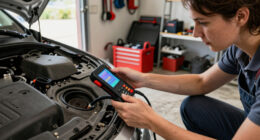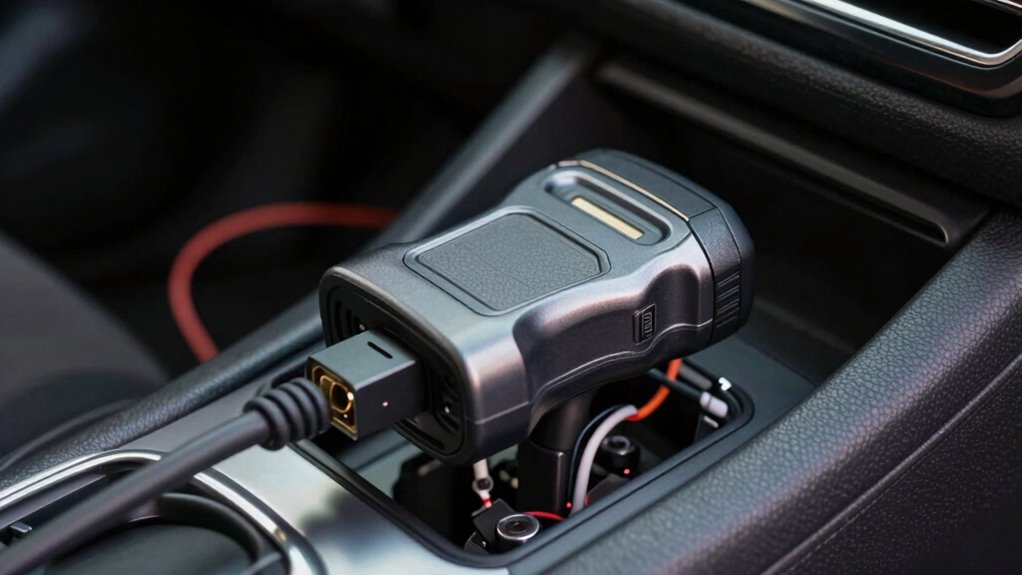

The hidden detail that makes OBD2 basics work better is proper sensor calibration. When sensors are well-maintained and regularly checked, you get accurate, reliable data that helps you diagnose issues accurately. This reduces false alarms, avoids unnecessary repairs, and makes troubleshooting faster. Consistent calibration keeps sensors performing at their best over time, ensuring your diagnostic tools are trustworthy. Keep going to discover more insights that can greatly improve your vehicle diagnostics.

Get business pricing on garage and car supplies
- Business-only prices and quantity discounts
- Tax-exempt purchasing
- Multiple users, one account, clear invoices
Key Takeaways
- Proper sensor calibration ensures accurate readings, enhancing the effectiveness of OBD2 diagnostics.
- Regular maintenance prevents calibration drift, maintaining sensor reliability over time.
- Skilled data interpretation transforms raw sensor data into actionable insights, improving diagnostic accuracy.
- Consistent calibration reduces false alarms, leading to more precise vehicle condition assessments.
- Combining hardware calibration with proper data analysis optimizes overall OBD2 tool performance.
In addition, the integrity of sensor calibration depends on proper maintenance and periodic checks, ensuring ongoing accuracy in diagnostic results. When sensor calibration and data interpretation are properly managed, the entire diagnostic process becomes smoother. You get reliable readings, fewer false alarms, and a clearer picture of what’s happening under the hood. This highlights how regular maintenance practices can prevent calibration issues and ensure consistent performance. It also helps in maintaining your vehicle’s efficiency, emissions, and overall performance. The hidden detail that makes OBD2 work better, then, is not just the hardware but the skilled calibration of sensors and the ability to interpret data effectively. Without these, even the best scanner can lead you astray.
In essence, understanding and maintaining sensor calibration, along with sharp data interpretation skills, elevate your vehicle diagnostics. It’s what turns a simple OBD2 scan into a powerful tool for keeping your vehicle running smoothly. Recognizing this hidden detail can make all the difference between a quick fix and a prolonged troubleshooting session.
Products Worth Considering

Chemical Guys 14-Piece Arsenal Builder Car Wash Kit with Foam Blaster

Milwaukee 2697-22 M18 18-Volt Lithium-Ion Cordless Hammer Drill/Impact Driver XC Combo Kit (2-Tool)

Autel MaxiCOM MK900BT Bidirectional Diagnostic Scanner
As an affiliate, we earn on qualifying purchases.
Frequently Asked Questions
How Often Should I Update My OBD2 Scanner Firmware?
You should update your OBD2 scanner firmware whenever manufacturer releases new updates, ideally every few months. Firmware updates improve scanner compatibility with newer vehicle models and enhance diagnostic accuracy. Regular updates guarantee your scanner stays current with the latest vehicle systems and coding standards. Check the manufacturer’s website or app for updates, and install them promptly to keep your scanner functioning at its best and avoid compatibility issues.
Can OBD2 Diagnostics Detect All Vehicle Issues?
Think of OBD2 diagnostics like a flashlight in a dark room—helpful, but not revealing every corner. They can detect many issues with sensor accuracy, like engine or emissions problems, but have diagnostic limitations. You might miss subtle mechanical wear or electrical faults. To get a complete picture, combine OBD2 scans with regular manual inspections. Relying solely on diagnostics can leave some issues unseen, so stay proactive.
What Are the Best Practices for Interpreting OBD2 Codes?
To interpret OBD2 codes effectively, focus on ensuring code accuracy and data reliability. Start by clearing the codes and noting any recurring ones, which can indicate persistent issues. Use a trusted scanner to verify the data, and cross-reference codes with manufacturer info for clarity. Always consider the context of your vehicle’s symptoms, and avoid jumping to conclusions solely based on code readings. Proper interpretation leads to more accurate diagnostics.
Is There a Difference Between Generic and Manufacturer-Specific OBD2 Codes?
Yes, there’s a difference between generic and manufacturer-specific OBD2 codes. Generic codes guarantee code accuracy across most vehicles, making diagnostics easier, but manufacturer-specific codes provide detailed insights unique to your vehicle’s make and model. Understanding these differences helps you interpret codes more accurately and get precise repairs. Recognizing manufacturer differences guarantees you don’t overlook critical issues, ultimately improving your ability to troubleshoot effectively and maintain vehicle health.
How Does Ambient Temperature Affect OBD2 Readings?
Imagine your OBD2 sensor as a thermometer in a chilly winter or hot summer. Ambient temperature impacts readings because sensors need proper calibration to account for temperature variations. Without temperature compensation, data can be skewed. When temperatures fluctuate, sensors adjust their calibration, ensuring accurate readings. This hidden detail helps your vehicle’s diagnostics stay reliable across different weather conditions, making your OBD2 system more precise and trustworthy.
Conclusion
Now that you’ve uncovered that hidden detail, your OBD2 basics become a finely tuned engine, purring smoothly beneath your fingertips. Think of it as discovering the secret key to a treasure chest — revealing smoother diagnostics and better insights. With this knowledge, you’re no longer fumbling in the dark but steering confidently through a well-lit road, where each turn reveals clarity and control. Embrace this hidden gem, and watch your understanding of your vehicle truly come alive.