
TL;DR

Get business pricing on garage and car supplies
- Business-only prices and quantity discounts
- Tax-exempt purchasing
- Multiple users, one account, clear invoices
Vehicle Data Global analysis says average car engine power has risen 28.9% since 2005, while average engine capacity fell 7.8%. The data also show a steep increase in new registrations with engines of 1.5 litres or less producing at least 134bhp; hybrid figures include electric-motor output.
Average car engine capacity in the data analysed by Vehicle Data Global fell 7.8% between 2005 and 2025, while average power output rose 28.9%, according to the vehicle-data firm. The findings illustrate how carmakers have increased power from smaller engines, using technologies including turbocharging and hybrid systems as they respond to tighter emissions requirements.
VDG calculated that average engine capacity decreased from 1,771cc in 2005 to 1,633cc in 2025. Over the same period, average power per litre increased by 42.9% to 69.1kW per litre, a measure of output relative to engine capacity. Median engine size also fell, from 1,599cc to 1,498cc, while median power rose from about 107bhp to 138bhp.
The analysis found a marked rise in cars combining relatively small engines with higher output. In 2005, about 8,500 registered cars had engines of 1.5 litres or less and produced at least 134bhp, or 100kW. Last year, the figure was 444,000 registrations, amounting to 26.7% of all registrations, compared with 0.4% in 2005. Those figures count registrations, not the total number of cars on the road.
VDG points to turbocharging and hybrid technology as factors in the shift. Turbochargers increase the air supplied to an engine, while hybrids can add electric-motor power. For hybrid vehicles, VDG’s reported power figures include the electric motor’s contribution and do not represent combustion-engine output alone.
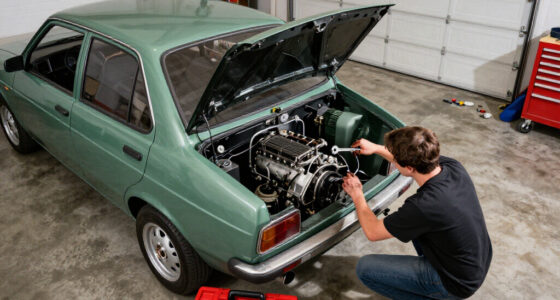
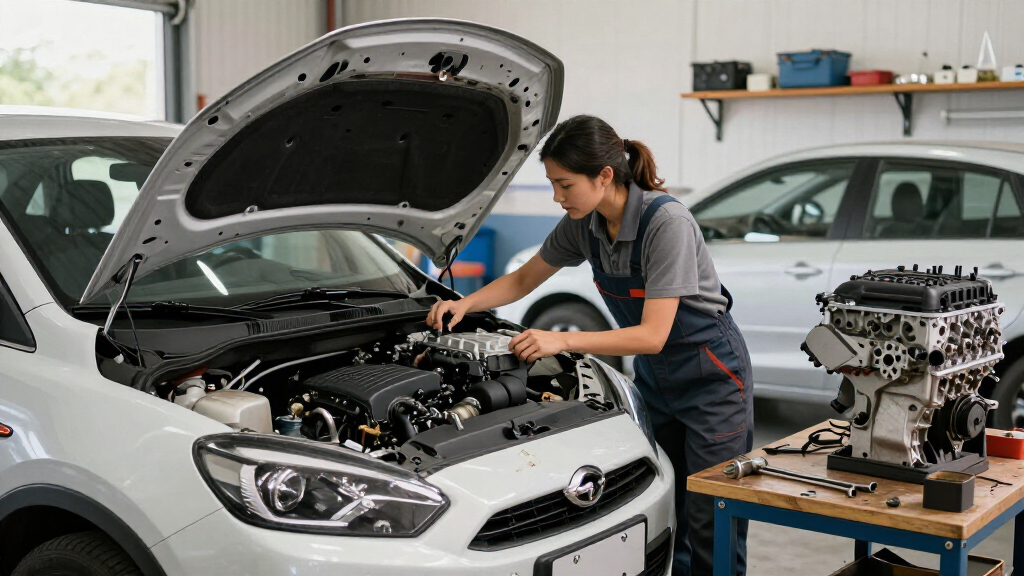
More Power From Smaller Engines
The figures show how the power available in many everyday cars has changed, even as engine capacity has generally decreased. For drivers, that helps explain why a family hatchback or crossover can have output comparable to older performance models. It does not mean the newer cars are equivalent in every respect: power alone says nothing about handling, weight, acceleration, braking, or driving feel.
The shift also matters to manufacturers working to meet emissions rules. Smaller displacement and higher output are not, by themselves, proof that a vehicle produces fewer emissions or uses less fuel in real-world driving. The VDG analysis describes engine capacity and power trends; it does not establish emissions or fuel-economy outcomes for individual models.
Products Worth Considering

Autel MaxiCOM MK808S Bidirectional Automotive Diagnostic Scanner

Autel MaxiCOM MK900BT Bidirectional Diagnostic Scanner

Chemical Guys 16-Piece Arsenal Builder Car Wash Kit with Foam Cannon & Bucket
As an affiliate, we earn on qualifying purchases.
How the Comparisons Are Measured
The supplied analysis compares registration and vehicle data over a period beginning in 2005. It also gives examples of modern mainstream models whose stated outputs resemble or exceed those of older performance cars. A Skoda Octavia 1.5 TSI e-TEC mild hybrid rated at 150PS is described as having power comparable to late-1990s hot hatches, despite a smaller engine. VDG says the Nissan Qashqai 1.3 mild hybrid produces about 156bhp, above the output it attributes to an early-1970s Triumph TR6 PI.
Another example is the Ford Puma 1.0 EcoBoost mild hybrid, reported at approximately 153bhp from a 999cc engine. VDG compares that with a 1980s Ford Escort RS Turbo rated at 132bhp from a 1.6-litre engine. These are comparisons of stated power and capacity, not controlled assessments of how the vehicles perform in use.
Engine downsizing has not continued at the same pace in recent years, according to the figures provided. Average capacity was about 1,645cc in 2019 and 1,633cc in 2025, while average power rose from 105kW to 111kW. One-litre engines grew from about 3.3% of registrations in 2005 to a peak of 18% in 2020, then accounted for 14.5% last year.
“Nothing illustrates the engineering success of modern car makers better than our analysis of powertrain output increases from ever-shrinking engines over the past 20 years.”
— Ben Hermer, operations director of Vehicle Data Global
What the Data Cannot Show
The supplied material does not describe the full dataset, its geographic coverage, or the detailed method used to calculate average power and capacity. It also does not provide a model-by-model comparison of fuel use, emissions, reliability, or real-world performance. Those outcomes cannot be inferred from engine size and power figures alone.
The reported hybrid outputs combine combustion-engine and electric-motor contributions, so they should not be read as figures for the engine alone. The source also uses different time spans in its headline and supporting comparisons: the main average-power finding covers just over 20 years, while the detailed capacity and registration figures are presented from 2005 through 2025. The precise basis for each comparison is not further specified in the supplied material.
Whether Downsizing Continues
VDG’s figures suggest engine downsizing has levelled off in recent years, while average power has continued to increase. The available material does not give a forecast or identify a next data release. Further analysis would be needed to show whether the trend continues and how future emissions rules, electrification, and changes in vehicle registrations affect the figures.
Key Questions
How much has average car engine power increased?
VDG says average power output rose 28.9% from 2005 to 2025. The supplied material does not specify a separate unit for that headline percentage.
Have car engines become smaller over the same period?
Yes. VDG calculated that average engine capacity fell 7.8%, from 1,771cc in 2005 to 1,633cc in 2025.
What technologies helped raise power from smaller engines?
VDG cites turbocharging and hybrid technology. Hybrid power figures in its analysis include electric-motor contributions as well as combustion-engine output.
Does more power mean lower emissions or better fuel economy?
Not necessarily. The analysis reports engine capacity and power trends, but the supplied figures do not establish fuel consumption or emissions for individual cars.
Are the modern-car and classic-car comparisons direct performance tests?
No. The examples compare stated power and engine capacity. They do not provide controlled tests of acceleration, handling, braking, or overall performance.
Source: rss