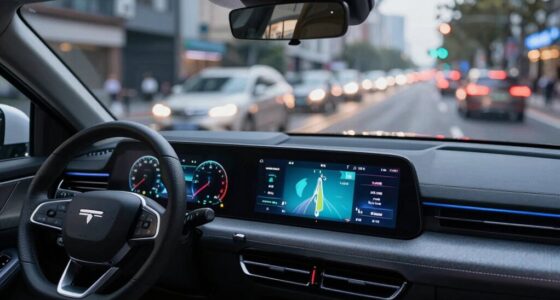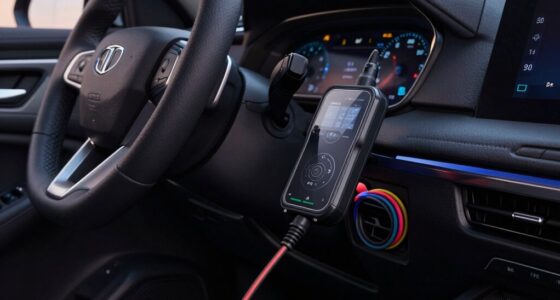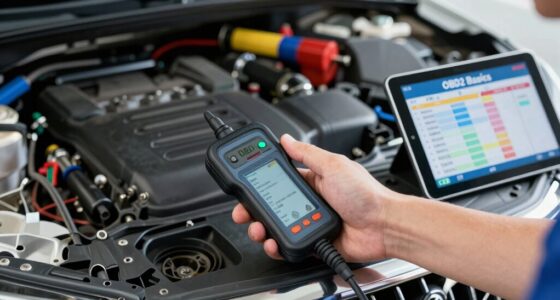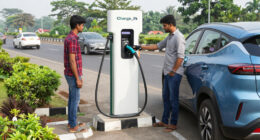

To choose the right parking mode power without guessing, consider how long you’ll park your vehicle. For short-term stops, a moderate power setting usually works fine, while long-term parking calls for a low-power mode to save battery. Check your vehicle’s electrical demands and battery health regularly, and use adjustable features to tailor the settings. Balancing security and power use is key—if you keep these tips in mind, you’ll make smarter choices and protect your battery more effectively.

Get garage and car supplies delivered free — and shop member deals
- Fast, free delivery on millions of items
- Access to Prime Big Deal Days deals on October 6–7
- Prime Video, Amazon Music and more included
Key Takeaways
- Match power mode to parking duration: moderate for short-term, low power for long-term stays.
- Consult your vehicle manual and electrical specifications for recommended settings.
- Use adjustable system features and alerts to monitor battery health and prevent drain.
- Consider battery size and age to determine appropriate power levels and avoid overloading.
- Balance security needs with power conservation by selecting suitable power settings for inactivity periods.
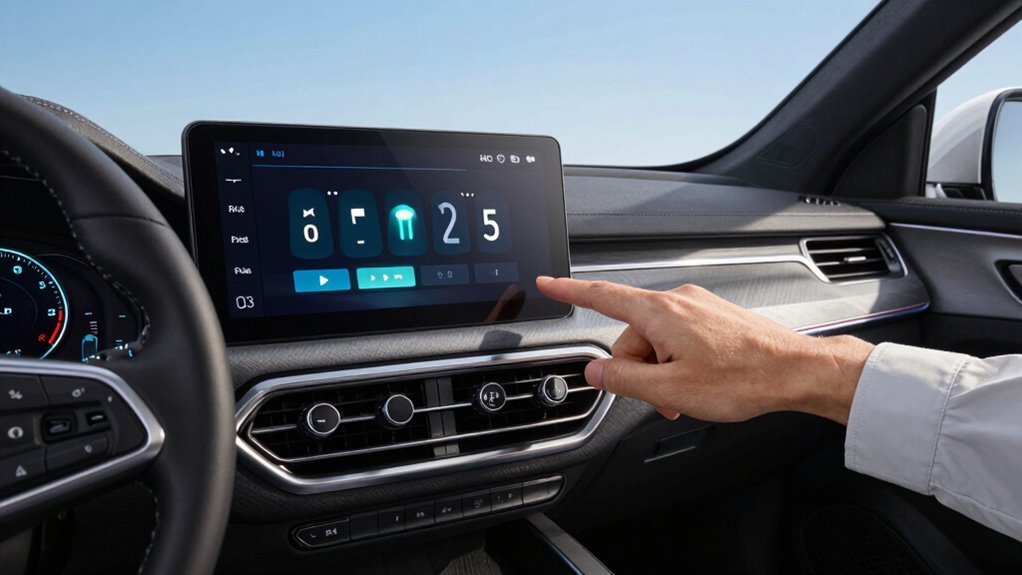
When selecting the right parking mode power for your vehicle’s security system, understanding your specific needs is essential. The goal is to find a balance that keeps your vehicle protected without unnecessarily draining your battery. If you choose a power setting that’s too high, you risk significant battery drain, especially if your vehicle sits unused for extended periods. On the other hand, selecting a power level that’s too low might compromise the effectiveness of your security system, leaving your vehicle vulnerable.
To make an informed decision, assess how often your vehicle is parked and how long it typically stays inactive. If you only park overnight or for a few hours, a moderate power setting can usually suffice, providing adequate protection while conserving energy. But if your vehicle remains parked for days or weeks, you need a power mode designed for low consumption. This helps guarantee your battery isn’t unnecessarily depleted, which could leave you stranded or force you to jump-start your vehicle.
Power conservation is a key factor in choosing the right parking mode power. Many modern security systems offer adjustable settings, allowing you to customize the power draw based on your circumstances. Look for systems that provide a low-power standby mode, which minimizes battery drain when the vehicle is inactive. This is especially useful if you’re concerned about frequent battery replacements or if your vehicle has an older battery that’s more sensitive to drain.
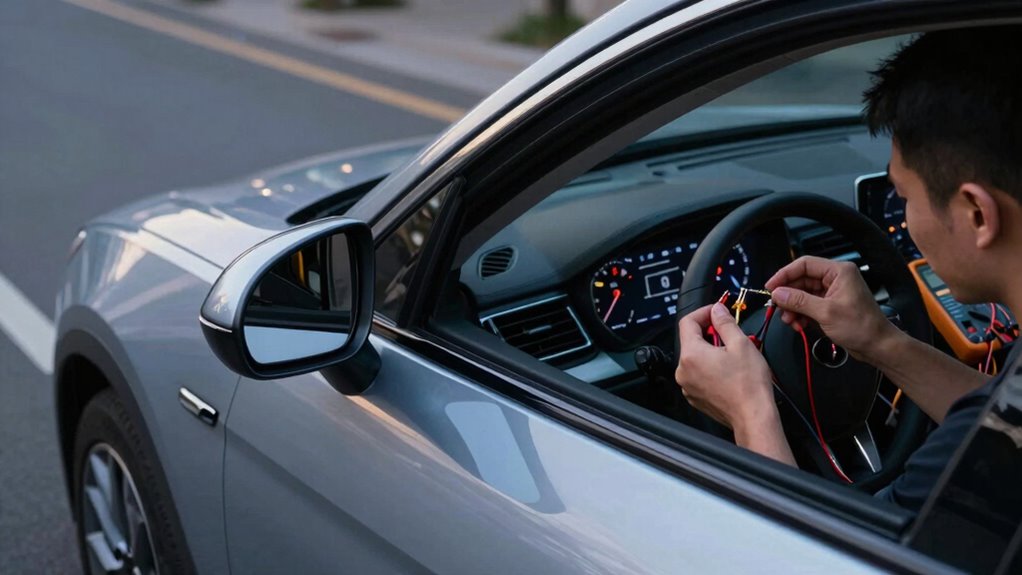
It’s important to remember that different vehicles have different electrical demands. Vehicles with larger batteries or advanced electronic systems might tolerate higher power settings without issue, while smaller or older batteries require more conservative power levels. To avoid unexpected battery drain, consult your vehicle’s manual or a professional installer to determine the ideal power setting tailored to your vehicle’s specifications. Additionally, understanding your vehicle’s electrical demands can help you make smarter choices about power settings and prevent battery issues. Recognizing battery capacity and its relationship to power consumption is crucial for maintaining your vehicle’s reliability. Being aware of battery health can also help you identify potential issues before they impact your vehicle’s performance. Regularly monitoring battery voltage can aid in early detection of drain problems before they become serious. A comprehensive understanding of battery management can further assist in optimizing your vehicle’s power settings and prolonging battery life.
Another practical tip is to regularly check your battery’s health if you’re using a higher power setting or if your vehicle remains parked for extended periods. Some security systems come with alerts that notify you if the battery voltage drops below a certain threshold. Utilizing these features can help you strike the perfect balance—ensuring your vehicle stays protected without risking battery drain or compromising power conservation. Ultimately, choosing the right parking mode power involves understanding your vehicle’s needs, monitoring your battery’s health, and leveraging adjustable system features to keep both your vehicle and your peace of mind intact.
vehicle parking mode power settings
As an affiliate, we earn on qualifying purchases.
As an affiliate, we earn on qualifying purchases.
Frequently Asked Questions
Can I Use a Lower Power Setting to Save Battery?
Yes, you can use a lower power setting to save battery, but it might impact your device’s battery life and power efficiency. Lowering the power reduces energy consumption, extending battery life during parking periods. However, it may also decrease the effectiveness of certain features. To balance power efficiency and functionality, experiment with different settings and monitor your device’s performance to find the most suitable power level without sacrificing necessary features.
How Do I Know if My Vehicle Supports Different Parking Modes?
You can discover if your vehicle supports different parking modes by checking your vehicle’s owner’s manual or exploring its parking system features. Many modern cars have advanced parking assist systems, but some older models might not. To avoid frustration, look for labels or settings related to parking modes in your vehicle’s info display. Ultimately, knowing your vehicle’s compatibility helps you optimize parking safety and convenience without guessing.
What Are the Risks of Using Excessive Parking Mode Power?
Using excessive parking mode power risks draining your battery quickly, which can leave you stranded. It also increases the chance of electrical damage to your vehicle’s sensitive components. If you push the power too high, you might overload the system, causing costly repairs. To avoid these issues, always select the appropriate parking mode power level, ensuring your battery stays charged and your vehicle’s electrical system remains intact.
Is There a Recommended Safety Margin When Selecting Power?
Think of your battery as a delicate balance beam: a small safety margin keeps it steady. When selecting parking mode power, you should aim for a safety margin of around 10-15%. This buffer helps protect battery longevity and guarantees accurate power calibration, preventing overexertion. By maintaining this margin, you reduce risks and extend your battery’s life, making your setup both reliable and safe.
How Often Should I Check My Parking Mode Power Setup?
You should check your parking mode power setup regularly, ideally once every few weeks, to guarantee battery preservation and maintain power efficiency. Frequent inspections help you spot any signs of drainage or malfunction early on, preventing unexpected power loss. By monitoring your system consistently, you can adjust settings if needed, prolonging your battery’s life and ensuring your parking mode functions reliably when you need it most.
car security system low power mode
As an affiliate, we earn on qualifying purchases.
As an affiliate, we earn on qualifying purchases.
Conclusion
Selecting the right parking mode power might seem tricky, but with the right knowledge, you’ll make an informed choice every time. Remember, the perfect power setting isn’t just a minor detail—it’s the key to safeguarding your vehicle and peace of mind. Don’t settle for guesswork that could turn your car into a ticking time bomb. Trust your instincts, do the research, and power up confidently—your car’s safety depends on it!
As an affiliate, we earn on qualifying purchases.
adjustable parking mode security system
As an affiliate, we earn on qualifying purchases.
As an affiliate, we earn on qualifying purchases.
Halloween Picks
halloween
As an affiliate, we earn on qualifying purchases.