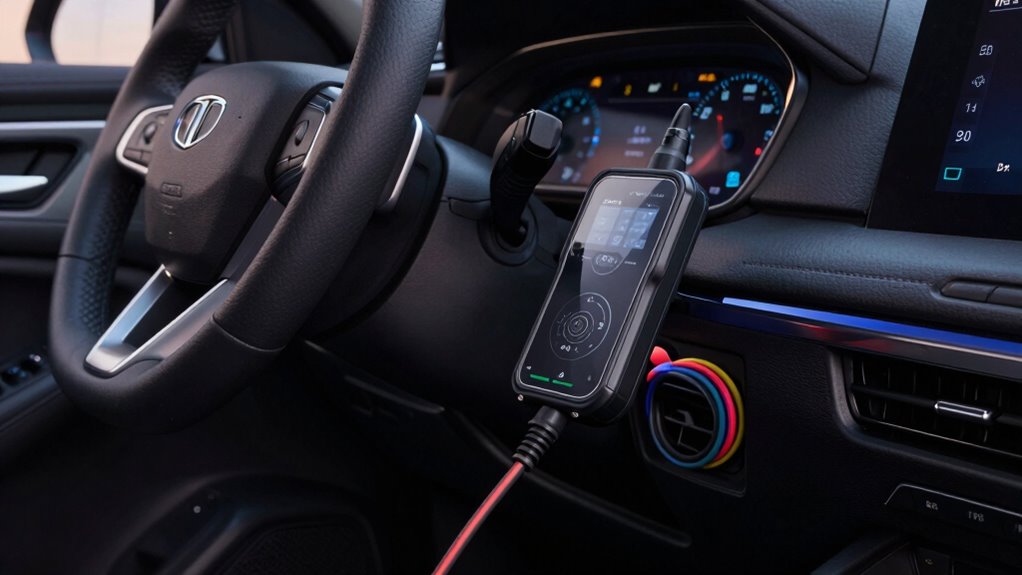
If you actively maintain your vehicle, an OBD2 scanner is a must-have tool. It connects to your car’s port to give real-time data on engine health, diagnose check engine lights, and help with tuning or emissions tests. You can monitor sensors, clear codes, and make smarter adjustments to improve performance. Mastering its features boosts your confidence as a DIY mechanic. Keep exploring, and you’ll discover how to get the most out of your gear.

Get business pricing on garage and car supplies
- Business-only prices and quantity discounts
- Tax-exempt purchasing
- Multiple users, one account, clear invoices
Key Takeaways
- Connect the OBD2 scanner to the vehicle’s port and turn on ignition to access real-time data.
- Use the device to read and clear diagnostic trouble codes for quick troubleshooting.
- Monitor sensor readings and live data streams to diagnose issues and optimize vehicle performance.
- Perform basic tuning adjustments to improve horsepower, efficiency, or emissions based on data insights.
- Regularly check vehicle systems to prevent problems, save repair costs, and maintain optimal performance.

Ever wondered how mechanics quickly diagnose vehicle issues? It’s all about the powerful tool called the OBD2 scanner. This device connects to your vehicle’s OBD2 port, giving you real-time access to data that can reveal what’s happening under the hood. Whether you’re troubleshooting check engine lights or fine-tuning your car’s performance, understanding how to use an OBD2 scanner is essential. One of the key aspects of vehicle tuning is performance tuning, where you tweak engine parameters to boost horsepower or efficiency. With an OBD2 scanner, you can monitor sensor readings, fuel trims, and ignition timing to optimize your car’s performance. It’s like having a mechanic in your pocket, helping you make informed adjustments without guesswork. Additionally, many OBD2 scanners allow you to access live data streams, providing even deeper insights into your vehicle’s operation. By understanding vehicle diagnostics, you can better interpret the information provided by your scanner and make smarter decisions. Gaining knowledge about vehicle systems can help you troubleshoot more effectively and understand how different components work together. Familiarity with OBD2 protocols can also improve your ability to select the right scanner for your needs and ensure compatibility with your vehicle. Knowing how different sensor data interacts can further enhance your troubleshooting skills and help in diagnosing complex issues.
An OBD2 scanner helps diagnose issues and optimize your car’s performance with real-time data and sensor monitoring.
Using an OBD2 scanner isn’t complicated once you get the hang of it. You connect the device to the port, turn on your ignition (without starting the engine if the scanner requires it), and then navigate through the menu to read codes. These codes tell you exactly what system or sensor is causing trouble. With some scanners, you can even clear codes after repairs, which resets the dashboard warning lights. This is especially useful if you’re doing performance tuning, where you might temporarily change settings or remove emissions components to test improvements.
In short, knowing how to interpret OBD2 data empowers you to take control of your vehicle’s health and performance. Whether you’re diagnosing issues, clearing codes, or fine-tuning for better power and efficiency, this tool puts valuable information at your fingertips. You’ll save time, avoid unnecessary repairs, and ensure your car runs smoothly and efficiently. Mastering the basics of OBD2 use turns you into your own mechanic, capable of making smarter decisions, whether it’s for performance tuning, emissions testing, or everyday maintenance.
Products Worth Considering

Autel MaxiCOM MK900BT Bidirectional Diagnostic Scanner with 40+ Services and CAN-FD & DOIP Protocols

Autel MaxiCOM MK808S Diagnostic Scanner

Chemical Guys 16-Piece Arsenal Builder Car Wash Kit with Foam Cannon & Bucket
As an affiliate, we earn on qualifying purchases.
Frequently Asked Questions
Can OBD2 Tools Work on Motorcycles or Older Cars?
OBD2 tools primarily work on cars that meet OBD2 standards, but motorcycle compatibility is limited since most bikes use different diagnostic systems. Older vehicles may not support OBD2 unless they were manufactured after 1996, so older vehicle support can be hit or miss. To guarantee compatibility, check your motorcycle or vehicle’s specifications or look for tools specifically designed for motorcycles and older models.
How Often Should I Scan My Vehicle With OBD2?
You should scan your vehicle with OBD2 regularly—think of it as a wellness check for your car’s soul. Follow your vehicle’s maintenance schedule, but aim for diagnostic frequency every few months or whenever you notice odd behavior. Ignoring these checks is like skipping doctor visits—you might catch problems early or face costly surprises. Stay vigilant, keep your engine happy, and your wallet will thank you later.
Are There Legal Restrictions on Using OBD2 Diagnostic Tools?
Yes, there are legal restrictions on using OBD2 diagnostic tools. You need to guarantee legal compliance in your area, especially if you’re performing emissions tests or modifying vehicle settings. Privacy concerns also come into play, as diagnostic data can reveal personal information. Always use these tools responsibly, follow local regulations, and avoid tampering with emissions controls or other critical systems to stay within the law.
What Is the Cost Range for Advanced OBD2 Scanners?
Ever wondered how much advanced OBD2 scanners cost? They typically range from $200 to over $1,000, depending on advanced features like live data streaming, bi-directional controls, and extensive vehicle coverage. When doing a pricing comparison, consider your needs—are you a hobbyist or a professional? Higher-priced models offer more in-depth diagnostics, but you can find capable options at the lower end if you focus on essential features.
Can OBD2 Data Improve Fuel Efficiency?
Yes, OBD2 data can improve your fuel efficiency. By monitoring real-time fuel economy and emissions, you can identify issues like inefficient fuel injectors or a clogged air filter. This info helps you adjust driving habits or schedule maintenance, reducing fuel consumption and emissions. Regularly analyzing OBD2 data guarantees your vehicle runs smoothly, saves you money on fuel, and keeps emissions under control, making your drives more economical and eco-friendly.
Conclusion
Understanding your OBD2 system isn’t just about reading codes; it’s about empowering yourself to take control of your vehicle’s health. Think of it like a trusted mechanic in your pocket—ready to help you diagnose issues before they become costly repairs. The truth is, staying informed and proactive can save you time and money, proving that knowledge truly is power when it comes to your car’s well-being. Keep learning, and stay ahead of the curve.