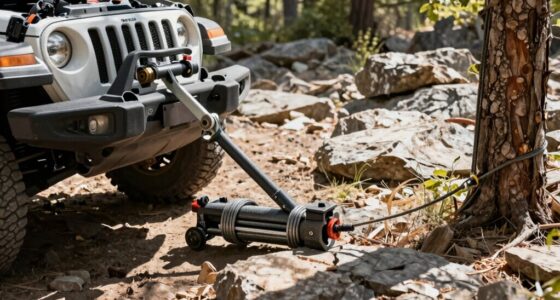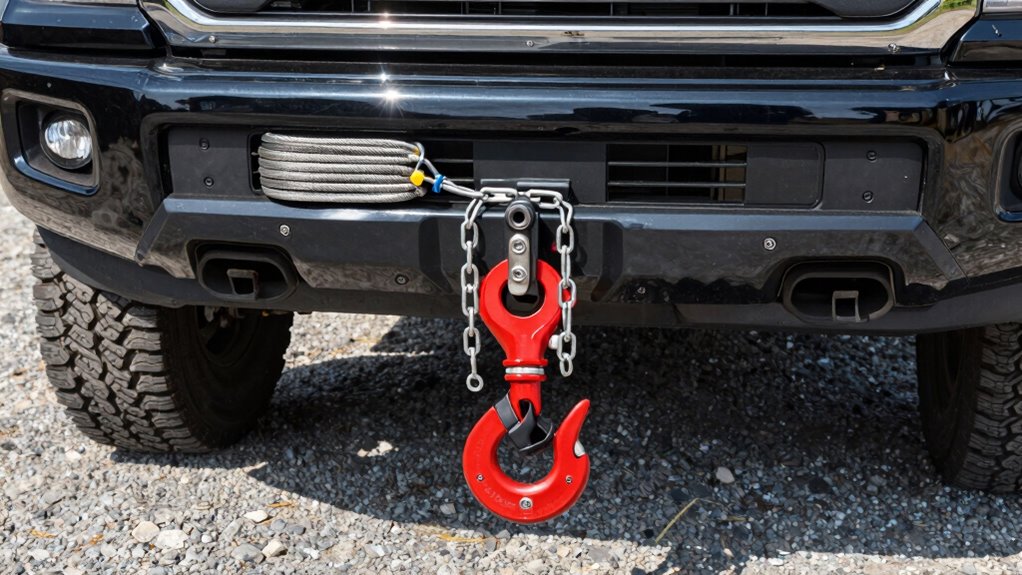

To prevent shock loads during recovery, make certain your hitch receiver setup is reinforced with a high-quality, durable hitch designed to absorb sudden forces. Always use properly rated recovery straps, winch lines, and secure shackles or hooks to handle the load safely. Incorporate safety accessories like dampers or blankets to reduce injury risk if a strap snaps. Applying tension gradually and double-checking all connections helps prevent jerks and sudden shocks. Keep your setup secure, and learn how to optimize for safer recoveries every time.
Key Takeaways
- Use a reinforced, shock-absorbing hitch design to handle sudden forces during recovery.
- Attach only rated recovery straps, shackles, and hooks in good condition for secure connections.
- Incorporate recovery dampers or blankets to reduce recoil and protect personnel during strap failure.
- Apply force gradually with controlled tension to minimize shock loads on the hitch and vehicle.
- Double-check all connections, security, and safety accessories before load application for safe recovery.

When you’re using a recovery hitch receiver, safety should always be your top priority. The way you set up your recovery system can make the difference between a smooth, controlled recovery and a dangerous failure. One of the most critical aspects is choosing the right hitch design, specifically one that can handle shock loads without risking damage to your vehicle or injury to yourself. Not all hitches are created equal; some are designed with reinforced materials and specialized construction to absorb sudden forces during recovery. Selecting a hitch with a robust design ensures it can withstand the stresses of recovery operations, especially when dealing with off-road obstacles or stubborn vehicles.
Choosing a strong, reinforced hitch design is essential for safe, shock-resistant recovery operations.
In addition to the hitch design, safety accessories play a *crucial* role in preventing mishaps. Using recovery straps or winch lines that are rated for the weight you’re pulling is essential. These accessories are engineered to stretch slightly under load, which helps dissipate shock loads that would otherwise stress your hitch and vehicle components. Always verify that your safety accessories are in good condition—no frays, tears, or signs of wear—before attaching them. Properly rated shackles or hooks are equally important, as they secure your strap or winch line to the hitch receiver. Never compromise on quality here; cheap, substandard hardware can break under pressure, leading to dangerous recoil or injury.
Another key safety accessory is a recovery damper or blanket. Placing a bright-colored, heavy-duty blanket over your recovery strap provides a visual warning to others and reduces the risk of injury if the strap snaps. These accessories are simple yet effective in mitigating the hazards associated with shock loads. Also, consider using a hitch lock or safety pin to secure your recovery setup tightly in place. A loose connection can cause sudden disconnection under load, which is a serious safety concern. Additionally, understanding the importance of Floating on Water techniques can help in situations where water crossings are involved, ensuring stability and safety during off-road recoveries near aquatic environments.
Always double-check your setup before applying any force. Ensure that the hitch is properly seated and secured, your safety accessories are rated for the load, and everything is attached correctly. When you execute the recovery, do so with controlled, gradual tension rather than sudden jerks, which generate shock loads. This careful approach minimizes stress on your hitch design and reduces the risk of mechanical failure. Remember, safety accessories aren’t just add-ons—they’re essential components that protect you and your equipment during recovery operations. Prioritize a well-thought-out setup, and you’ll *considerably* reduce the chances of accidents caused by shock loads, ensuring a safer recovery every time.

SALMAN 5T 11,000 LBS Aluminum Alloy 6061 Hitch Receiver Winch Accessories
The 5T aluminium hitch receiver is made of aluminum alloy 6061.
As an affiliate, we earn on qualifying purchases.
As an affiliate, we earn on qualifying purchases.
Frequently Asked Questions
What Are Common Signs of a Damaged Recovery Hitch Receiver?
You might notice corrosion issues or misalignment problems if your recovery hitch receiver is damaged. Look for rust, cracks, or bends on the receiver, as these can weaken its integrity. If the hitch doesn’t line up properly or feels loose when attached, it’s a sign of possible damage. Always inspect for visible signs of wear or corrosion to ensure safe towing and prevent accidents.
How Often Should I Inspect My Recovery Hitch Receiver for Wear?
You should inspect your recovery hitch receiver at least every three months or after heavy use. During each inspection, check for signs of wear, proper hitch lubrication, and receiver alignment. Look for rust, cracks, or deformation, and make certain the hitch moves smoothly. Regularly maintaining proper lubrication and ensuring correct receiver alignment helps prevent damage and ensures safe recovery operations. Stay vigilant to keep your recovery setup reliable and secure.
Can I Use a Recovery Hitch Receiver for Towing Heavy Loads Regularly?
Think of your recovery hitch receiver as the foundation of a sturdy bridge. You can regularly tow heavy loads, but only if the hitch receiver installation is solid and compatible. Guarantee your recovery hitch compatibility and inspect for wear often. Using a well-installed hitch receiver designed for heavy-duty towing prevents shock loads and keeps your vehicle safe. With proper setup, you can confidently handle those demanding tasks without risking damage.
What Materials Are Safest for Recovery Hitch Receivers?
You should choose recovery hitch receivers made from high-strength steel or reinforced alloy, as they offer excellent material durability and withstand heavy loads. Look for options with corrosion resistance, like powder-coated finishes or stainless steel, to prevent rust over time. These materials guarantee safety and longevity when towing or recovery, reducing risks of failure. Always verify the manufacturer’s specifications to ensure the receiver meets your towing demands safely.
How Do Weather Conditions Affect Recovery Hitch Receiver Safety?
Think of your recovery hitch receiver like a sturdy shield—weather impacts can weaken it over time. Harsh conditions, like rain or snow, increase corrosion risk, making it less reliable during recovery. When exposed to extreme weather, metal can rust or become brittle, risking failure. To stay safe, regularly inspect your hitch, especially after bad weather, and consider protective coatings to combat weather impact and prolong its life.

METOWARE Heavy Duty Tow Strap Recovery Kit – 3" x 20ft(35,000lbs) Tree Saver Winch Strap + 3/4" D Ring Shackles(2pcs) + Storage Bag – Truck, SUV, ATV Off Road Towing Strap Kit
4 IN 1 TOW STRAP KIT: This towing strap set includes 1 tow strap (3in x 20ft ,…
As an affiliate, we earn on qualifying purchases.
As an affiliate, we earn on qualifying purchases.
Conclusion
By ensuring your recovery hitch receiver setup is solid, you’re building a fortress against shock loads that threaten to shake your trust. Think of it as tightening the anchors before setting sail—your safety depends on it. When you double-check that everything’s in place, you’re steering clear of surprises and keeping your journey smooth. Stay vigilant, stay prepared, and let your recovery setup be the sturdy shield that keeps you moving forward, no matter what storms come your way.

QWORK Winch Damper, 2 Pack Heavy Duty Safety Recovery Dampener Recovery Line Dampener Car Off-Road Winch Rope Dampener Blanket with Pocket
Material: Heavy Duty vinyl construction, waterproof, not easy to tear, easy to clean and long term to use.
As an affiliate, we earn on qualifying purchases.
As an affiliate, we earn on qualifying purchases.

BUNKER INDUST Recovery Kit, 1"×30ft Kinetic Recovery Rope + 2 Soft Shackles + Recovery Ring+ Shackle Hitch Receiver + Winch Dampener+ Gloves+ Carry Bag, Off Road 4×4 Recovery Gear Winch Accessories
Comprehensiveness: Get ready for any off-road emergency with BUNKER INDUST comprehensive recovery kit. It includes everything you need…
As an affiliate, we earn on qualifying purchases.
As an affiliate, we earn on qualifying purchases.