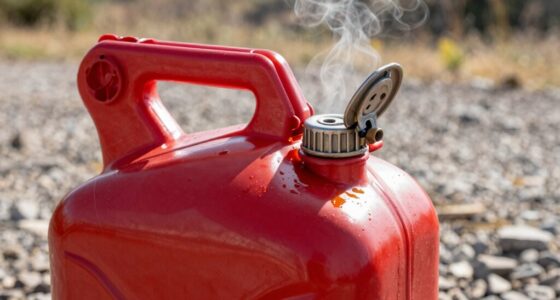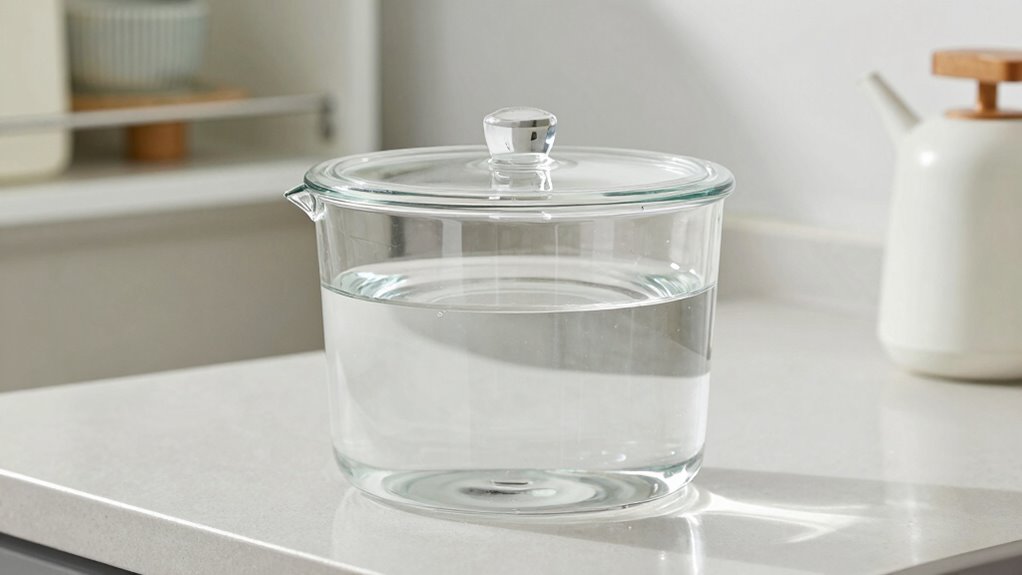
To prevent funky tastes and contamination when storing water, always use food-grade containers like HDPE or stainless steel with tight-fitting lids. Keep your containers in a cool, dark place away from sunlight and heat, and regularly inspect them for cracks or mold. Clean containers thoroughly before refilling and label them with the fill date. Rotate your supplies every six months for fresh, safe water. For more tips on maintaining quality, keep exploring these essential practices.

Get business pricing on garage and car supplies
- Business-only prices and quantity discounts
- Tax-exempt purchasing
- Multiple users, one account, clear invoices
Key Takeaways
- Properly purify water through boiling, filtering, or chemical treatment before storage to eliminate contaminants.
- Use food-grade, airtight containers made from HDPE or stainless steel, avoiding chemicals or non-food plastics.
- Store water in a cool, dark place, away from sunlight and heat, to prevent bacterial growth and chemical reactions.
- Label containers with fill dates, and replace stored water every six months for freshness and safety.
- Regularly clean and inspect storage containers to prevent mold, leaks, and maintain water quality.
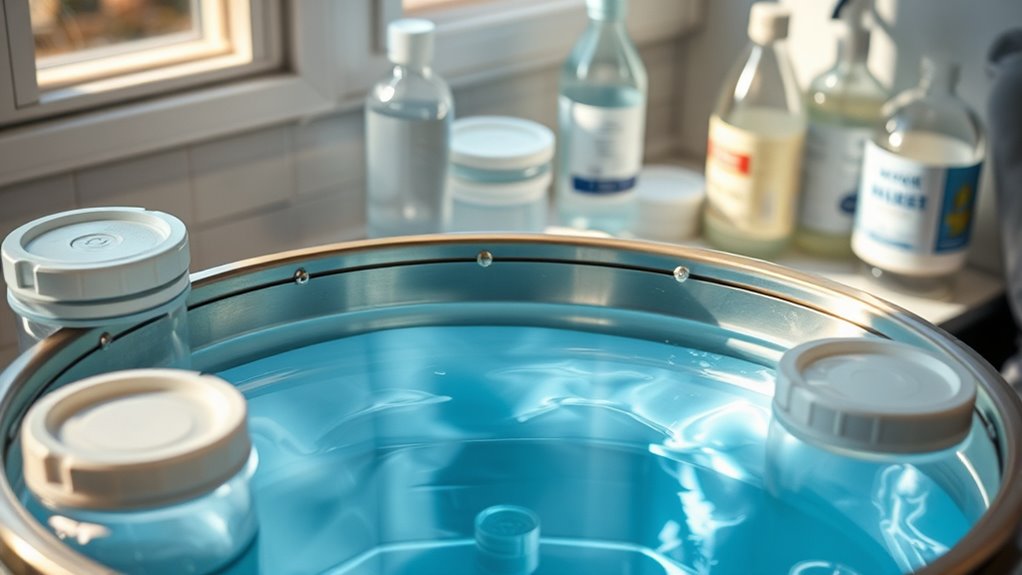
Proper water storage is vital to guarantee your water remains safe and clean. When you’re storing water, the goal is to prevent contamination and preserve its freshness. To do this effectively, you need to pay attention to water purification methods and choose the right storage containers. Water purification is essential because it eliminates bacteria, viruses, and other impurities that can lead to funky tastes or health risks. Before storing, consider purifying your water using methods like boiling, filtering, or chemical treatments, especially if it’s sourced from a questionable supply. This initial step ensures that any microorganisms or contaminants are neutralized, making your stored water safer over time.
Once you’ve purified your water, the next step is selecting proper storage containers. Not all containers are created equal, and the right choice can make a big difference in maintaining water quality. Use food-grade containers that are free from harmful chemicals like BPA or other toxins. Containers made of high-density polyethylene (HDPE) or stainless steel are usually best because they don’t leach substances into the water and are easy to clean. Avoid using containers that previously held chemicals or non-food-grade plastics, as residues can introduce contaminants or alter the water’s taste. Also, ensure your storage containers have tight-fitting lids to prevent dirt, insects, and other debris from entering. Proper sealing helps keep the water fresh and free from odors or funky tastes caused by exposure to air and potential contaminants.
Placement is another critical factor. Store your containers in a cool, dark place away from direct sunlight, heat sources, or chemicals. Light and heat can cause chemical reactions in the container material or promote bacterial growth, both of which compromise water quality. Regularly inspect your storage containers for cracks, leaks, or signs of mold, and clean them thoroughly with mild soap and water before refilling. Never reuse containers that previously stored non-food substances unless you’ve cleaned them thoroughly and confirmed they’re food-safe. Label your water storage clearly with the date it was filled so you know when it’s time to replace or refresh it. Additionally, understanding the importance of water quality maintenance can help you implement effective practices that extend the usability of your stored water.
Maintaining good storage habits also involves rotating your supplies. Use older water first and replace it periodically—generally every six months—to ensure freshness and safety. By combining proper water purification techniques with suitable storage containers and good maintenance practices, you can prevent funky tastes and contamination. This proactive approach guarantees that your stored water remains clean, safe, and ready for use whenever you need it.
Frequently Asked Questions
How Often Should I Replace My Water Storage Containers?
You should replace your water storage containers every 2 to 5 years, depending on container maintenance and storage conditions. Regularly clean and inspect them for cracks or mold, which can affect water quality. Proper replacement frequency guarantees you prevent funky tastes and contamination. If you notice any signs of wear or lingering odors, it’s best to replace the container sooner to keep your water safe and fresh.
Can Sunlight Affect Stored Water Quality?
Yes, sunlight can affect stored water quality. UV exposure from sunlight can promote algae growth and degrade container materials, especially if they’re not UV-resistant. Using opaque or dark-colored containers helps block sunlight, preventing UV damage and maintaining water taste and safety. Always choose containers made from UV-resistant materials for long-term storage, and keep your water in a cool, shaded place to avoid sunlight-related contamination.
Are There Natural Remedies to Improve Water Taste?
You can naturally improve water taste by infusing it with herbal herbs like mint, basil, or lemon balm, which add fresh flavor without chemicals. Additionally, mineral additives like trace mineral drops or a pinch of sea salt can enhance the water’s taste and mineral content. These remedies are simple, safe, and help make your stored water more enjoyable to drink, especially if it’s been stored for a while.
What Are the Signs of Contaminated Stored Water?
If your stored water shows a cloudy appearance, bad smell, or strange taste, it’s likely contaminated. Watch for signs like microbial growth, such as algae or mold, and chemical leaching, which can cause discoloration or an odd chemical smell. These indicators mean bacteria or harmful chemicals may have entered your water supply. Always inspect your storage regularly, and if you notice these signs, disinfect or replace your water immediately to stay safe.
Is Boiling Enough to Ensure Storage Water Safety?
Boiling water is effective for ensuring safety, as it kills most bacteria and viruses through boiling efficacy. However, it’s not enough if you plan to store water for an extended duration, since contaminants can still develop over time. To keep your stored water safe, boil it before use, especially if it’s been sitting for more than 24 hours, and store it in clean, sealed containers to prevent recontamination.
Conclusion
To keep your water fresh and safe, think of your storage as a fortress guarding against contamination. Regularly clean your containers, replace the water, and keep everything sealed tight. When you follow these simple steps, you’re like a captain steering clear of trouble in choppy waters. Safeguarding your water isn’t just a chore; it’s your shield against funky tastes and hidden dangers, ensuring every sip you take is pure, invigorating, and safe — a small effort with a big reward.
Evergreen bestsellers Picks
bestsellers
As an affiliate, we earn on qualifying purchases.