To build a simple power budget for your trip, start by listing all your devices and noting their power needs and daily usage time. Calculate the total energy required and compare it with your available power sources, like solar panels or power banks. Manage your device use carefully, turning off unnecessary features, and plan for recharging options. Keeping this balance prevents dead electronics, and you’ll discover more ways to optimize your power plan further.
Key Takeaways
- List all devices’ power consumption and estimated daily usage to determine total energy needs.
- Match solar panel output and battery capacity to your daily device energy requirements.
- Use higher-capacity power banks to accommodate energy losses and ensure sufficient recharging.
- Track daily energy consumption versus recharging capacity with a simple power budget chart.
- Adjust device use or increase power sources proactively to prevent running out of power during the trip.

Planning a trip involves more than just packing your bags; it also requires managing your device power to stay connected and safe. Whether you’re heading into the wilderness or exploring urban areas, understanding how to efficiently power your devices can make all the difference. A simple power budget helps you keep track of your energy needs and guarantees your electronics don’t run out of juice when you need them most. To start, consider your essential devices: smartphones, GPS units, cameras, and portable lights. For each, note their average power consumption—usually listed in watts or milliamps—and estimate how long you’ll need to use them each day.
Next, evaluate your power sources. If you’re venturing into remote areas, solar panels can be a game-changer. Portable solar panels allow you to harness sunlight during the day to recharge your batteries. When choosing solar panels, pay attention to their wattage and efficiency, because higher wattage panels can generate more power but may also be bulkier. Combined with your device’s battery capacity—measured in milliamp-hours (mAh) or watt-hours (Wh)—you can determine whether your solar setup can meet your daily energy demands. For example, if your phone has a 4,000 mAh battery and consumes about 2.45 Wh per charge, you’d want a solar panel capable of delivering at least that amount of energy daily, considering weather conditions and sunlight hours.
Your battery capacity also plays an essential role in your power planning. Portable power banks with high capacity can store enough energy to recharge your devices multiple times. When selecting a power bank, look for one with a capacity that exceeds your total daily needs; this way, you won’t be caught off guard if solar charging is less effective than expected. Remember that the actual usable capacity can be slightly less due to conversion losses, so it’s wise to choose a bank with a higher capacity than the minimum required. Additionally, understanding power management techniques can help extend your device usage time and optimize your energy resources.
Finally, build your power budget by balancing your device needs with your available power sources. Keep a simple chart or list that tracks your daily consumption versus your recharging capabilities. This way, you’ll know if you need to carry additional batteries, adjust your device usage, or rely more on solar charging. By planning ahead and understanding your solar panel options and battery capacity, you prevent dead electronics and guarantee you stay connected, safe, and prepared throughout your trip.

Pro Chaser 400W Power Inverters for Vehicles - DC 12v to AC 110v Car Inverter Converter, 6.2A Dual USB Charging Ports, Dual AC Adapter for Laptops Air Compressor
【Pro Chaser Power Inverter Basics】: This inverter provides a steady 400W of DC to AC power with a...
As an affiliate, we earn on qualifying purchases.
Frequently Asked Questions
How Often Should I Update My Power Budget During a Trip?
You should update your power budget daily or whenever you notice significant changes in your power consumption estimation. Regular updates help account for battery calibration shifts and unexpected power drain, ensuring your estimates stay accurate. By tracking your actual usage against the initial plan, you can adjust your device’s settings or usage habits, preventing dead electronics and keeping your trip running smoothly without surprises.
What Are the Best Tools for Tracking Power Consumption?
Did you know that using battery monitoring tools can increase your device’s energy efficiency by up to 30%? To track power consumption effectively, invest in a reliable battery monitor or energy management app. These tools give real-time data, helping you identify power-hungry devices and optimize usage. By actively monitoring, you prevent dead electronics and ensure your trip stays powered longer, making your adventure more worry-free.
How Do I Prioritize Devices When Power Is Limited?
You should start with device prioritization by establishing a power hierarchy, identifying essential devices like your communication gear, lights, and safety equipment. Next, allocate power to these critical items first, then consider secondary devices like entertainment or comfort items. Continuously monitor your power levels to adapt your device usage accordingly. This approach ensures you maintain essential functions while managing limited power effectively, preventing dead electronics during your trip.
Can Solar Panels Reliably Extend My Power Supply?
A chain is only as strong as its weakest link, so relying solely on solar panels isn’t foolproof. Solar panel efficiency varies with weather and angle, so it’s wise to plan battery capacity accordingly. Yes, solar can reliably extend your power supply if you size your system well, but don’t depend on it alone. Combine solar with solid battery capacity planning to keep your electronics running smoothly, rain or shine.
What Are Common Mistakes to Avoid in a Power Budget?
You should avoid neglecting battery management, which can lead to unexpected power loss, and overlook device compatibility, risking damage or inefficiency. Double-check your device power requirements and guarantee your battery setup matches them. Don’t forget to account for all devices in your power budget, and steer clear of underestimating consumption. Properly managing batteries and confirming compatibility keeps your power supply reliable and prevents dead electronics during your trip.

BESTEK Power Inverter DC 12V to AC 110V - 300W Car Plug Adapter Outlet with 4.8A Dual USB Fast Charging Port - Car Charger Cigarette Lighter Adapter for Phone, Laptop on Road Trip - Aluminum Housing
BESTEK Advantage Upgraded: Bestek is power inverter patents owner, America's leading power inverter brand. Our inverter tech upgraded...
As an affiliate, we earn on qualifying purchases.
Conclusion
By creating a simple power budget, you’re setting yourself up for a smooth trip without unexpected dead electronics. It’s like having a safety net that catches you before things go wrong. Planning ahead guarantees you won’t be left in the dark when you need power most. Remember, a little preparation goes a long way—don’t put all your eggs in one basket. Stay prepared, and your gadgets will thank you.

Cantonape 3000W Power Inverter 12V to 110V/120V DC to AC with LCD Display, Remote Controller 4 x AC Outlets and 4 x 3.1A USB Car Adapter for Car Truck Boat RV Solar System
POWERFUL OUTPUT: Convert power of DC 12V to AC 110V/120V 60Hz. Provides 3000 Watts continuous modified sine wave...
As an affiliate, we earn on qualifying purchases.
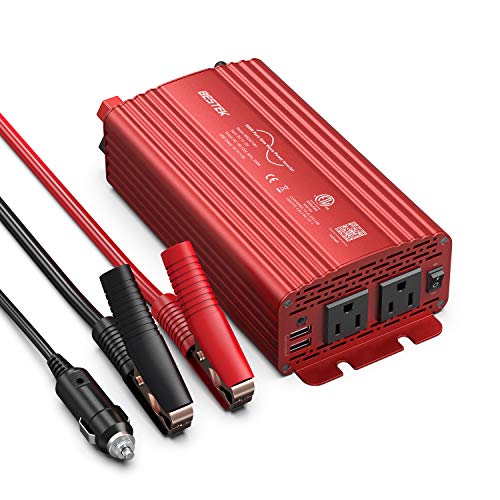
BESTEK 500W Pure Sine Wave Power Inverter DC 12V to AC(2 Outlets) 110V Car Charger Plug Inverter Adapter Converter with 4.2A Dual USB Charging Ports, ETL Listed
BESTEK 500W Pure Sine Wave Car Inverter:Its output waveform is same as the AC power waveform of mains...
As an affiliate, we earn on qualifying purchases.