To quickly find tiny air leaks in your hose, turn off your compressor and disconnect the hose for an accurate assessment. Apply soapy water to fittings and suspected weak spots; bubble formation indicates leaks. Visual inspection for cracks or worn areas helps too. Regularly performing this simple test can prevent costly repairs and improve tool performance. Keep in mind, proper maintenance guarantees long-lasting results—stay tuned for more tips on effective leak detection.

Get business pricing on garage and car supplies
- Business-only prices and quantity discounts
- Tax-exempt purchasing
- Multiple users, one account, clear invoices
Key Takeaways
- Turn off the compressor and disconnect the hose for accurate testing.
- Apply soapy water to fittings and suspected areas, watching for bubbling.
- Listen for hissing sounds when the compressor is off to identify leaks.
- Conduct visual inspections for cracks, cuts, and worn spots on the hose.
- Regularly perform quick leak tests to prevent unnoticed tiny air losses and maintain efficiency.
Air hose leaks can cause a considerable drop in pressure, reducing the efficiency of your tools and potentially leading to costly damage. When you notice your equipment isn’t performing as it should, it’s time to contemplate if leaks are the culprit. The good news is, you can quickly identify tiny air losses with a simple test, saving you time and money on more extensive repairs later. Before jumping into hose repair, though, it’s essential to understand how to perform this quick test effectively and how it can help you implement leak prevention strategies.
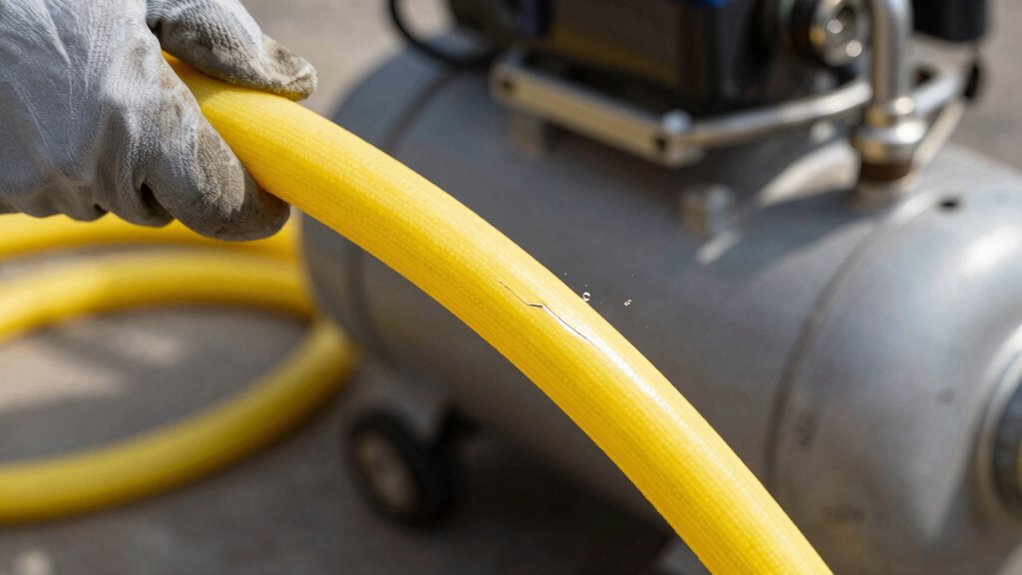
Start by inspecting your hose visually for obvious signs of damage, such as cracks, cuts, or worn areas. Even if nothing appears outwardly damaged, leaks can still be present in less obvious spots. To confirm, you can perform a simple air leak test by turning off your compressor, disconnecting the hose, and listening carefully for escaping air. If you hear a hissing sound, you’ve identified a leak location. For tiny leaks that are harder to detect by ear, you can use soapy water. Apply the soapy solution over the hose fittings, connectors, and known weak spots, then turn the compressor back on. If bubbles form, you’ve pinpointed the leak.
This quick test is highly effective because it allows you to detect even small air losses that might otherwise go unnoticed. Once identified, performing hose repair becomes straightforward—whether it’s tightening fittings, replacing damaged sections, or sealing minor cracks. Addressing leaks promptly not only restores your tool’s efficiency but also prevents further damage and conserves energy. Leak prevention methods, like regular inspection and maintenance, are critical to keeping your hose in top shape. Using high-quality fittings and avoiding sharp bends or kinks can substantially reduce the risk of developing leaks.
Additionally, understanding the role of proper air pressure settings can help prevent undue stress on hose connections and fittings, further reducing leak risks. Developing a routine of quick leak tests before starting work ensures you catch problems early. Remember, small leaks can snowball into bigger issues if left unchecked, leading to increased repair costs and downtime. Keeping your air system airtight boosts performance, saves money on energy, and extends the lifespan of your tools.
Frequently Asked Questions
How Often Should I Check My Air Hose for Leaks?
You should check your air hose for leaks at least once a month to guarantee its durability and prevent leaks. Regular inspections help catch small issues early, saving you time and money. Look for signs of wear, cracks, or loose fittings. By proactively maintaining your hose, you reduce the risk of sudden breakdowns and extend its lifespan, keeping your tools operating efficiently and safely.
What Tools Are Best for Detecting Tiny Air Leaks?
You need the best tools to find tiny air leaks—think of ultra-sensitive detectors and leak detection sprays. These tools are your secret weapon, helping you pinpoint even the smallest leaks with precision. Using ultra-sensitive detectors, you can scan for subtle pressure drops, while leak detection sprays make leaks visible by bubbling at the source. Don’t leave leaks to chance; equip yourself with these reliable tools to keep your system airtight.
Can Air Hose Leaks Cause Safety Hazards?
Yes, air hose leaks can pose safety hazards. When you use leak noise detection, you can identify leaks in hoses made of various materials that may weaken over time. Leaks can cause sudden pressure drops, leading to unexpected hose failure or whipping, which risks injury. Regularly inspecting hoses with proper tools helps you detect tiny leaks early, preventing accidents and ensuring safe operation in your workspace.
How Do Temperature Changes Affect Air Hose Leak Detection?
Imagine your air hose as a balloon; when temperatures drop, thermal expansion causes the hose to contract, leading to pressure fluctuations that can hide leaks. Conversely, rising temperatures cause expansion, temporarily sealing tiny leaks. These changes make leak detection trickier, as pressure variations can mimic or mask actual leaks. To get accurate results, perform tests in stable temperature conditions, ensuring thermal expansion doesn’t skew your findings.
Are There Any DIY Methods to Fix Small Air Hose Leaks?
Yes, you can fix small air hose leaks yourself. First, locate the leak using a soap solution—apply it along the hose and look for bubbles. Once found, tighten a hose clamp around the damaged area or use a repair patch. For minor cracks, sealing with appropriate tape or adhesive can work temporarily. Always verify the hose is depressurized before attempting repairs to prevent injury.
Conclusion
Now that you know how to quickly spot tiny air leaks, you can save time and money. It’s easy to overlook small leaks, yet they can cause big problems down the line. Think of it like catching a small crack before it becomes a costly repair. Stay vigilant, test regularly, and keep your tools running smoothly. A tiny leak may be small, but fixing it promptly keeps your workflow tight and your wallet happy.
Halloween Picks
halloween
As an affiliate, we earn on qualifying purchases.