Many believe warm and cool off-road light colors greatly affect visibility, but it’s actually more about bulb type, beam pattern, and environmental conditions. Warm lights reduce glare and improve contrast in foggy or dusty settings, while cool lights appear brighter but may cause glare, limiting clarity. The real impact depends on terrain and weather, not just hue. To understand how these myths compare to reality, keep exploring what truly influences your off-road visibility.
Key Takeaways
- Light color does not significantly impact visibility; beam pattern and bulb type are more critical.
- Warm lights reduce glare and improve safety in foggy or dusty conditions, regardless of hue.
- Cool lights appear brighter but can cause glare, which may hinder visibility over distance.
- LED lights provide better penetration through obstacles and adverse weather than halogen or warm-colored lights.
- Environmental factors like weather and terrain influence whether warm or cool lighting enhances off-road safety.
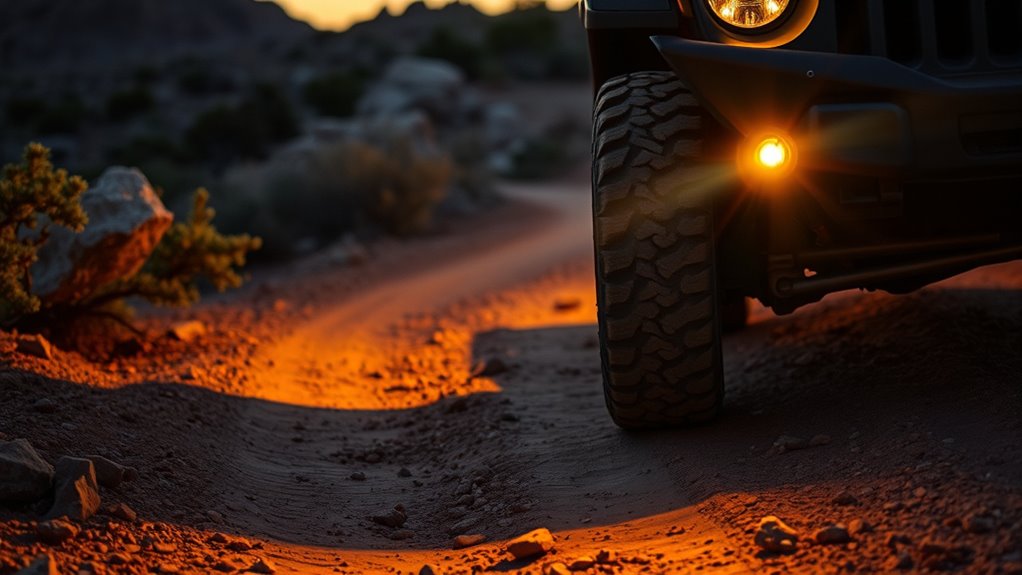
Many off-road enthusiasts believe that the color of your lights can make a significant difference in visibility and safety, but some common myths about light colors are simply not true. When it comes to choosing between LED vs halogen lights, many assume that hue alone determines how well you see in the dark. However, light penetration—the ability of a light beam to cut through fog, dust, or darkness—is influenced more by the type of bulb and beam pattern than by tone. LEDs tend to offer brighter, more focused beams with better light penetration than halogen lights. Their advanced design allows for clearer visibility in challenging conditions, which is why many off-roaders prefer LEDs for their durability and superior performance. Additionally, environmental factors like weather and terrain significantly impact how effective different light colors and types are in practice.
People often think that warm or cool light hues drastically change visibility, but the reality is more nuanced. Warm lights, which emit a yellowish hue, can reduce glare and improve contrast in foggy or dusty environments, enhancing safety. Cool lights, with their bluish tint, tend to appear brighter to the human eye because of their higher color temperature, but they don’t necessarily penetrate obstacles better. Instead, their perceived brightness can sometimes cause glare, making it harder to see clearly at a distance. So, it’s a myth that cool lights always outperform warm ones in terms of visibility; the effectiveness depends on environmental conditions and how you use the light. Understanding the light penetration capabilities of different bulb types can help off-roaders choose the most effective lighting for their specific needs.

Nilight – ZH002 20Inch 126W Spot Flood Combo Off Road Led Light Bar 2PCS 18w 4Inch LED Pods With 16AWG Wiring Harness Kit-3 Lead For Tractor, 2 Years Warranty
Super bright beam: High intensity 3W LED chips and clear PC lens, super bright white light dispels darkness,…
As an affiliate, we earn on qualifying purchases.
As an affiliate, we earn on qualifying purchases.
Frequently Asked Questions
Does Light Color Affect Off-Road Vehicle Visibility in Different Weather Conditions?
Yes, light color affects your off-road vehicle visibility in various weather conditions. Cooler (blueish) lights have higher color temperature, offering better light penetration through fog, rain, or snow, which helps you see further and clearer. Warm (yellowish) lights reduce glare and improve contrast in foggy or hazy conditions. Choosing the right color temperature enhances safety by optimizing visibility based on weather, giving you better control and awareness on rough terrains.
Can Changing Light Colors Improve Safety During Night Off-Road Adventures?
Changing light colors can improve safety during night off-road adventures because it leverages light color psychology, enhancing your visibility and reaction time. Modern off-road light technology offers a variety of options, like warm or cool hues, to adapt to different terrains and conditions. By selecting the right color, you can better see obstacles and signals, ultimately reducing risks and making your off-road experience safer and more enjoyable.
Are Certain Light Colors Better for Long-Distance Off-Road Driving?
For long-distance off-road driving, cooler light colors with higher color temperature are better because they provide a broader light spectrum. This helps you see farther and clearer by reducing shadows and enhancing contrast. Warm lights, with lower color temperature, create a softer glow but can limit visibility over long distances. Choose lights with a higher color temperature to improve your safety and visibility during extended off-road adventures.
How Do Different Light Colors Impact Wildlife Encounters Off-Road?
Different light colors can markedly impact wildlife encounters off-road. Cooler lights, like blue or white, tend to disturb wildlife more, causing changes in animal behavior and increasing disturbance. Warmer lights, such as amber or yellow, are less intrusive and help minimize wildlife disturbance. By choosing warmer light options, you lessen the chance of startling animals, promoting safer and more respectful off-road adventures while avoiding negative impacts on animal behavior.
Is There a Legal Restriction on the Use of Colored Off-Road Lights?
You should know that about 75% of states have specific off-road lighting laws, including restrictions on colored lights. Color light regulations vary, but many areas prohibit using certain colors like red or blue to avoid confusion with emergency signals. Always check your local off-road lighting laws before installing or using colored lights, as violating these regulations can lead to fines or vehicle impoundment. Stay compliant to enjoy your adventure safely.

KARSAM 4 Inch Round LED Fog Lights for 2007-2018 Jeep Wrangler JK JKU 2018-2024 Jeep Wrangler JLU Accessories, 60W White Amber Off-Road Lamps Black Front Bumper LED Fog Lights Assembly, DOT Approved
BRIGHTER DUAL COLOR FOG LIGHTS: 4inch round fog lights for Jeep made of premium quality 30W LED chips,…
As an affiliate, we earn on qualifying purchases.
As an affiliate, we earn on qualifying purchases.
Conclusion
Don’t let darkness deceive you—distinguishing between warm and cool light is easier than you think. Remember, warmer hues bring brightness and balance, while cooler shades sharpen sight and shape. By understanding these subtle shifts, you can confidently choose your off-road lighting, illuminating your adventures with clarity and control. So, seize the scene, steer with skill, and let the right light lead your journey into the night’s natural nuances. Embrace the truth behind the tint and thrive in the twilight.
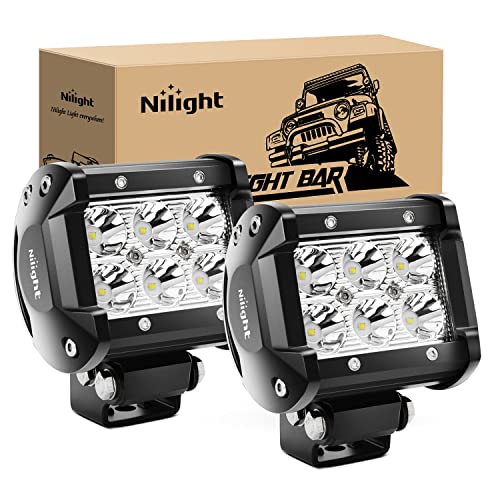
Nilight Led Pods 2Pcs 18W 1260LM Spot Off Road Lights Super Bright Driving Fog Boat Lamp Work Lighting Bar for Trucks Van Camper Wagon Car Pickup Golf Cart ATV UTV SUV Boat 4×4
Super bright spot beam: High-quality LED chips emits bright white light; Concentrated spot beam illuminates to further distance…
As an affiliate, we earn on qualifying purchases.
As an affiliate, we earn on qualifying purchases.

FAHREN H11 9005 Light Bulbs Combo, 110000LM 11X Super Bright H9 H8 HB3 Off-Road Use or Fog Light Bulbs, 6500k White Non-Polarity Plug and Play, Pack of 4
【99%+ Vehicle Compatibility】FAHREN H11 9005 Bulbs combo Bezels Equipped with the latest upgraded linear decoding technology and built-in…
As an affiliate, we earn on qualifying purchases.
As an affiliate, we earn on qualifying purchases.