To reduce dust backscatter when driving off-road at night, aim your headlights 10-15° downward. This slight tilt helps focus the light on the trail directly ahead, minimizing the amount of dust particles reflected back into your eyes. Avoid shining lights directly into dust clouds or traffic behind you. Properly aiming your lights makes your trail clearer and safer. Keep working on these adjustments, and you’ll discover more tips for better off-road night visibility.
Key Takeaways
- Aim headlights 10-15° downward to focus light on the trail and reduce dust backscatter.
- Use focused beams like driving or spot lights rather than floodlights for better control.
- Avoid shining lights directly into dust clouds; aim to illuminate terrain ahead instead.
- Regularly adjust headlight aim based on environmental conditions during the drive.
- Properly aimed lights improve visibility and minimize dust glare for safer off-road night driving.
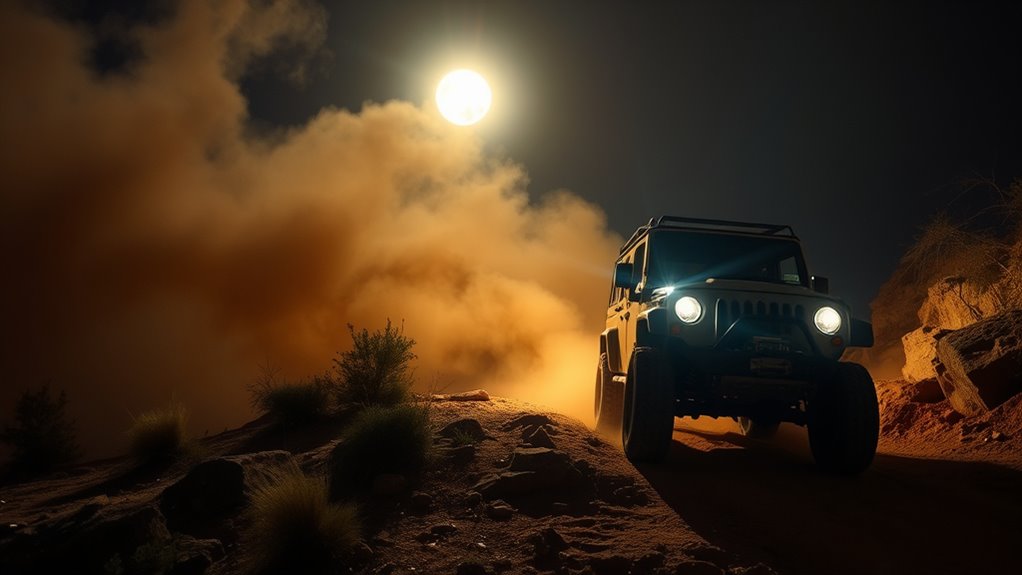
Driving off-road at night presents unique challenges that require your full attention and preparation. One of the biggest issues you’ll face is managing how your lights behave in dusty conditions. Dust backscatter can considerably reduce visibility, making it harder to see obstacles, trail markers, or the terrain ahead. To improve your night-driving experience and safety, you need to understand how to aim your lights correctly and minimize dust backscatter.
First, focus on proper light aiming. Many drivers make the mistake of pointing their lights straight ahead or slightly downward, which might seem intuitive but can actually cause problems in dusty environments. When your lights are aimed too high, the beams can illuminate the dust particles suspended in the air, creating a glare that obscures your view. Conversely, aiming too low might limit your forward vision. The goal is to find a balanced angle that illuminates the trail ahead without causing excessive dust backscatter. Typically, you want the beams to be angled slightly downward, about 10 to 15 degrees below your line of sight. This position helps the light reach the terrain directly in front of your vehicle, reducing the amount of dust particles illuminated and bouncing back into your eyes.
Aim headlights 10-15° downward to reduce dust glare and improve night off-road visibility.
Dust backscatter occurs when dust particles reflect the light back toward you, creating a hazy or foggy effect that hampers visibility. To combat this, adjusting your light aiming is essential. When your lights are properly aimed, fewer particles will reflect the beam back, and you’ll see a clearer path ahead. It’s also beneficial to use lights with proper beam patterns—preferably driving or spot beams—rather than floodlights, which spread light over a wide area and increase backscatter. Additionally, consider using auxiliary lights designed for off-road use; many are adjustable, allowing you to tweak the aim for different conditions. Proper light aiming also involves understanding how your vehicle’s headlights interact with environmental factors, enabling you to adapt quickly.
Another tip is to avoid shining your lights directly into dust clouds or into the air in front of you. Instead, keep them focused on the trail or obstacle you’re approaching. This reduces the amount of dust backscatter and improves your ability to spot hazards early. Remember, your headlights are tools, and fine-tuning their aim isn’t just about brightness—it’s about maximizing visibility and minimizing glare. Proper light aiming and awareness of dust backscatter can make the difference between a safe, confident night ride and a frustrating experience filled with glare and reduced sightlines. Take the time to adjust your lights correctly before setting out, and keep in mind that conditions may change, requiring readjustments along the way.
Frequently Asked Questions
How Do I Adjust Headlights for Different Off-Road Terrains?
You should adjust your headlights for different off-road terrains by focusing on proper headlight alignment and terrain-specific adjustment. When tackling dusty or uneven terrain, tilt the beams slightly downward to reduce backscatter and improve visibility. For flatter terrains, aim the lights straight ahead for maximum coverage. Always test your adjustments in the environment you’ll be driving in, ensuring ideal illumination without blinding others or causing glare.
Can LED Lights Be Better Than Halogen for Dust Conditions?
LED lights can be better than halogen for dust conditions because they offer greater durability and longer lifespan, which means less worry about damage from dust particles. While halogen bulbs provide strong brightness initially, LEDs maintain consistent brightness over time, reducing backscatter and glare. Plus, LEDs consume less power and heat up less, making them more reliable and effective for off-road dust environments.
What Is the Ideal Beam Pattern for Night Off-Road Driving?
For night off-road driving, you want a beam focus that concentrates light ahead without excessive spread, reducing backscatter in dust. Aim your lights slightly downward to minimize dust glare and create a wider, more effective light spread. This setup enhances visibility, helps you spot obstacles early, and keeps backscatter manageable. Adjust your headlights regularly to optimize the beam pattern, ensuring safe, clear vision in challenging off-road conditions.
How Often Should I Clean and Maintain My Off-Road Lights?
You should clean your off-road lights regularly, ideally before each trip, to maintain lens clarity and guarantee peak brightness. Check mounting stability every few uses to prevent vibrations that can misalign the beams. Use a soft cloth and mild cleaner for the lenses, and tighten mounting brackets as needed. Regular maintenance keeps your lights performing well, reduces backscatter in dust, and ensures safety during night off-road adventures.
Are There Specific Accessories to Minimize Backscatter in Dust?
When it comes to minimizing backscatter in dust, it’s best to “nip it in the bud.” You can use accessories like dust shields and beam diffusers to help. Dust shields block excess dust from hitting your lights directly, while beam diffusers soften the light, reducing glare and backscatter. These accessories help you see clearer and safer, especially in dusty off-road conditions, making your night drives much smoother.
Conclusion
By mastering how to aim your off-road lights, you turn darkness into an ally rather than an adversary. Think of your headlights as a lighthouse guiding you safely through treacherous waters—dust and shadows included. When you adjust your lights properly, you cut through the haze like a knife through silk, reducing backscatter and illuminating your path with clarity. Remember, your best tool against the night’s mysteries is knowledge—and a well-aimed beam.