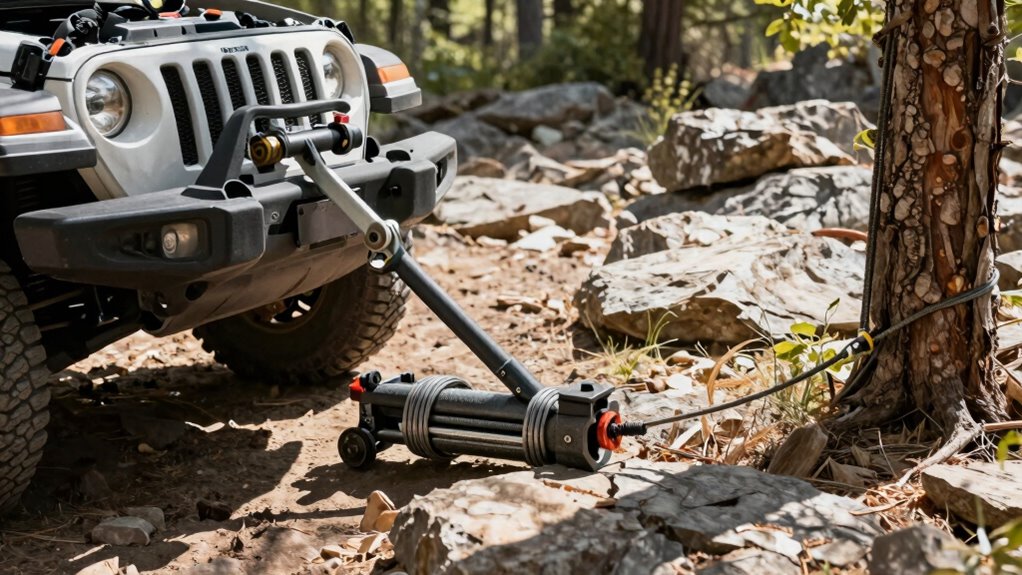

To use a Hi-Lift jack as a makeshift winch, make certain it’s on solid, level ground and securely attached to a stable anchor point with heavy-duty straps or chains rated for the load. Attach a winch line or cable properly, wound securely around the lifting arm, and consider adding pulleys or snatch blocks to increase pulling power. Always follow safety precautions to prevent injuries or equipment failure. Continue to explore best practices and potential risks to ensure safe recovery.
Key Takeaways
- Use proper pulley systems and secure anchor points to maximize lifting power with a Hi-Lift jack acting as a winch.
- Ensure the jack is on stable, level ground and all attachments are rated and securely fastened.
- Avoid exceeding the jack’s rated capacity, as increased mechanical advantage raises the risk of equipment failure.
- Regularly inspect all gear, chains, and straps for damage, and stay clear of tension lines during operation.
- Remember that Hi-Lift jacks are temporary solutions; professional winching equipment is safer for vehicle recovery.
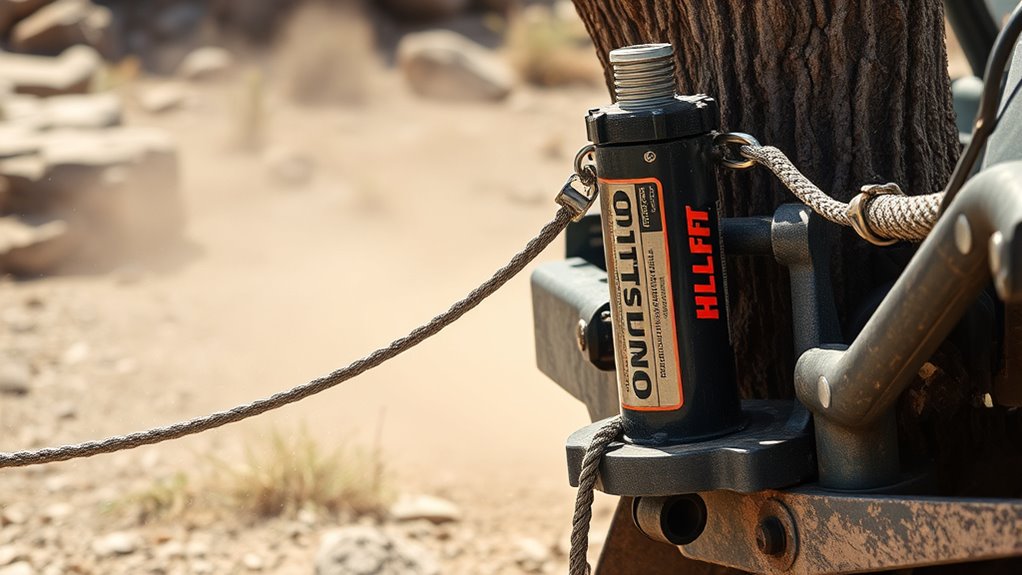
Have you ever considered using a Hi-Lift Jack as a makeshift winch? It’s a resourceful solution when you’re stuck and don’t have a traditional winch nearby. However, before you attempt this setup, it’s essential to understand the safety precautions involved and the mechanical advantages you can gain. While a Hi-Lift Jack can provide significant lifting power, it’s not designed for pulling loads like a dedicated winch, so risks are inherent. Ensuring safety is your top priority, especially since misuse can lead to serious injury or vehicle damage.
First, always inspect your Hi-Lift Jack thoroughly before use. Check for any cracks, corrosion, or damaged parts. Properly securing the jack to a stable anchor point is essential—this prevents slippage or accidental release during operation. Use sturdy chains or heavy-duty straps, and make sure they are rated for the load you’re planning to pull. Never rely solely on the jack’s handle or a weak attachment point; the mechanical advantage you gain from the jack’s design can be deceptive, leading you to underestimate the forces involved. Remember, the jack is meant for lifting, not pulling, so don’t push its limits.
Always inspect your Hi-Lift Jack thoroughly and secure it properly to ensure safe operation.
When setting up your makeshift winch, position the jack on solid, level ground. Attach your winch line or cable carefully, ensuring it’s wound correctly on the jack’s lifting arm and secured firmly. You’ll want to use a pulley system or a snatch block to multiply the pulling power. This is where understanding the mechanical advantages of the setup becomes essential. A properly configured pulley system can greatly increase your pulling capacity, making it easier to recover a stuck vehicle. But keep in mind, these mechanical advantages also mean higher tension on your equipment and anchor points. Always stay clear of the line under tension to avoid injury if something slips or breaks. Additionally, using energy-efficient cloud servers can enhance your planning and safety communication during recovery operations.
While this setup can be effective in emergencies, it’s important to recognize its limits. Never exceed the rated capacity of your Hi-Lift Jack, and always use it with caution. Keep in mind that this isn’t the safest or most reliable method compared to a proper winch, but with careful preparation and awareness of the risks, it can serve as a temporary solution. Ultimately, understanding the mechanical advantages and adhering to strict safety precautions makes all the difference. If anything feels unsafe or uncertain, it’s best to seek professional help or use the right equipment designed specifically for pulling loads.

Rhino USA Recovery Tow Strap (3" x 20') – 31,518lb Break Strength – Emergency Recovery Strap Tow Rope for Truck, UTV, ATV & More – Heavy Duty Towing Strap for Offroad 4×4 Use – Compatible with Jeep
AMERICAN OWNED, FAMILY OPERATED – Join the Rhino USA Family and Support a Father/Son Business With the Best…
As an affiliate, we earn on qualifying purchases.
As an affiliate, we earn on qualifying purchases.
Frequently Asked Questions
Can a Hi-Lift Jack Be Used Underwater Safely?
You shouldn’t use a Hi-Lift jack underwater securely. Waterproofing concerns mean it’s not designed for submerged operation, and water can cause rust, corrosion, and damage to the internal mechanisms. Even if you try to waterproof or seal it, the jack’s components aren’t built for continuous water exposure. For underwater tasks, opt for a specialized marine winch or waterproof equipment to ensure safety and reliability.
What Is the Maximum Load Capacity When Using as a Winch?
Ever wonder what the maximum load capacity is when using a Hi-Lift jack as a winch? Typically, it’s around 4,660 pounds, but this depends on the specific model. Do you follow safety precautions? Always make certain the load is within the jack’s rated capacity, use proper attachments, and avoid sudden movements. Overloading risks equipment failure and injury, so stay within recommended limits for safe, effective use.
How Long Does It Take to Set up a Hi-Lift as a Winch?
Setting up your Hi-Lift as a winch takes about 15 to 30 minutes, depending on your experience. You should follow proper lifting techniques and safety precautions, such as inspecting the equipment and securing the load before starting. Confirm all connections are tight and stable. Taking your time and double-checking everything minimizes risks and guarantees a safer, more efficient setup. Always prioritize safety to avoid accidents.
Are There Special Accessories Needed for Winching With a Hi-Lift?
When winching with a Hi-Lift, you’ll need specific winch accessories like a proper pulley, shackles, and rated ropes or cables to guarantee safe and effective operation. Always follow safety precautions, such as wearing gloves and inspecting gear beforehand. These accessories help distribute load evenly and prevent accidents. Using the right equipment minimizes risks, makes your winching smoother, and keeps you safe during the entire process.
What Are Common Signs of Wear When Using as a Winch?
You’ll notice wear indicators like frayed or broken cable strands, which signal it’s time to substitute the cable. Rust formation on metal parts also indicates corrosion from moisture exposure, weakening the overall strength. Regularly check for rust and cable wear, especially after heavy use or exposure to water. Address these signs promptly to guarantee safe, reliable winching and prevent equipment failure or accidents.
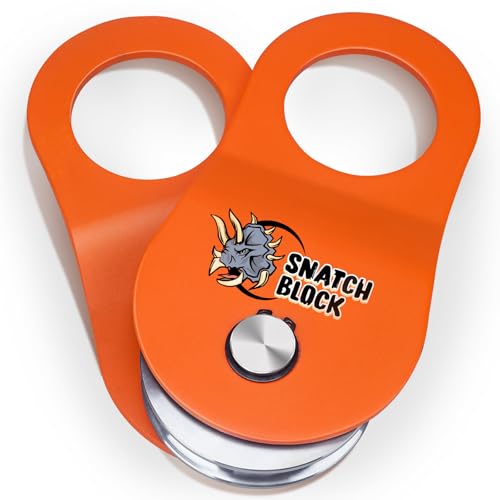
TICONN 10 Ton Winch Snatch Block Towing Pulley Blocks 22,000 LBS Capacity, Heavy Duty Offroad Recovery Accessory for Truck, Tractor, ATV & UTV
Sturdiness: Made of heavy-duty steel, MAX. load at 10 Ton (22,000 LBS), suitable for most off-road recovery situations,…
As an affiliate, we earn on qualifying purchases.
As an affiliate, we earn on qualifying purchases.
Conclusion
Using a Hi-Lift jack as a winch can be a handy solution in a pinch, but it’s vital to understand the risks involved. Did you know that improper use can cause injuries or damage worth thousands? Always follow safety guidelines and make sure your setup is secure. With over 2 million Hi-Lift jacks sold worldwide, knowing how to use yours correctly can make a real difference between a successful recovery and a costly accident.
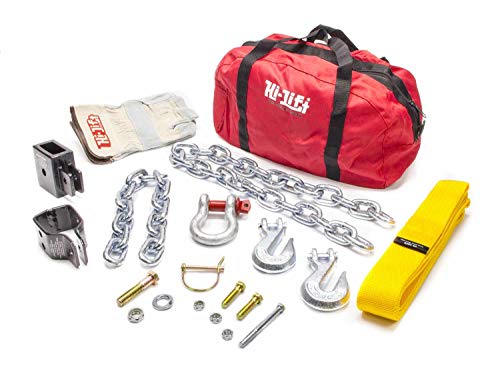
Hi-Lift Jack Off-Road Kit ORK
The Hi-Lift Jack Off-Road Kit contains all the accessories needed for winching with a Hi-Lift jack all in…
As an affiliate, we earn on qualifying purchases.
As an affiliate, we earn on qualifying purchases.
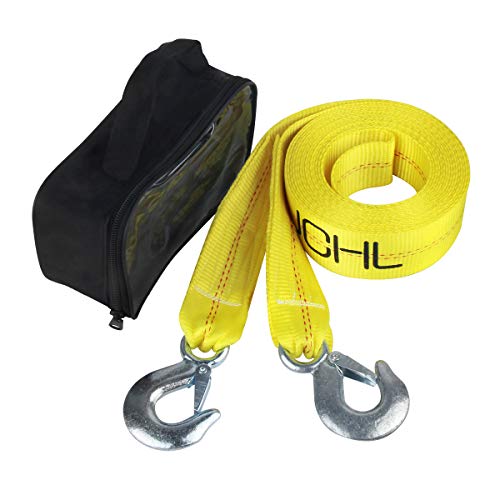
JCHL Nylon Tow Strap with Hooks 2”x20’ Car Vehicle Heavy Duty Recovery Rope 20,000 lbs Capacity Tow Rope for Car Truck Jeep ATV SUV
2 inch x 20 feet Yellow High Strength Polyester Strap, 20,000Lb Break Strength Capacity
As an affiliate, we earn on qualifying purchases.
As an affiliate, we earn on qualifying purchases.