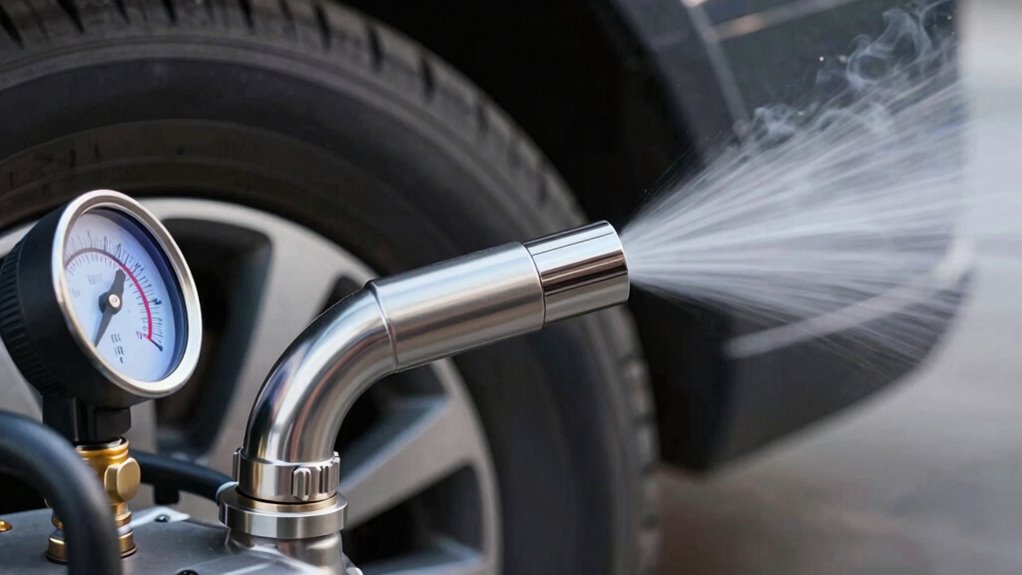

Your compressor stops mid-inflation because it reaches its duty cycle limit, which is the safe percentage of time it can operate without overheating. Exceeding this limit causes the compressor to generate excessive heat, risking thermal damage or shutdowns. Proper thermal management and regular maintenance help prevent these issues. If you want to understand how staying within the duty cycle protects your equipment and what steps to take, keep exploring the details.

Get business pricing on garage and car supplies
- Business-only prices and quantity discounts
- Tax-exempt purchasing
- Multiple users, one account, clear invoices
Key Takeaways
- Compressors often shut down mid-inflation if they exceed their duty cycle, to prevent overheating and thermal damage.
- Overrunning the duty cycle causes excessive heat buildup, triggering safety features that stop operation.
- Proper thermal management, including cooling systems, helps maintain safe operating temperatures during prolonged use.
- Ignoring duty cycle limits increases the risk of overheating, leading to compressor failure and mid-inflation stops.
- Monitoring operating time and allowing rest periods extend compressor lifespan and ensure continuous operation.
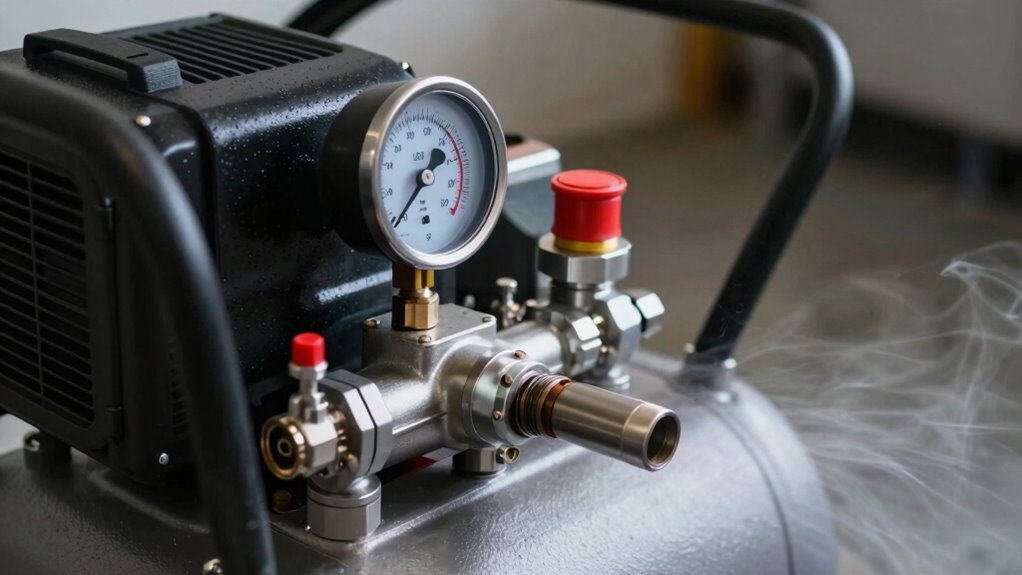
Ever wondered what duty cycle really means in electronics and signal processing? It’s a fundamental concept that explains how long a device, like an air compressor, can run within a specific period without overheating or failing. When you’re managing an air compressor, understanding duty cycle isn’t just about efficiency; it’s about safety and longevity. If you push a compressor beyond its duty cycle, you risk overheating, which can cause thermal damage or even lead to shutdowns mid-inflation. This is where proper air compressor maintenance becomes essential. Regular checks and ensuring the compressor operates within its recommended duty cycle can prevent unexpected stops and extend the life of the equipment.
Understanding duty cycle is key to safe, efficient, and long-lasting compressor operation.
The duty cycle is typically expressed as a percentage—say 50%. If your compressor has a 50% duty cycle at a certain pressure, it means you can run it continuously for half of a cycle, then need to let it rest to cool down. Ignoring this can lead to thermal management problems. When the compressor runs past its duty cycle, it generates excessive heat because the internal components aren’t given enough time to cool. Overheating not only damages the machine but also compromises safety. Proper thermal management involves ensuring your compressor has adequate ventilation, cooling fans, or even liquid cooling if needed. When these systems are in place and functioning correctly, they help keep the temperature within safe limits, allowing the compressor to operate efficiently without risking thermal damage. Additionally, understanding the thermal limits of your compressor is crucial to prevent overheating and ensure optimal performance.
Maintaining an awareness of the duty cycle can also help you plan your work more effectively, avoiding unnecessary downtime or equipment stress. A thorough understanding of duty cycle also emphasizes the importance of thermal management techniques, which are vital for preventing damage during prolonged use. If you’re experiencing frequent compressor shutdowns mid-inflation, it’s likely a sign that you’re exceeding the recommended duty cycle or that thermal management is lacking. To prevent this, you should monitor the compressor’s operating time and give it appropriate rest periods. Upgrading cooling systems or adjusting your usage patterns can also make a difference. Remember, the goal isn’t just to keep the compressor running but to do so safely and efficiently. Proper air compressor maintenance includes checking the cooling system, ensuring filters are clean, and inspecting electrical components that could affect thermal regulation.
Understanding duty cycle helps you optimize your compressor’s performance and avoid costly repairs. By respecting its operational limits, maintaining effective thermal management, and practicing routine maintenance, you keep your equipment running smoothly and extend its lifespan. So, next time you start inflating a large tire or running a pneumatic tool, keep in mind that respecting the duty cycle isn’t just about efficiency—it’s about safety and durability, ensuring your compressor performs reliably when you need it most.
air compressor duty cycle monitor
As an affiliate, we earn on qualifying purchases.
As an affiliate, we earn on qualifying purchases.
Frequently Asked Questions
How Can I Improve My Compressor’s Duty Cycle?
To improve your compressor’s duty cycle, focus on enhancing lubrication efficiency and power management. Regularly check and maintain proper lubrication to reduce overheating and wear, allowing the compressor to run longer without stopping. Implement effective power management practices, such as avoiding overloading and ensuring proper venting, which prevents strain on the motor. These steps help your compressor operate more efficiently, extending its duty cycle and reducing downtime during inflation tasks.
What Are Signs of a Compressor Overheating?
You’ll notice signs of a compressor overheating if it runs unusually hot to the touch, triggers overheating sensors, or shuts down unexpectedly. You might also see reduced performance or strange noises. To prevent this, use effective cooling methods like proper ventilation, fans, or coolant systems, and regularly check overheating sensors. Addressing these signs early helps avoid damage and keeps your compressor running smoothly.
Can Duty Cycle Affect Air Tool Performance?
Yes, duty cycle can affect your air tool performance. If your compressor’s duty cycle is too low for your air tool’s demands, it may struggle to supply consistent pressure, leading to reduced efficiency or tool stoppage. To avoid this, guarantee proper compressor sizing and check air tool compatibility with your compressor. Matching these factors helps maintain peak performance and prevents overheating or premature compressor shutdowns during extended use.
How Does Ambient Temperature Impact Duty Cycle?
Ambient temperature directly impacts your compressor’s duty cycle because fluctuations in temperature affect its cooling efficiency. Higher temperatures reduce temperature regulation, causing the compressor to overheat sooner and cut off more frequently. Conversely, cooler ambient conditions improve cooling, allowing longer operation before overheating. To optimize duty cycle, guarantee proper ventilation, monitor ambient fluctuations, and maintain consistent temperature regulation, preventing premature shutdowns and extending your compressor’s performance.
What Maintenance Prolongs Compressor Life During High Duty Cycles?
To prolong your compressor’s life during high duty cycles, focus on lubrication maintenance and the coolant system. Regularly check and change the lubricants to prevent overheating and wear. Make certain the coolant system functions properly to keep the compressor cool and operating efficiently. These practices reduce stress on components, prevent breakdowns, and extend the overall lifespan, especially under continuous or demanding usage conditions.
As an affiliate, we earn on qualifying purchases.
Conclusion
So, next time your compressor quits mid-inflation, remember it’s not just about overheating—it’s warning you that pushing it too hard could turn your DIY project into a disaster movie. Respect its duty cycle, or risk facing a catastrophic breakdown that could leave you stranded in a sea of deflated tires and empty air tanks. Treat it wisely, and your compressor will work tirelessly, turning your tasks into triumphs instead of epic failures.
air compressor thermal management system
As an affiliate, we earn on qualifying purchases.
As an affiliate, we earn on qualifying purchases.
As an affiliate, we earn on qualifying purchases.
Fall Picks
fall essentials
As an affiliate, we earn on qualifying purchases.