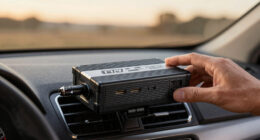

To navigate confidently with a compass, you need to understand bearings, which are the degrees from north you follow to stay on course. Remember to adjust for magnetic declination, the difference between magnetic and true north, to avoid drifting off track. Using landmarks and quick reference techniques helps verify your direction, especially in remote areas. Mastering these basics guarantees you can stay accurate even if your digital tools fail—continue exploring to sharpen your skills further.
Key Takeaways
- Bearings indicate your travel direction in degrees from magnetic or true north for precise navigation.
- Adjust for magnetic declination to correct compass readings based on your geographic location.
- Align the compass with the map’s orientation to set accurate bearings and determine your route.
- Use landmarks and terrain features to verify your course and ensure you’re on the correct path.
- Regularly check your compass during travel to maintain course and account for potential deviations.
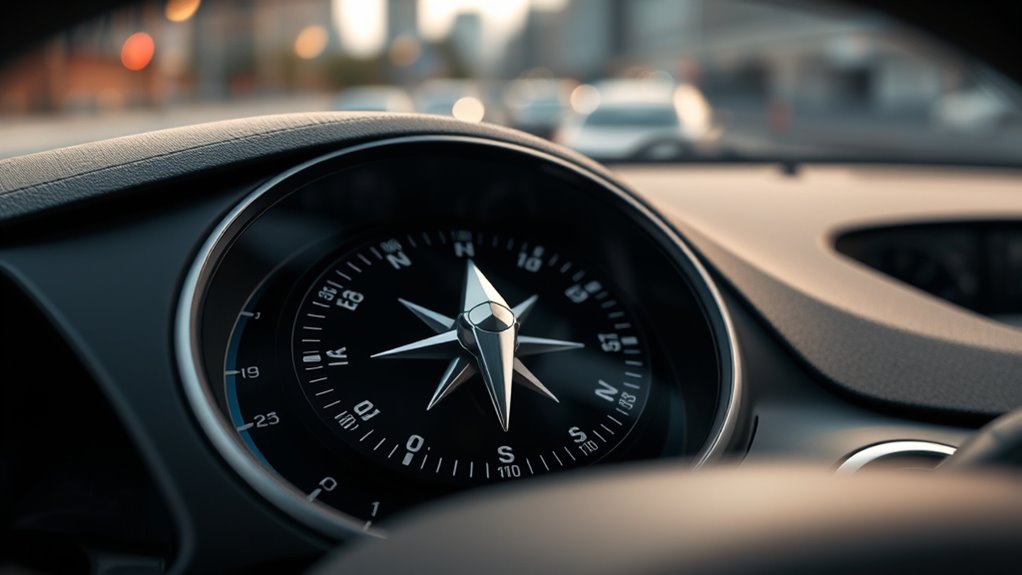
Ever wonder how to reliably find your way when GPS isn’t available? While modern technology has made navigation easier than ever, knowing the basics of compass use remains an essential skill, especially in remote areas or during technical failures. Understanding compass fundamentals like bearings, declination, and quick navigation techniques can help you stay on course even without digital assistance. One of the key skills you should develop is map reading, which pairs seamlessly with compass use. When you’re out in the field, a reliable map provides a visual reference, while a compass helps you determine direction. Many drivers overlook map reading as a skill, but it’s vital for situational awareness and effective navigation. Integrating a compass with your map allows you to pinpoint your position, set bearings, and navigate accurately through unfamiliar terrain or roadways. This skill becomes especially useful when GPS integration fails due to signal loss or technical issues.
To get started, familiarize yourself with the compass rose and how it aligns with your map. Once you know how to read a compass, you can determine your bearings—the degrees from north that indicate your direction of travel. For example, if your destination lies at a bearing of 045°, you’re heading northeast. By aligning your compass with your map, you can set a precise course and avoid unnecessary detours. Remember, magnetic declination—the angle difference between magnetic north and true north—must be accounted for to guarantee accurate navigation. Most maps indicate the local declination, so you can adjust your compass reading accordingly. Ignoring declination can cause you to drift off course, especially over long distances. Once you’ve established your bearing, you can maintain your course by regularly checking your compass and comparing it with landmarks or terrain features.
Quick navigation techniques include taking bearing readings at key junctions, identifying prominent landmarks, and using relative positioning to confirm your direction. These skills are essential when GPS signals are weak or unavailable, making your ability to read a compass and interpret map data all the more valuable. As you practice, you’ll find that relying on traditional navigation methods enhances your overall situational awareness. This knowledge not only supplements GPS integration but also guarantees that you stay confident and in control, no matter what technology is available. Mastering compass basics empowers you to navigate confidently, whether you’re driving across unfamiliar roads or venturing into remote wilderness. It’s a skill that keeps you prepared, resourceful, and capable of finding your way in any situation.
![ANDERY Only for iPhone Magsafe Car Mount Charger [15W Wireless Faster Charging, 78+LBS Strongest Suction, 2400gf Strongest Magnetic] 360° Adjustable Car Phone Holder for iPhone 17-12 Pro Max Plus Air](https://m.media-amazon.com/images/I/515Fmw5g0hL._SL500_.jpg)
ANDERY Only for iPhone Magsafe Car Mount Charger [15W Wireless Faster Charging, 78+LBS Strongest Suction, 2400gf Strongest Magnetic] 360° Adjustable Car Phone Holder for iPhone 17-12 Pro Max Plus Air
360° Rotation & Dual-Axis Adjustment:This car phone holder features a 360° rotating base and 210° dual-axis folding metal...
As an affiliate, we earn on qualifying purchases.
Frequently Asked Questions
How Do I Calibrate My Compass for Accurate Readings?
To calibrate your compass accurately, start by minimizing magnetic interference from nearby metal objects or electronic devices. Use calibration techniques like turning your vehicle in a figure-eight pattern or rotating the compass slowly in all directions. Repeat this process until your compass consistently points true. Regular calibration guarantees reliable readings, especially when magnetic interference is present, helping you navigate more confidently and avoid errors in bearing measurements.
What Should I Do if My Compass Shows Inconsistent Directions?
Did you know that magnetic interference affects over 60% of compass inaccuracies? If your compass shows inconsistent directions, it’s likely due to magnetic interference or compass misalignment. Move away from metal objects, electronics, or strong magnets, and recalibrate your compass. Keep it steady and away from potential sources of interference. If problems persist, consider replacing or professionally adjusting your compass to guarantee reliable navigation.
Can Weather Conditions Affect Compass Accuracy?
Weather conditions can definitely affect your compass accuracy because of magnetic interference and weather effects. Lightning, storms, or heavy rain can cause fluctuations in magnetic fields, leading to inconsistent readings. Strong winds or extreme temperatures might also impact your compass’s performance. To guarantee reliable navigation, avoid using your compass during severe weather, and recalibrate it when weather conditions stabilize. Keep your compass away from electronic devices that can cause interference as well.
How Do Magnetic Fields From Electronic Devices Impact Compass Readings?
Magnetic interference from electronic devices can disrupt your compass readings, making them less accurate. When you carry or use devices like smartphones, GPS units, or radios nearby, their magnetic fields impact the compass’s magnetic needle. This electronic device impact causes the needle to wobble or point in the wrong direction, so always keep your compass away from such devices to guarantee reliable navigation.
Are There Specific Compass Types Better Suited for Drivers?
Digital compasses are better suited for drivers because they provide quick, accurate readings and are less prone to mechanical failure than analog compasses. Digital compasses, especially those integrated into GPS devices or smartphones, offer easier calibration and display clear directional data. While analog compasses are reliable, digital compasses are more convenient for modern driving, helping you navigate efficiently even with electronic interference, making them the ideal choice for everyday drivers.
![ANDERY Car Phone Holder for Magsafe [78+LBS Strongest Suction & 2400gf Strongest Magnetic] 360° Adjustable Car Phone Mount, Phone Holders for Your Car for iPhone 17-12 Pro Max Air Plus (Carbon Fiber)](https://m.media-amazon.com/images/I/41y4I4lyhVL._SL500_.jpg)
ANDERY Car Phone Holder for Magsafe [78+LBS Strongest Suction & 2400gf Strongest Magnetic] 360° Adjustable Car Phone Mount, Phone Holders for Your Car for iPhone 17-12 Pro Max Air Plus (Carbon Fiber)
360° Rotation & Dual-Axis Adjustment: This car phone holder features a 360° rotating base and 210° dual-axis folding...
As an affiliate, we earn on qualifying purchases.
Conclusion
Understanding bearings, declination, and quick navigation makes you a more confident driver. Did you know that over 70% of drivers who learn basic compass skills report feeling more prepared for unexpected detours? Mastering these concepts can help you stay on course, even without GPS. So next time you hit a confusing intersection or lose signal, remember these basics—they’re your secret tools to stay confident and in control on the road.
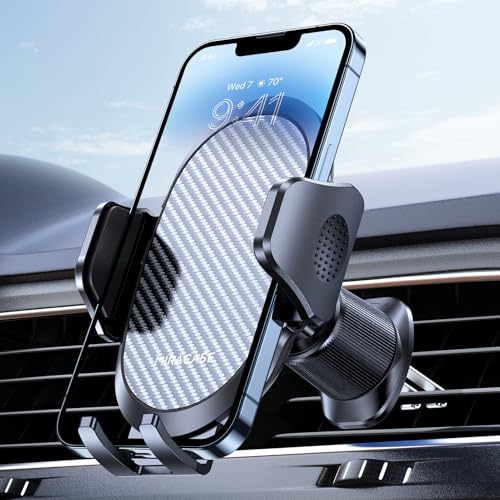
Miracase Phone Holders for Your Car with Metal Hook Clip, Air Vent Cell Phone Stand Car Mount, Universal Automobile Cradle for Garmin GPS Fit iPhone Android and All Smartphones, Dark Black
Never Fall Off-Metal Hook Design: Miracase car phone holder adopts simplified locking design. The steel metal hook(with silicone...
As an affiliate, we earn on qualifying purchases.
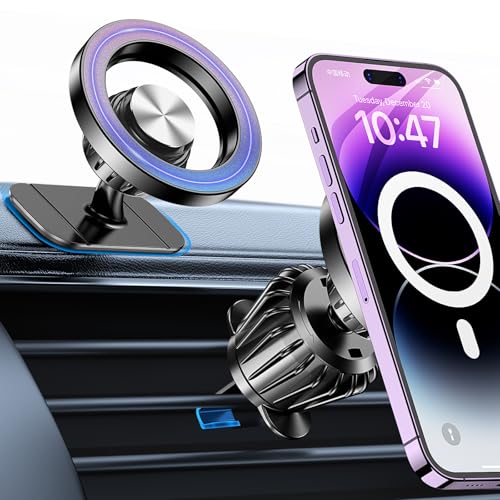
Kaistyle for Magsafe Car Mount【20 Strong Magnets】Magnetic Phone Holder for Car Phone Holder Mount Dash Mounted Holders Cell Phone Holders for Your Car Accessories for Women Men for iPhone 17 16 15 14
✅【Designed for Magsafe】 - The most fashionable iphone car mount in 2026 Magsafe is designed for iphone 17/16/15/14/13/12...
As an affiliate, we earn on qualifying purchases.