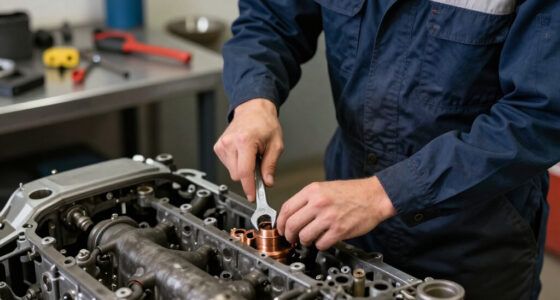
Suspension tuning directly impacts your cornering speed by improving grip, responsiveness, and stability. Adjusting spring rates, camber, and toe helps maximize tire contact with the road, enhancing control during turns. Stiffer anti-roll bars reduce body roll, keeping the car more planted. Proper ride height and geometry ensure balanced weight transfer, while fine-tuning surface-specific settings boosts performance. Keep exploring, and you’ll uncover even more ways to optimize your suspension for ultimate cornering efficiency.

Get business pricing on garage and car supplies
- Business-only prices and quantity discounts
- Tax-exempt purchasing
- Multiple users, one account, clear invoices
Key Takeaways
- Proper suspension tuning optimizes wheel contact patch, increasing grip during cornering.
- Adjusting spring stiffness and damping balances ride comfort with responsiveness for sharper turns.
- Anti-roll bars reduce body roll, enhancing stability and allowing higher cornering speeds.
- Correct wheel alignment and camber settings improve tire grip and handling during turns.
- Fine-tuning tire pressure and suspension settings ensures consistent traction and reduces understeer or oversteer.
As an affiliate, we earn on qualifying purchases.
The Role of Suspension Stiffness in Handling

Suspension stiffness plays a vital role in how your vehicle handles corners. When your suspension is stiff, spring deflection decreases, meaning the springs resist movement more, providing a firmer ride. This firmness improves your vehicle’s responsiveness during cornering, helping it stay more level and reducing body roll. Shock absorbers also contribute by damping oscillations, ensuring smooth and controlled movements. If your suspension is too soft, excessive spring deflection causes your tires to lose contact with the road, reducing grip. Conversely, overly stiff suspension can lead to a harsh ride and poor traction over uneven surfaces. Balancing spring deflection and shock absorber damping is essential for optimal handling, giving you better control and confidence when navigating corners at higher speeds. Understanding suspension dynamics is crucial for optimizing your vehicle’s handling characteristics.
adjustable anti-roll bars for cars
As an affiliate, we earn on qualifying purchases.
As an affiliate, we earn on qualifying purchases.
Adjusting Camber for Optimal Tire Contact

Adjusting camber directly influences how your tires contact the road, which in turn impacts grip and handling during cornering. When you modify camber angles, you’re changing the tilt of the wheels, affecting the tire’s contact patch. Proper wheel alignment guarantees your camber is set for ideal tire contact, maximizing grip. Keep in mind that tire pressure also plays a critical role; under- or over-inflated tires can distort contact and reduce performance. By fine-tuning camber, you help your tires maintain a larger, more consistent contact patch during turns, enhancing cornering stability and speed. Regularly check your wheel alignment and tire pressure to guarantee your camber adjustments deliver the best possible tire contact, leading to improved handling and safer cornering at higher speeds. Proper wheel alignment ensures your suspension settings are optimized for safe and effective cornering performance. Additionally, understanding the impact of contrast ratio on visual clarity can be crucial for evaluating the overall performance of your vehicle’s visual systems. Moreover, research into sound vibrations suggests they can influence cellular regeneration and overall health, which could indirectly affect driver alertness and reaction times during high-speed maneuvers. Proper suspension tuning can also help mitigate the effects of road surface irregularities, providing a smoother ride and better control. Furthermore, implementing aerodynamic adjustments can optimize airflow around the vehicle, contributing to enhanced stability during high-speed cornering.
As an affiliate, we earn on qualifying purchases.
The Impact of Toe Settings on Cornering Grip
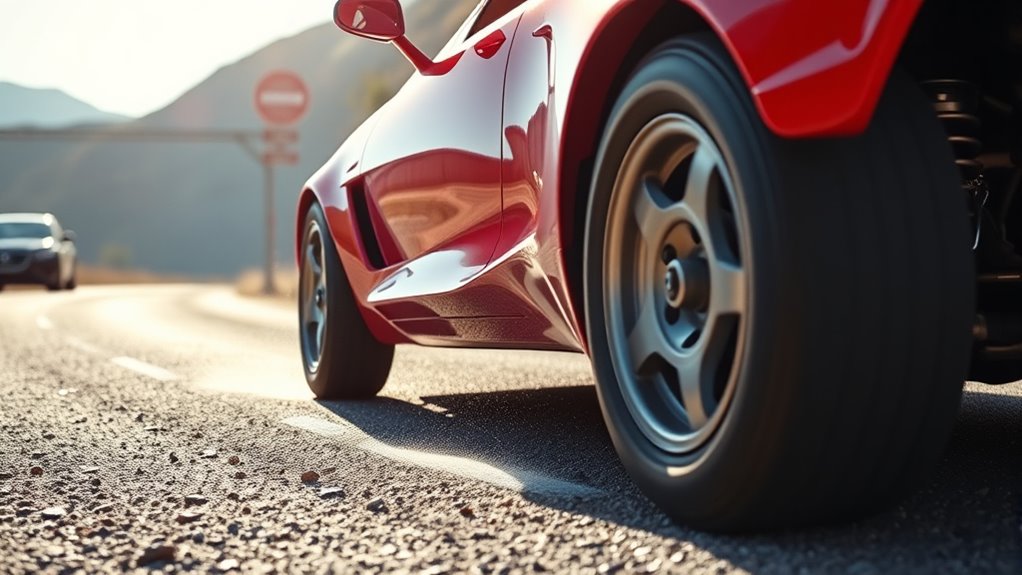
Your toe settings considerably influence how your car handles through corners. Toe-in adds stability at high speeds, helping you stay steady, while toe-out makes your steering more responsive. Understanding how these adjustments affect grip can help you optimize your setup for better cornering performance. Additionally, fine-tuning your toe settings can enhance overall digital asset management, ensuring more precise control during dynamic driving conditions. Proper toe alignment can also reduce tire wear and improve vehicle handling, leading to a more confident driving experience. Recognizing the role of alignment specifications in suspension tuning can further optimize your vehicle’s cornering capabilities and support connected vehicle technology to monitor and adjust alignment in real-time. Incorporating these precise adjustments can also contribute to better tire longevity, making your driving safer and more economical.
Toe-In and Stability
When it comes to cornering grip, toe-in plays a crucial role in vehicle stability. Proper wheel alignment ensures your tires maintain ideal contact with the road, preventing unnecessary scrubbing that can reduce grip. Toe-in helps stabilize the vehicle during cornering by slightly pointing the wheels inward, which improves straight-line stability and reduces steering wobble. This setup distributes forces more evenly across the tires, allowing for better grip. Additionally, a well-adjusted shock absorber works in tandem with toe-in to absorb road imperfections and maintain tire contact. If toe-in is too excessive, it can cause increased tire wear and sluggish response, but when set correctly, it enhances stability through corners. Overall, fine-tuning toe-in directly impacts your vehicle’s confidence and grip during aggressive turns. Proper alignment precision is essential to achieve optimal handling characteristics.
Toe-Out and Responsiveness
Have you ever noticed how a slight outward angle on your wheels can make your car feel more agile during aggressive turns? That’s the effect of toe-out, which enhances responsiveness by allowing quicker steering input transfer to the tires. Proper wheel alignment ensures your toe settings are precise; too much toe-out can reduce stability, while too little may dampen responsiveness. Additionally, maintaining ideal tire pressure boosts grip, making your car more reactive during cornering. When your tires are correctly inflated, they respond more predictably to steering adjustments, which is crucial for maintaining control, and complements toe-out’s benefits. Adjusting toe-out can improve how quickly your car reacts in corners, but it must be balanced with alignment and tire pressure to avoid uneven tire wear or compromised stability. Proper tuning transforms responsiveness into confident, precise cornering, especially when considering vehicle dynamics and handling. Moreover, using Vetted electric bike conversion kits with reliable performance can provide insights into how precise adjustments impact overall handling and efficiency.
As an affiliate, we earn on qualifying purchases.
How Spring Rates Influence Vehicle Responsiveness

Your spring rates directly affect how quickly your vehicle responds to steering inputs, impacting handling and stability. Stiffer springs improve responsiveness but can compromise ride comfort, while softer springs offer a smoother ride but may reduce precision. Adjusting spring rates also influences understeer and oversteer tendencies, shaping your overall cornering behavior. Additionally, Free Floating systems in suspension design can further modify how these spring adjustments translate into on-road performance. The choice of spring rates can also be influenced by the vehicle’s Youngster Choice and the driver’s personal preferences for handling characteristics. Proper suspension tuning can also help prevent uneven tire wear and improve overall safety, especially when considering factors like suspension geometry. Furthermore, understanding how Ear Wax Odor can change with different setups might give you insights into how your suspension reacts under various conditions.
Stiffness and Handling
Spring rates directly impact how your vehicle responds to steering inputs and road irregularities. When you increase stiffness, your car becomes more precise, allowing sharper turns and better control through corners. Higher spring rates help manage aero downforce, which pushes the car onto the road, enhancing grip at high speeds. However, they also influence tire pressure management; stiffer springs often require adjustments to tire pressure to maintain ideal contact patch and traction. Too stiff, and you risk a harsh ride that reduces feedback and comfort. Too soft, and handling becomes vague, diminishing your ability to respond quickly. Striking the right balance in stiffness ensures your suspension reacts predictably, improves cornering speed, and maintains stability during aggressive maneuvers. Proper ventilation considerations also play a role in maintaining optimal vehicle performance and comfort during spirited driving. Additionally, understanding spring rate dynamics can help fine-tune your suspension setup for specific driving conditions.
Ride Comfort Balance
Choosing the right spring rates is essential for balancing ride comfort and vehicle responsiveness. When you adjust spring rates, you influence how your suspension reacts to road imperfections and cornering forces. For example:
- Softer springs provide a plush ride, absorbing bumps smoothly, ideal for comfort.
- Medium rates strike a balance, improving responsiveness without sacrificing too much comfort.
- Stiffer springs deliver sharper handling, feeling more connected during aggressive turns.
If you’re using air suspension, you can fine-tune ride height and softness by adjusting air pressure, affecting comfort and responsiveness. Additionally, proper suspension fluid ensures smooth damping, preventing excessive bouncing or harshness. When spring rates are optimized, your vehicle responds precisely to steering inputs, offering a comfortable ride that still handles cornering with confidence. Proper suspension tuning plays a crucial role in achieving this balance for optimal driving performance.
Careful spring rate selection helps optimize overall vehicle dynamics and ensures a tailored ride experience. Moreover, understanding the suspension dynamics involved in vehicle feedback can enhance driver awareness and control. Recognizing how suspension behavior influences sound and feel can provide valuable cues for fine-tuning handling.
Understeer and Oversteer
Since spring rates directly affect how a vehicle responds during cornering, they play a crucial role in managing understeer and oversteer. Heavier front springs can increase understeer, while softer ones may promote oversteer. Adjusting differential setups also influences responsiveness—locking the differential can reduce slip and help control oversteer, while a more open setup encourages rotation. Tire pressure is equally critical; higher pressure stiffens the tire, reducing grip and potentially causing understeer, whereas lower pressure increases grip, helping prevent oversteer. By fine-tuning spring rates, differential setups, and tire pressure, you can balance vehicle responsiveness, improve cornering stability, and optimize handling characteristics for your driving style.
The Effect of Anti-Roll Bars on Body Roll and Stability

Anti-roll bars play a crucial role in controlling body roll during cornering, helping your vehicle stay balanced and stable. When you tighten the anti-roll bar, it reduces the lean of the body, which results in a more planted feel. This stability improves your cornering speed by:
- Minimizing excessive tire tread deformation, maintaining ideal grip.
- Reducing aero drag caused by body lean, allowing smoother airflow around the car.
- Keeping the chassis level, which enhances tire contact and prevents uneven wear.
- Proper suspension tuning ensures optimal performance and handling characteristics.
Damping Settings and Their Role in Traction Control
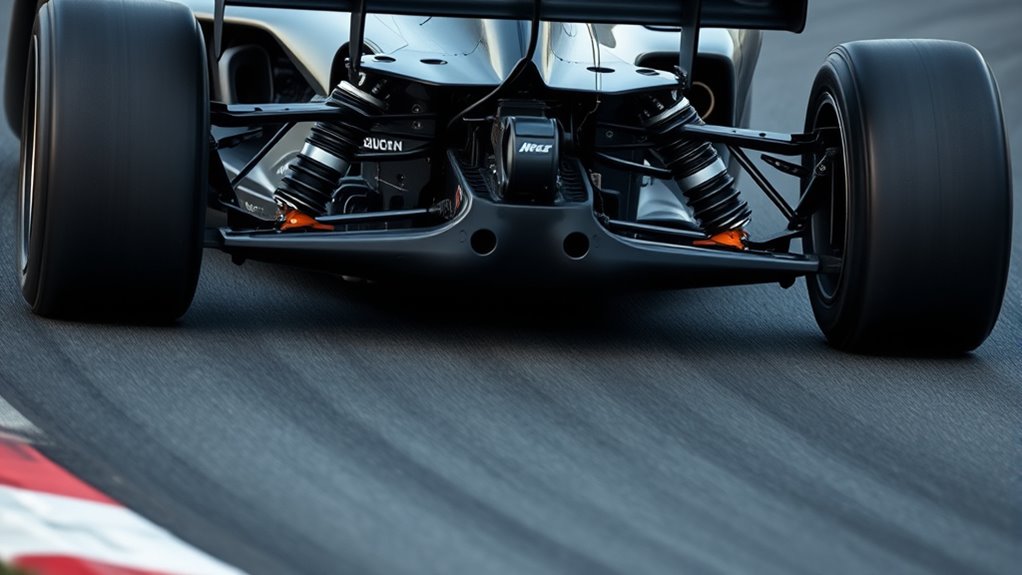
Your damping settings directly influence how well your tires grip the road, affecting traction during cornering. Adjusting these settings also impacts ride comfort, so finding the right balance is essential. Fine-tuning damping helps you optimize both grip and comfort for better overall handling.
Damping Adjustments and Grip
Adjusting damping settings plays a crucial role in enhancing grip and maintaining traction during cornering. When you fine-tune your shock absorber, you influence how your suspension reacts to road forces. Proper damping helps keep tire contact consistent, even on uneven surfaces. Consider these key points:
- Increasing damping stiffness allows the shock absorber to respond quicker, improving grip during aggressive turns.
- Adjusting spring preload alters initial suspension tension, helping your tires stay planted.
- Balancing damping and preload ensures the suspension can absorb bumps without losing traction.
Impact on Ride Comfort
Since damping settings directly influence how your suspension absorbs road imperfections, they play a vital role in ride comfort and traction control. Proper damping reduces vibrations and noise, making your drive smoother and more enjoyable. Adjusting damping also enhances aesthetic appeal by minimizing bounce and harshness, maintaining a sleek look. To see how damping impacts ride comfort, consider this table:
| Damping Level | Ride Comfort | Noise Reduction |
|---|---|---|
| Soft | Smoother ride, absorbs bumps | Higher noise reduction |
| Medium | Balanced comfort and handling | Moderate noise reduction |
| Hard | Less bounce, sporty feel | Less noise absorption |
| Adaptive | Custom comfort, optimized | Maximum noise control |
Tuning for Balance
Balancing damping settings is essential for optimizing traction control without sacrificing ride quality. Proper damping helps manage the vehicle’s response to road irregularities, ensuring stability during cornering. Think of it as fine-tuning:
- Adjusting rebound damping to keep tires in contact, reducing aerodynamic drag caused by unnecessary wheel movement.
- Setting compression damping to prevent excessive pitch or dive, which influences brake bias and steering precision.
- Balancing both to maintain even weight transfer, improving grip and reducing the risk of understeer or oversteer.
Balancing Ride Height for Cornering Performance

Your ride height plays a crucial role in how well your car handles cornering. Lowering it can improve stability by increasing tire contact and fine-tuning wheel camber, which enhances grip during turns. However, too low ride height risks scraping and uneven tire wear. Finding the right balance ensures your suspension maintains proper alignment and maximizes tire contact patch, boosting cornering speed. Use this table as a guide:
| Ride Height Adjustment | Effect on Tire Contact | Impact on Wheel Camber |
|---|---|---|
| Lowered | Increases contact | Positive camber gain |
| Raised | Reduces contact | Less camber change |
| Slightly lowered | Optimal grip | Maintains proper camber |
| Too low | Tire contact loss | Excessive camber wear |
Balancing ride height helps you find that sweet spot for cornering performance.
The Significance of Suspension Geometry and Alignment
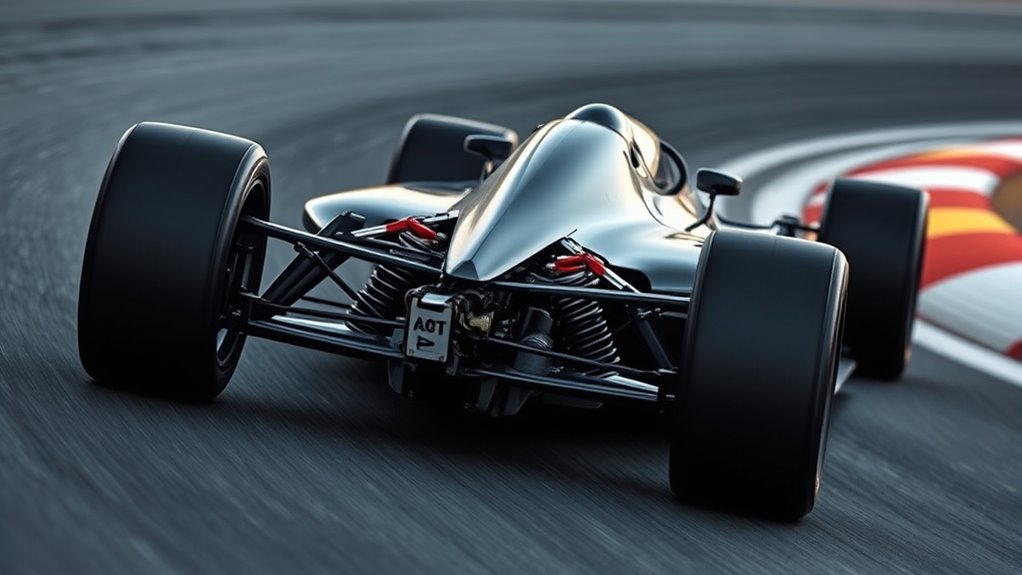
Adjusting ride height impacts not only tire contact but also how your suspension components work together. Proper suspension geometry and alignment are vital for optimal cornering. When you get wheel alignment right, you guarantee even tire wear and predictable handling. It influences:
Proper wheel alignment ensures even tire wear and enhances cornering performance.
- The camber angle, which affects how your tires grip during turns.
- The toe setting, impacting steering response and tire wear.
- Caster angle, aiding steering stability and straight-line tracking.
Incorrect alignment can cause uneven wear, reducing suspension longevity and compromising handling. A well-aligned suspension maintains the correct geometry, helping your car respond precisely to your inputs. It also prevents premature component wear, saving costs in the long run. Focus on these aspects to improve cornering speed and prolong your suspension’s life, ensuring consistent performance on every drive.
Fine-Tuning Suspension for Different Track Conditions
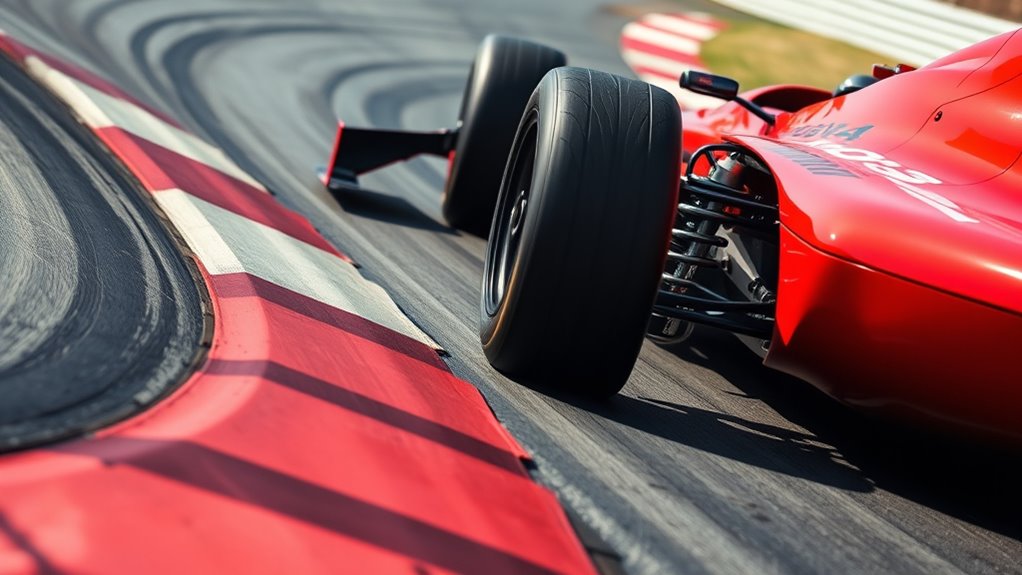
Different track conditions demand specific suspension setups to maximize performance. On a dry, smooth track, increasing aero downforce pushes the car into the pavement, improving grip. Adjusting tire pressure helps optimize contact with the surface. For wet or bumpy tracks, soften suspension settings to absorb irregularities, maintaining tire contact. Consider this setup guide:
| Track Condition | Suspension & Tire Adjustments |
|---|---|
| Dry & Smooth | Higher aero downforce, lower tire pressure |
| Wet & Bumpy | Softer suspension, higher tire pressure |
| Hot Weather | Slightly lower tire pressure for grip |
| Cooler Conditions | Moderate suspension stiffness for stability |
Fine-tuning your suspension based on these conditions can remarkably improve cornering speed and overall handling.
Practical Tips for Incremental Suspension Adjustments
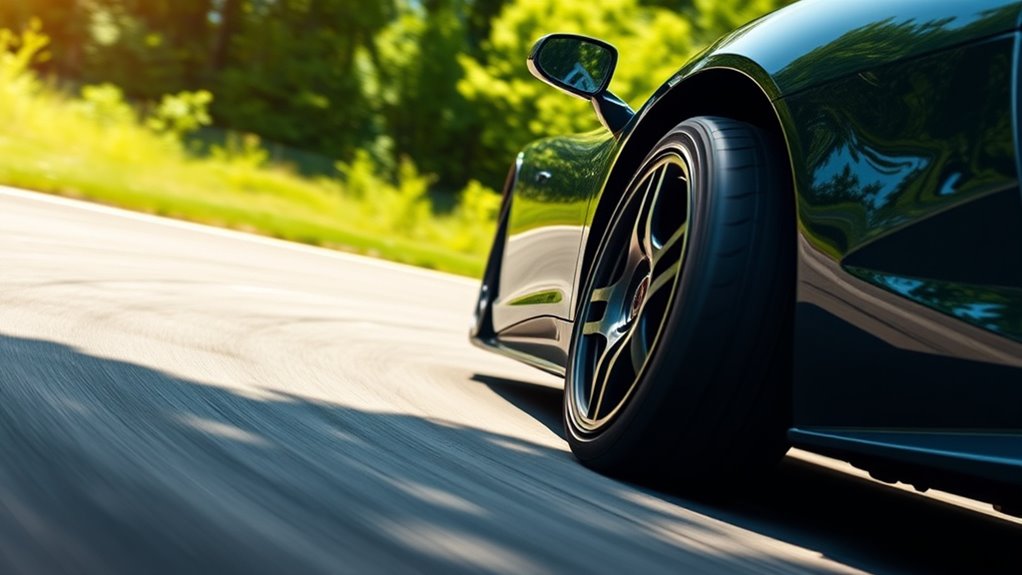
Making small, incremental suspension adjustments allows you to fine-tune your car’s handling without overhauling the entire setup. Start by checking your wheel alignment; even a slight misalignment affects handling and cornering speed. Next, adjust your tire pressure; lower pressure increases grip but can cause instability, while higher pressure improves responsiveness. Finally, fine-tune your suspension settings by:
- Slightly stiffening or softening shocks to balance grip and comfort.
- Adjusting camber to improve tire contact during cornering.
- Monitoring how these changes impact your steering feel and stability.
Always test after each adjustment, and avoid large jumps. These small tweaks help you find the ideal setup, maximizing cornering speed and maintaining control on the track.
Frequently Asked Questions
How Does Suspension Tuning Affect Tire Wear During Cornering?
Your suspension tuning directly impacts tire wear during cornering, influencing tire grip and wear patterns. If you set your suspension too stiff, it causes uneven tire contact, leading to faster wear on edges or center. Conversely, a balanced suspension maintains even contact, increasing tire grip and promoting uniform wear. Proper tuning helps maximize tire life while maintaining ideal grip, ensuring safer, more controlled cornering without premature tire degradation.
Can Suspension Adjustments Improve Overall Vehicle Comfort?
Imagine gliding smoothly over every bump, feeling almost nothing but comfort—that’s what suspension adjustments can do for you. By fine-tuning your suspension, you enhance ride comfort and reduce road noise, making every drive more enjoyable. You’ll notice less jarring and a quieter cabin, transforming your vehicle into a sanctuary on wheels. These tweaks can turn ordinary rides into extraordinary experiences, giving you control and serenity on every journey.
What Is the Ideal Suspension Setup for Different Vehicle Types?
The ideal suspension setup depends on your vehicle type and weight distribution. For sports cars, opt for performance suspension types like coilovers or adaptive systems that enhance handling. Sedans benefit from balanced setups focusing on comfort and stability, while trucks require rugged suspension types for load support. Adjust for your vehicle’s weight distribution to guarantee the best cornering, ride comfort, and control, tailoring suspension tuning to match your driving needs.
How Does Suspension Tuning Influence Brake Performance in Corners?
Suspension tuning directly impacts your brake performance in corners by improving brake modulation and pedal feel. When your suspension is properly tuned, it maintains better tire contact with the road, allowing you to brake more precisely and confidently. You’ll notice smoother pedal feel and improved control, which helps you decelerate effectively without upsetting the vehicle’s balance. This results in safer, more controlled cornering and shorter braking distances.
Are There Risks to Over-Tuning Suspension for Cornering Speed?
Suspension overcorrection can cause costly car complications, so be cautious. Over-tuning for cornering speed risks suspension overcorrection, which limits your vehicle’s handling harmony and may cause handling hazards. Pushing tuning limitations too far can lead to unpredictable responses, reduced ride comfort, and increased wear on components. Stay within sensible settings, and prioritize proper tuning techniques to prevent problems, ensuring your car remains safe, stable, and superbly responsive on every turn.
Conclusion
By tuning your suspension, you hold the power to transform your cornering speed into a lightning-fast blur. Small tweaks can make your vehicle feel glued to the road, turning every turn into a triumphant dance with gravity. Remember, even the tiniest adjustment can unlock performance levels that seem almost supernatural. So, don’t settle—fine-tune relentlessly, and watch your car conquer corners with unmatched agility and speed. Your ride’s true potential is waiting to be unleashed!
Halloween Picks
halloween
As an affiliate, we earn on qualifying purchases.