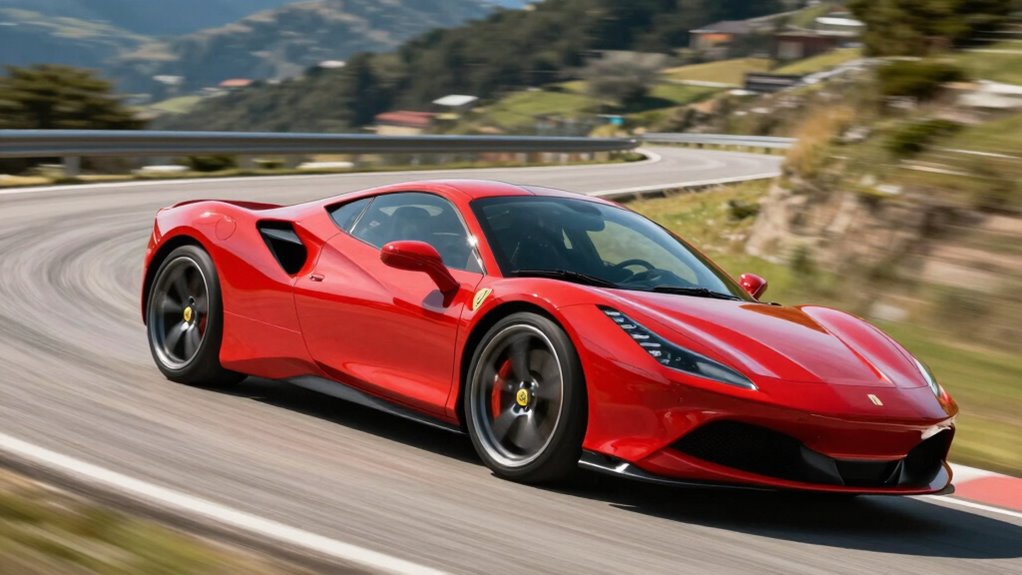

When you take a high-speed turn, your vehicle’s weight shifts quickly from the inside to outside tires, increasing grip on the outside and reducing it on the inside. This transfer affects how well your tires handle the corner, risking oversteer or understeer if unbalanced. Proper technique, smooth steering, and good vehicle setup help manage this force, allowing you to maintain stability. If you keep exploring, you’ll discover how to optimize your control during these dynamic maneuvers.

Get garage and car supplies delivered free — and shop member deals
- Fast, free delivery on millions of items
- Access to Prime Big Deal Days deals on October 6–7
- Prime Video, Amazon Music and more included
Key Takeaways
- During high-speed turns, weight shifts from the inside to outside tires, affecting grip and vehicle stability.
- Increased load on outside tires enhances their grip, while inside tires have reduced contact pressure.
- Aerodynamics generate downforce that counters weight transfer, improving tire grip during cornering.
- Excessive weight transfer can cause oversteering or understeering, risking loss of control.
- Smooth steering and controlled acceleration help manage load shifts and maintain vehicle stability.

When you take a high-speed turn, your vehicle’s weight shifts sharply from the inside wheels to the outside wheels, affecting grip and stability. This considerable transfer of load directly influences tire grip dynamics, which are essential for maintaining control. As your car leans into the turn, the outside tires bear more weight, increasing their grip capacity, while the inside tires experience reduced contact pressure. This redistribution is critical because tire grip isn’t just about the rubber meeting the road; it depends heavily on how load is distributed across the tires during the maneuver.
Aerodynamic effects come into play during high-speed turns as well. As you accelerate into a corner, airflow over your vehicle alters, creating downforce that can either enhance or diminish grip depending on your car’s design. Proper aerodynamics help generate additional downforce on the tires, pressing them more firmly against the road and improving tire grip dynamics. This increased downforce effectively counteracts some of the negative effects of weight transfer, providing extra stability and allowing you to corner at higher speeds with more confidence.
However, the shifting weight can also cause instability if not managed carefully. When the vehicle’s center of gravity is high or if the tires lack sufficient grip, the transfer of weight might lead to oversteering or understeering. Oversteering occurs when the rear tires lose grip, causing the back of the car to swing out, while understeering happens when the front tires lose traction, making it harder to turn effectively. Both situations can be dangerous, especially at high speeds, emphasizing the importance of understanding tire grip dynamics and how to maximize them.
Your driving technique plays an essential role in managing weight transfer. Smooth inputs, like gentle steering and controlled acceleration or deceleration, help distribute forces evenly and prevent sudden shifts that could compromise grip. Additionally, choosing tires with appropriate grip characteristics and ensuring they are properly inflated enhances their ability to handle the load shifts during turns. When your tires maintain ideal contact with the road surface, and your vehicle’s aerodynamics are tuned for stability, you considerably reduce the risk of losing control due to weight transfer.
Frequently Asked Questions
How Does Tire Grip Affect Weight Transfer?
Tire grip directly influences how weight transfer occurs during high-speed turns. When your tires have strong grip, they better support the weight shift, allowing for smoother, more controlled turns. Conversely, if grip diminishes, weight transfer becomes less predictable, increasing the risk of slipping or losing control. You should monitor tire grip closely, as it’s essential for maintaining ideal weight transfer and ensuring your vehicle handles safely and efficiently through turns.
What Role Does Suspension Stiffness Play?
Imagine you’re steering a ship through rough seas—suspension stiffness acts like the ship’s hull, influencing how your car handles high-speed turns. When you tune your suspension, you adjust its stiffness to match your driving style, affecting chassis rigidity and weight transfer. Stiffer suspension minimizes body roll, enhancing responsiveness, while softer setups absorb bumps. Proper suspension tuning guarantees better grip, control, and confidence during those exhilarating high-speed maneuvers.
How Does Driver Technique Influence Weight Transfer?
Your driver technique directly influences weight transfer during high-speed turns. By adjusting your body positioning, such as leaning into the turn, you help balance the car’s weight distribution. Precise steering input techniques, like smooth, deliberate movements, prevent abrupt shifts that can destabilize the vehicle. Combining good body positioning with controlled steering allows you to manage weight transfer more effectively, enhancing grip and overall handling during high-speed cornering.
Can Weight Transfer Be Controlled Manually?
Yes, you can control weight transfer manually through your driver skill. By making manual adjustments like steering input, throttle control, and braking, you influence how weight shifts during high-speed turns. Skilled drivers anticipate and manage these shifts, maintaining better grip and stability. Your ability to smoothly execute these techniques allows you to optimize weight transfer, ultimately improving your control and performance in demanding driving situations.
What Are Common Mistakes During High-Speed Turns?
During high-speed turns, you often make mistakes like misjudging aerodynamic balance and brake bias, which can lead to loss of control. You might brake too late or unevenly, causing unnecessary weight transfer, or rely on improper aerodynamic settings that destabilize the vehicle. To avoid these mistakes, verify your brake bias is properly adjusted, and maintain awareness of aerodynamic balance to keep your car stable and responsive through the turn.
Conclusion
So, next time you expertly lean into a turn, remember: it’s all about shifting that precious weight. Who knew that moving your body around could make you feel like a racing legend? Just don’t forget, if you end up in a ditch, it’s probably your weight transfer skills — or lack thereof — that’s to blame. Keep practicing, and maybe someday you’ll master the art of high-speed balancing, or at least look good trying!
Halloween Picks
halloween
As an affiliate, we earn on qualifying purchases.