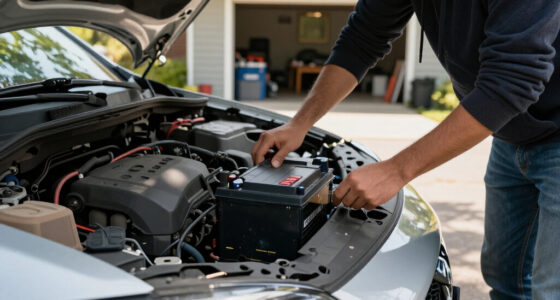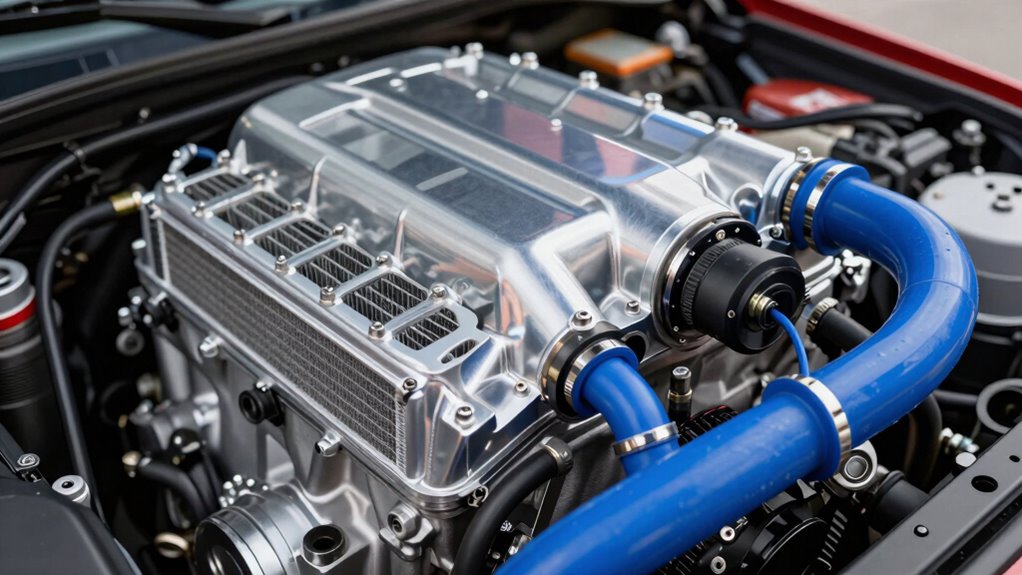

In high-performance engines, cooling systems are essential for managing intense heat. You’ll find liquid cooling being most common, circulating coolant through radiators to transfer heat away, while air cooling relies on airflow and fins. Advanced designs, like hybrid systems and innovative materials, boost efficiency. Proper maintenance guarantees these systems work effectively, preventing failures. If you want to understand how these systems optimize engine performance and what new trends are shaping their future, there’s more to explore.

Get business pricing on garage and car supplies
- Business-only prices and quantity discounts
- Tax-exempt purchasing
- Multiple users, one account, clear invoices
Key Takeaways
- High-performance engines often require advanced liquid cooling systems for efficient heat dissipation and temperature regulation.
- Thermostat and radiator design are crucial for maintaining optimal engine temperatures under high loads.
- Air cooling can be used in high-performance applications for lightweight, smaller engines with airflow management.
- Innovations like microchannel heat exchangers and hybrid cooling systems improve efficiency and system responsiveness.
- Regular maintenance of coolant chemistry and system components ensures durability and peak performance of cooling systems.
high performance engine cooling system
As an affiliate, we earn on qualifying purchases.
As an affiliate, we earn on qualifying purchases.
Types of Cooling Systems Used in High-Performance Engines

High-performance engines require efficient cooling systems to prevent overheating and maintain ideal power output. You’ll find that these systems vary, with options like liquid cooling, air cooling, and hybrid setups. Liquid cooling is the most common, using coolant that circulates through radiators, demanding careful attention to coolant chemistry to prevent corrosion and freezing. Proper cooling system maintenance guarantees the coolant stays effective, preventing buildup that can impair heat transfer. Regular coolant monitoring is essential to ensure optimal performance and longevity of the system. Additionally, advancements in cooling technology continue to improve efficiency and reliability in high-performance engines. To maximize cooling efficiency, understanding thermal management principles is crucial for engine longevity and consistent power delivery. Air cooling, often seen in smaller engines, relies on fins and airflow to dissipate heat, making it simpler but less efficient at high performance levels. Hybrid systems combine both methods for enhanced control. Understanding these different types helps you choose the right cooling system for your engine’s demands, ensuring longevity and peak performance.
liquid cooling radiator for cars
As an affiliate, we earn on qualifying purchases.
As an affiliate, we earn on qualifying purchases.
How Liquid Cooling Systems Operate
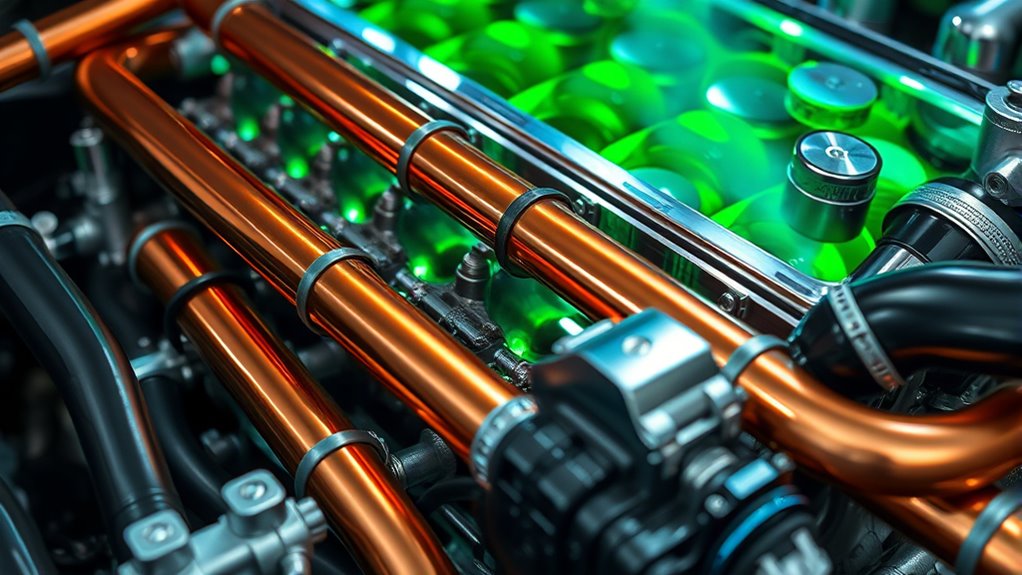
You’ll see how liquid cooling systems keep your engine at the right temperature through a continuous coolant circulation process. The coolant absorbs heat from the engine and moves it to the radiator for dissipation. The thermostat plays a key role by regulating coolant flow, ensuring your engine warms up quickly and stays cool during operation. Additionally, smart monitoring systems can be integrated to track engine temperatures in real-time and optimize cooling performance. Proper ventilation considerations are also essential to maintain system efficiency and prevent overheating. Ensuring adequate airflow around the radiator enhances overall cooling system effectiveness and helps maintain optimal engine temperatures. Regular system checks are vital to identify potential issues like blockages or leaks that can compromise cooling efficiency.
Coolant Circulation Process
Liquid cooling systems operate by continuously circulating coolant through the engine to absorb and transfer heat. The process relies on understanding coolant chemistry to prevent corrosion and maximize heat transfer. As the coolant moves, flow dynamics play a vital role in guaranteeing efficient circulation; a steady, smooth flow prevents hotspots and maintains consistent engine temperature. Pumps propel the coolant through channels, radiator, and engine passages, where heat is absorbed and then dissipated. Proper flow also requires balanced pressure to avoid leaks or blockages. Maintaining essential coolant chemistry ensures that corrosion inhibitors and anti-freeze components work effectively, enhancing system longevity. Coolant chemistry is crucial for preventing buildup and ensuring optimal performance. Additionally, understanding flow dynamics helps optimize system design and troubleshooting. By controlling flow dynamics and coolant composition, your cooling system keeps high-performance engines running smoothly and efficiently, and staying informed about corrosion prevention techniques can further extend system lifespan. Incorporating regular maintenance checks can also help identify potential issues before they escalate, ensuring the system remains in peak condition.
Thermostat Regulation Role
The thermostat plays a vital role in regulating the engine’s temperature by controlling coolant flow. It responds to signals from temperature sensors that monitor engine heat, opening or closing to maintain ideal operating temperature. When your engine warms up, the thermostat stays closed, allowing coolant to circulate within the engine, quickly reaching the desired temperature. Once the engine is hot enough, it opens, letting coolant flow to the radiator for cooling. Proper cooling system maintenance guarantees the thermostat functions correctly, preventing overheating or underheating. Regularly check and replace your thermostat as part of cooling system maintenance to keep your engine running smoothly and efficiently. Power tools and equipment knowledge can help you understand how to safely perform maintenance tasks and troubleshoot issues effectively. Maintaining coolant levels and inspecting for leaks are also essential to ensure the system operates as intended, especially considering the importance of system components in overall engine health. Additionally, understanding glycolic acid benefits can be useful for maintaining the cleanliness and efficiency of cooling systems. Being aware of the vital role of the thermostat helps prevent potential engine damage caused by improper temperature regulation.
engine coolant temperature monitor
As an affiliate, we earn on qualifying purchases.
As an affiliate, we earn on qualifying purchases.
The Role of Air Cooling in High-Performance Applications

Air cooling plays a crucial role in high-performance applications by offering a lightweight and reliable method to dissipate heat. You can enhance airflow around your engine to improve heat dissipation, preventing overheating during intense operation. Proper airflow management ensures that cool air reaches critical components, while hot air is expelled efficiently. This balance improves engine performance and longevity, especially in racing or high-demand scenarios. By focusing on airflow enhancement, you reduce the need for complex or heavy cooling systems, keeping your setup streamlined. Air cooling systems are simple yet effective, relying on natural or forced airflow to maintain ideal temperatures. When designed well, they provide consistent heat dissipation, ensuring your high-performance engine runs smoothly without the added weight or complexity of liquid cooling. Effective airflow management is essential for maintaining optimal engine temperatures and preventing damage, and understanding aviation regulations can help in designing compliant cooling solutions.
As an affiliate, we earn on qualifying purchases.
Advanced Cooling Technologies and Innovations
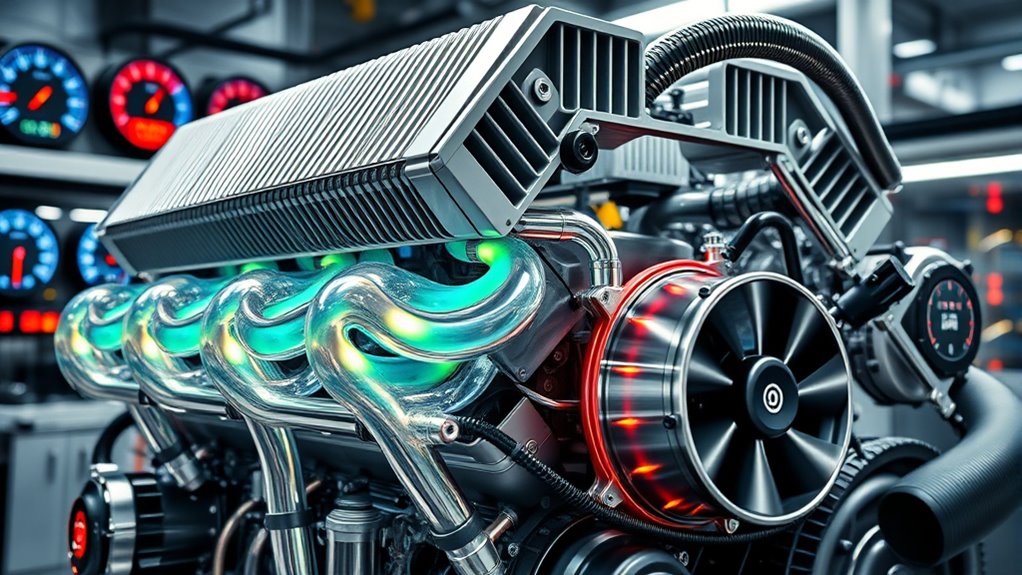
Innovations in cooling technology continue to push the boundaries of high-performance engine management. You now benefit from advanced thermal management systems that optimize heat dissipation, keeping engines cooler under extreme conditions. These innovations include liquid-cooled intercoolers, microchannel heat exchangers, and phase-change materials that absorb and release heat efficiently. By integrating these technologies, you improve heat dissipation, which enhances engine performance and longevity. Here’s a quick comparison:
| Technology | Benefit |
|---|---|
| Liquid-cooled intercoolers | Better thermal management, faster heat transfer |
| Microchannel heat exchangers | Compact design, high heat dissipation |
| Phase-change materials | Absorb excess heat, stabilize temperature |
| Vapor chambers | Rapid heat spread, improved cooling |
| Nanofluids | Enhanced thermal conductivity |
These innovations allow you to maintain ideal engine temperatures, even during intense driving, while advanced cooling techniques continue to evolve to meet the demands of high-performance engines. Additionally, ongoing research into thermal conductivity materials aims to further improve heat transfer efficiency in future cooling systems. Furthermore, the development of microchannel designs has significantly increased the efficiency of heat exchangers, enabling more compact and effective cooling solutions for high-performance applications. As materials with superior thermal properties are developed, cooling systems will become even more efficient and compact. This ongoing progress highlights the importance of innovative materials in shaping the future of thermal management.
Factors Influencing Cooling System Efficiency
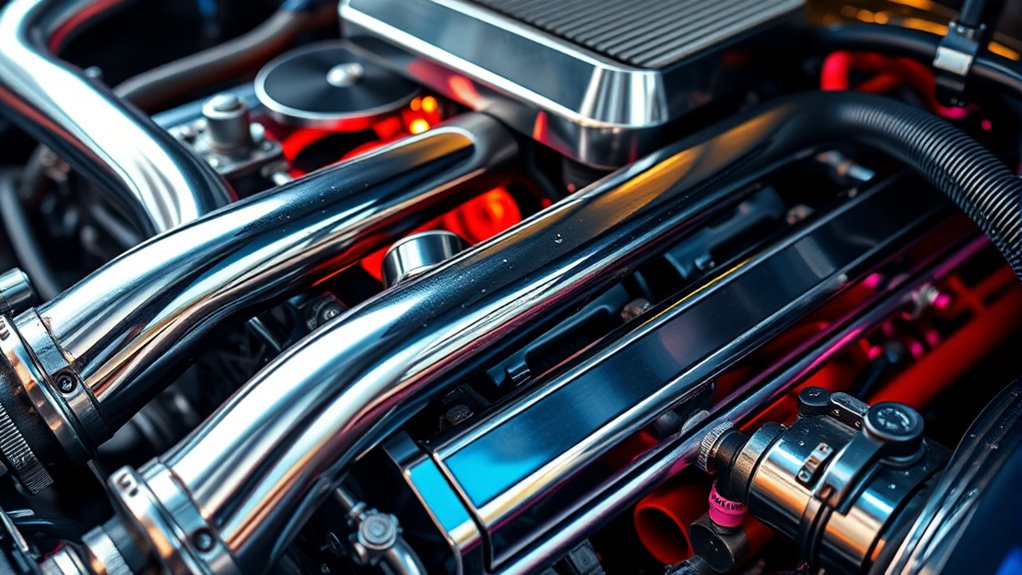
You can boost your cooling system’s efficiency by paying attention to coolant composition and flow, which directly affect heat transfer. Coolant quality can influence the longevity and effectiveness of your cooling system. The radiator’s design and size also play a vital role in dissipating heat effectively. Additionally, your thermostat and fan controls help regulate engine temperature, ensuring ideal performance under various conditions. Regular maintenance and proper component selection are essential for optimal cooling performance.
Coolant Composition and Flow
The effectiveness of a cooling system heavily depends on the coolant’s composition and flow rate. Proper coolant chemistry guarantees peak heat transfer and prevents corrosion or scaling. Maintaining the right flow dynamics allows heat to be evenly distributed and removed efficiently. You should consider factors like additives that improve thermal conductivity and prevent cavitation. A balanced flow rate avoids hotspots or system strain. Additionally, understanding nanotechnology applications can lead to the development of advanced coolants with enhanced properties. Incorporating curiosity into the design process can inspire innovative solutions for thermal management. Innovations in coolant formulation are continually advancing to optimize engine cooling performance. Here’s a quick overview:
| Aspect | Impact |
|---|---|
| Coolant chemistry | Prevents corrosion, enhances heat transfer |
| Flow rate | Ensures even distribution, avoids hotspots |
| Additives | Improve thermal conductivity, prevent scaling |
| System pressure | Maintains optimal flow and boiling point |
| Temperature control | Keeps engine within safe operating range |
Radiator Design and Size
Radiator design and size play a essential role in determining how effectively a cooling system can dissipate heat from a high-performance engine. The radiator shape impacts airflow and heat exchange efficiency; for example, a wider or taller shape can increase surface area. Core thickness also influences cooling capacity—thicker cores hold more coolant and improve heat transfer, but may add weight and restrict airflow if not designed properly. You should consider optimizing both shape and core thickness to match your engine’s heat output. A well-designed radiator ensures maximum surface contact with air and coolant, preventing overheating. Balancing these factors helps maintain ideal operating temperatures, especially under high load. Proper radiator design is indispensable for sustaining engine performance and longevity.
Thermostat and Fan Control
Efficient cooling depends heavily on how well the thermostat and fan system respond to engine temperature changes. As the engine warms, thermal expansion causes coolant to flow more rapidly, signaling the thermostat to open and regulate temperature. The thermostat’s responsiveness ensures the engine stays within essential operating ranges. Meanwhile, fan control plays a key role; adjusting fan speed helps dissipate heat effectively. When the engine reaches a set temperature, increasing fan speed enhances airflow, speeding up heat removal. Conversely, reducing fan speed conserves energy when cooling needs are lower. Proper coordination between thermostat operation and fan control maintains consistent engine temperatures, prevents overheating, and maximizes performance. This balance is critical for high-performance engines where precise temperature management directly impacts reliability and efficiency.
Common Cooling System Failures and Troubleshooting

Cooling system failures can leave your engine vulnerable to overheating and damage if not quickly identified and addressed. Common issues include radiator leaks, coolant contamination, and clogged hoses. Radiator leaks reduce coolant levels, leading to inadequate heat transfer, while coolant contamination can cause corrosion and blockages. Troubleshooting involves inspecting for visible leaks, checking coolant color and consistency, and monitoring temperature gauges. Regularly inspect hoses for cracks or swelling. Use the table below to understand typical failure symptoms and solutions:
| Symptom | Possible Cause |
|---|---|
| Overheating engine | Radiator leaks or coolant contamination |
| Coolant loss | Leaks or evaporation |
| Poor heat transfer | Blocked radiator or contaminated coolant |
Future Trends in Engine Cooling Solutions
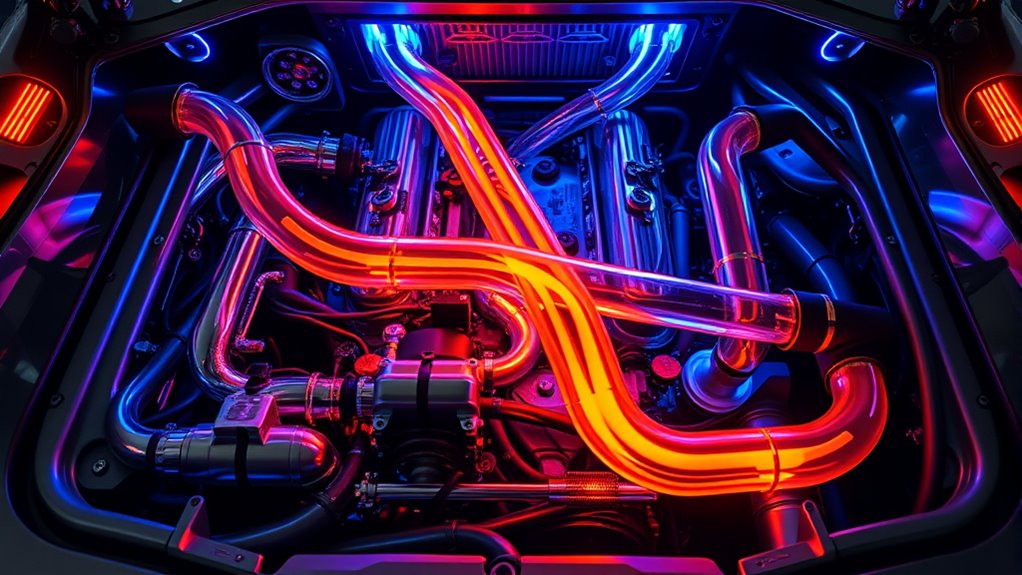
Advancements in engine cooling technology are shaping the future of automotive performance and reliability. You’ll see a shift toward electric cooling systems, which use electric pumps and fans to maximize temperature control more efficiently and reduce energy consumption. Hybrid cooling solutions are also emerging, combining traditional liquid cooling with advanced electronics to adapt to varying engine conditions dynamically. These innovations enable engines to operate at ideal temperatures, boosting efficiency and longevity. You might notice that electric cooling reduces reliance on engine-driven components, leading to simpler, lighter systems. As these technologies evolve, expect more intelligent, responsive cooling systems that enhance high-performance engines, improve fuel economy, and support the increasing integration of electric and hybrid powertrains.
Frequently Asked Questions
How Do Cooling Systems Impact Engine Power Output?
Cooling systems directly impact your engine’s power output by maintaining ideal cooling efficiency. When your cooling system works well, it prevents overheating, allowing your engine to operate at its peak without losing power. Conversely, poor cooling reduces power retention because excess heat causes engine parts to work less efficiently. So, a reliable cooling system ensures your high-performance engine stays cool, maximizing power output and overall performance.
What Are the Environmental Effects of Different Cooling Methods?
Your choice of cooling method can dramatically impact the environment—some produce minimal emissions, while others release significant cooling emissions that harm air quality. For instance, liquid cooling systems tend to be more eco-friendly than air-based ones, which can emit more greenhouse gases. By selecting efficient cooling solutions, you reduce environmental impact, helping to lower cooling emissions and combat climate change, making your engine’s performance more sustainable and Earth-friendly.
How Does Ambient Temperature Influence Cooling System Performance?
Ambient temperature directly impacts your cooling system’s performance by affecting ambient heat transfer. When temperatures rise, your cooling efficiency drops because the system struggles to dissipate heat into the hotter environment. Conversely, cooler ambient temperatures help your cooling system operate more efficiently, allowing it to maintain ideal engine temperatures. So, in hot weather, you might notice your engine runs hotter, requiring extra cooling measures to prevent overheating.
Can Cooling Systems Be Customized for Specific High-Performance Engines?
Yes, you can customize cooling systems for specific high-performance engines. By implementing cooling system modifications like upgraded radiators, electric fans, or specialized coolant pathways, you enhance engine temperature regulation. These adjustments help manage increased heat output, ensuring ideal performance and longevity. Tailoring your cooling system to your engine’s unique needs allows better heat dissipation, prevents overheating, and keeps your high-performance engine running smoothly under demanding conditions.
What Maintenance Schedules Are Recommended for Optimal Cooling Efficiency?
You should stick to a regular maintenance schedule to keep things running smoothly. Change the coolant every 2-3 years or as recommended, and don’t forget to examine the radiator for leaks or blockages. Think of it as a well-oiled machine—if you neglect it, trouble’s just around the corner. Keeping up with these tasks ensures your cooling system stays efficient and your engine runs at its best.
Conclusion
As you explore the world of high-performance engines, you’ll discover that cooling systems are quietly essential, ensuring your engine runs smoothly and efficiently. While they often work behind the scenes, their importance can’t be overstated—like a gentle guardian maintaining balance. Embracing innovative cooling solutions can help you unleash peak performance and longevity. By paying attention to these systems, you nurture your engine’s health, keeping it reliable and ready for the road ahead.
Fall Picks
fall essentials
As an affiliate, we earn on qualifying purchases.