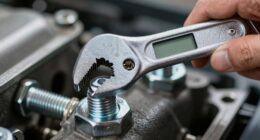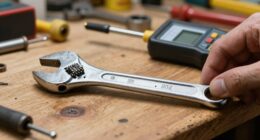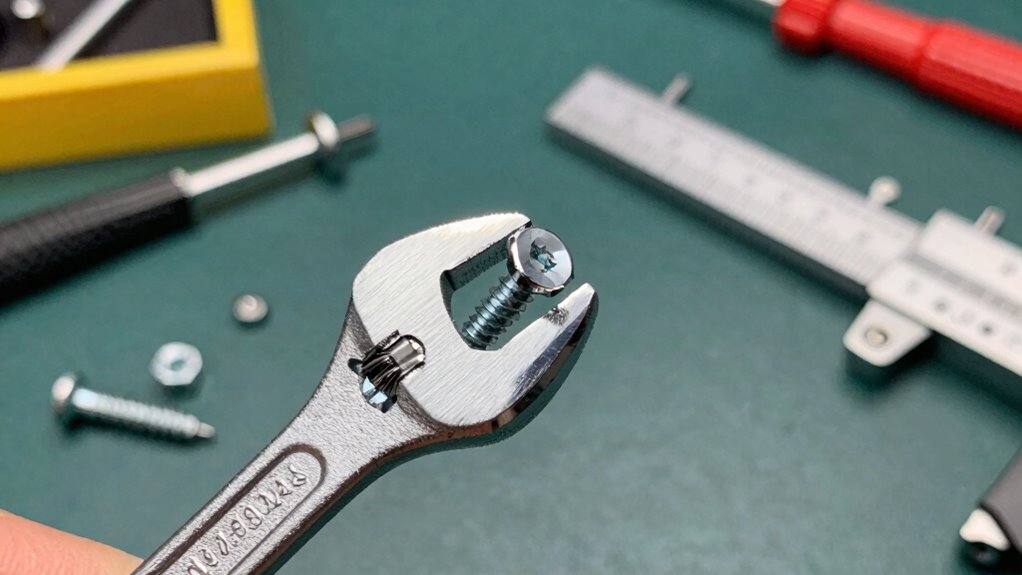

When working with small fasteners, you might over-tighten because torque wrenches are less accurate at low settings, especially if not properly calibrated. Minor technique errors, like rushing or uneven pressure, can also cause you to apply more force than intended. Regular calibration and proper use are essential to maintain precision. If you keep these tips in mind, you’ll better understand how to avoid over-tightening small fasteners and improve your results.
Key Takeaways
- Inaccurate calibration at low torque settings can cause small fasteners to be over-tightened.
- User technique, such as rushing or uneven force, significantly impacts low-torque accuracy.
- Low-torque ranges are challenging to measure precisely, increasing the risk of over-tightening.
- Improper use of torque wrenches without proper training can lead to misapplication at small torque values.
- Regular calibration and adherence to manufacturer instructions help maintain low-torque accuracy and prevent over-tightening.
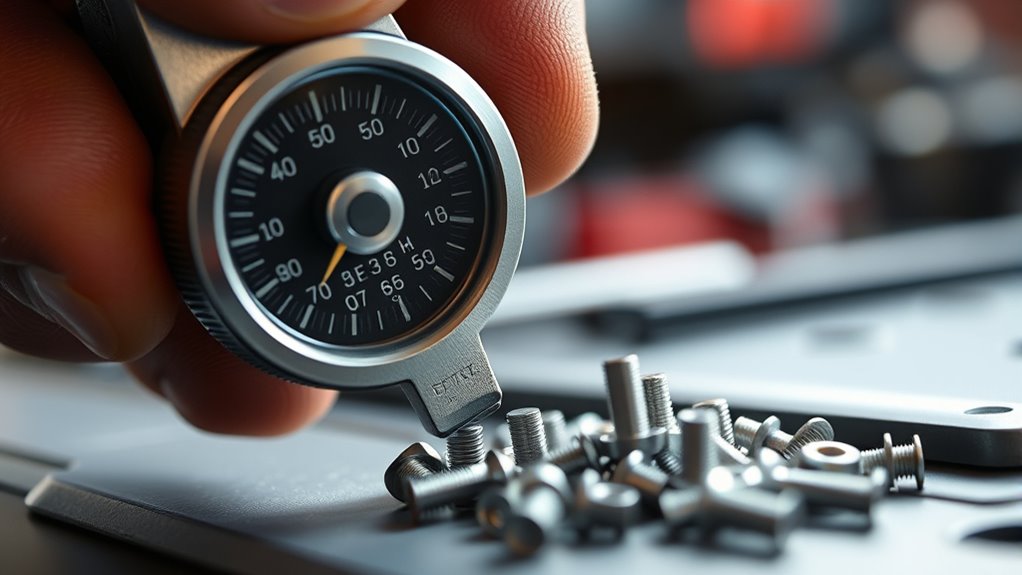
Achieving accurate torque at low settings can be challenging, yet it’s essential for tasks like automotive repairs and assembling delicate machinery. When working with small fasteners, even slight inaccuracies can lead to over-tightening or insufficient clamping force, risking damage or failure. One key factor influencing low-torque precision is adherence to calibration standards. Calibration ensures your torque wrench provides reliable measurements, especially at the lower end of its range. Regularly checking your tool against certified standards guarantees consistency and accuracy, preventing misapplication that could compromise the integrity of your work. Without proper calibration, you might unknowingly apply more torque than intended, particularly with small fasteners, leading to stripped threads or damaged components.
Your user technique also plays a crucial role in maintaining torque accuracy at low settings. It’s tempting to rely solely on the wrench’s readout, but how you handle the tool makes a significant difference. For example, applying uneven force or rushing through the tightening process can cause inaccuracies. Instead, you should use smooth, controlled motions, maintaining steady pressure until you reach the desired torque. Also, be aware of your body positioning; applying downward force evenly helps guarantee consistent results. Many people underestimate how much their grip and posture affect the accuracy of torque application, especially at low settings where small deviations can cause large percentage differences. Additionally, understanding the proper use of your torque wrench—whether it’s a click-type, beam, or digital model—is essential. Each type responds differently to user technique, and manufacturers often specify how to achieve the most precise readings. For instance, with a click-type wrench, you should listen for the click and stop applying force immediately. For beam models, you need to read the scale carefully at eye level without rushing. Digital models often have alerts or visual indicators that help you stop precisely at the correct torque. Training yourself to use these tools correctly, following manufacturer instructions, and calibrating them periodically according to industry standards can drastically improve low-torque accuracy. Moreover, being aware of instrument calibration and its importance in precision work helps ensure your torque wrench remains reliable over time.
Frequently Asked Questions
How Does Temperature Affect Low-Torque Accuracy?
Temperature affects low-torque accuracy because thermal expansion causes the wrench’s materials to expand or contract, altering its calibration. When it’s hot, parts may expand, leading to over-tightening, while cold temperatures can cause contraction, making the torque less precise. Material conductivity also plays a role, as it influences how quickly heat affects the wrench. You should regularly calibrate your torque wrench, especially in extreme temperatures, to maintain accuracy.
Are Digital Torque Wrenches More Reliable at Low Settings?
Digital torque wrenches are generally more reliable at low settings because their digital calibration and sensor sensitivity allow for precise readings. You can easily verify calibration accuracy, ensuring consistent torque application. Unlike traditional wrenches, digital models reduce guesswork at low torque levels, minimizing over-tightening risks. So, if you need accurate, repeatable results with small fasteners, a digital torque wrench offers better reliability and control.
Can Calibration Errors Cause Over-Tightening on Small Fasteners?
Calibration errors can definitely cause over-tightening on small fasteners. If your torque wrench experiences calibration drift, it may inaccurately indicate you’ve reached the desired torque, leading you to tighten more than necessary. Additionally, your user technique plays a role; applying inconsistent force or not following proper procedures can compound the problem. Regular calibration checks and proper technique help make certain you don’t over-tighten those tiny fasteners.
What Maintenance Improves Low-Torque Precision?
You can improve low-torque precision by regularly maintaining your torque wrench. For example, ensuring lubrication consistency and keeping fasteners clean prevents slipping and inaccuracies. Check and calibrate your tool often, and clean fasteners thoroughly before tightening. This reduces friction variability, helping you achieve consistent, accurate tightness on small fasteners without over-tightening, especially at low torque settings. Proper maintenance is key for reliable, precise results every time.
Do Different Materials Impact Torque Wrench Performance at Low Levels?
Different materials can impact your torque wrench performance at low levels because material effects influence fastener properties. Softer materials may require more precise torque application, while harder ones can affect the wrench’s accuracy. You should consider these material effects to avoid over-tightening small fasteners. Using a calibrated torque wrench suited for specific fastener properties helps ensure consistent, accurate results, especially when working with delicate or varying materials.
Conclusion
When working with small fasteners, don’t rely solely on your torque wrench—it’s like trusting a cat to guard your treasure. Even the best tools can lose accuracy at low torque settings, risking over-tightening that could cause catastrophic damage. Always double-check your torque settings and consider calibration or alternative methods. Remember, precision isn’t just a skill; it’s your secret weapon against tiny fastener disasters. Stay vigilant, and your projects will hold strong like a fortress!