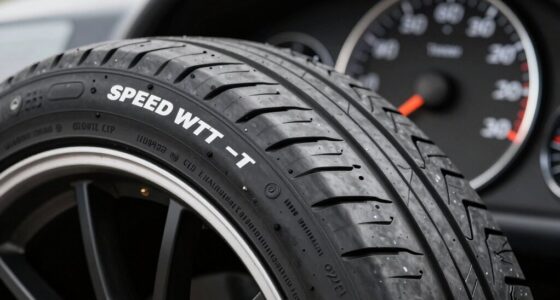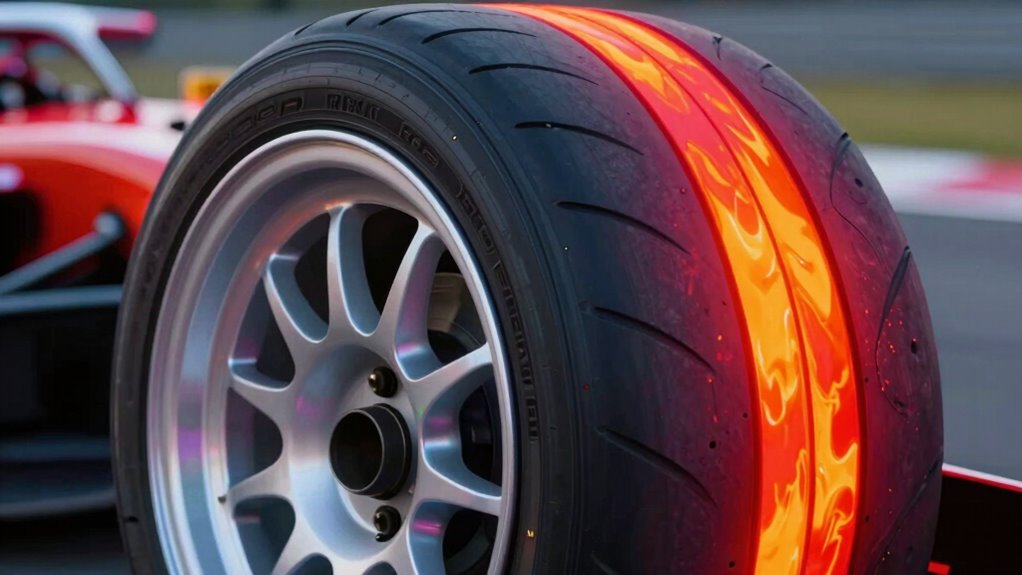

Tire temperature considerably affects your vehicle’s grip, handling, and safety. Cold tires provide less traction because the rubber is stiff, while warm tires improve grip as the rubber becomes more flexible. Overheating tires, however, causes rubber breakdown, reduces traction, and increases slipping risk. Managing tire temperature guarantees peak performance and safety. By understanding how different compounds and driving conditions influence temperature, you’ll be better equipped to maintain your tires—more details can help you enhance your driving experience.

Get business pricing on garage and car supplies
- Business-only prices and quantity discounts
- Tax-exempt purchasing
- Multiple users, one account, clear invoices
Key Takeaways
- Tire grip improves with optimal temperature; cold tires have less traction, while overheating reduces grip due to rubber breakdown.
- Different tire compounds respond uniquely to temperature changes, affecting grip and performance.
- Driving heats tires, and maintaining ideal temperatures is crucial for maximum handling and safety.
- Overheating tires causes rubber degradation, leading to decreased traction and increased slipping risks.
- Monitoring tire temperature with gauges helps maintain optimal performance and prevents loss of control.
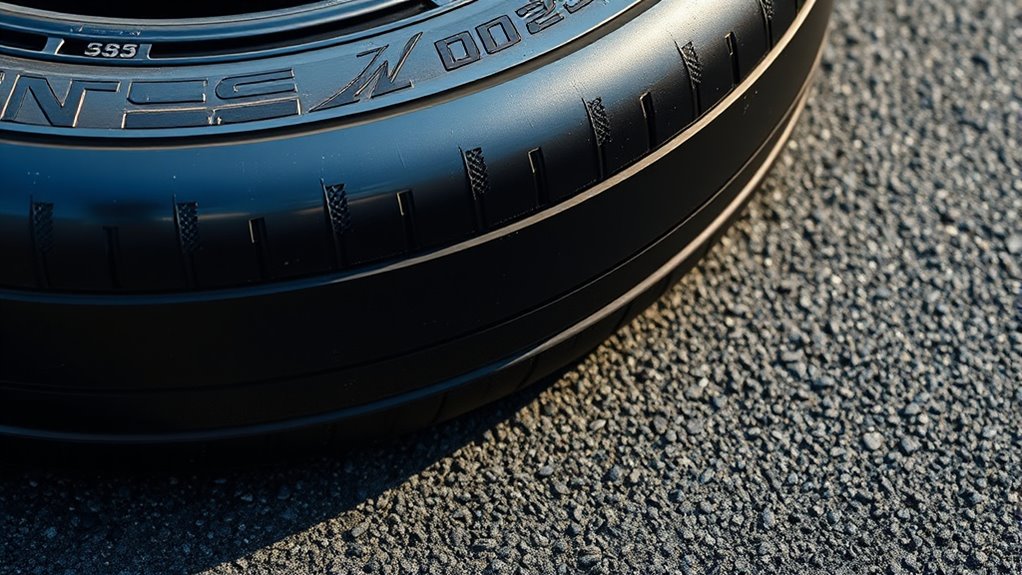
Understanding how tire temperature affects performance is essential for optimizing your vehicle’s handling and safety. When your tires heat up, their ability to grip the road changes markedly, influencing everything from acceleration to cornering. One of the most vital factors in this process is the tire compounds used in your tires. Different compounds have varying sensitivities to temperature changes, which directly impacts grip levels. Softer compounds tend to generate more heat and usually deliver higher grip levels when they reach their perfect temperature range. However, if they overheat, their performance can decline rapidly, leading to reduced traction and increased risk of slipping. Conversely, harder compounds might handle higher temperatures better but often provide less initial grip, especially in cooler conditions. Knowing the type of tire compound you’re using allows you to better predict how your tires will perform under different driving scenarios.
As your tires heat up during driving, their grip levels fluctuate. When tires are cold, they don’t offer much traction because the rubber isn’t flexible enough to conform to the road surface. As they warm up, the rubber becomes more pliable, increasing grip levels and improving handling. This is why, in racing or aggressive driving, drivers often aim to bring tires up to their ideal temperature quickly. If tires become too hot, however, their grip can diminish. Excessive heat causes the rubber to break down, reducing its ability to adhere to the road. This is why maintaining proper tire temperatures is vital—too cold, and you lack grip; too hot, and you risk losing traction altogether. Additionally, proper tire maintenance can help ensure consistent performance across different conditions. Implementing consistent monitoring techniques enables drivers to maintain optimal temperature ranges and enhance overall safety.
Monitoring tire temperature with dedicated gauges or sensors can provide valuable insights into when your tires are within their optimal range, allowing you to optimize driving techniques accordingly.
As an affiliate, we earn on qualifying purchases.
Frequently Asked Questions
How Does Tire Pressure Influence Temperature and Grip?
You’ll notice that higher tire pressure reduces contact with the road, which can decrease grip, but it also keeps the tire cooler because less flex generates less heat. Conversely, lower pressure increases contact patch, improving grip, but raises temperature due to more flex. Tire compound characteristics and tread pattern effects also influence how pressure impacts temperature and grip, with softer compounds and aggressive tread patterns generating more heat and grip at lower pressures.
What Are Optimal Tire Temperatures for Different Racing Conditions?
You should aim for tire temperatures around 70-100°C (158-212°F) for ideal grip in racing. For dry, high-speed conditions, choose a harder tire compound and optimize tire pressure to maintain consistent temperature. In wet or cooler races, opt for softer compounds and adjust pressure to increase heat buildup. Always monitor tire temperature to adapt your tire compound selection and pressure, ensuring maximum performance and safety on different racing surfaces.
How Can I Measure Tire Temperature Accurately During Driving?
Think of your tires like a car’s heartbeat—monitoring them keeps you in sync. To measure tire temperature accurately during driving, use infrared thermometers or tire sensors. Infrared thermometers quickly scan the tire surface without contact, while tire sensors provide real-time data directly from the wheel. Both tools give you precise readings, helping you adjust your driving or tire pressure to optimize performance and safety on the track.
Do All Tire Types Respond Similarly to Temperature Changes?
Not all tire types respond similarly to temperature changes. Your tire material plays a big role; rubber compounds designed for high performance heat up faster and may lose grip if too hot. Tread pattern also affects heat dissipation—sipes and grooves help cool tires, but racing slicks retain more heat. Understanding these differences helps you choose the right tires for your driving style and conditions.
How Does Tire Wear Affect Temperature and Performance?
Imagine your tire as a vintage radio losing clarity—that’s how tire wear impacts performance. As tire tread degrades, heat builds up more easily, leading to uneven temperature distribution. Rubber compound effects become more pronounced, reducing grip and responsiveness. Worn tires can overheat, causing faster deterioration and compromised safety. Keep an eye on tread depth and replace tires timely to maintain ideal temperature regulation and performance on the road.
As an affiliate, we earn on qualifying purchases.
Conclusion
Understanding tire temperature is like tuning a musical instrument—you need the right balance for perfect performance. When your tires heat up appropriately, they grip the road like a loyal dog on a walk, enhancing your safety and speed. Keep an eye on those temps, and you’ll find your ride smoother and more responsive. Remember, a well-managed tire temperature is the secret sauce that keeps your driving experience in harmony and on pitch.
performance tire pressure monitor
As an affiliate, we earn on qualifying purchases.
As an affiliate, we earn on qualifying purchases.
As an affiliate, we earn on qualifying purchases.
Halloween Picks
halloween
As an affiliate, we earn on qualifying purchases.