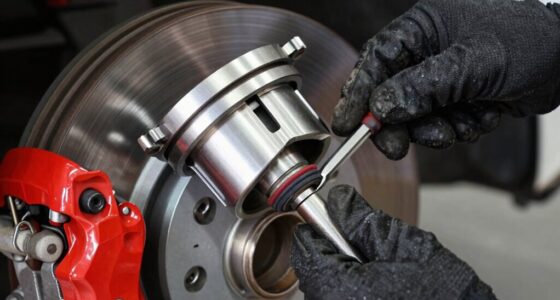
To check your wheel bearing play, first make certain your vehicle is on a level surface with the parking brake engaged and wheel chocks in place. Lift the vehicle safely using jack stands, remove the wheel, and grip it firmly at 12 and 6 o’clock to perform a vertical shake test. Next, grasp at 9 and 3 o’clock for side-to-side movement. If you notice excessive play or noise, it could be a sign of bearing wear. Continuing with proper steps can help you catch problems early.
Listen free for 30 days with Audible
Thousands of audiobooks and originals — cancel anytime.
As an affiliate, we earn on qualifying purchases.
Key Takeaways
- Secure the vehicle on level ground with properly rated jack stands and chocks before removing the wheel.
- Remove the wheel and lug nuts, then grasp the tire at 12 and 6 o’clock positions to perform vertical play testing.
- Apply steady, gentle pressure to detect axial or radial wheel movement, indicating bearing wear.
- Confirm lug nuts are torqued to specifications to prevent false play readings during the test.
- Listen for grinding noises or feel for excessive movement to accurately assess potential wheel bearing issues.
Understanding the Signs of Wheel Bearing Issues

Recognizing the signs of wheel bearing issues is essential to prevent further damage and guarantee safety. One of the first clues is uneven or faster tire wear, which hints at bearing overload or misalignment. If you notice warning lights for ABS, traction, or stability, it could be linked to wheel speed sensor problems caused by bearing damage. Visible grease leaks or rust at the hub seal suggest contamination or seal failure. Also, check for loose lug nuts or damaged wheel studs, which can mimic bearing play. Vibration or noise when braking, coupled with steering pull, may also point to bearing trouble. Performing a visual inspection and listening for abnormal sounds during a spin test can help you detect early issues before they escalate. Additionally, understanding modern diagnostic tools can assist in accurately identifying bearing problems.
Preparing Your Vehicle for the Play Test
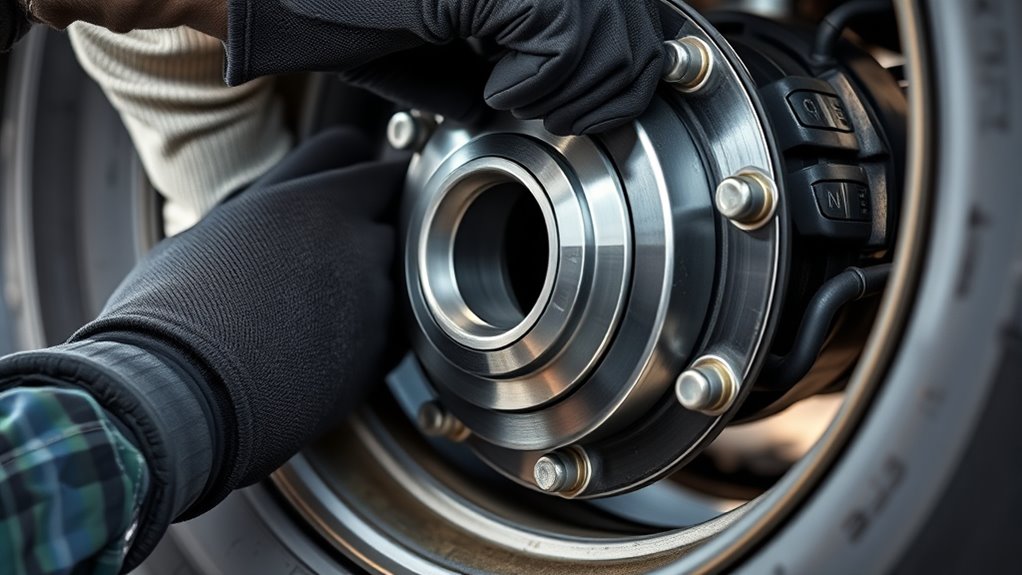
Before starting the play test, make sure your vehicle is properly secured on level ground with jack stands. Check the tire conditions for uneven wear or damage that could affect your diagnosis, and confirm that all lug nuts and hub bolts are torqued to the manufacturer’s specifications. Taking these steps guarantees your test results are accurate and safe. Familiarizing yourself with vehicle maintenance concepts can help you identify potential issues before they become dangerous. Additionally, understanding projector technology can help you better interpret the results of your inspection. Being aware of criminal investigation procedures can also assist in recognizing signs of tampering or abnormal wear that might indicate underlying problems. For example, inspecting for signs of tampering or abnormal wear can reveal underlying issues that need addressing before proceeding with the test. Knowing about website performance metrics can also help you understand how your vehicle’s components are functioning under different conditions.
Secure Vehicle Properly
To guarantee accurate and safe wheel bearing play testing, you must properly secure your vehicle before starting. Start by parking on a level surface and engaging the parking brake. Use quality jack stands rated for your vehicle’s weight to lift and support the vehicle securely; never rely solely on a hydraulic jack. Place wheel chocks behind the opposite tires to prevent movement. Confirm that the vehicle is stable and fully supported before proceeding. Proper securing ensures safety and prevents accidents during testing. Always double-check that your vehicle is stable, and consider inspecting your wheels and tires for any signs of damage or uneven wear before beginning the test to avoid potential hazards. Additionally, being aware of European cloud innovation can help you stay informed about advances in vehicle safety technology and data security. Regularly reviewing maintenance best practices can further enhance your vehicle’s safety and performance during such tests. Staying informed about upfitting fundamentals can also improve your approach to vehicle modifications and safety measures.
Check Tire Conditions
Ensuring your tires are in good condition is essential before performing a wheel bearing play check. Start by inspecting the tire surface for uneven or accelerated wear, which can signal bearing overload or misalignment. Check for cracks, cuts, or bulges that compromise tire integrity. Look for visible signs of grease leakage or rust around the hub area, indicating seal failure or contamination. Confirm that tire pressure is correct according to manufacturer specifications, as improper pressure affects handling and can mask or mimic bearing issues. Remove debris or mud lodged between the tire and wheel to prevent false readings. Also, ensure wheel lug nuts are properly torqued to avoid loose wheels, which can be mistaken for bearing play. Proper tire condition sets a reliable foundation for accurate testing. Additionally, inspecting the tire conditions helps maintain optimal performance of electric bikes and dirt bikes alike.
Confirm Correct Torques
Properly torquing wheel lug nuts and hub components is essential for accurate bearing play assessment. If these fasteners are loose or unevenly tightened, they can mimic bearing play or mask actual issues. Before performing any tests, double-check that the lug nuts are torqued to the manufacturer’s specifications using a calibrated torque wrench. This guarantees the wheel is securely mounted without overstressing the studs or hub. Similarly, verify that hub components, such as axle nuts or retaining bolts, are correctly torqued to avoid false positives or negatives during your inspection. Proper torque application maintains the integrity of the wheel assembly, provides a stable platform for testing, and ensures safety during the process. Always recheck torque after test procedures to confirm everything remains secure.
Locating and Securing the Suspect Wheel
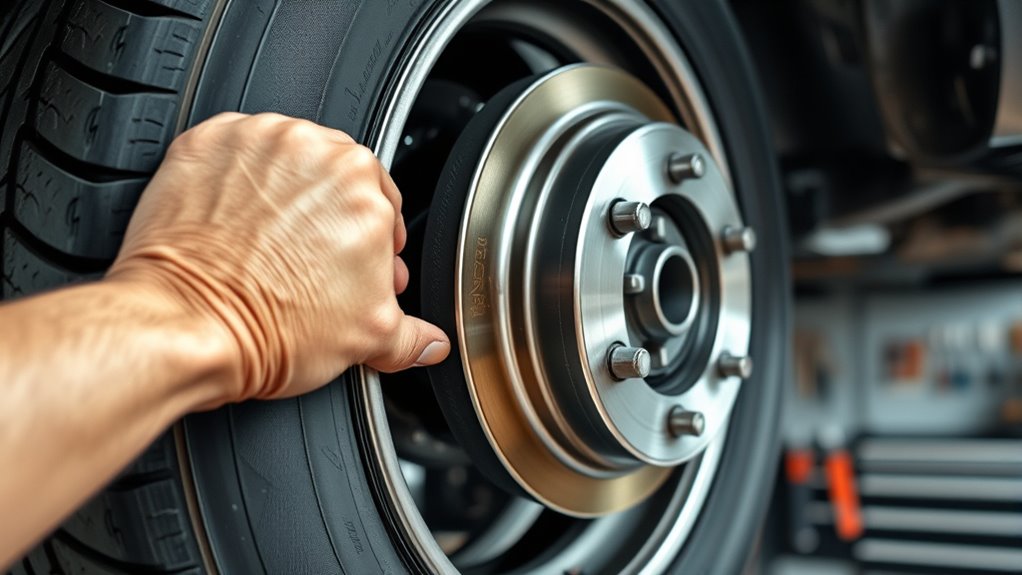
Locating and securing the suspect wheel is the first step in diagnosing a wheel bearing issue. First, you need to identify which wheel might be faulty—listen for noise, feel for vibrations, or check for uneven tire wear. Once identified, safely lift your vehicle using a jack and secure it on jack stands on a level surface. Remove the wheel lug nuts and take off the wheel, ensuring you don’t damage studs or the hub. Confirm the vehicle’s safety before proceeding with any tests. Properly secured and elevated, you can proceed with more detailed checks like wobbling or spinning the wheel to pinpoint issues. Always ensure the vehicle is stable before working underneath it to prevent accidents, and consider consulting recommended maintenance procedures to avoid potential hazards. Regularly inspecting wheel bearing play can help prevent dangerous failures. Additionally, performing a visual inspection for any signs of damage or wear on the bearing area can provide early indications of problems.
Performing the Vertical “shake” Test for Axial Play
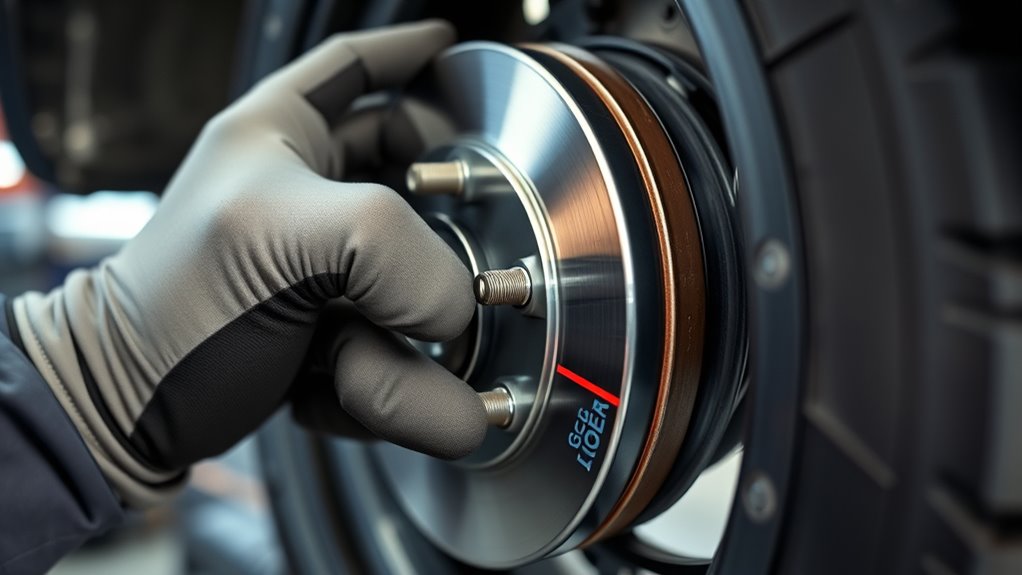
To perform the vertical “shake” test for axial play, lift the vehicle and secure it on jack stands, ensuring the wheel is completely off the ground. Grip the wheel at 12 and 6 o’clock positions, then gently rock it in and out. Any noticeable vertical movement suggests axial play, which often indicates bearing wear or damage. Before making a diagnosis, double-check that the lug nuts are properly torqued to eliminate false positives. While rocking, observe the wheel for abnormal movement and inspect the suspension components, such as control arms and ball joints, to rule out other causes. This test helps identify excessive axial movement, a common sign of failing wheel bearings, and determines if further inspection or replacement is necessary. Regular inspections and understanding repair fundamentals can help prevent costly failures. Additionally, understanding bearing design can aid in recognizing early warning signs and ensuring proper maintenance. Incorporating proper lubrication into your maintenance routine can extend the lifespan of wheel bearings and reduce the risk of failure. Recognizing signs of wear early can also help you schedule repairs before a dangerous failure occurs. Being aware of symptom patterns can lead to more accurate diagnoses and timely interventions.
Conducting the Side-to-Side “shake” Test for Radial Play
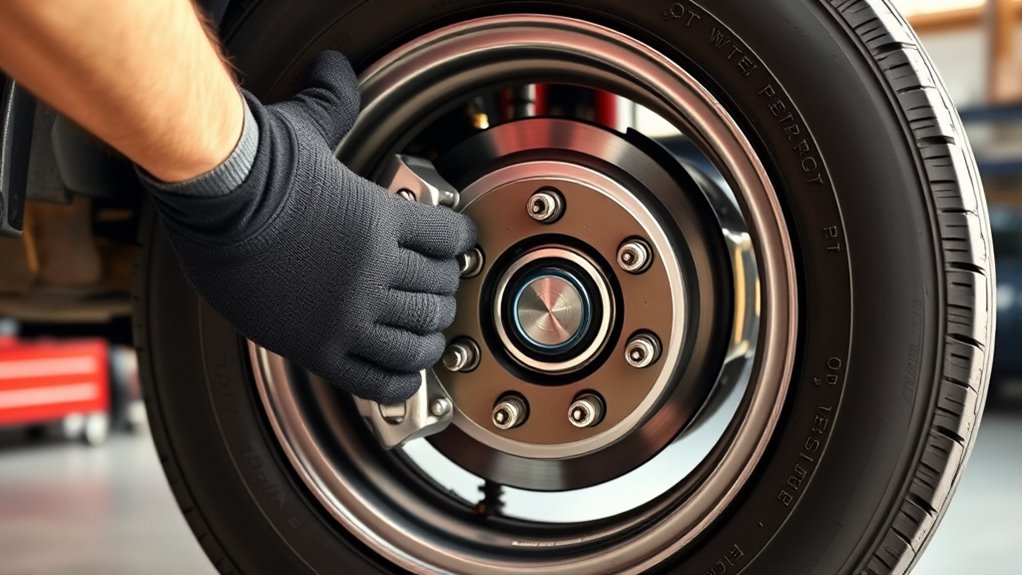
To check for radial play, position your hands at 9 and 3 o’clock on the wheel, ensuring a firm grip. Apply gentle side-to-side pressure to feel for any excessive movement, which can indicate bearing wear. Make sure the lug nuts are properly torqued to prevent false readings before evaluating the wheel’s movement.
Proper Hand Placement
When conducting the side-to-side “shake” test for radial play, proper hand placement is essential to accurately detect any looseness in the wheel bearing. You want to grip the wheel firmly but gently at the 9 and 3 o’clock positions, keeping your thumbs on the tire’s sides for control. Avoid gripping too tightly, which can mask movement or cause fatigue. Keep your wrists steady and use your palms and fingers to apply smooth, consistent pressure. Focus on feeling for any side-to-side wiggle or play, not on forcing the wheel. Remember to stand securely and maintain balance.
- Use your fingertips and palms for a controlled grip
- Apply gentle, steady pressure rather than aggressive force
- Keep your wrists straight to avoid false readings
- Stay balanced and maintain a firm stance
Detecting Excessive Movement
Detecting excessive movement during the side-to-side shake test requires careful hand placement and consistent pressure. Grip the wheel at 9 and 3 o’clock firmly, then gently push and pull to feel for side-to-side play. Any noticeable movement indicates potential axial or radial bearing wear. Verify your hands are steady and apply even pressure to avoid false readings. While performing the test, watch for loose or wobbly wheel movement that persists beyond normal tolerances. Confirm that lug nuts are properly torqued before testing to prevent misdiagnosis. If you detect excessive side-to-side movement, further inspection of the bearing and surrounding components is necessary. Remember, even slight play can signal early bearing failure, so don’t ignore small movements—address them promptly to prevent more serious damage.
Interpreting the Results of Your Play Check
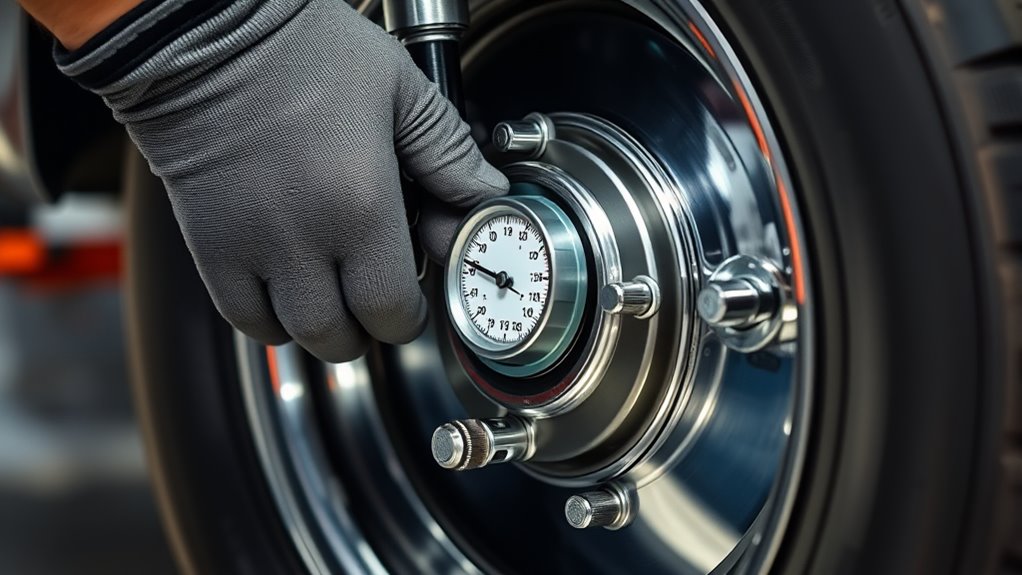
Interpreting the results of your play check requires careful consideration of what you feel or observe during the test. If you notice any movement or looseness, it often indicates a worn or damaged bearing. However, it’s essential to differentiate between true bearing play and issues caused by other components.
- Perceptible vertical or side-to-side movement usually points to bearing wear, especially if it’s felt at the 12/6 or 9/3 positions.
- Noise during spinning, like grinding or humming, suggests deteriorating rollers or races.
- Inconsistent noise or vibration when turning or at different speeds can help pinpoint whether the bearing or another part causes the issue.
- Check for loose lug nuts or suspension components first, as they can mimic bearing play, skewing your diagnosis.
Differentiating Bearing Play From Suspension or Tire Problems

Looseness or noise during a wheel play check can be caused by several components beyond the bearing itself, making it important to distinguish between bearing issues and suspension or tire problems. Tire problems like uneven wear or bulges can cause vibration, while loose lug nuts mimic bearing play. Suspension components such as ball joints or control arms may produce similar symptoms if worn. To differentiate, consider this table:
| Symptom/Source | How to Test | Key Indicator |
|---|---|---|
| Tire wear | Inspect tire surface | Uneven wear suggests tire issues |
| Lug nuts | Check torque | Loose nuts cause play |
| Suspension joints | Wiggle suspension parts | Worn joints produce movement |
| Wheel bearing | Rock wheel at 12/6 and 9/3 | Play only at hub indicates bearing wear |
| Brake components | Observe during brake test | Warped rotors cause vibration |
Understanding these differences helps identify the true cause before costly repairs. Additionally, bearing play detection is crucial in preventing further damage and ensuring safe driving. Recognizing the signs early can save you from expensive repairs and potential safety hazards.
Ensuring Proper Safety and Measurement Practices
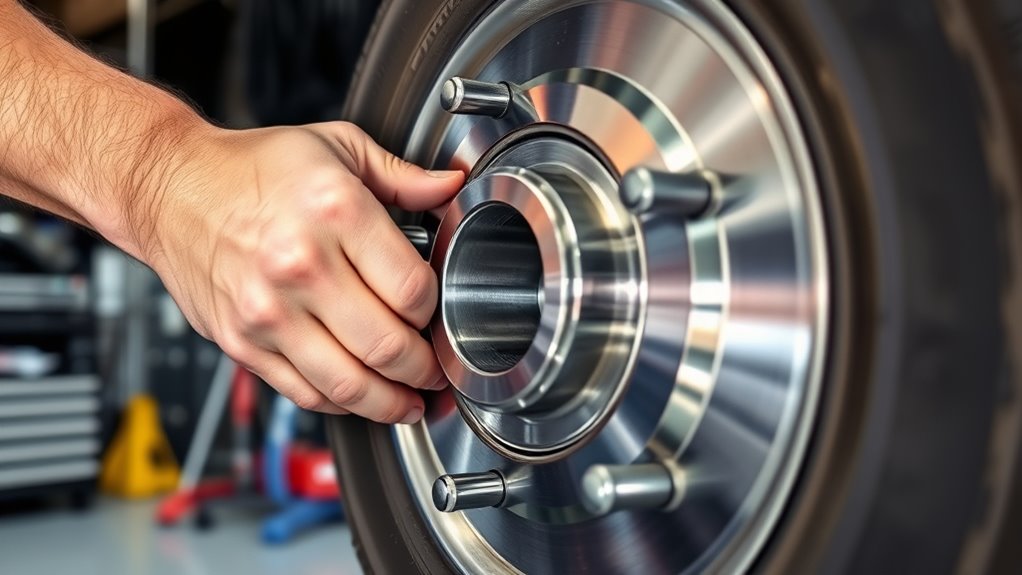
Ensuring proper safety and measurement practices is essential for accurate diagnosis and safe vehicle handling during wheel bearing inspections. You must follow proper procedures to avoid injury and incorrect results. Always support your vehicle securely on level ground using rated jack stands—never rely solely on a hydraulic jack. Use calibrated tools like dial indicators for precise measurements of bearing runout or preload. Confirm wheel lug nut torque with a torque wrench before testing, ensuring the wheel is properly secured. When measuring, keep a detailed record of readings and audio/video evidence of any noise issues. Additionally, double-check other components like tie-rods and suspension parts to rule out false positives, and always prioritize safety by following manufacturer guidelines and using appropriate protective gear.
- Support the vehicle securely on level ground
- Use calibrated measurement tools for accuracy
- Confirm torque specifications before testing
- Document findings with audio or video clips
Knowing When to Seek Professional Inspection and Repair

Recognizing when to seek professional inspection and repair is crucial to prevent further damage and guarantee your safety. If you notice persistent grinding sounds, increased vibration, or uneven tire wear, it’s time to consult an expert. Visible grease leaks, rust, or loose lug nuts also signal issues beyond simple checks. Always verify that suspension components and tire conditions are ruled out first. If you’re unsure about the source of noise or play, a professional diagnosis ensures accurate identification and safe repair.
| Symptom | Action Required | Why It Matters |
|---|---|---|
| Persistent noise or vibration | Seek professional inspection | Prevents further damage |
| Visible grease or rust | Have a mechanic assess the bearing | Avoid contamination and failure |
| Uneven tire wear | Get expert diagnosis | Ensures safety and longevity |
| Loose lug nuts or damaged studs | Immediate professional repair | Prevent wheel separation |
Frequently Asked Questions
Can Loose Lug Nuts Cause Similar Wheel Play as Bad Bearings?
Yes, loose lug nuts can cause wheel play that feels similar to bad bearings. When lug nuts aren’t properly tightened, the wheel can wobble or shift, mimicking bearing issues. Always confirm lug nuts are torqued to manufacturer specs before diagnosing bearing problems. If you notice play, recheck wheel lug torque first, as tightening them correctly might eliminate the wobble, saving you from unnecessary bearing replacement.
How Often Should I Perform a Wheel Bearing Check?
Think of checking your wheel bearings like getting a routine health checkup. You should inspect them every 12,000 to 15,000 miles, or at every oil change if you drive in harsh conditions. If you notice uneven tire wear, noise, or vibrations, check sooner. Regular inspections help catch problems early, preventing dangerous failures. Staying proactive keeps your vehicle safe and smooth, just like regular health visits keep you feeling your best.
Are There Specific Tools Needed for an Accurate Play Test?
You’ll need a few specific tools for an accurate play test. A reliable jack and jack stands are essential to lift and secure the vehicle safely. Use a tire iron or your hands to wiggle the wheel at 12 and 6 o’clock and 9 and 3 o’clock positions. For precise measurements, a dial indicator helps detect any radial or axial play. A torque wrench guarantees lug nuts are properly tightened to avoid false readings.
What Are the Risks of Ignoring Slight Wheel Play?
Ignoring slight wheel play can be risky, especially since 70% of wheel bearing failures worsen gradually. If you neglect it, you risk damaging the hub, ABS sensor, or even causing wheel separation. This can lead to loss of control, accidents, or costly repairs. Early detection and fixing prevent these dangers, so don’t dismiss minor play—address it promptly to keep you safe and avoid bigger problems down the road.
Can Uneven Tire Wear Be Caused Solely by Bearing Issues?
Uneven tire wear can be caused solely by bearing issues, especially if the bearings are loose or worn. When bearings fail, they misalign the wheel or create excessive movement, leading to uneven contact with the road surface. This uneven contact causes irregular tire wear patterns. However, other factors like misalignment or suspension problems can also contribute, so it’s best to inspect all components for a proper diagnosis.
Conclusion
Remember, catching wheel bearing play early can save you from costly repairs and dangerous breakdowns. By performing simple tests yourself, you take control of your vehicle’s safety. If in doubt, don’t hesitate—it’s better to be safe than sorry. As the saying goes, “A stitch in time saves nine.” Regular checks keep you confident on the road, so stay vigilant and address issues before they become serious.
Flea & tick season Picks
flea and tick prevention
As an affiliate, we earn on qualifying purchases.