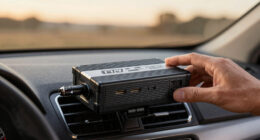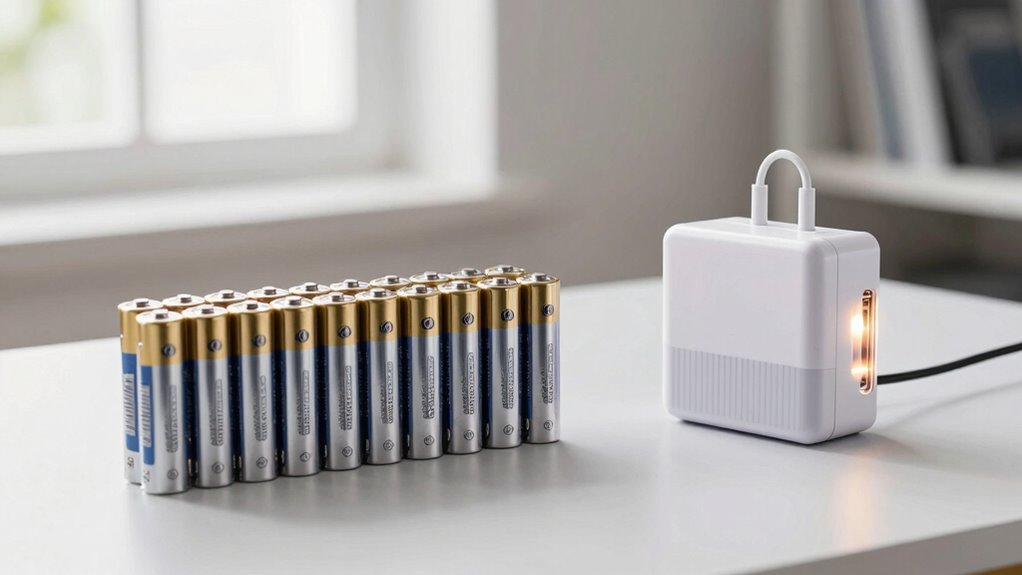
To charge batteries safely indoors, make certain there’s good ventilation to disperse gases and heat, preventing buildup that could cause fires or explosions. Keep sparks away by avoiding loose metal objects, static, and smoking nearby, and use the right charger securely attached to the correct battery type. Place batteries on stable, non-flammable surfaces in cool, dry spots away from sunlight and chemicals. Following these tips helps protect you and prolong your batteries’ lifespan—more tips await to keep you even safer.
Key Takeaways
- Charge batteries in well-ventilated areas to disperse gases and prevent buildup.
- Keep the charging environment free of loose metal objects to avoid sparks.
- Place batteries on stable, non-flammable surfaces away from heat sources and direct sunlight.
- Follow manufacturer guidelines specific to each battery chemistry for safe charging practices.
- Regularly inspect batteries for damage and avoid charging compromised units to prevent hazards.
Charging batteries safely is essential to prevent accidents and prolong their lifespan. When you’re handling batteries indoors, understanding the importance of proper ventilation, preventing sparks, and correct placement plays a vital role in ensuring safety. One of the key factors to consider is battery chemistry, as different types of batteries—like lithium-ion, lead-acid, or nickel-metal hydride—have unique reactions and safety requirements during charging. Recognizing these differences helps you avoid mishaps and ensures that charging safety protocols are followed effectively. For example, lithium-ion batteries can overheat if not charged properly, leading to potential fires or explosions, so it’s critical to adhere to manufacturer guidelines tailored for each chemistry.
Understanding battery chemistry is vital for safe charging and preventing hazards.
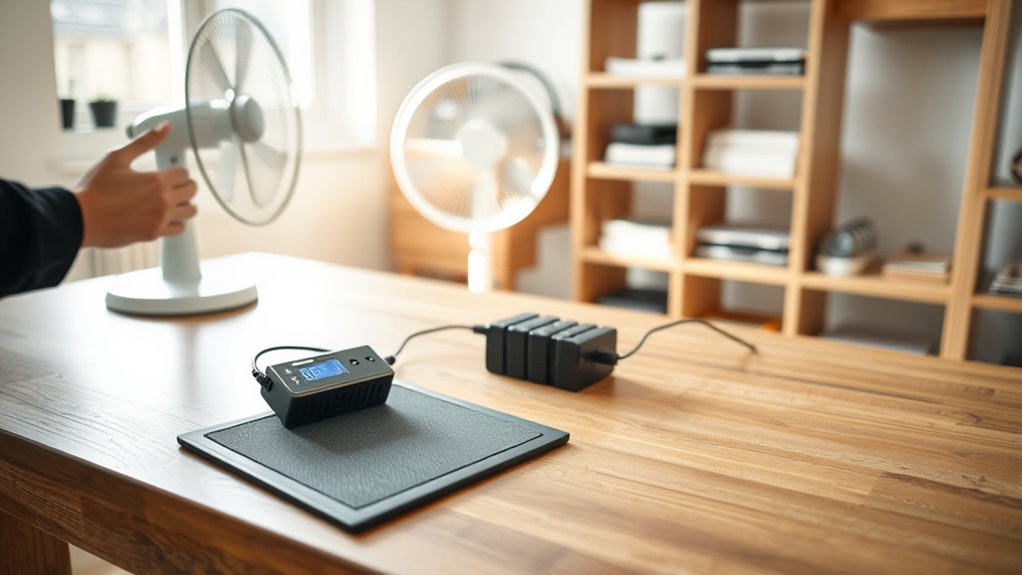
Ventilation is a crucial aspect of indoor charging safety. When batteries charge, they can emit gases or heat up, especially if they’re damaged or faulty. Poor ventilation can cause these gases to accumulate, creating a hazardous environment and increasing the risk of fire or explosion. To mitigate this, always charge batteries in well-ventilated areas, such as near open windows or in rooms with exhaust fans. This way, any gases released are quickly dispersed, reducing the chance of a dangerous buildup. Proper ventilation also helps dissipate heat generated during charging, preventing overheating, which can compromise battery chemistry and lead to safety hazards. Additionally, understanding battery chemistry helps in selecting appropriate safety measures for different types of batteries.
Preventing sparks is another vital safety concern when charging batteries indoors. Sparks can ignite flammable gases or vapors released during charging, especially in poorly ventilated spaces. To avoid this, keep your charging area free of loose metal objects, such as jewelry or tools that might accidentally come into contact with battery terminals. Always use the correct chargers designed for your specific battery type, and double-check connections to ensure they are secure but not forced. Avoid smoking or creating static electricity near batteries, as even a small spark can cause significant problems. Proper placement is equally important—position batteries on stable, non-flammable surfaces, away from sources of heat or moisture, to reduce the risk of accidents.
Your choice of placement matters a lot. Keep batteries in a cool, dry, and well-ventilated spot, away from direct sunlight or heat sources. Avoid stacking batteries or placing them near flammable materials like paper, cloth, or chemicals. By doing so, you minimize the risk of thermal runaway or fire caused by internal faults or external heat sources. Regularly inspect your batteries for signs of damage, swelling, or leaks, and never charge compromised cells. Following these safety practices ensures that your charging process remains safe and that your batteries last longer. Remember, understanding battery chemistry, prioritizing charging safety, and choosing the right placement are all key to a safe indoor charging environment.

Pro Chaser 400W Power Inverters for Vehicles - DC 12v to AC 110v Car Inverter Converter, 6.2A Dual USB Charging Ports, Dual AC Adapter for Laptops Air Compressor
【Pro Chaser Power Inverter Basics】: This inverter provides a steady 400W of DC to AC power with a...
As an affiliate, we earn on qualifying purchases.
Frequently Asked Questions
Can I Charge Batteries Near Flammable Materials Indoors?
You shouldn’t charge batteries near flammable materials indoors because of the fire risk. Batteries can sometimes spark or overheat, potentially igniting nearby combustibles. Make certain proper ventilation needs are met to prevent the buildup of dangerous fumes or heat. Always place batteries in a well-ventilated area, away from flammable objects, and monitor the charging process. Prioritizing safety minimizes the chance of accidents or fires indoors.
How Often Should I Check Battery Chargers for Safety Issues?
You should check your charger for safety issues at least once a month to keep everything running smoothly. Regular charger maintenance and safety inspections help catch potential problems early, preventing accidents. Keep an eye out for signs like unusual heat, strange noises, or frayed cords. By staying attentive and proactive, you guarantee safe charging conditions, protect your space, and keep your batteries in great shape for longer-lasting performance.
Are There Specific Indoor Environments Unsuitable for Battery Charging?
You should avoid indoor environments with poor ventilation, excessive moisture, or high temperatures for battery charging. These conditions can lead to overheating, gas buildup, or fire hazards. Guarantee proper ventilation requirements are met to prevent dangerous fumes from accumulating. Also, keep batteries away from sensitive battery storage areas, direct sunlight, or flammable materials. Choosing a well-ventilated, cool, and dry space helps ensure safe indoor battery charging.
What Safety Gear Is Recommended When Charging Batteries Indoors?
When charging batteries indoors, you should wear personal protective equipment like safety goggles and gloves to protect against potential acid leaks or sparks. Additionally, follow fire safety measures by keeping a fire extinguisher nearby and ensuring proper ventilation to prevent buildup of fumes. Always handle batteries carefully, avoid sparks, and never leave charging batteries unattended to minimize risks and stay safe.
How Do I Detect and Prevent Battery Overheating Indoors?
You can’t afford to ignore battery overheating indoors—it’s like inviting a fire-breathing dragon into your home! To detect and prevent this, use battery temperature monitoring tools to keep a close eye on heat levels, and enable overcharge protection to stop batteries from overheating during charging. Regularly check for swelling or unusual warmth, and never leave batteries unattended while charging. Safety first keeps your home and batteries safe!

400W Power Inverter 12V DC to 110V AC, Car Charger Plug in Adapter Outlet with PD 65W USB-C&QC 18W Port, Portable Power Converters for Laptop Vehicles Camping Road Trip Essentials Adults
【𝐄𝐏𝐀𝐍𝐄𝐄 𝐏𝐨𝐰𝐞𝐫 𝐈𝐧𝐯𝐞𝐫𝐭𝐞𝐫 𝐁𝐚𝐬𝐢𝐜𝐬】: Our power inverter produces Watts continuous DC to AC power and 800 Watts instantons...
As an affiliate, we earn on qualifying purchases.
Conclusion
Remember, keeping your batteries charged indoors safely isn’t just about proper placement or ventilation—it’s also about staying alert to sparks and potential hazards. Sometimes, a simple oversight can lead to unexpected problems, like discovering a fire hazard right where you least expect it. So, stay vigilant and double-check your setup. After all, the safest charge is one you never see coming, and that coincidence of caution can save your home—and your day.
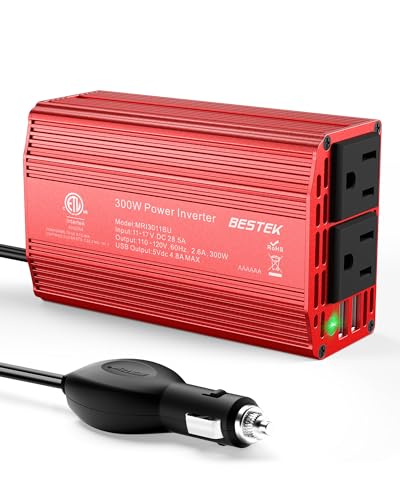
BESTEK Power Inverter DC 12V to AC 110V - 300W Car Plug Adapter Outlet with 4.8A Dual USB Fast Charging Port - Car Charger Cigarette Lighter Adapter for Phone, Laptop on Road Trip - Aluminum Housing
BESTEK Advantage Upgraded: Bestek is power inverter patents owner, America's leading power inverter brand. Our inverter tech upgraded...
As an affiliate, we earn on qualifying purchases.

BELTTT 2000W Pure Sine Wave Inverter, Inverter 12V DC to 120V AC for Solar, RV, Truck, Outdoor, Power Inverter with Dual AC and 20A Socket, 5V 2.1A USB, Surge 4000W, Hardwire Port, Remote Controller
【POWERFUL DC to AC CONVERTER】: This solar inverter delivers 2000W of continuous battery DC 12V to AC 110V...
As an affiliate, we earn on qualifying purchases.