Proper brake caliper maintenance involves greasing the caliper pins to guarantee smooth movement and prevent corrosion, while also replacing rubber boots that keep dirt and moisture out. When these components are neglected, your brakes can drag or feel spongy, leading to uneven wear and reduced safety. Regularly inspecting and servicing these parts keeps your braking system in top shape. Keep going to discover essential tips to keep your brakes functioning flawlessly.
Key Takeaways
- Proper lubrication of caliper pins with high-quality grease ensures smooth sliding and prevents uneven brake pad wear.
- Rubber boots protect caliper pins from dirt, moisture, and debris, preventing corrosion and seizing.
- Regular inspection and replacement of damaged boots and reapplication of pin grease maintain caliper functionality.
- Using clean hydraulic fluid and flushing the brake system prevents internal corrosion and brake drag issues.
- Signs like reduced responsiveness or vehicle pulling indicate caliper issues that may require cleaning, lubrication, or component replacement.
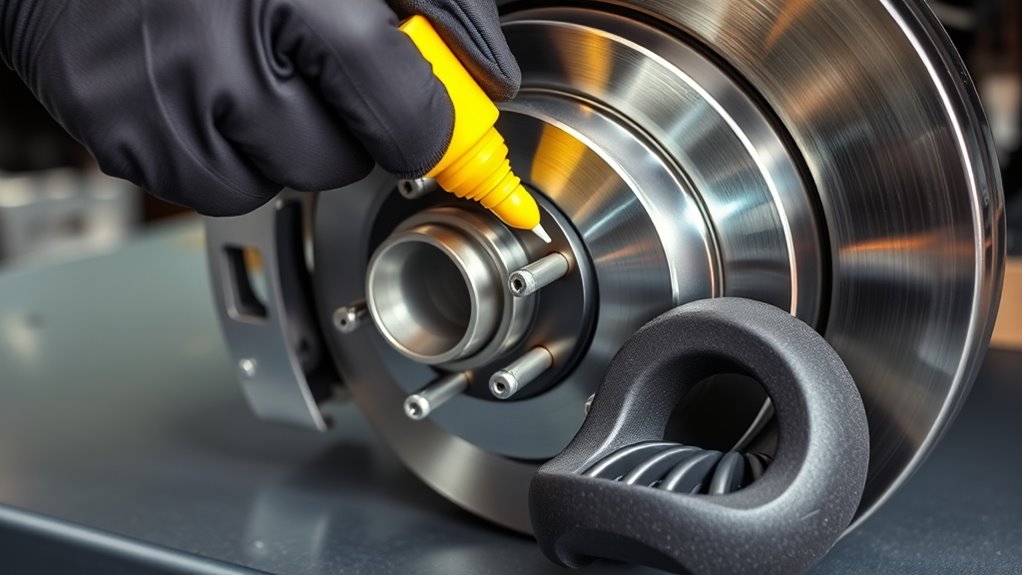
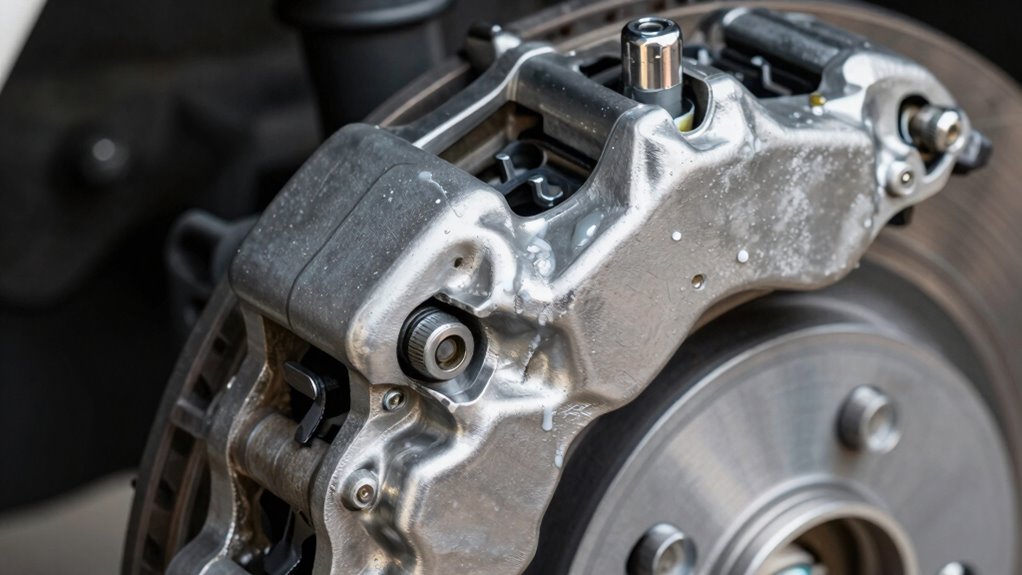
Maintaining your brake calipers is crucial for safe and reliable braking performance. Your calipers are responsible for pressing the brake pads against the rotor, creating the friction needed to slow or stop your vehicle. Over time, components like the pin grease, boots, and hydraulic fluid can wear out, leading to issues such as brake drag or uneven braking. Regular inspection and maintenance ensure your braking system stays responsive and safe. One key aspect of caliper maintenance involves checking the caliper pins, which allow the caliper to slide smoothly. Applying high-quality pin grease prevents corrosion and guarantees free movement, reducing the risk of brake drag. If these pins become rusted or stuck, the caliper can’t move properly, causing uneven pad wear and potentially overheating the rotor during braking. This can lead to rotor replacement sooner than expected, which is costly and time-consuming. When inspecting your brake system, don’t forget to examine the rubber boots that cover the caliper pins. These boots keep dirt, debris, and moisture out, preserving the pins’ lubrication and preventing corrosion. If these boots crack or tear, contaminants can enter, causing the pins to seize and impair proper caliper function. Replacing damaged boots and reapplying fresh pin grease restores smooth caliper operation and prolongs the life of your brake components. Additionally, your hydraulic fluid plays a crucial role in brake performance. Over time, hydraulic fluid can absorb moisture, reducing its effectiveness and leading to spongy pedal feel or brake fade. Flushing and replacing the hydraulic fluid at recommended intervals ensures consistent pressure transfer from the master cylinder to the calipers, maintaining ideal braking response. Proper hydraulic fluid maintenance also helps prevent internal corrosion within the calipers, which can cause sticking or seizing. When your brakes feel less responsive, or if you notice that your vehicle pulls to one side during braking, it might be time for a caliper service, which could include cleaning, lubricating pins, replacing worn boots, or even rotor replacement if the rotors are warped or excessively worn. Ultimately, keeping your brake calipers in good condition involves a combination of regular inspection, cleaning, lubrication, and fluid maintenance. Doing so ensures your brakes perform reliably and safely, reducing the likelihood of costly repairs down the line. Regular use of high-quality brake components can also extend the lifespan of your braking system and improve overall safety.

Keze High Temp Ceramic Brake Caliper Grease and Pin Parts Lubricant for Auto Break Sliding Pin Pad,Prevents Seizing Stops Squeaking with Brush Top Can,8 oz
Extreme-Temp Brake Caliper Grease: High-performance brake grease combines synthetic MCA + ceramic powder to resist melting, even at…
As an affiliate, we earn on qualifying purchases.
As an affiliate, we earn on qualifying purchases.
Frequently Asked Questions
How Often Should Brake Calipers Be Professionally Inspected?
You should have your brake calipers professionally inspected every 12,000 to 15,000 miles or at least once a year. During these inspections, they’ll check caliper lubrication, brake fluid maintenance, and the condition of boots and pins. Regular inspections ensure proper caliper function, prevent brake dragging, and extend your brake system’s lifespan. If you notice any brake issues, get them checked sooner to maintain safety and peak performance.
Can Brake Caliper Issues Cause Uneven Tire Wear?
Imagine your car’s tires as a canvas, and uneven tire wear as strokes of inconsistent paint. Brake caliper issues can cause this by unevenly pressing brake pads against the rotor, leading to uneven rotor wear. Over time, this imbalance can cause one side of your tire to wear faster than the other, making your tires wear unevenly and reducing overall braking efficiency. Regular inspection helps catch these issues early.
Are Aftermarket Calipers Compatible With All Vehicle Models?
Aftermarket calipers can be compatible with many vehicle models, but you need to check caliper compatibility first. Not all aftermarket options fit every car, so verify your vehicle’s make, model, and year before purchasing. Some brands design calipers specifically for certain vehicles, ensuring proper fit and function. Always consult your vehicle’s manual or a trusted mechanic to confirm that the aftermarket calipers you choose will work correctly with your car.
What Are the Signs of a Sticking Brake Caliper?
Imagine driving and feeling like your brakes are resisting, like trying to pedal through mud—that’s caliper sticking causing brake drag. Signs include uneven brake pad wear, pulling to one side, or a burning smell after driving. You might also notice reduced fuel efficiency or increased stopping distances. These symptoms indicate caliper sticking, which prevents proper release, leading to excessive heat and brake drag that needs prompt attention.
Is It Necessary to Replace Caliper Pins During Every Brake Service?
You don’t need to replace caliper pins during every brake service, but you should check their condition. If the pins are corroded or damaged, replacing them is best. Regular caliper pin lubrication helps prevent sticking and guarantees smooth movement. If pins are seized or worn out, opt for caliper pin replacement. Maintaining proper lubrication and inspecting pins regularly can extend their lifespan and keep your brakes functioning effectively.

4PCS Brake Caliper Pin Bushing Kit,Rubber Brakes Calipers Slide Pins Bushing for Sealing,Durable Caliper Pin Boots Car Accessories Compatible with Honda,Chevrolet,Pontiac
PRECISE FITS: Caliper slide pin boots are compatible with Honda 2001-2023 Civic, compatible with Chevrolet 2004-2012 Malibu, compatible…
As an affiliate, we earn on qualifying purchases.
As an affiliate, we earn on qualifying purchases.
Conclusion
By regularly checking and greasing your brake caliper pins, replacing worn boots, and addressing any dragging issues promptly, you keep your brakes working smoothly. Think of it like tending to a garden—skipping care leads to weeds and overgrowth. If you ignore these simple steps, you risk uneven brake wear or dangerous delays. But with a little attention now, you’ll enjoy confident stops and safer drives, knowing your brakes are in top shape when you need them most.

Orion Motor Tech 24pc Brake Caliper Compression Tool Set, Heavy Duty Brake Piston Compressor Tool and Wind Back Tool Kit for Brake Pad Replacement, Universal Disc Brake Caliper Tool Set with Blue Case
Complete Tool Set: Orion Motor Tech's 24-piece brake caliper compression tool set includes 2 retaining plates, 2 thrust…
As an affiliate, we earn on qualifying purchases.
As an affiliate, we earn on qualifying purchases.
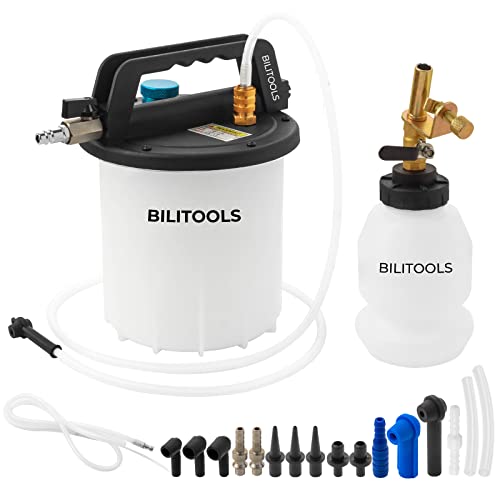
BILITOOLS 3L Brake Bleeder Vacuum Pump Kit Air Compressor, Universal One Person Pneumatic Brake System Clutch Fluid Bleeding Extractor Tool with Adapters & 1L Refilling Bottle
【One-Person Brake Bleeding Made Easy】 Connects to air compressor to let you bleed brakes or clutch lines on…
As an affiliate, we earn on qualifying purchases.
As an affiliate, we earn on qualifying purchases.