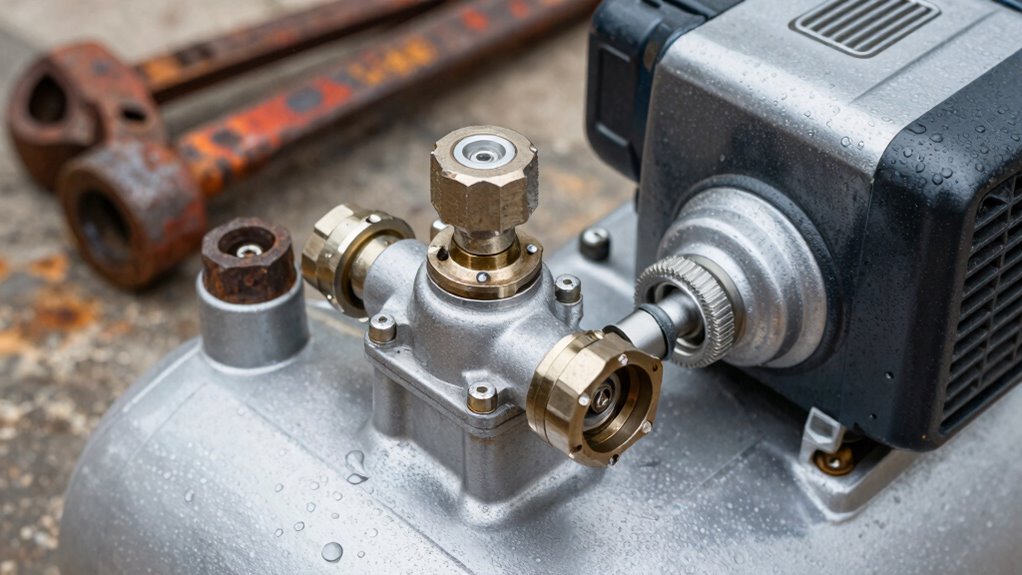

To prevent rust and tool damage caused by moisture in your air compressor, install quality separators, refrigerated or desiccant dryers, and regularly drain the tanks. Keep filters clean, inspect hoses for leaks, and maintain proper air pressure. Store the compressor in a dry environment and use corrosion-resistant coatings on metal parts. Consistent maintenance and moisture control are essential. If you want to discover more ways to keep your tools protected, continue exploring these strategies.

Get business pricing on garage and car supplies
- Business-only prices and quantity discounts
- Tax-exempt purchasing
- Multiple users, one account, clear invoices
Key Takeaways
- Install moisture separators and dryers to prevent water from entering the system and causing rust.
- Regularly drain compressor tanks and inspect hoses to remove accumulated water and moisture.
- Use corrosion-resistant coatings and keep the compressor in a dry environment to avoid rust formation.
- Maintain proper air pressure and filtration to reduce moisture buildup and protect tools.
- Conduct routine system inspections for leaks and moisture intrusion points to ensure optimal dryness.
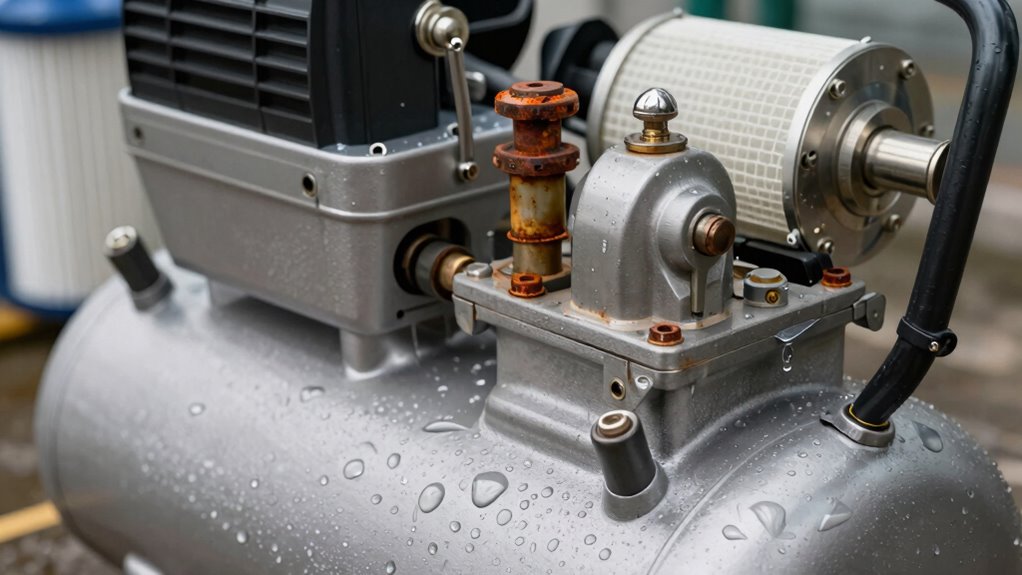
One effective way to remove moisture is by installing a quality moisture separator or filter. These devices are designed to trap water and oil before they reach the sensitive components. Regularly draining your compressor’s tank also plays an essential role in moisture removal. Many compressors come with a drain valve—make it a habit to open it after each use to release accumulated water. Doing so regularly prevents water from settling and causing rust inside the tank and piping. Using moisture removal systems such as refrigerated or desiccant dryers can considerably improve moisture removal, especially in environments with high humidity. Refrigerated dryers cool the compressed air, causing moisture to condense and be expelled. Desiccant dryers, on the other hand, use absorbent materials to dry the air to much lower dew points, offering superior protection against moisture-related issues. Investing in these systems helps maintain dry, clean compressed air, which is critical for the longevity of your tools and equipment. Additionally, choosing the right air quality setup tailored to your environment can further reduce moisture-related problems. Proper air filtration also plays a vital role in removing contaminants and moisture from the compressed air stream, enhancing overall system performance. Maintaining the air system by inspecting hoses and fittings for leaks can also help prevent moisture intrusion. Ensuring proper air pressure levels is important because fluctuations can contribute to moisture buildup and system inefficiencies. Corrosion prevention is another essential aspect of managing moisture in your compressor system. Rust not only damages the compressor itself but also contaminates the compressed air, which can harm downstream tools and processes. To prevent corrosion, consider applying corrosion-resistant coatings to metal parts and regularly inspecting for signs of rust. Keeping your compressor in a dry, sheltered environment further minimizes exposure to moisture and reduces corrosion risks.
air compressor moisture separator
As an affiliate, we earn on qualifying purchases.
As an affiliate, we earn on qualifying purchases.
Frequently Asked Questions
How Often Should I Drain My Air Compressor Tank?
You should drain your air compressor tank at least once a week during regular use, and more often if you use it daily or in humid conditions. Regular tank maintenance and consistent drain frequency prevent moisture buildup, which can cause rust and damage. Always turn off and unplug the compressor before draining, and open the drain valve fully to remove accumulated water. This helps keep your tools in top shape and extends the compressor’s lifespan.
Can Moisture Cause Health Issues Besides Equipment Damage?
Moisture in your air compressor can pose humidity hazards that extend beyond equipment damage, potentially affecting your health. It may increase respiratory risks, especially if you’re exposed to contaminated or moldy air over time. Like a silent fog, moisture can quietly infiltrate your environment, leading to breathing issues or allergies. To stay safe, make certain proper drainage and filtration, reducing moisture buildup and protecting both your tools and your well-being.
Are There Specific Tools More Vulnerable to Moisture Damage?
Yes, some tools are more vulnerable to moisture damage due to their material or design. Tools with metal parts, especially those made of iron or steel, are highly susceptible to tool corrosion from moisture sensitivity. You should pay extra attention to pneumatic tools, cutting tools, and those with moving metal components, as they tend to rust faster if exposed to humidity. Proper storage and moisture control can markedly extend their lifespan.
What’s the Best Type of Desiccant for Moisture Control?
The best desiccant for moisture control is silica gel, known for its excellent moisture absorption. Desiccant types like activated alumina or clay also work well, but silica gel is most effective for reducing humidity around your tools. To prevent rust, choose a desiccant that absorbs moisture efficiently and replenish it regularly. Proper placement of the desiccant in tool storage areas ensures consistent moisture control and prolongs tool lifespan.
How Does Altitude Affect Compressor Moisture Levels?
Altitude effects can impact your compressor’s moisture regulation. As you go higher, the air becomes thinner and holds less moisture, which might seem beneficial. However, lower pressure at high altitudes can lead to increased condensation inside your compressor, causing moisture build-up. To prevent rust and damage, you need to regularly drain the tank and consider adding moisture control measures. Adjusting your maintenance routine based on altitude helps keep your compressor dry and in good shape.
refrigerated air dryer for compressor
As an affiliate, we earn on qualifying purchases.
As an affiliate, we earn on qualifying purchases.
Conclusion
Think of your air compressor like a trusty ship steering through foggy waters. Just as a ship needs a clear path to stay afloat, your compressor needs moisture control to avoid rust and damage. By draining tanks regularly, using moisture traps, and maintaining proper storage, you’ll keep your tools sailing smoothly for years to come. When you manage moisture effectively, your compressor becomes a reliable vessel—ready to conquer any job with confidence and ease.
desiccant air dryer for compressor
As an affiliate, we earn on qualifying purchases.
As an affiliate, we earn on qualifying purchases.
As an affiliate, we earn on qualifying purchases.
Halloween Picks
halloween
As an affiliate, we earn on qualifying purchases.