
Brake bias refers to how your vehicle’s braking force is shared between the front and rear wheels. Adjusting it affects your vehicle’s stability, handling, and stopping distance. Too much front bias can cause the wheels to lock up or the car to oversteer, while too much rear bias risks instability and rear-wheel lockup. Understanding and fine-tuning brake bias helps you brake smoothly and maintain control—keep exploring to learn more about how to optimize it for your driving style.
Key Takeaways
- Brake bias determines how braking force is distributed between front and rear wheels.
- It affects weight transfer, influencing tire grip, vehicle stability, and braking efficiency.
- Front bias increases front wheel grip but risks locking, while rear bias can cause rear instability.
- Proper adjustment balances safety and performance, preventing skidding and loss of control.
- Modern cars feature adjustable brake bias systems for real-time tuning based on conditions.
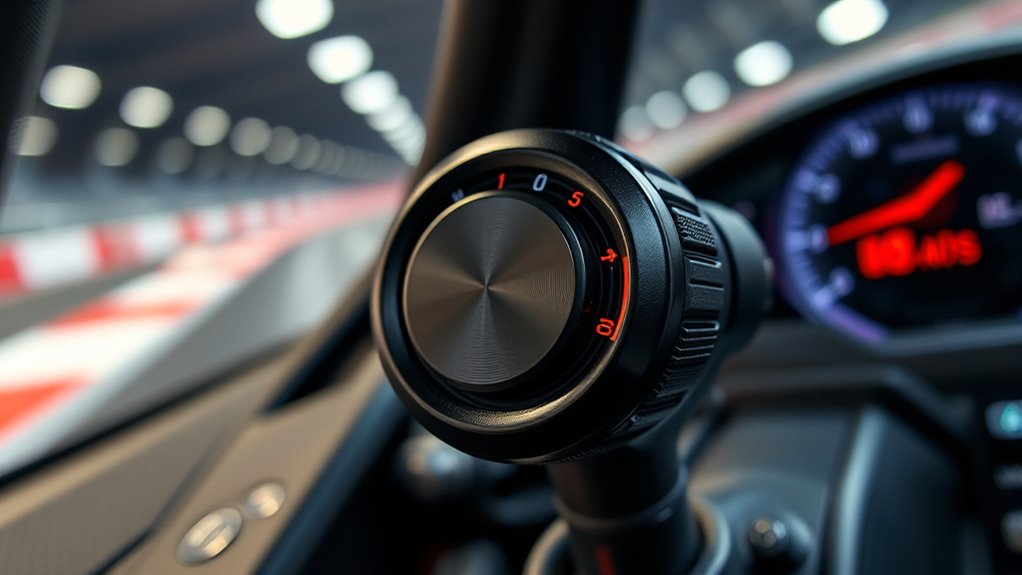
Have you ever wondered how race cars maintain ideal handling during a turn? One essential factor is brake bias, which determines how much braking force is applied to each wheel. When you brake, your car experiences weight transfer — the shifting of weight from the rear to the front. This shift affects how the tires grip the road and influences overall stability. Proper brake balance ensures that this weight transfer is managed effectively, allowing you to brake smoothly and control the car through corners.
If your brake bias favors the front too much, you’ll notice the front wheels lock up more easily, risking a loss of steering control. Conversely, if too much brake force is applied to the rear, the rear wheels might lock or lose grip, causing the car to slide or spin out. Striking the right balance is essential for predictable handling, especially during aggressive braking or high-speed cornering. Adjusting brake bias helps you fine-tune how the car behaves, giving you confidence to brake later and carry more speed into turns.
Understanding weight transfer is key here. When you brake, the load on the front tires increases, providing more grip, while the rear tires shed some of their load. If brake bias isn’t properly set, the car can become unbalanced during braking. For example, too much front brake causes excessive weight transfer forward, increasing the risk of front-wheel lockup. Too much rear brake, and the rear may become light and unstable, especially if the load transfer isn’t managed well. By adjusting the brake balance, you’re essentially controlling this transfer, helping to prevent unwanted skidding or loss of control.
Modern braking systems often include adjustable brake bias controls, letting you customize the distribution of braking force on the fly. This is especially useful in racing, where conditions and tire wear change quickly. You might start with a bias that favors the front for stability, then shift it rearward slightly as tires warm up or as you approach a corner to maximize braking efficiency. The goal is to keep the weight transfer within a range that maintains ideal tire grip and prevents wheel lockup.

Speedway Motors Remote Brake Bias Balance Bar Adjuster with Dual Heim Joints and Cable for Adjustable Brake Bias Control on Drag, Street, and Performance Cars Easy-Reach Mount
Adjustable Brake Bias: Remote balance bar adjuster allows you to adjust front-to-rear brake bias from the driver’s seat…
As an affiliate, we earn on qualifying purchases.
As an affiliate, we earn on qualifying purchases.
Frequently Asked Questions
How Does Brake Bias Affect Tire Wear Over Time?
Brake bias considerably impacts tire wear over time. If you have too much front brake bias, you’ll notice increased tire degradation on the front tires due to uneven wear, which can reduce grip and cause handling issues. Conversely, rear bias can cause uneven wear on the rear tires. Adjusting brake bias properly helps distribute braking forces evenly, minimizing uneven wear and extending your tires’ lifespan.
Can Adjusting Brake Bias Improve Fuel Efficiency?
Sure, adjusting your brake bias can surprisingly boost your fuel economy. When you fine-tune your brake system, you reduce unnecessary drag and improve overall efficiency. It might sound ironic, but a well-balanced brake system minimizes energy loss during deceleration, helping you save fuel. So, don’t overlook this small tweak—your wallet and the environment will thank you for optimizing brake bias for better fuel economy.
What Are Common Signs of Improper Brake Bias?
You’ll notice improper brake bias through uneven brake pedal feel, where one side feels softer or harder than the other. It can cause the vehicle to pull to one side during braking, indicating a problem with brake balance. If you experience these issues, it’s a sign to have your brake system examined. Proper brake balance ensures smooth, effective stopping and maintains vehicle stability during braking maneuvers.
How Is Brake Bias Adjusted in Electric Vehicles?
Adjusting brake bias in electric vehicles is like fine-tuning a musical instrument; it requires precision. You typically use electronic control systems that manage regenerative braking and traditional brakes. By modifying these settings through the vehicle’s software, you can shift the brake force distribution to optimize stopping power and stability. This seamless adjustment guarantees the vehicle responds correctly under different conditions, enhancing safety and performance without manual intervention.
Does Brake Bias Influence Vehicle Handling in Wet Conditions?
Yes, brake bias considerably influences vehicle handling in wet conditions. When you adjust brake bias, you impact wet traction and vehicle stability, making it easier to control your car on slippery surfaces. Proper brake balance helps prevent skidding or loss of control, especially in rain or puddles. By optimizing brake bias, you enhance your safety and maintain better handling, ensuring your vehicle reacts predictably and stays stable during wet driving scenarios.

Allstar Performance ALL42078 5' Brake Bias Adjuster with Reference Pointer and Crank
The housing, internals, brackets and knob with detent are all made of high-quality aluminum along with the five…
As an affiliate, we earn on qualifying purchases.
As an affiliate, we earn on qualifying purchases.
Conclusion
So, next time you hit the brakes, remember that brake bias isn’t just a technical detail—it’s the secret to safer, smoother rides. Funny enough, many drivers overlook this essential balance, only realizing its importance during a sudden turn or emergency stop. Coincidentally, understanding brake bias could be the difference between a controlled stop and a costly accident. Keep it in mind; it might just save you when you least expect it.

EBC Brakes DP51537 Bluestuff NDX Full Race Brake Pad
Worlds first street and true track pad
As an affiliate, we earn on qualifying purchases.
As an affiliate, we earn on qualifying purchases.

Allstar Performance ALL48025 Brake Proportioning Valve
Proportioning valves allows adjustment of front-to-rear brake bias with a simple twist of the knob
As an affiliate, we earn on qualifying purchases.
As an affiliate, we earn on qualifying purchases.