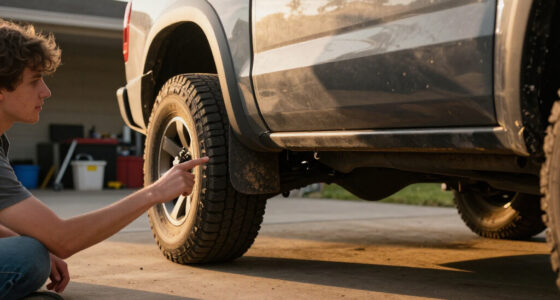
Downforce plays a vital role in track cars by pressing the tires onto the road, giving you better grip and stability, especially when cornering at high speeds. It’s created through aerodynamic elements like wings, diffusers, and vortices that manage airflow and generate low-pressure zones. Balancing downforce with drag is key to maximizing performance without sacrificing speed. To understand how these design choices work together, keep exploring how engineers optimize aerodynamics for racing success.

Get business pricing on garage and car supplies
- Business-only prices and quantity discounts
- Tax-exempt purchasing
- Multiple users, one account, clear invoices
Key Takeaways
- Downforce increases tire grip and stability, enabling faster cornering and improved handling on track.
- Ground effects and vortices under the car enhance downforce by creating low-pressure areas.
- Aerodynamic components like wings and diffusers manipulate airflow to generate optimal downforce.
- Proper downforce balance boosts traction without excessive drag, maintaining top speed.
- Effective downforce design improves safety, vehicle control, and driver confidence during high-speed maneuvers.
As an affiliate, we earn on qualifying purchases.
Understanding the Concept of Downforce
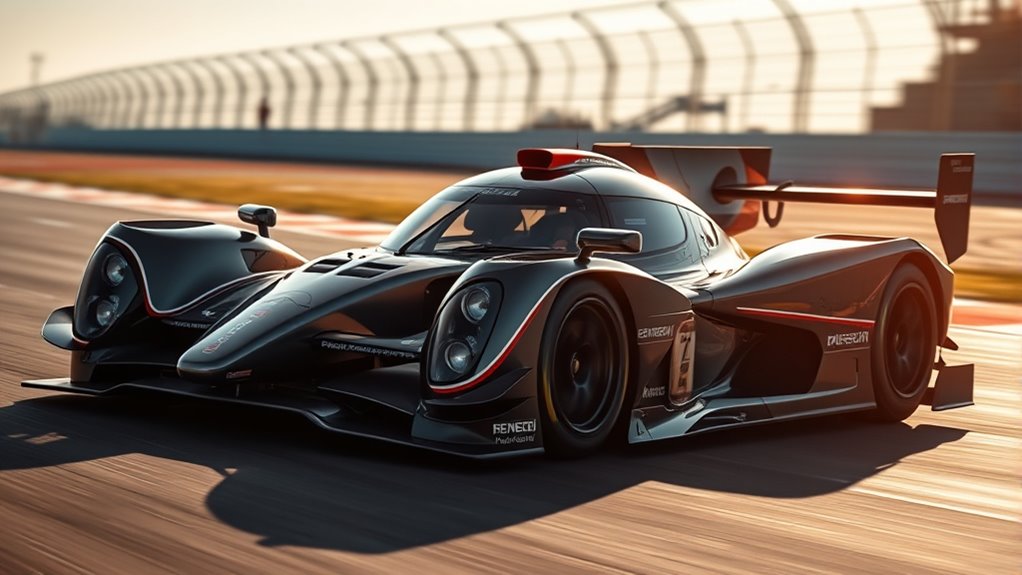
Downforce is the aerodynamic force that presses a race car’s tires onto the track, increasing grip and stability at high speeds. One way downforce is generated is through the ground effect, where the car’s underside creates a low-pressure area that pulls it closer to the surface. This effect is enhanced by vortices—swirling air patterns that form around the car’s underbody and edges—helping to seal the airflow and boost downforce. Vortices effectively channel air, reducing turbulence and increasing contact between the tires and the track. Understanding how ground effect and vortices work together gives you insight into how cars stay glued to the surface during high-speed corners, maximizing grip and ensuring better handling and safety. Additionally, aerodynamic principles play a crucial role in optimizing downforce for improved performance, with aerodynamic efficiency being a key factor in achieving optimal results. Incorporating advanced vortex control techniques can further enhance the effectiveness of vortices, leading to even better stability at high speeds, especially when combined with innovative aerodynamic designs. Moreover, understanding the thermal behavior of aerodynamic surfaces can help in designing components that maintain performance under different racing conditions.
As an affiliate, we earn on qualifying purchases.
Aerodynamic Components That Generate Downforce
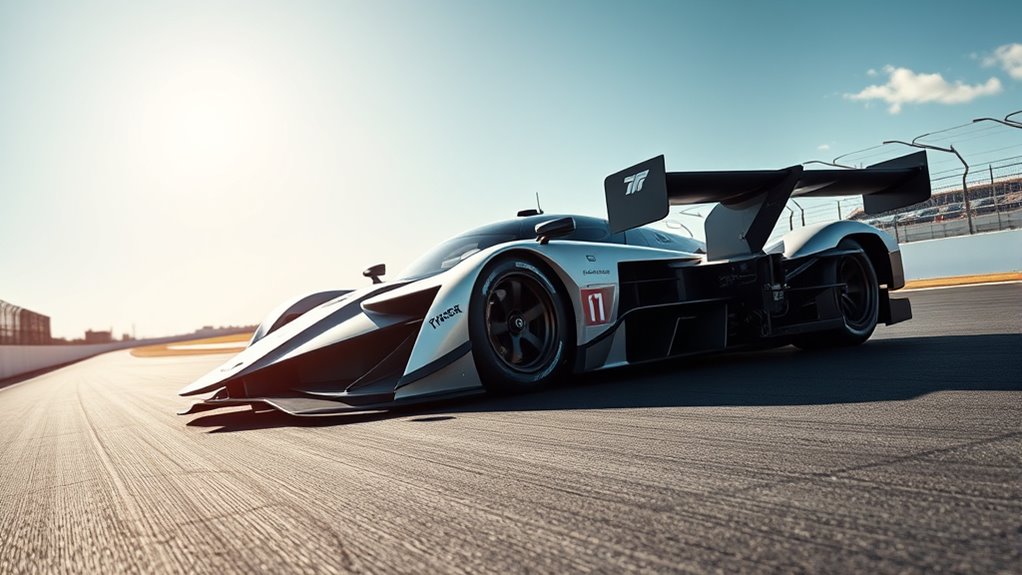
Aerodynamic components such as wings, spoilers, and diffusers are specifically designed to generate downforce by manipulating airflow around the car. Diffuser design plays a vital role by accelerating airflow underneath, creating a low-pressure area that presses the car downward. Front splitters, mounted at the car’s front, extend beneath the bumper to direct air away from the underbody, increasing front downforce and improving grip. These components work together to optimize airflow, reduce lift, and enhance stability at high speeds. Properly designed diffusers and splitters help balance downforce distribution, ensuring better handling through corners. By controlling airflow with these aerodynamic devices, you can maximize grip without adding excessive weight, ultimately boosting your car’s performance on the track. Understanding aerodynamic principles is essential for designing effective components that improve vehicle stability and handling. Additionally, airflow management plays a crucial role in maintaining optimal downforce levels across different driving conditions, which is critical for track performance. Applying data‑driven comparisons can help identify the most effective aerodynamic setups for specific track layouts and conditions. Incorporating precise computational fluid dynamics analysis can further enhance the effectiveness of these aerodynamic elements by simulating airflow patterns before physical testing.
As an affiliate, we earn on qualifying purchases.
Impact of Downforce on Handling and Cornering

When aerodynamic components like wings and diffusers generate downforce, they profoundly influence how your car handles turns and maintains stability. Increased downforce pushes your tires harder against the road, boosting tire grip. This enhanced grip allows sharper, more confident cornering without losing control. As a result, your vehicle feels more stable at high speeds, reducing body roll and enhancing driver confidence. Additionally, electric dirt bikes demonstrate that improved traction and stability can be achieved through various means, including aerodynamic design, which could inspire innovative approaches in track car design. Understanding aerodynamic balance helps optimize a track car’s overall handling capabilities, especially when considering how downforce influences overall stability.
As an affiliate, we earn on qualifying purchases.
Balancing Downforce and Drag for Optimal Performance

Achieving the right balance between downforce and drag is essential for maximizing your car’s performance. Too much downforce can increase drag, reducing top speed, but it boosts tire grip and cornering stability. Conversely, excessive drag hampers straight-line speed without markedly improving grip. To optimize this balance, you need to tune suspension dynamics to adapt to different downforce levels, ensuring consistent tire contact and responsiveness. Adjusting aerodynamics for minimal drag while maintaining sufficient downforce helps you stay fast through corners without sacrificing overall speed. Remember, the goal is to enhance tire grip for better handling without compromising top-end performance. Incorporating aero testing into your setup process can provide valuable insights into how different configurations affect downforce and drag. Additionally, understanding how fluid dynamics influence airflow over the vehicle can lead to more precise aerodynamic adjustments, enabling more effective aerodynamic tuning. Considering the principles of laminar flow can further improve airflow management, reducing drag and enhancing downforce efficiency.
Design Considerations and Trade-offs in Downforce Optimization

Designing effective downforce systems involves carefully balancing performance benefits against practical constraints. You need to contemplate how changes impact suspension tuning, as increased downforce can stiffen the suspension, affecting ride quality and handling. While higher downforce improves tire grip, it also adds drag, which can reduce top speed. You must trade off between maximizing tire grip and maintaining acceptable aerodynamic efficiency. Adjusting wing angles and diffuser designs influences this balance, but remember that too much downforce can lead to unpredictable handling at high speeds. Optimizing downforce requires testing these variables to find a setup that enhances tire grip without compromising suspension dynamics or increasing drag excessively. Incorporating essential oils for performance into your maintenance routine can also help keep engine components clean and functioning optimally, indirectly supporting better downforce management. Additionally, understanding aerodynamic principles is crucial for designing effective systems. Developing a thorough understanding of vehicle aerodynamics can lead to more precise tuning and performance gains. Recognizing how downforce distribution affects overall vehicle stability is essential for achieving optimal results. Carefully analyzing aerodynamic loads allows for more targeted adjustments that improve handling and reduce drag. This delicate trade-off ensures you get the best performance suited to your track conditions and driving style.
Frequently Asked Questions
How Does Downforce Affect Tire Wear Over Time?
Downforce increases tire wear over time because it pushes the tires harder against the track, leading to faster tire degradation. While it boosts grip and handling at high speeds, the added pressure reduces grip longevity, meaning your tires won’t last as long. You’ll notice more frequent tire changes and decreased performance as the tires wear faster due to the constant high downforce forces acting on them.
Can Excessive Downforce Cause Stability Issues?
Yes, excessive downforce can cause stability issues. When you have too much aero balance at the front or rear, it can lead to oversteering or understeering, making the car unpredictable. Lowering ride height increases downforce but may reduce clearance, risking contact with track debris. Striking the right balance ensures maximum grip and stability; too much downforce shifts the aero balance and compromises handling.
How Do Weather Conditions Influence Downforce Effectiveness?
Ever wonder how weather turns your track day into a rollercoaster? Rain and fog can reduce aero efficiency, making downforce less effective. Wet conditions disrupt aerodynamic balance, causing less grip and stability at high speeds. You’ll find your car less responsive, especially when airflow’s compromised. To stay ahead, adjust wing angles and tire pressures accordingly—remember, weather isn’t just a backdrop; it’s a dynamic player in your car’s performance.
What Role Does Ground Clearance Play in Downforce Generation?
Lower ground clearance enhances downforce generation by allowing aerodynamic elements like splitters and diffusers to work more effectively, increasing grip and stability. Conversely, higher ground clearance can reduce aerodynamic balance, decreasing downforce and making the car less responsive at high speeds. You should consider adjusting ground clearance based on track conditions and desired handling characteristics to optimize aerodynamic balance and maximize downforce.
How Does Downforce Impact Fuel Efficiency During Races?
Think of downforce as your car’s invisible cape, helping it stick to the track. While it improves cornering, it also increases aerodynamic drag, which forces your engine to work harder. This extra effort consumes more fuel, reducing efficiency during races. So, as you generate more downforce, you’ll notice your engine power is taxed more, making fuel efficiency a balancing act between grip and economy.
Conclusion
You might think more downforce always means better performance, but that’s not entirely true. Too much can increase drag, slowing you down on straightaways. Striking the right balance improves handling without sacrificing speed. It’s a delicate dance—optimizing downforce enhances cornering, but too much hampers overall performance. So, trust that well-designed aerodynamics aren’t just about sticking to the road; they’re about finding that perfect sweet spot for ultimate track performance.
Columbus Day / Indigenous Peoples' Day Picks
long weekend sales
As an affiliate, we earn on qualifying purchases.