At high speeds, downforce is vital because it helps keep your vehicle stable by pressing it onto the road, giving you better grip and control during quick turns and accelerations. It prevents skidding and helps you stay confident in sharp maneuvers. Proper downforce improves responsiveness and even tire wear, making your drive safer and more predictable. Keep exploring to see how aerodynamic features optimize this balance for ultimate performance.

Get business pricing on garage and car supplies
- Business-only prices and quantity discounts
- Tax-exempt purchasing
- Multiple users, one account, clear invoices
Key Takeaways
- Downforce increases tire grip, enhancing stability and control during high-speed maneuvers.
- It prevents skidding and loss of control during sharp turns at high speeds.
- Proper downforce distribution ensures balanced vehicle handling, reducing oversteering or understeering.
- It allows for confident acceleration and braking by maintaining consistent tire contact with the road.
- Balancing downforce and drag optimizes high-speed performance and safety.
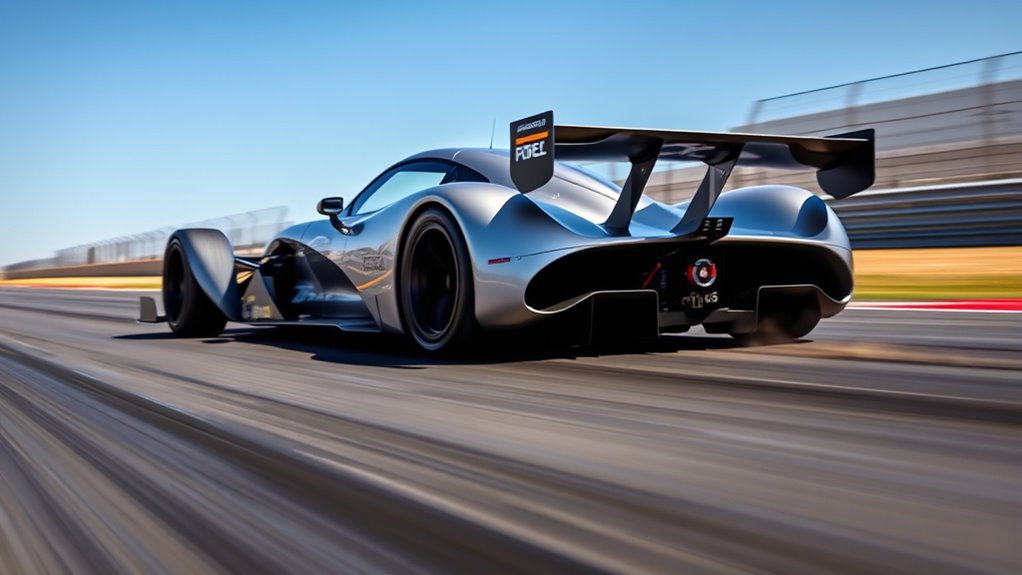
When you accelerate to high speeds, downforce plays a critical role in maintaining stability and grip. As your vehicle pushes faster, aerodynamic forces come into play, and understanding how downforce enhances aero efficiency can make all the difference in your driving experience. Aero efficiency isn’t just about reducing drag; it’s about optimizing the balance between air resistance and downforce to ensure your car remains glued to the road. When designed effectively, downforce improves vehicle stability, especially during cornering and sudden maneuvers, by increasing the vertical load on your tires. This added grip allows you to accelerate out of turns more confidently and brake later without losing control. Proper aerodynamic design also involves balancing downforce and drag to maximize performance while minimizing negative effects on speed. Achieving this balance requires a careful analysis of your vehicle’s aerodynamic profile and how different components interact with airflow.
At high speeds, aerodynamic features like spoilers, splitters, and diffusers generate downforce that pushes the car downward, increasing the contact patch of your tires. This effect isn’t just about sticking to the road; it’s about making your vehicle more predictable and responsive. When your car has better vehicle stability, you can handle sharp turns or quick lane changes with less risk of skidding or losing control. That stability translates into more precise steering and a greater sense of confidence, especially when pushing the limits on a racetrack or winding road. You’ll find that well-designed aerodynamic components distribute downforce evenly, preventing front or rear end instability that could cause understeering or oversteering. Such aerodynamic tuning is essential for aero efficiency and overall vehicle performance.
It’s essential to understand that aero efficiency isn’t solely about creating maximum downforce; it’s about achieving the right amount for your specific vehicle and driving conditions. Too much downforce, for example, can increase drag and reduce top speed, while too little can compromise grip and stability. When you focus on balancing these factors, your vehicle becomes more predictable at high speeds, allowing you to maintain control with less effort. Properly managed downforce also helps reduce tire wear since it ensures even pressure distribution, which is essential for sustained high-speed driving. Optimizing aero efficiency can also result in better fuel economy by reducing unnecessary drag that wastes energy.
In essence, downforce isn’t just a tool for race cars; it’s a key element for anyone seeking ideal vehicle stability at high speeds. When your car’s aerodynamics are tuned for efficiency, you gain better control, improved safety, and enhanced performance. Whether you’re on the track or cruising on a highway, understanding and leveraging downforce means you can enjoy a more stable, confident ride, no matter how fast you’re going.
Frequently Asked Questions
How Does Downforce Affect Tire Wear During High-Speed Racing?
Downforce increases tire grip, helping you maintain better control at high speeds, but it also raises aero drag, which can cause uneven tire wear. As you push harder into corners, the added downforce wears tires faster due to increased friction. Balancing downforce is essential—too much can accelerate tire wear, while too little reduces grip. You need to optimize aero settings to maximize tire life without sacrificing performance.
Can Excessive Downforce Cause Loss of Vehicle Control?
Excessive downforce can indeed cause loss of vehicle control. When aero efficiency is overdone, it increases downforce too much, making the car overly sensitive to small steering inputs. This can reduce vehicle stability, especially in sudden maneuvers or on uneven surfaces. Too much downforce pushes the tires harder into the road, which may lead to unpredictable behavior, loss of grip, and difficulty maintaining control at high speeds.
How Do Different Track Surfaces Influence Downforce Effectiveness?
Different track surfaces notably impact downforce effectiveness by affecting tire grip and aerodynamic efficiency. You’ll notice that smooth, dry asphalt enhances tire contact, boosting grip and allowing your car to generate ideal downforce. Conversely, rough or wet surfaces reduce tire grip, diminishing downforce effectiveness and risking instability. Adjusting your setup to match surface conditions helps maintain control, ensuring your car stays glued to the track and performs at its best.
What Are the Trade-Offs Between Downforce and Top Speed?
You might think more downforce always equals faster top speeds, but ironically, it actually increases drag impact and reduces aero efficiency. When you dial up downforce, your car gains grip but sacrifices top speed because the added aerodynamic resistance slows you down. The trade-off is balancing enough downforce for cornering without overly compromising your top speed, so you stay fast on straights and nimble in turns.
How Is Downforce Adjusted for Different Racing Conditions?
You adjust downforce for different racing conditions by fine-tuning the aero balance through wing angle changes. Increasing the wing angle boosts downforce, ideal for twisty or wet tracks, while decreasing it reduces drag for high-speed straights. You may also modify other aerodynamic components to optimize grip and speed, ensuring your car maintains stability without sacrificing outright top speed. This balance is essential for adapting to varying track demands effectively.
Conclusion
Just like Icarus needed wings to soar without falling, your car relies on downforce to stay glued to the road at high speeds. Without it, you risk losing control just when you need precision most. Downforce isn’t just about speed; it’s your silent guardian, keeping you stable and confident. So, next time you push the pedal, remember: it’s the unseen force that helps you conquer the limits, much like the wings that once lifted Icarus toward the sun.
Halloween Picks
halloween
As an affiliate, we earn on qualifying purchases.