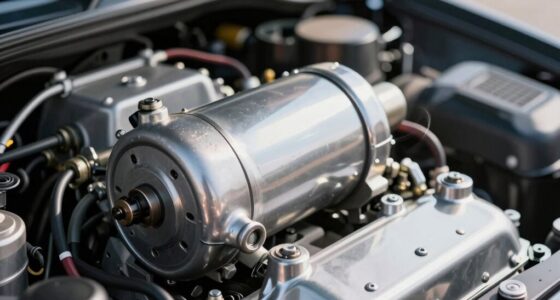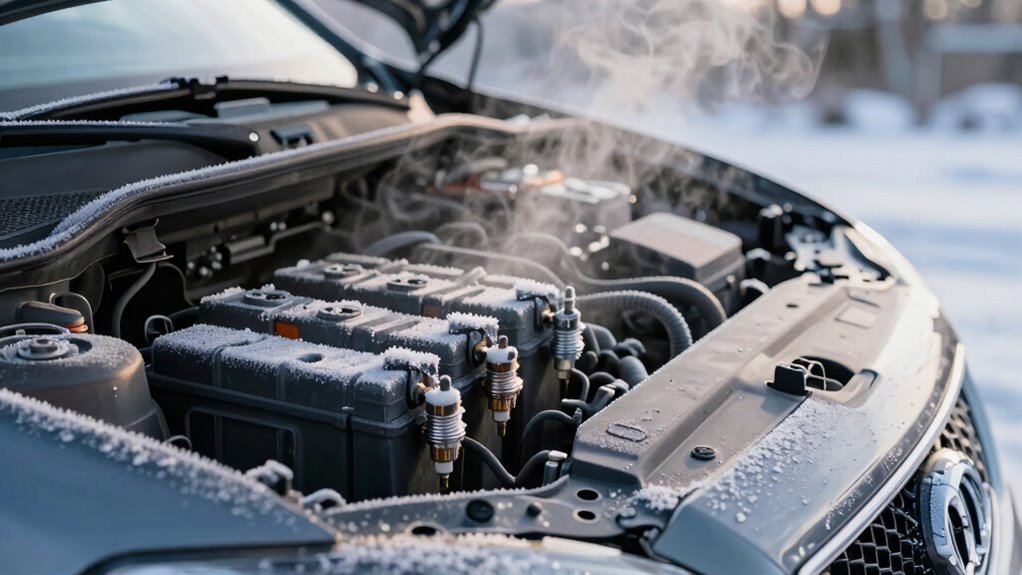

Avoid letting your engine idle for too long before driving, as it wastes fuel and puts strain on your engine. Don’t forget to check your battery’s health regularly, especially in cold weather—dead batteries are costly and inconvenient. Never push the accelerator hard during cold starts; gentle driving helps circulate oil and prevents damage. Make certain your vehicle’s ventilation is proper to keep fumes out. Staying prepared with these tips can save you from costly repairs—more helpful advice awaits if you keep going.

Get business pricing on garage and car supplies
- Business-only prices and quantity discounts
- Tax-exempt purchasing
- Multiple users, one account, clear invoices
Key Takeaways
- Idling the engine to warm up wastes fuel and is unnecessary with modern vehicles.
- Pushing the accelerator hard during cold start can strain the engine and reduce efficiency.
- Neglecting regular battery checks increases the risk of failure during cold starts.
- Failing to ensure proper ventilation can lead to harmful fume buildup inside the vehicle.
- Ignoring winter vehicle preparation, like inspecting the heating system, can cause unexpected breakdowns.

Many drivers also forget that letting your vehicle warm up isn’t always the best approach. While it’s tempting to let your engine idle to warm up, doing so can waste fuel and isn’t necessary with modern vehicles. Instead, start your engine and allow it to run for a minute or two, then gently drive off. This helps circulate oil and warms the engine more efficiently. Keep in mind, however, that a cold engine requires less throttle, so don’t push the accelerator too hard during those first few minutes. Regularly checking the battery’s health can prevent unexpected failures during cold starts, saving you from costly repairs. Proper ventilation is also essential to maintain a healthy interior environment and prevent the buildup of fumes. Additionally, ensuring your vehicle is equipped with appropriate winter accessories can improve safety and performance in cold weather. To further prevent issues, consider inspecting your vehicle’s heating system before winter begins, which can ensure optimal comfort and safety during cold starts. Being aware of common cold-weather vehicle problems can help you prepare better and avoid unnecessary breakdowns.
Products Worth Considering

Meguiar's G55048 Ultimate Car Care Kit

DEWALT 20V MAX XR 3-Speed Cordless Impact Driver Kit with Battery and Charger (DCF845P1)

Chemical Guys 14-Piece Arsenal Builder Car Wash Kit with Foam Blaster
As an affiliate, we earn on qualifying purchases.
Frequently Asked Questions
How Can I Prevent My Battery From Dying in Cold Weather?
To prevent your battery from dying in cold weather, focus on proper battery maintenance by keeping terminals clean and ensuring it’s well-charged. Use cold weather accessories like a battery warmer or insulation blanket to help maintain ideal temperature. Regularly check your battery’s health, especially before cold spells, and consider replacing it if it’s old or weak. These steps help your battery perform reliably despite the chilly conditions.
What’s the Best Way to Warm up My Engine Properly?
Think of your engine as a frozen lake needing gentle thawing. Start your vehicle and let it idle for a few minutes, allowing the engine insulation to facilitate its magic. For faster warmth, plug in a block heater overnight, creating a cozy environment for the engine. This approach guarantees a smooth start, reduces strain, and prevents damage, all while respecting your vehicle’s delicate winter needs.
Are Synthetic Oils Better for Cold-Weather Starts?
Yes, synthetic oils are better for cold-weather starts because they flow more easily at low temperatures. Their viscosity comparison shows they maintain ideal lubrication when it’s cold, reducing engine strain. Unlike conventional oils, synthetic options resist thickening, allowing your engine to start quicker and run smoother. This improved flow helps prevent wear and reduces the risk of costly breakdowns during winter, making synthetic oils a smart choice for cold climates.
How Often Should I Check My Antifreeze Levels?
You should check your antifreeze levels at least twice a year, ideally before winter and summer. Regular antifreeze testing helps guarantee your coolant isn’t degraded, preventing engine freezing or overheating. Don’t ignore signs of coolant loss; it’s crucial for avoiding costly repairs. If your antifreeze is old or contaminated, a coolant replacement is necessary. Consistent checks keep your vehicle running smoothly in cold weather, giving you peace of mind.
Can Cold Weather Damage My Spark Plugs?
Yes, cold weather can damage your spark plugs by causing corrosion, especially if moisture gets into the ignition system. This corrosion can lead to ignition system issues, such as misfires or difficulty starting your vehicle. To prevent this, regularly inspect and replace spark plugs if they show signs of corrosion or wear. Keeping your ignition system dry and properly maintained guarantees reliable starts during harsh winter conditions.
Conclusion
By avoiding these common cold-weather starting mistakes, you can keep your vehicle running smoothly and save yourself from costly repairs. Don’t overlook the importance of proper maintenance and patience when starting your car in chilly conditions. After all, isn’t it worth taking a little extra time to prevent bigger headaches down the road? Stay proactive, stay warm, and keep your vehicle happy all winter long. Your car will thank you for it!