
After driving, it’s important to re-torque your wheels because normal road conditions, temperature changes, and vibrations can loosen lug nuts over time. Properly re-tightening them using a calibrated torque wrench in a star pattern helps guarantee your wheels stay secure and reduces the risk of accidents. Regular re-torqueing extends your wheel and hardware lifespan. If you want to learn the best practices for safe and effective re-torqueing, keep exploring this important topic.

Get business pricing on garage and car supplies
- Business-only prices and quantity discounts
- Tax-exempt purchasing
- Multiple users, one account, clear invoices
Key Takeaways
- Re-torqueing ensures lug nuts remain at manufacturer-specified torque after driving-induced loosening.
- Normal driving conditions, like vibrations and temperature changes, can cause wheels to loosen over time.
- Regular re-torqueing prevents wheel detachment, enhancing vehicle safety during operation.
- Using a calibrated torque wrench during re-torqueing guarantees accurate and consistent tightening.
- Incorporating re-torque checks into maintenance routines prolongs wheel and hardware lifespan.

Proper wheel torque is essential for ensuring vehicle safety and ideal performance. When you’re installing or tightening your wheels, paying attention to lug nut safety is crucial. If the lug nuts aren’t torqued correctly, your wheels could loosen over time, increasing the risk of accidents or damage. That’s why using a reliable torque wrench is vital. A properly calibrated torque wrench ensures you apply the right amount of force, preventing under-tightening or over-tightening. If your torque wrench isn’t calibrated correctly, you might not achieve the accurate torque needed, which can compromise lug nut safety. Regular calibration checks help maintain the wrench’s accuracy, giving you confidence in your torque settings every time.
After driving for a while, it’s important to re-torque your wheels, especially if you’ve recently had new tires installed or if you notice any unusual vibrations or noises. The reason is that wheel lug nuts can loosen slightly due to normal driving conditions, temperature changes, and road vibrations. Re-torqueing ensures that the lug nuts remain at the manufacturer’s specified torque, maintaining proper lug nut safety. When you re-torque, you help prevent wheel detachment, which can lead to dangerous situations on the road. It’s a simple but critical step that many overlook, yet it substantially impacts your vehicle’s safety and performance.
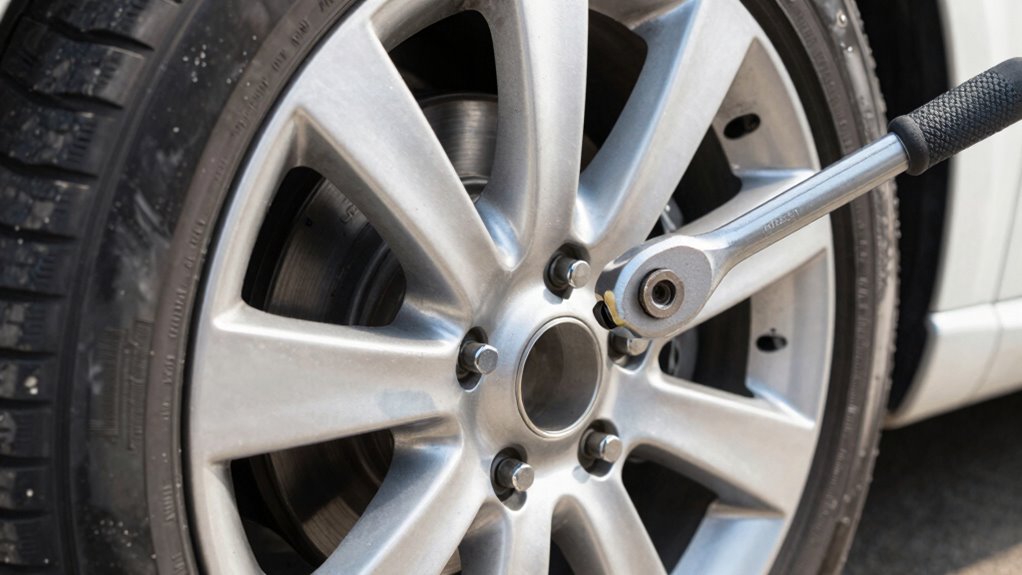
To properly re-torque your wheels, you should first loosen the lug nuts slightly and then tighten them in the correct sequence—usually a star pattern—to evenly distribute pressure. Use your calibrated torque wrench to tighten each lug nut to the specified torque setting. This process guarantees that each lug nut is secured with the right amount of force, preventing uneven stress and potential damage. Remember, the manufacturer’s recommended torque value is designed to keep your wheels safely attached without risking damage to the wheel or studs.
Additionally, understanding the importance of Free Floating systems can help you recognize the need for precise torque application, as these setups often require specific procedures to ensure optimal performance and safety.
In addition to re-torquing, always double-check your torque wrench calibration periodically, especially if you notice inconsistent torque readings or if you’ve dropped or mishandled the tool. Proper maintenance of your torque wrench ensures that your lug nut safety remains uncompromised. Following these best practices not only prolongs the lifespan of your wheels and hardware but also guarantees that your vehicle performs at its best and remains safe to drive. Making re-torqueing part of your regular vehicle maintenance routine is a simple, effective way to stay ahead of potential issues and keep your driving experience secure.
Frequently Asked Questions
How Often Should Wheel Nuts Be Re-Torqued?
You should re-torque your wheel nuts after the first 50 to 100 miles of driving to guarantee nut safety and proper torque frequency. This initial check prevents loose nuts that could compromise safety. Afterward, re-torque is typically recommended every 5,000 to 10,000 miles or during regular maintenance. Regularly checking your nut torque keeps your wheels secure and helps avoid potential accidents caused by loose or improperly torqued nuts.
Can Over-Tightening Damage Wheel Components?
Yes, over-tightening can damage wheel components. When you apply excessive torque, it stresses the studs, leading to fatigue, which weakens them over time. It can also cause wheel deformation, compromising the wheel’s integrity and safety. To avoid these issues, always follow manufacturer torque specifications and re-torque after driving to make certain the wheel nuts stay secure without risking damage to the studs or wheel.
What Tools Are Best for Re-Torquing Wheels?
You’ll want a good torque wrench for re-torquing your wheels—an essential tool that guarantees proper tightness without risking damage. The best choice is a calibrated, click-type torque wrench for precision. Re-torque frequency isn’t just a suggestion; it’s a must-do to prevent wheel loosening. So, don’t ignore this step—your safety depends on it. After all, who doesn’t love a smooth, worry-free drive?
Does Driving on Rough Roads Affect Torque?
Driving on rough roads can impact torque stability because road condition impacts cause vibrations and jolts that loosen wheel bolts over time. You should regularly check and re-torque your wheels after driving on uneven terrain, especially if you notice any wobbling or unusual noises. This guarantees your wheel torque remains secure, preventing accidents or damage. Always follow your vehicle manufacturer’s recommended torque specifications for safety and peak performance.
Are Alloy Wheels More Prone to Torque Issues?
Alloy wheels are like delicate glassware—they’re more torque sensitive than steel rims. You’re more prone to torque issues with alloy wheels if you don’t perform regular alloy wheel maintenance. Over time, driving on rough roads can loosen the lug nuts, increasing the risk of problems. To keep your wheels secure and in top shape, always re-torque after driving, especially on uneven terrain, to prevent costly damage.
Conclusion
Remember, re-torque your wheels like tightening the strings on a tightrope—each turn keeps your journey steady and safe. Neglecting this step is like a ship losing its anchor, risking a dangerous drift. By following best practices, you’re the captain steering your vehicle with confidence, ensuring every drive stays smooth and secure. Don’t let loose bolts be the hidden storm on your road—re-torque and stay firmly grounded on every adventure.
Columbus Day / Indigenous Peoples' Day Picks
long weekend sales
As an affiliate, we earn on qualifying purchases.