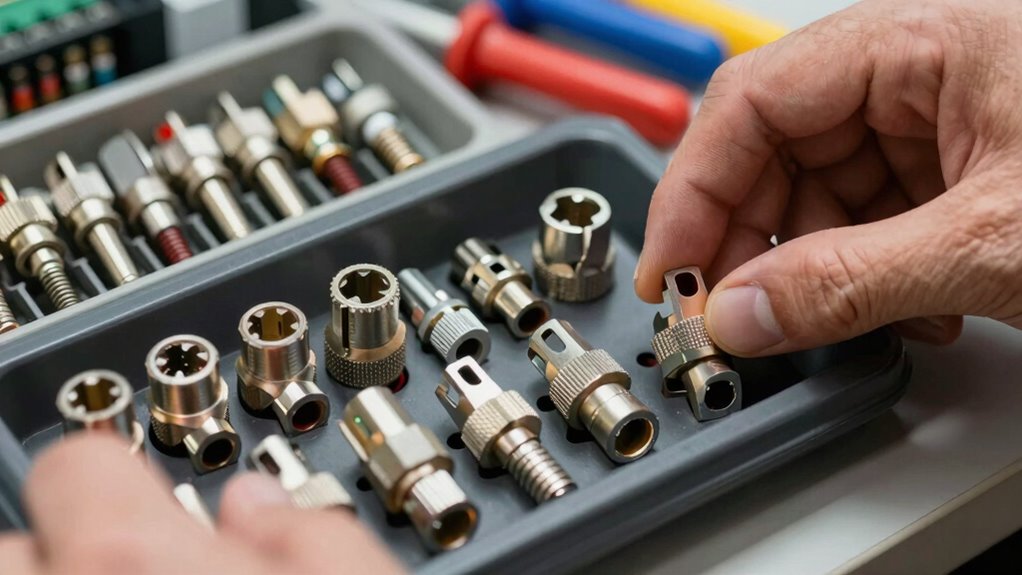

When choosing between SAE, Anderson, and Ring terminals, consider your specific wiring needs and environmental conditions. SAE terminals are common for automotive applications, Anderson connectors are great for high-current setups, and Ring terminals provide secure connections for grounding or power distribution. Make certain you match the wire gauge and terminal type for a safe, reliable connection. If you want to understand the best choice for each situation, keep exploring how proper installation techniques make a difference.
Key Takeaways
- Choose the terminal type based on application requirements, such as SAE for automotive, Anderson for high-current, or Ring for secure connections.
- Match wire gauge precisely to the terminal to ensure a secure, reliable connection and prevent overheating or loose contacts.
- Use proper crimping tools and techniques for each terminal type to guarantee a strong mechanical and electrical bond.
- Consider environmental conditions—select terminals with appropriate insulation, sealing, or corrosion resistance for durability.
- Evaluate system needs, including current capacity and vibration resistance, to select the most suitable connector for long-term performance.
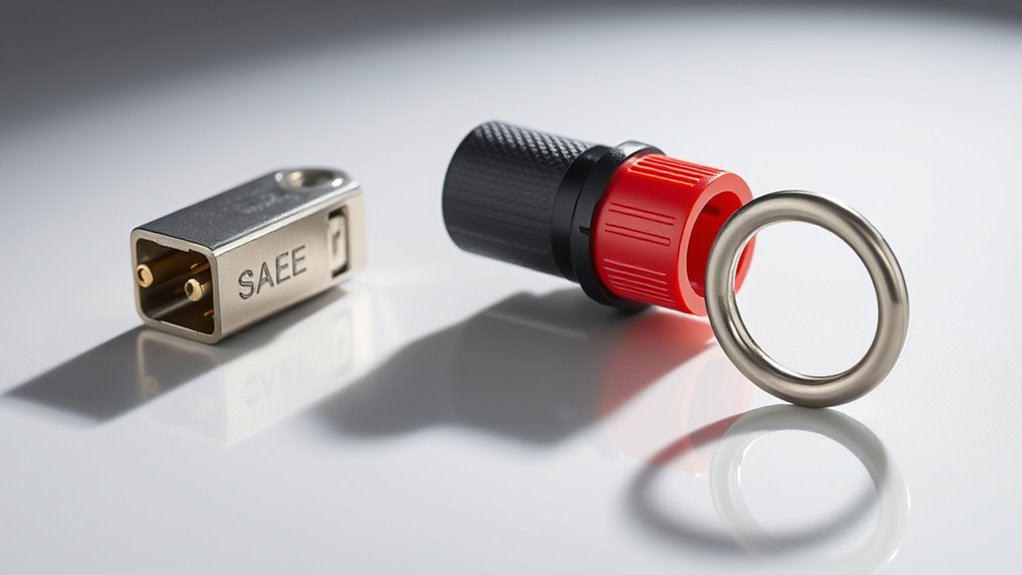
Are you familiar with the different types of electrical terminals used in wiring applications? If not, it’s essential to understand how choosing the right connector can impact the safety and reliability of your electrical system. Among the most common options are SAE, Anderson, and Ring terminals, each suited for specific tasks. When selecting a terminal, you need to consider wire gauge compatibility, which ensures a secure connection and prevents issues like loose contacts or overheating. Matching the terminal to the wire gauge is crucial because using a terminal designed for a different gauge can compromise the connection’s integrity. For instance, installing a small gauge wire into a terminal meant for larger wires might result in poor contact, leading to potential failure or electrical hazards. Additionally, understanding the importance of contrast ratio helps in choosing projectors that produce clear images in various lighting conditions, which is vital for creating an optimal home cinema experience.
Terminal installation techniques also play a significant role in the effectiveness of your wiring. Proper crimping, for example, is vital—using the right tools and techniques ensures the terminal is firmly attached to the wire. A good crimp creates a solid mechanical bond and good electrical contact, reducing resistance and preventing future failures. When installing SAE, Anderson, or Ring terminals, you should strip the wire correctly, insert it fully into the terminal, and then crimp firmly without damaging the wire or the terminal. This process guarantees a consistent, reliable connection that withstands vibrations, moisture, and other environmental factors.
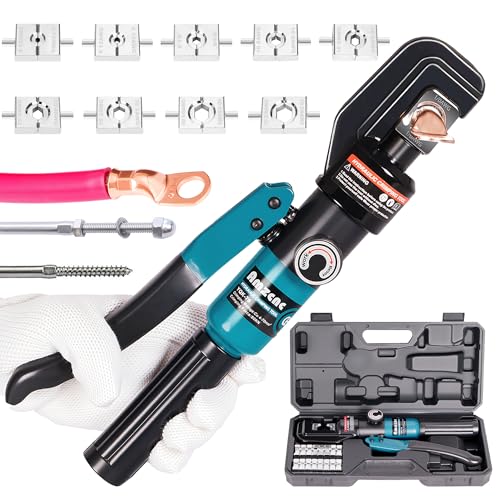
10 Ton Hydraulic Battery Cable Crimper – Single-Hand Return, 9 Hex Dies for 12-2/0 AWG, 180° Rotating Head, Pro Terminal Tool for Car/RV/Marine Power
Hydraulic crimping tool specification: Crimping range 12 AWG-2/0 AWG, Stroke 0.55 Inch
As an affiliate, we earn on qualifying purchases.
As an affiliate, we earn on qualifying purchases.
Frequently Asked Questions
How Do I Determine the Correct Terminal Size for My Project?
To determine the correct terminal size for your project, start by checking your wire gauge selection to guarantee compatibility. Match the terminal’s crimp barrel size to your wire gauge for a secure connection. Also, verify terminal compatibility with your connector type to prevent issues later. Measure your wire diameter accurately and consult manufacturer charts to select the right size, ensuring safety and reliable performance in your application.
Are There Specific Terminals Suitable for High-Vibration Environments?
If you’re tackling a high-vibration environment, look for vibration resistant terminals and heavy-duty connectors. These components are specifically designed to withstand constant movement and shocks, reducing the chances of disconnection or failure. You’ll want terminals with secure locking mechanisms and robust insulation. By choosing these rugged options, you guarantee your connections stay reliable, even in the most demanding conditions, giving you peace of mind and lasting performance.
Can SAE, Anderson, and Ring Terminals Be Used Interchangeably?
No, SAE, Anderson, and Ring terminals can’t be used interchangeably because they have different terminal materials and designs suited for specific applications. You need to take into account the terminal material’s durability and compatibility with your wiring. Additionally, using the correct installation tools ensures secure connections. Always match the terminal type to your project’s requirements to avoid issues like poor conductivity or mechanical failure.
What Safety Precautions Should I Follow When Installing Terminals?
Think of safety precautions like a sturdy shield when installing terminals. Always wear insulated gloves and eye protection to guard against sparks or shorts. Make sure you use the proper tools to avoid damaging terminals or wiring. Check that wires are stripped correctly and connectors are securely crimped. Prioritize insulation safety by verifying all connections are insulated properly, preventing accidental shorts or shocks. Follow these steps, and you’ll keep your work safe and sound.
Which Terminals Are Best for Outdoor or Corrosive Conditions?
For outdoor or corrosive conditions, you should choose terminals with high corrosion resistance and excellent weatherproofing. Look for terminals made from materials like stainless steel or coated with protective layers to prevent rust and deterioration. Waterproof or sealed terminals are ideal, as they keep moisture out and guarantee reliable connections. Always verify the product specifications to confirm they’re rated for harsh environments, so your connections stay secure and durable over time.

GXMRHWY 2PCS 175A Battery Specific Quick Connect Plugs, for 12V-36V,1/0 AWG Anderson High Current Connectors with a Panel Fixing Bracket and Handle for Cars, Motors, Trailers, Ships, Winches (Red)
175A quick connect wire connector, suitable for 1/0 AWG (10mm ² -50mm ²) battery cables, 12-36V DC voltage,…
As an affiliate, we earn on qualifying purchases.
As an affiliate, we earn on qualifying purchases.
Conclusion
Choosing the right terminal is like selecting the perfect key to open a secure door. SAE, Anderson, and Ring Terminals each hold unique strength, symbolizing trust, connection, and stability. When you pick the right one, you’re forging a bond that withstands the test of time and vibration. Trust your instincts, visualize that seamless connection, and remember—your choice is the bridge that keeps your project alive and thriving.

TICONN 120Pcs Heat Shrink Wire Connectors, Waterproof Automotive Marine Electrical Terminals Kit, Crimp Connector Assortment, Ring Fork Spade Butt Splices
[PREMIUM QUALITY] Thick copper barrel ensures strong secure crimping every time, providing minimal voltage drop, high current flow,…
As an affiliate, we earn on qualifying purchases.
As an affiliate, we earn on qualifying purchases.

dakewang 24types 900pcs Automotive Pin Connectors Kit, 1/1.5/1.8/2.2/2.3/2.8/3.5mm Male&Female Wire Pins, Non Insulated Wire Terminal Pin Kit. (Crimp Tool)
WHAT YOU GET: We offer 24 types 480 Pcs terminal pins,4 types 400 Pcs Connector Wire Seals, a…
As an affiliate, we earn on qualifying purchases.
As an affiliate, we earn on qualifying purchases.