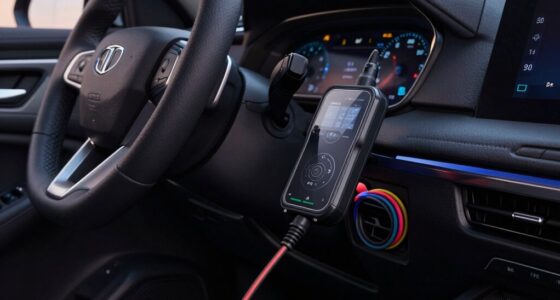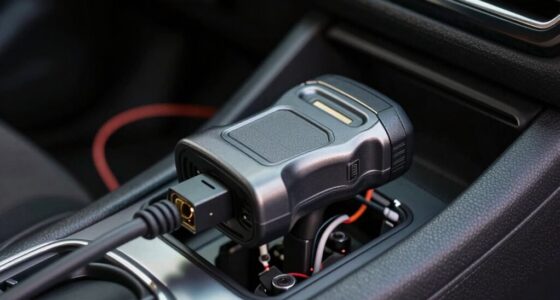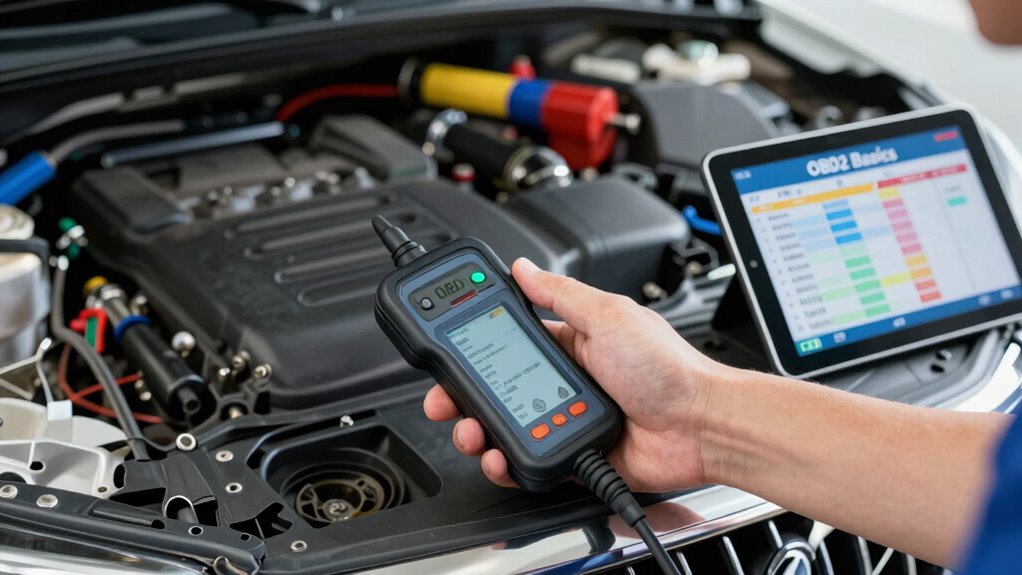

To quickly diagnose with your OBD2 scanner, start by ensuring your cables and connections are secure and free of damage. Turn on your vehicle and connect the scanner firmly to the OBD2 port. Read any trouble codes and note their meanings related to engine or emission issues. Check live sensor data, like oxygen or coolant temperature readings, to see if they are within normal ranges. Clear codes to see if they reappear, indicating ongoing problems. Keep practicing these steps, and you’ll become more confident in troubleshooting efficiently.
Key Takeaways
- Ensure secure connection to the OBD2 port and inspect cables for damage.
- Read and record trouble codes using an OBD2 scanner.
- Check live sensor data to identify abnormal readings or faulty sensors.
- Clear codes and verify if they reappear to confirm persistent issues.
- Use freeze-frame data to analyze intermittent faults and improve diagnosis accuracy.
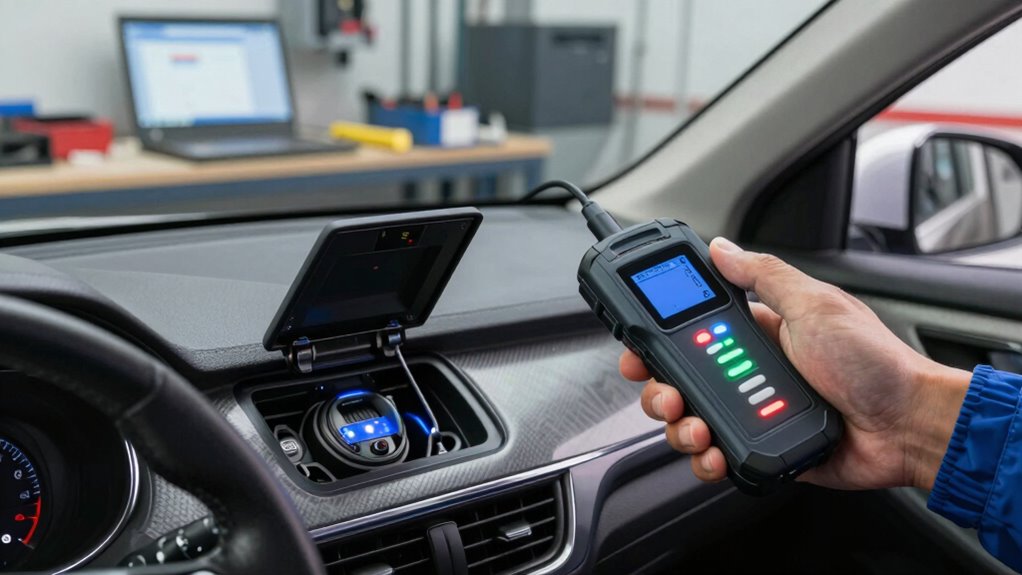
Ever wondered what steps to take when diagnosing your vehicle’s issues with an OBD2 scanner? The first thing you want to do is familiarize yourself with the basics of sensor diagnostics and code reading. When you connect your scanner to the OBD2 port, it immediately starts communicating with your car’s onboard computer. Your goal is to read the trouble codes stored in the system. These codes are like clues that point you directly toward specific problems. Whether it’s an issue with the engine, transmission, or emissions system, understanding how to interpret these codes saves you time and money. The scanner also lets you view live sensor data, which is essential for sensor diagnostics. You can see real-time information from various sensors—like oxygen sensors, MAF sensors, or coolant temperature sensors—and determine if they’re functioning properly. If a sensor’s readings are outside the normal range, that’s a clear sign that it might be faulty or misreading, and you can then focus your troubleshooting accordingly.
Once you’ve read the codes and checked the sensor data, it’s time to clear any stored codes to see if they reappear. Clearing codes resets the system, and if the check engine light comes back on shortly after, you know the problem persists. This feedback loop helps you confirm whether your initial diagnosis was accurate. Keep in mind, though, that not all issues trigger codes or show up as abnormal sensor readings immediately. Sometimes, mechanical inspections or other diagnostic tools are necessary to complete the picture. But with your OBD2 scanner, you’re off to a solid start, especially in pinpointing issues through code reading and sensor diagnostics. Additionally, don’t forget to check the condition of your scanner’s cables and connections before diving into diagnostics. A loose or damaged connector can give false readings or prevent data from loading correctly. Ensuring a secure connection is crucial for accurate results. Proper vehicle interface can also help streamline your diagnostic experience, making the process more efficient. Once everything’s connected properly, you can use the scanner’s freeze-frame data feature to capture the moment when the fault occurred. This snapshot can be invaluable for pinpointing intermittent issues. It’s also helpful to understand the OBD2 system, which is a standardized interface that makes vehicle diagnostics more accessible for users. Understanding the diagnostic trouble codes and how they relate to specific components can further enhance your troubleshooting skills. Remember, mastering these initial steps—reading codes, analyzing sensor data, and performing basic checks—puts you in control of your vehicle’s diagnostics. With practice, you’ll quickly identify problems and determine whether a simple fix or professional help is needed. This 5-minute checklist keeps you proactive and informed, turning what might seem like complex troubleshooting into a manageable process.

ANCEL AD310 Classic Enhanced Universal OBD II Scanner Car Engine Fault Code Reader CAN Diagnostic Scan Tool, Read and Clear Error Codes for 1996 or Newer OBD2 Protocol Vehicle (Black)
CEL Doctor: The ANCEL AD310 is one of the best-selling OBD II scanners on the market and is…
As an affiliate, we earn on qualifying purchases.
As an affiliate, we earn on qualifying purchases.
Frequently Asked Questions
Can OBD2 Diagnostic Tools Fix Car Issues Automatically?
OBD2 diagnostic tools can’t fix car issues automatically, but they help you identify problems like emission system faults or poor fuel efficiency. When you connect the tool, it scans for error codes, letting you know what’s wrong. While the tool itself doesn’t repair issues, using the data effectively can save time and money during maintenance or emission testing, ensuring your vehicle runs smoothly and efficiently.
Are All Vehicles Compatible With OBD2 Scanners?
Not all vehicles are compatible with OBD2 scanners, especially older models made before 1996 in the U.S. or those with unique diagnostic systems. You should check your vehicle’s compatibility first, as scanner limitations can prevent certain tools from reading all data correctly. If your vehicle isn’t compatible, you might need a specialized scanner or an alternative diagnostic method to identify issues effectively.
How Often Should I Perform an OBD2 Scan?
Think of your car as a living organism; regular OBD2 scans are like essential check-ups. You should perform a scan every few months or when you notice issues, ensuring sensor calibration stays accurate and battery health remains strong. Frequent scans help catch problems early, prevent breakdowns, and keep your vehicle running smoothly. Don’t wait for warning lights—regular check-ins are your best defense for long-term reliability.
What Does a Specific Error Code Mean?
A specific error code, or diagnostic trouble code (DTC), indicates a particular issue with your vehicle. Error code interpretation helps you understand what’s wrong by decoding these DTCs, which are alphanumeric identifiers stored by your car’s onboard computer. When you see a code, look it up in your vehicle’s manual or an online database to identify the problem, then decide if you need professional repair or can fix it yourself.
Do I Need Professional Training to Interpret OBD2 Data?
You don’t need professional training for DIY diagnostics; many OBD2 readers are user-friendly and designed for car enthusiasts. While technician training offers in-depth knowledge, basic data interpretation is straightforward with the right tools and guides. If you’re comfortable following instructions and understanding simple codes, you can effectively analyze your vehicle’s health without formal training. Just remember, complex issues might still require a professional’s expertise.
ANCEL AD310 Classic Enhanced Universal OBD II Scanner Car Engine Fault Code Reader CAN Diagnostic Scan Tool, Read and Clear Error Codes for 1996 or Newer OBD2 Protocol Vehicle (Black)
CEL Doctor: The ANCEL AD310 is one of the best-selling OBD II scanners on the market and is…
As an affiliate, we earn on qualifying purchases.
As an affiliate, we earn on qualifying purchases.
Conclusion
By following this quick OBD2 checklist, you can confidently diagnose your vehicle’s issues and understand its health. Think of it like a visual map, revealing the hidden connections behind your car’s performance. Just as a scientist tests a theory to uncover truth, this guide helps you verify what’s really happening under the hood. With a little practice, you’ll see the clear picture, making maintenance simpler and more reliable.

FOXWELL NT301 OBD2 Scanner Live Data Professional Mechanic OBDII Diagnostic Code Reader Tool for Check Engine Light
【Read Fault Codes】About the read code funtion needs to be in the ignition on state and if the…
As an affiliate, we earn on qualifying purchases.
As an affiliate, we earn on qualifying purchases.
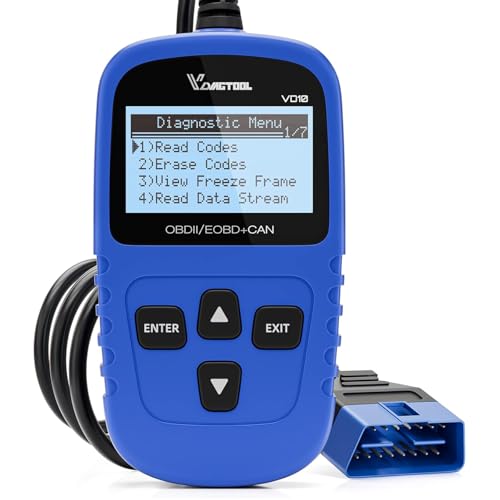
VDIAGTOOL VD10 OBD2 Scanner Code Reader Car Diagnostic Tool Engine Fault Code Reader for Turn Off CEL with Freeze Frame/I/M Readiness for All OBDII Protocol Cars, OBD2 Scanner Diagnostic Tool
【A MUST-HAVE TOOL FOR DIYERS】 – VDIAGTOOL VD10 car code reader is an incredibly useful obd scanner for…
As an affiliate, we earn on qualifying purchases.
As an affiliate, we earn on qualifying purchases.