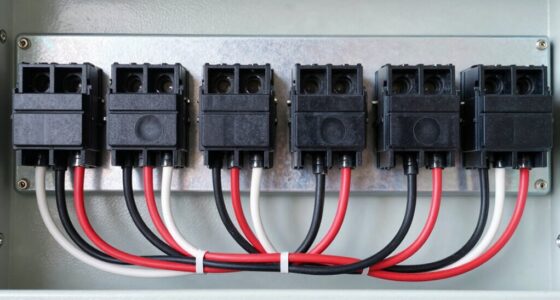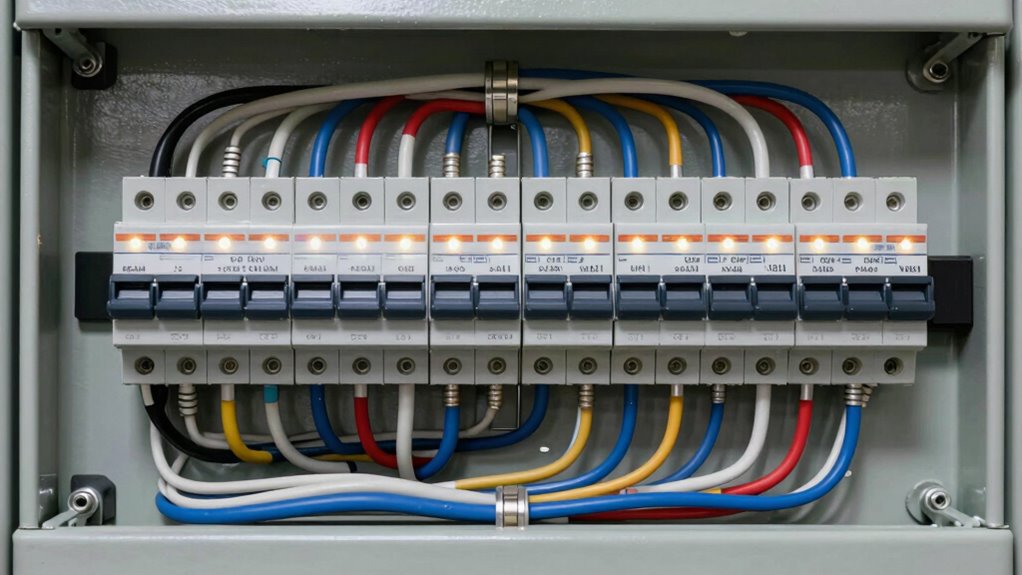
For a no-drama wiring and fusing setup, start by selecting the right fuse or circuit breaker that matches your load capacity to prevent overloads. Use insulated wires of proper gauge, keep everything neat, and secure connections tightly. Follow electrical codes, plan your layout clearly, and label circuits for quick identification. Position safety components within easy reach, and always turn off power before working. Want more tips? Keep going to learn how to make your system even safer and more reliable.
Key Takeaways
- Select appropriately rated fuses or circuit breakers to prevent overloads and ensure quick fault response.
- Use insulated, properly gauged wiring with secure, tight connections for safety and reliability.
- Follow electrical codes and proper wiring techniques to ensure compliance and system integrity.
- Clearly plan and label circuits for easy maintenance, troubleshooting, and emergency access.
- Position safety components in accessible locations and practice safety protocols during installation and repairs.
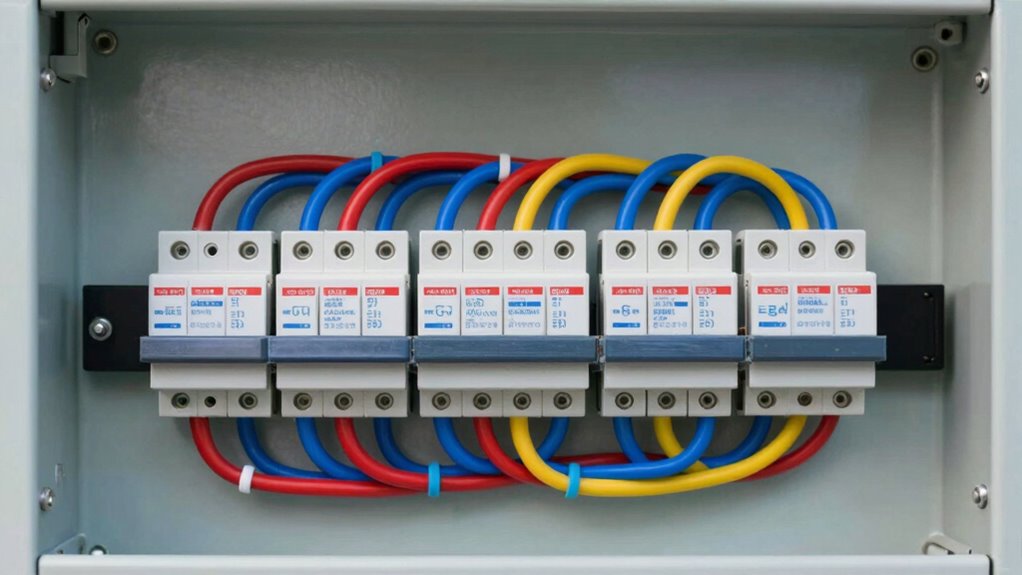
Setting up wiring and fusing for your electrical system can seem intimidating, but with a straightforward approach, it doesn’t have to be complicated. The key is understanding circuit protection and wiring safety, which are essential for a reliable and safe electrical setup. When you plan your wiring, start by selecting the right type of fuse or circuit breaker. These components are designed to prevent overloads and short circuits, protecting your wiring and devices from damage. Proper circuit protection isn’t just about choosing the right fuse; it’s about ensuring the fuse rating matches the circuit’s load capacity. Too high, and it won’t trip in a fault; too low, and it may blow unnecessarily, causing inconvenience.
Next, focus on wiring safety. Use insulated wires of appropriate gauge for your circuits, and avoid shortcuts like splitting wires or overloading circuits. Keeping wiring neat and organized isn’t just for aesthetics—it makes troubleshooting easier and reduces the risk of accidental damage or shorts. When connecting wires, ensure tight, secure connections to prevent arcing and overheating, which can be dangerous. Always turn off power before working on any wiring, and double-check your connections before restoring power. Incorporating proper wiring techniques ensures your setup remains safe and reduces the risk of electrical hazards. Additionally, following electrical codes helps ensure your system is compliant and safe for long-term use.
Incorporate a clear plan for your wiring layout, marking circuits and components to avoid confusion later. Proper labeling helps you identify circuits quickly, especially if you need to shut off power for maintenance or repairs. When installing fuses or circuit breakers, position them in accessible locations so you can easily shut off power if needed. This straightforward setup minimizes downtime and makes troubleshooting more efficient. Additionally, understanding circuit protection principles ensures your system remains safe and compliant with electrical standards. Being aware of electrical safety practices can further reduce risks during installation and maintenance.

16 Sheets Breaker Panel Labels Electrical Box Sticker Numbers Breaker Panel Labels Electrical Sticker Number Catalog Load Center Adhesive Waterproof Reusable(Mix Colors)
- Customizable Labels: Cut to size for various panels
- Reusable & Tear-Resistant: Durable labels for multiple uses
- Comprehensive Set: Includes 12 catalog and 4 number stickers
As an affiliate, we earn on qualifying purchases.
As an affiliate, we earn on qualifying purchases.
Frequently Asked Questions
What Tools Are Essential for No-Drama Wiring?
To guarantee no-drama wiring, you’ll need essential tools like wire strippers, a voltage tester, and a screwdriver. You should also have the right wire gauge for your project and appropriate circuit breakers to protect your system. Using a multimeter helps verify connections. These tools help you wire safely and efficiently, reducing the risk of shorts or overloads, and ensuring your setup stays reliable and safe.
How Often Should Fuses Be Inspected or Replaced?
Think of fuses as vigilant guards at a gate, standing watch to protect your system. You should inspect fuses regularly—about every six months—to guarantee their lifespan isn’t nearing its end. Replace any fuse showing signs of damage or corrosion immediately. Consistent inspection frequency keeps your wiring safe and reliable, preventing unexpected failures. Stay proactive, and your electrical system will remain secure, just like a well-guarded fortress.
Can This Setup Be Used for Outdoor Wiring?
Yes, you can use this setup for outdoor wiring. Make certain to incorporate weatherproof connectors and use corrosion-resistant materials to protect against moisture and environmental elements. These features help guarantee safety and durability, preventing shorts or failures. Proper sealing and durable materials are essential for outdoor applications, so always verify that your wiring setup meets outdoor safety standards to maintain reliable operation under various weather conditions.
What Safety Precautions Are Recommended During Installation?
Imagine sparks flying as you work outdoors, so you want to prioritize wire safety and fuse compatibility. Wear insulated gloves and safety glasses to protect against shocks. Turn off the power before wiring, and double-check connections. Use weatherproof gear for outdoor safety, make certain all fuses match the rated amperage, and keep the workspace dry. These precautions help prevent accidents and ensure your wiring setup remains safe and reliable.
Is Professional Help Necessary for Complex Wiring?
Yes, professional help is necessary for complex wiring. DIY pitfalls can lead to unsafe installations, risking electrical fires or shocks. When dealing with intricate wiring systems, you might overlook critical safety codes or make costly mistakes. Relying on professional expertise guarantees your wiring is correctly installed, compliant with standards, and safe for long-term use. Don’t cut corners—trust the experts to handle complex tasks safely and effectively.

MKBKLLJY 26 Gauge Solid Wire 300V PVC Electrical Wire 26AWG Insulation Tinned Coated Copper Wire Hook Up Wire 4Colors(Red/Yellow/Blue/Black) 5m/16.4ft Each Wire Assortment for Electronics DIY
- Cable Length: 5 meters (16.4 feet) per roll
- Wire Gauge: 26 AWG
- Inner Core: Solid copper
As an affiliate, we earn on qualifying purchases.
As an affiliate, we earn on qualifying purchases.
Conclusion
By following this no-drama wiring and fusing setup, you’ll create a safe, reliable electrical system that minimizes surprises. Keep things simple, stay organized, and double-check your connections—think of it like building a sturdy bridge, one plank at a time. Remember, “A stitch in time saves nine,” so taking the time now guarantees smoother, trouble-free operation later. With patience and care, you’ll keep your wiring safe and stress-free for years to come.

BOJACK 5x20mm 20A 20amp 250V 0.2 x 0.78 Inch F20AL250V Fast-Blow Glass Fuses (Pack of 20
- Package Quantity: 20 fuses included
- Fuse Size: 5x20mm
- Current Rating: 20A
As an affiliate, we earn on qualifying purchases.
As an affiliate, we earn on qualifying purchases.

8 in 1 Wire Stripper with Voltage Tester, Multi-function Electric Wire Stripping Tool for Cutting and Pulling Pliers, Electrical Pliers for Wire Cutting Stripping Crimping Repair Tool (Green-Black)
- 8-in-1 Multi-Function Tool: Includes stripping, cutting, crimping, voltage testing
- Voltage Testing Range: Tests 12-250V AC/DC with alarms
- Cable Compatibility: Supports AWG 18-6 and up to 25mm² cables
As an affiliate, we earn on qualifying purchases.
As an affiliate, we earn on qualifying purchases.