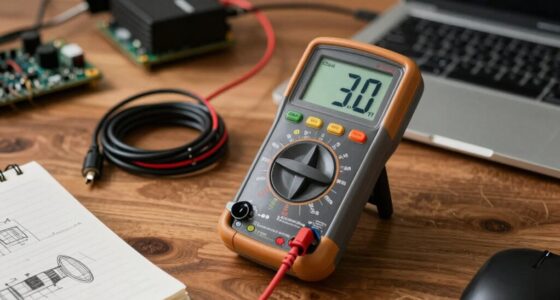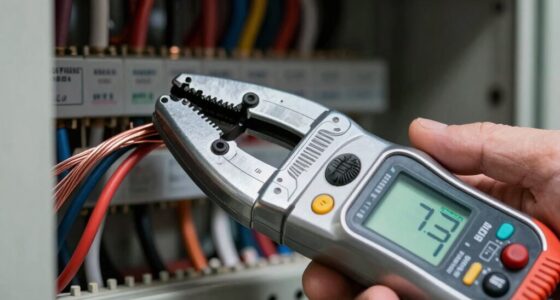
When testing USB-C ports in vehicles, you’ll want to check if they deliver consistent power, fast-charging speeds, and reliable data transfer during daily use. Pay attention to how well they handle multiple devices at once and if the charging performance matches the vehicle’s claims. Misalignments, wiring issues, and electrical system limitations can affect results. Keep exploring to uncover the best ways to guarantee your USB-C ports work effectively in real-world scenarios.

Get business pricing on garage and car supplies
- Business-only prices and quantity discounts
- Tax-exempt purchasing
- Multiple users, one account, clear invoices
Key Takeaways
- Conduct practical tests on USB-C ports during daily use to assess actual charging speed and data transfer reliability.
- Verify port performance under multitasking, such as charging multiple devices or using navigation simultaneously.
- Ensure proper device alignment on wireless chargers to evaluate real-world wireless charging effectiveness.
- Assess the vehicle’s electrical system capacity and wiring quality, which influence USB-C port performance.
- Compare performance across different devices and usage scenarios to determine consistency and reliability of ports.
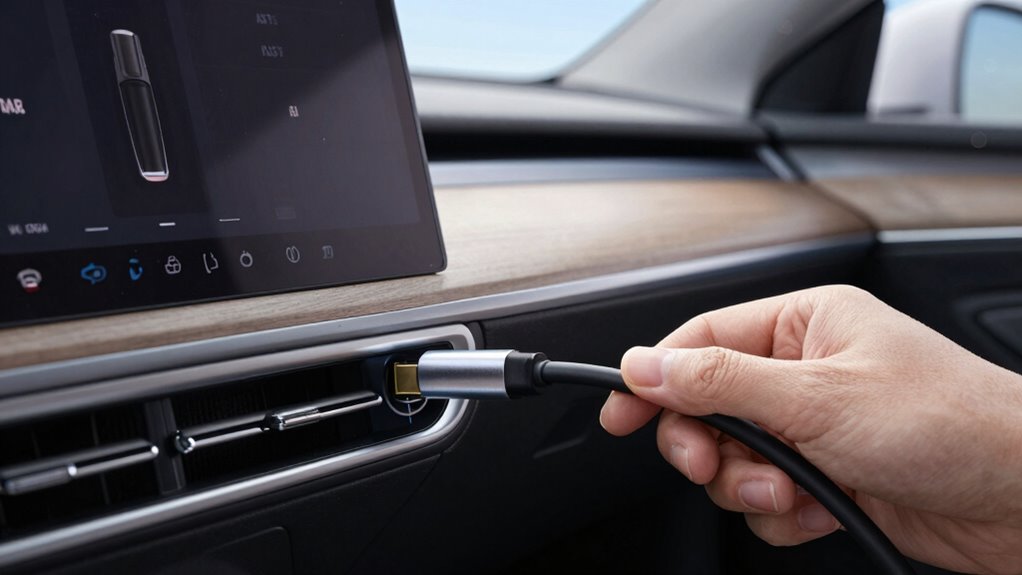
As more vehicles incorporate USB-C ports, understanding how well they perform in real-world conditions is essential. You rely on these ports not just for charging your devices but also for seamless data transfer and quick power delivery. One of the key features that drivers look for is wireless charging compatibility, which has become a standard expectation in modern vehicles. When you plug in your smartphone, you want it to start charging immediately, without fiddling with cables or worrying about alignment. In practical terms, this means that the USB-C port should support wireless charging pads or at least facilitate fast charging through reliable wired connections. Power delivery is critical here; the port must supply enough wattage to charge your device quickly, especially during long drives when you need your phone ready for navigation or calls.
In real-world testing, you’ll notice that not all USB-C ports deliver the same performance. Some vehicles tout fast-charging capabilities but fall short when it comes to actual power delivery. You might find that your phone charges at a much slower rate than expected, especially if the vehicle’s port isn’t optimized for high wattage output. This discrepancy can stem from the port’s design, wiring, or the vehicle’s electrical system. For wireless charging, the alignment between your device and the charging pad matters a lot. Even a slight misalignment can cause slower charging or, in some cases, no charging at all. So, in your daily use, it’s worth testing the placement of your device on the wireless pad and seeing how reliably it charges over time. Proper testing methods can help you determine the true performance of your vehicle’s charging system. Additionally, considering compatibility standards ensures your devices will work efficiently with your vehicle’s charging capabilities. Moreover, the electrical system of your vehicle can influence how effectively your devices charge, making it important to understand its capacity and limitations.
When evaluating the USB-C ports in your vehicle, pay close attention to how they handle multiple tasks simultaneously. For example, if you’re charging your phone while using it for navigation, the port should deliver consistent power without overheating or throttling. Some vehicles have ports that support Power Delivery (PD), which means they can provide higher wattage levels—up to 100W in certain cases—enabling faster charging for larger devices like tablets or even laptops. This capability is a game-changer if you’re on long trips and need to keep multiple devices powered up without waiting hours for a charge. Additionally, wireless charging standards are continually evolving, so checking if your vehicle supports the latest versions can ensure better compatibility and performance. It’s also helpful to consider the vehicle’s electrical system and how it impacts the overall charging experience, especially when multiple devices are connected. Ensuring your vehicle’s electrical system is robust and well-maintained can significantly influence USB-C performance.
Ultimately, the real-world performance of USB-C in vehicles hinges on how well these ports deliver power, support wireless charging, and handle your device’s demands during everyday use. A port that’s reliable, supports fast power delivery, and facilitates wireless charging removes the hassle and keeps you connected and powered up wherever you go.
USB-C car charger with fast charging
As an affiliate, we earn on qualifying purchases.
As an affiliate, we earn on qualifying purchases.
Frequently Asked Questions
How Does USB-C Affect Vehicle Safety Systems?
USB-C impacts your vehicle’s safety systems by enabling wireless connectivity for real-time updates and diagnostics, ensuring your systems stay current. It also enhances data security through encrypted data transfer, protecting sensitive information from cyber threats. By integrating USB-C, you benefit from faster, more reliable connections, which can improve safety features like collision avoidance and driver alerts, ultimately making your driving experience safer and more secure.
Are There Compatibility Issues With Older Car Models?
You might face compatibility concerns with older car models when using USB-C. Many older vehicles lack native USB-C ports, so you’ll need an adapter, which has limitations. These adapters can sometimes cause connection issues or slower data transfer, impacting your device’s performance. It’s crucial to check your vehicle’s compatibility and choose high-quality adapters to guarantee reliable charging and data transfer without risking damage to your car’s system.
What Is the Durability of USB-C Ports in Vehicles?
Like a sturdy bridge surviving storms, USB-C ports in vehicles are designed for high durability. Their port longevity depends on quality and usage, but generally, they resist wear well. Connector resilience is key, and premium ports withstand repeated insertions without failure. Be mindful of rough handling and debris, which can reduce lifespan. Properly maintained, your USB-C port can serve reliably, matching your vehicle’s journey mile for mile.
Can USB-C Support All Vehicle Entertainment Features?
Yes, USB-C can support all vehicle entertainment features thanks to its universal compatibility and high data transfer speeds. You can connect your devices seamlessly, stream high-quality media, and even charge your gadgets simultaneously. However, make sure your vehicle’s system is compatible with USB-C to fully utilize these features. When properly integrated, USB-C offers a versatile and efficient way to enhance your in-car entertainment experience.
How Does USB-C Impact Charging Speed During Road Trips?
USB-C considerably boosts your charging speed during road trips with fast charging capabilities, so you spend less time plugged in and more time on the road. However, compatibility concerns may arise if your vehicle or device doesn’t support fast charging, limiting the benefits. Make sure both your vehicle’s port and your device are compatible with USB-C fast charging to maximize efficiency and reduce charging times.
As an affiliate, we earn on qualifying purchases.
Conclusion
So, as you see, USB-C’s come through in the clutch, combining convenience and capability. While the road tests reveal reliability and real-world resilience, it’s clear that this connection continues to conquer challenges. With a compact, capable, and consistent connection, USB-C’s set to stay in your vehicle’s voyage. Embrace the evolution, enjoy the enhancement, and experience the excellence that USB-C delivers on every drive. Stay connected, stay confident, and cruise with confidence.
As an affiliate, we earn on qualifying purchases.
high wattage USB-C power delivery cable
As an affiliate, we earn on qualifying purchases.
As an affiliate, we earn on qualifying purchases.
Fall Picks
fall essentials
As an affiliate, we earn on qualifying purchases.