
To set up a no-drama inverter system, start by calculating your total load and guarantee the inverter can handle peak surges—adding 20-25% buffer is ideal. Match the inverter size to your battery capacity, considering efficiency and future growth. Avoid undersizing, which causes system struggles, or oversizing, which wastes money. Focus on balancing power needs and reliability. Keep these principles in mind, and you’ll prevent costly mistakes and ensure smooth operation—more tips await if you continue.

Get business pricing on garage and car supplies
- Business-only prices and quantity discounts
- Tax-exempt purchasing
- Multiple users, one account, clear invoices
Key Takeaways
- Match inverter capacity to total load, including surge and peak demands, with a safety margin of 20-25%.
- Accurately calculate battery watt-hours to determine appropriate inverter size and system capacity.
- Avoid undersizing to prevent system failure, but don’t oversize to control costs and inefficiency.
- Consider future load growth and system efficiency when selecting inverter and battery components.
- Ensure inverter can handle both continuous and surge loads for reliable, no-drama operation.
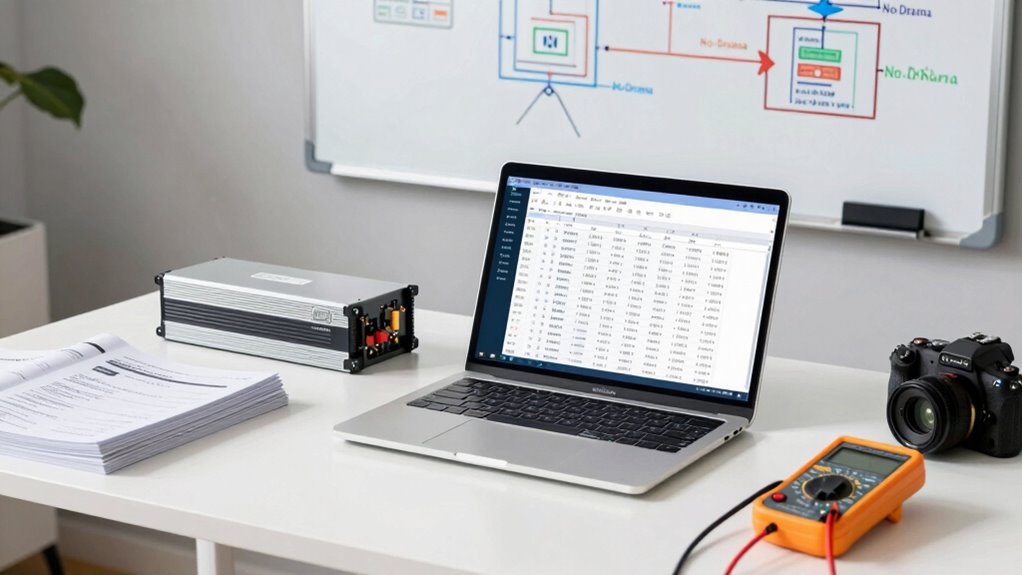
Choosing the right inverter size might seem intimidating, but with a straightforward approach, it’s easy to get it right the first time. The key is understanding your energy needs and making sure the inverter can handle your power demands without any fuss. To do this effectively, you need to focus on two main factors: battery capacity and load calculation. These elements ensure your setup runs smoothly and reliably, avoiding the common pitfalls of under- or over-sizing.
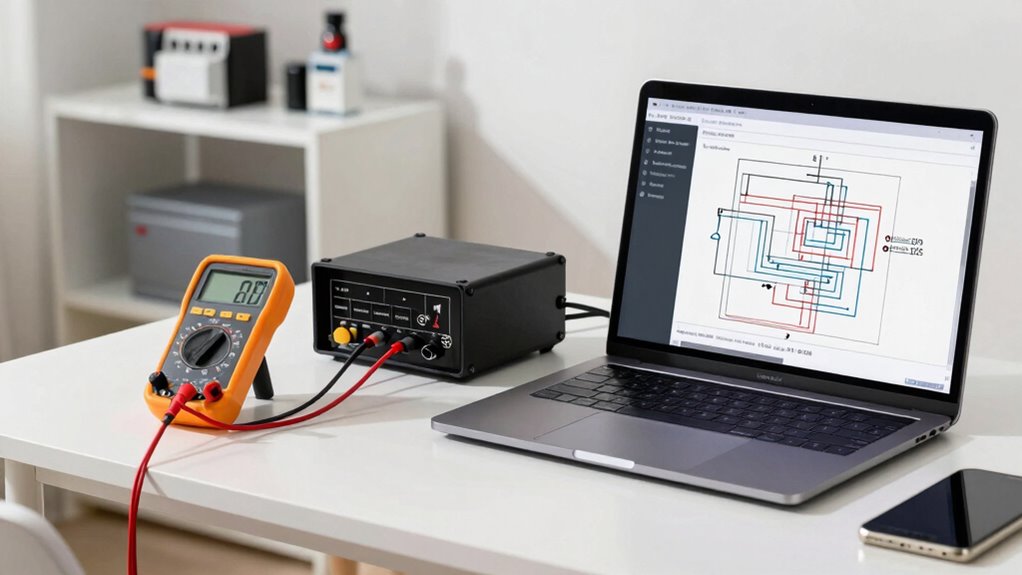
Start by assessing your battery capacity. Your batteries store the energy you’ll draw from your inverter, so knowing how much they can supply is crucial. Look at the amp-hour (Ah) rating and voltage of your batteries to determine the total watt-hours they can provide. Multiply the Ah rating by the voltage to get watt-hours, then divide that number by 1,000 to convert to kilowatt-hours if needed. This calculation tells you the total energy available, helping you match your inverter size with your battery system. If your batteries have limited capacity, opting for a smaller inverter might seem appealing, but if your power needs grow, you’ll need larger batteries or a bigger inverter to handle increased loads. Understanding your system’s capacity planning can prevent mismatched components and ensure optimal performance. Additionally, considering your future expansion plans can help you select an inverter that accommodates growth without immediate upgrades. Properly accounting for battery efficiency can also influence your sizing decisions, ensuring you’re not underestimating energy losses over time.
Assess your battery capacity by calculating watt-hours to match your inverter size with your energy storage.
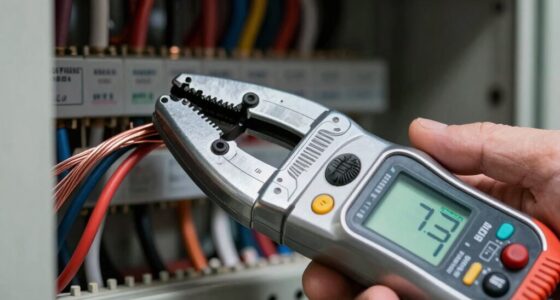
Next, perform a load calculation. This step involves listing all the devices and appliances you want to run simultaneously and noting their wattage. Keep in mind that some devices, like refrigerators or pumps, have starting surges that require extra power. Add up the running wattages and surges to determine your total load. If your total load exceeds your inverter’s capacity, your system will struggle, leading to shutdowns or damage. Conversely, oversizing your inverter can result in unnecessary costs and inefficiencies. Aim for an inverter that comfortably exceeds your maximum calculated load by about 20-25%, giving you room for future expansion without constantly upgrading.
Finally, understanding the importance of proper sizing and how it relates to your overall system’s efficiency can make a significant difference in performance and longevity. Once you’ve completed your load calculation and understood your battery capacity, choosing the right inverter size becomes a matter of matching these numbers. A well-sized inverter ensures your system can handle peak loads, provides reliable power, and prolongs the lifespan of your batteries. Remember, the goal isn’t to oversize unnecessarily but to find the balance that delivers enough power without wasting resources. By focusing on these core principles—battery capacity and load calculation—you’re well on your way to a no-drama inverter setup that’s both efficient and dependable.
As an affiliate, we earn on qualifying purchases.
Frequently Asked Questions
How Do I Determine My Total Power Load?
To determine your total power load, start with a load calculation by listing all devices and their wattage. Add these up to find the total wattage. Then, consider your battery capacity to guarantee it can support this load over your desired time. This process helps you accurately size your inverter, making sure your system can handle your power needs without any surprises.
What Are Common Inverter Types for Residential Setups?
They say, “Know your tools,” and for residential setups, common inverter types include pure sine wave, modified sine wave, and hybrid inverters. You want one with good inverter efficiency and compatibility with your batteries to guarantee smooth operation. Pure sine wave inverters are ideal for sensitive electronics, while hybrid models combine inverter and charge controller features. Choose based on your power needs, ensuring compatibility to keep your system running effortlessly.
How Often Should I Upgrade My Inverter System?
You should consider upgrading your inverter system every 10 to 15 years, especially if your energy storage needs grow or technology advances. Regular upgrades can improve efficiency, reduce costs over time, and guarantee compatibility with new energy storage solutions. Conduct a cost comparison between your current inverter’s performance and newer models, factoring in potential energy savings and improved reliability, to decide if an upgrade is worthwhile.
Can I Install an Inverter Without Professional Help?
You can install an inverter yourself, but you need to prioritize installation safety and guarantee battery compatibility. Carefully read the manufacturer’s instructions, use proper tools, and double-check wiring connections. Handling batteries safely is essential to prevent hazards. If you’re unsure about any step or the system’s compatibility, it’s wise to consult a professional. Proper installation assures efficiency, safety, and longevity for your inverter system.
What Maintenance Is Required for Inverter Systems?
You need to regularly check your inverter system’s battery lifespan and cooling requirements to keep it running smoothly. Keep the batteries clean and make sure they’re charged properly, replacing them when they show signs of wear. Also, maintain proper cooling by cleaning vents and ensuring proper airflow, especially in hot environments. This proactive approach prevents overheating, extends your inverter’s lifespan, and guarantees reliable performance without unexpected breakdowns.
solar inverter with surge capacity
As an affiliate, we earn on qualifying purchases.
As an affiliate, we earn on qualifying purchases.
Conclusion
So, next time you’re faced with inverter sizing, remember: it’s all about keeping it simple and drama-free. Skip the overthinking, resist the urge to overcomplicate, and embrace the “no-drama” approach. After all, nobody wants their energy setup to turn into a soap opera. Stick to the basics, size it right, and enjoy a smooth, fuss-free power experience—because who needs extra drama when you’re just trying to keep the lights on?
As an affiliate, we earn on qualifying purchases.
As an affiliate, we earn on qualifying purchases.
Halloween Picks
halloween
As an affiliate, we earn on qualifying purchases.