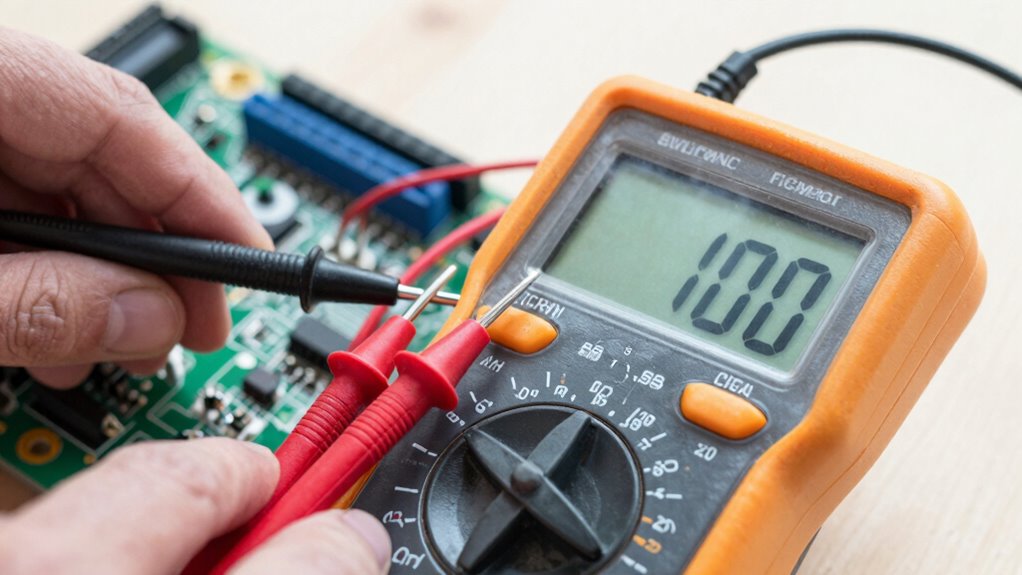
To find constant versus switched power with a multimeter, set it to measure DC voltage and connect the black probe to ground. Test different points in the circuit—if the voltage stays steady regardless of switches or relays, it’s constant power. If the voltage drops when switches are off, it’s switched power. Be cautious and double-check connections to stay safe. Keep exploring for more tips on accurately identifying circuit types and ensuring safe electrical work.
Key Takeaways
- Set the multimeter to DC voltage and connect black to ground, red to the wire under test.
- A constant power source shows steady voltage regardless of switches or relays.
- Switched power drops to zero when the switch is off and returns when on.
- Test at multiple points to distinguish between constant and switched circuits.
- Always verify proper connections and de-energize circuits before testing for safety.
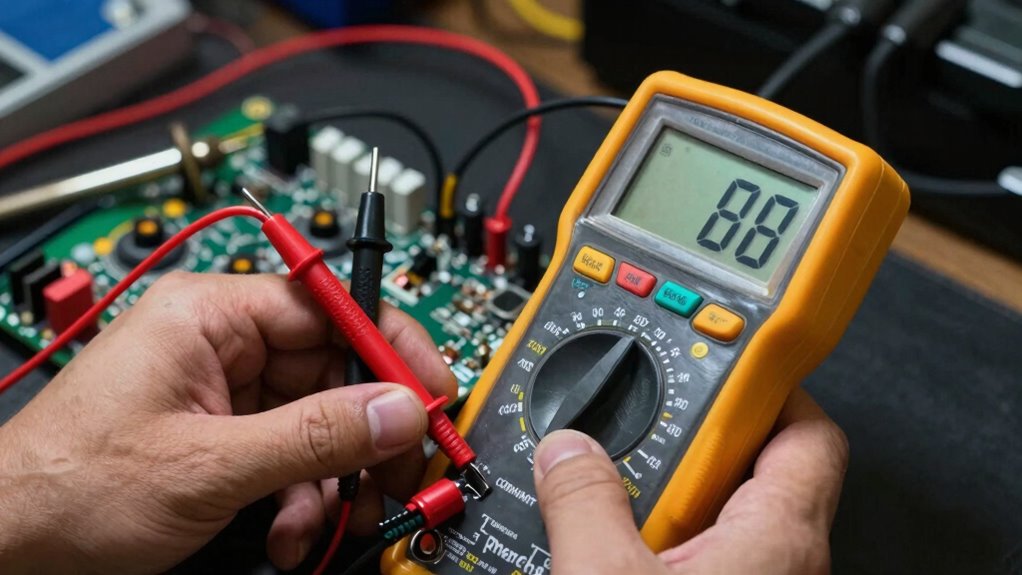
When working with electrical circuits, it’s essential to identify whether a power source provides constant or switched power. This step is vital because it influences how you approach circuit troubleshooting, repairs, or modifications. Using a multimeter for voltage measurement can help you determine the nature of the power source. To do this effectively, you need to understand circuit identification—that is, recognizing which parts of the circuit are live all the time and which are only active under certain conditions.
Begin by setting your multimeter to measure DC voltage if you’re working with typical automotive or low-voltage circuits, or AC voltage for household wiring. Once set, carefully connect the multimeter probes to the points in the circuit you want to test. Usually, you’ll place the black (common) probe on a ground or negative terminal and the red (positive) probe on the wire or terminal you’re testing. When you power on the circuit, observe the voltage reading. If the multimeter shows a constant voltage reading regardless of switches or relays, you’re likely dealing with a constant power source.
To distinguish between constant and switched power, you’ll want to test at different points along the circuit. For example, if you’re testing a wire that supplies power to a device, turn the device off and then on. If the voltage remains the same regardless of the device’s state, that wire is probably constantly powered. Conversely, if the voltage drops to zero when the switch is off and returns when it’s on, you’ve identified switched power. This process of circuit identification helps guarantee you don’t mistakenly work on a live wire that’s only energized under certain conditions, reducing the risk of shock or damage. Remember that proper testing techniques and safety procedures are essential when working with electrical systems.
Keep in mind that some circuits may have a combination of constant and switched power. For example, a car’s fuse box might supply constant power to certain circuits, while others are controlled by relays or switches. Using your multimeter to systematically test different wires and terminals will help you map out the circuit’s power flow. Understanding circuit identification is crucial for safe and effective electrical work. It’s also important to be aware of voltage levels to prevent accidental shocks or damage to sensitive components. Additionally, knowing the typical voltage ranges in your circuit can help you interpret your readings more accurately and avoid misdiagnosing issues. Always double-check your connections and ensure the circuit is de-energized when making adjustments or inspections. Properly interpreting voltage readings and understanding circuit behavior can save time and prevent hazards. In short, proper circuit identification through voltage measurement makes working with electrical systems safer and more efficient.
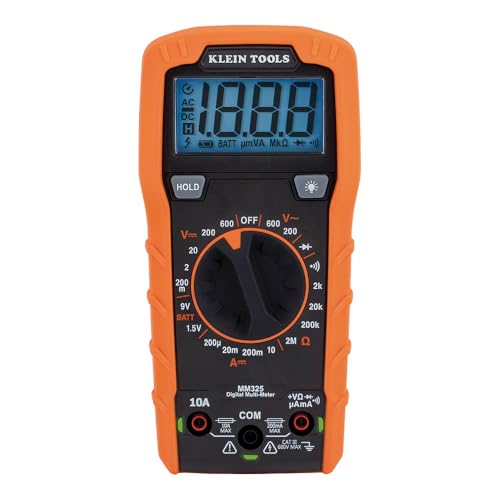
Klein Tools MM325 Multimeter, Digital Manual-Ranging 600V AC/DC Voltage Tester, Tests Batteries, Current, Resistance, Diodes, and Continuity
VERSATILE FUNCTIONALITY: Measures AC/DC voltage up to 600V, 10A DC current, 2MΩ resistance; additional features include continuity, diode…
As an affiliate, we earn on qualifying purchases.
As an affiliate, we earn on qualifying purchases.
Frequently Asked Questions
Can a Multimeter Detect Live Wires Safely Without Risk?
Yes, a multimeter can detect live wires safely if you follow proper safety precautions. Always wear insulated gloves and use a multimeter with the correct type—preferably a CAT-rated device for safety. Before testing, make certain the multimeter is set to the right voltage range. Keep one hand away from the circuit, and never touch exposed wires. Proper use minimizes risk and guarantees accurate readings.
What Multimeter Settings Are Best for Testing Power Sources?
You should set your multimeter to a suitable voltage range, typically AC or DC depending on the power source you’re testing, to get accurate readings. Use the voltage setting for measuring power sources directly. For safety and to check if wires are complete, switch to continuity testing. Always start with a higher voltage range and adjust downwards if needed, ensuring your multimeter is properly configured for reliable, safe testing.
How Do I Identify Ground Versus Power Wires With a Multimeter?
Approximately 70% of wiring accidents happen due to misidentifying wires. To identify ground versus power wires with a multimeter, start by testing for voltage—set it to voltage mode. Usually, black or green wires are ground, and red or colored wires are power, but always verify with wire color codes. Test safety by ensuring the multimeter probes are properly placed; touching the wrong wires can cause shorts or shocks.
Is There a Difference Between AC and DC Voltage Testing?
Yes, there’s a difference between AC and DC voltage testing. Alternating current (AC) voltage fluctuates in direction and magnitude, so your multimeter needs to be set to AC mode to measure it accurately. Direct current (DC), on the other hand, flows in a single direction, requiring you to set your multimeter to DC mode. Always double-check your settings to verify accurate readings and safety when testing different circuits.
Can Multimeters Measure Current Without Disconnecting Circuits?
You can’t measure current without disconnecting circuits because multimeters need to be part of the circuit, like a bridge connecting two islands. Instead, you use voltage continuity checks and resistance measurement to diagnose. These methods act like a health check-up, revealing the circuit’s inner state without unplugging everything. Always remember, to measure current safely, you must break the circuit and connect your multimeter in series, like adding a new link in a chain.
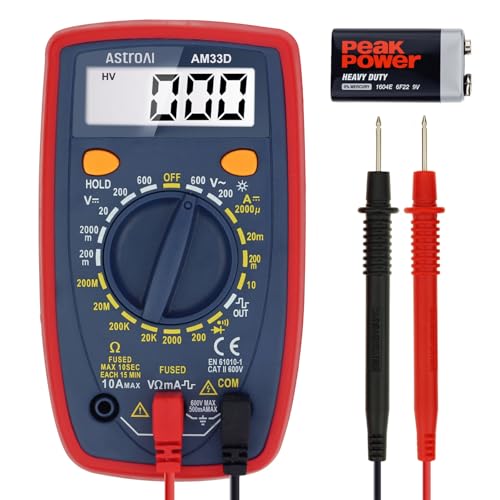
AstroAI Digital Multimeter Tester 2000 Counts with DC AC Voltmeter and Ohm Volt Amp Meter; Measures Voltage, Current, Resistance, Continuity and Diode, Blue
Additional Tips – The following incorrect operations may cause the multimeter not to show results: Firstly, the plugs…
As an affiliate, we earn on qualifying purchases.
As an affiliate, we earn on qualifying purchases.
Conclusion
Knowing how to differentiate constant from switched power with a multimeter can save you time and prevent wiring mistakes. Did you know that nearly 80% of electrical troubleshooting errors are due to incorrect power source identification? By mastering this skill, you’re not only making your projects safer, but you’re also joining a community of DIY enthusiasts who understand the importance of precision. Keep practicing, and soon it’ll become second nature—making your electrical work smarter and more reliable.
AstroAI Digital Multimeter Tester 2000 Counts with DC AC Voltmeter and Ohm Volt Amp Meter; Measures Voltage, Current, Resistance, Continuity and Diode, Blue
Additional Tips – The following incorrect operations may cause the multimeter not to show results: Firstly, the plugs…
As an affiliate, we earn on qualifying purchases.
As an affiliate, we earn on qualifying purchases.

TM-510 Digital Multimeter, 4000 Counts, Smart Measurement, Auto-Ranging Voltmeter; Voltage Tester with Non-Contact Voltage Function, Measures AC/DC Voltage, Resistance, Continuity – Green
Smart Digital Multimeter: Thanks to its Smart Auto Mode, TESMEN TM-510 4000 counts smart digital multimeter allows you…
As an affiliate, we earn on qualifying purchases.
As an affiliate, we earn on qualifying purchases.