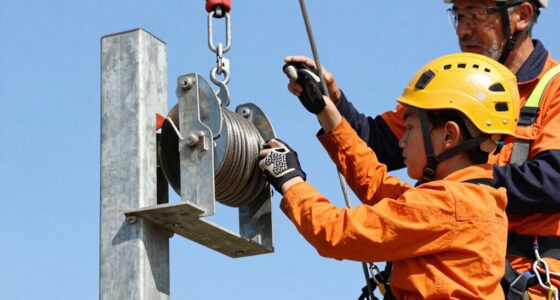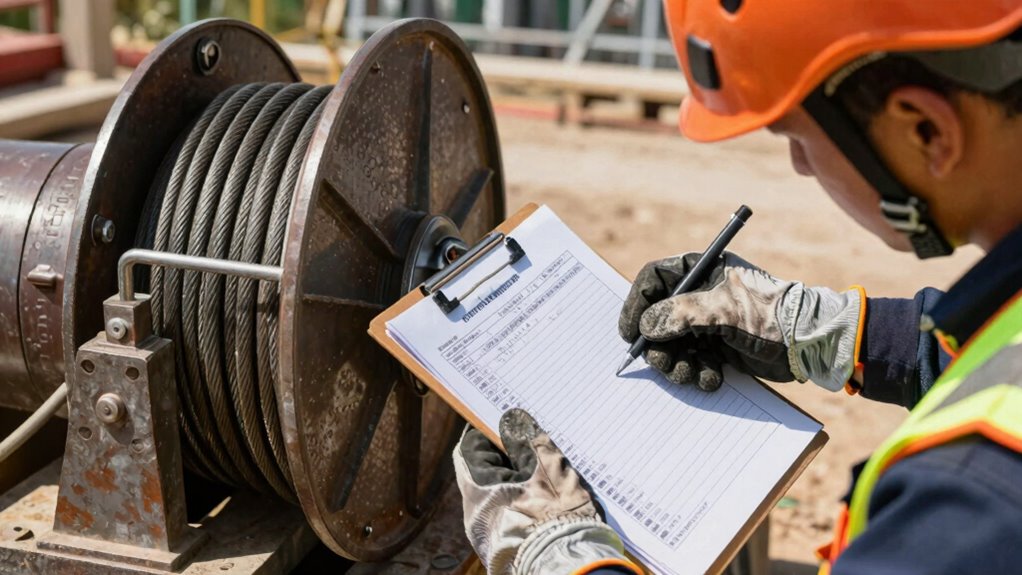

Before operating a winch, quickly inspect equipment for wear, corrosion, or damaged parts. Clear the area of obstacles and guarantee everything’s properly secured and balanced. Confirm safety devices like brakes and emergency stop buttons work, and review safety procedures. Check maintenance needs, such as hydraulic fluid and electrical connections. Don’t forget to wear protective gear and communicate clearly with your team. Following these simple steps now can help you stay safe—keep going to uncover even more essential tips.

Get business pricing on garage and car supplies
- Business-only prices and quantity discounts
- Tax-exempt purchasing
- Multiple users, one account, clear invoices
Key Takeaways
- Conduct a quick inspection for cable wear, corrosion, and damaged parts; test safety devices like brakes and emergency stops.
- Clear the area of obstacles, ensure sufficient space, and verify load is secure and balanced.
- Review safety procedures, emergency protocols, and confirm accessible emergency shut-off switches.
- Perform rapid maintenance checks: fluid levels, lubrication, bolt tightness, and inspect for leaks or corrosion.
- Ensure all team members wear appropriate PPE, communicate clearly, and understand emergency steps.
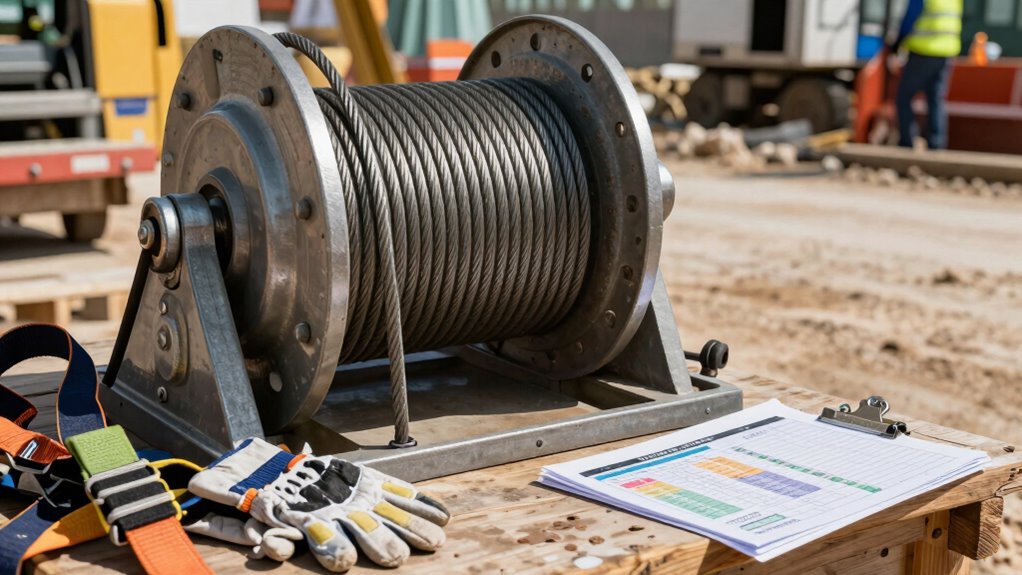
Have you ever considered how essential it is to follow proper safety procedures when operating a winch? Even a moment of oversight can lead to serious accidents or equipment damage. That’s why a quick, 5-minute checklist before each use is so critical. It helps you stay alert and prepared, ensuring everything is in top condition and ready to function safely. Start by inspecting your equipment thoroughly. Look for any signs of wear, fraying cables, or corrosion. Damaged or worn-out parts can cause failure under load, so replace or repair any compromised components before proceeding. Confirm that all safety devices, like brakes and emergency stop buttons, are operational. These safety features are your first line of defense if something goes wrong, so testing them before use is a non-negotiable step.
Inspect equipment and safety devices thoroughly to prevent failures and ensure safe operation.
Next, focus on your environment. Clear the area of any obstacles or debris that could interfere with the winch’s operation. Make sure there’s enough space for the load to move freely without risking contact with people or objects. Properly securing your load is equally essential; ensure it’s attached correctly and balanced to prevent sudden shifts that could cause accidents. Now, turn your attention to emergency procedures. Always review your plan for handling unexpected situations, such as cable failure or load slipping. Know where your emergency shut-off switches are and confirm they’re easily accessible. Visualize what steps you’ll take if something goes wrong—this mental preparedness can make all the difference during a real emergency. Additionally, understanding safe operating procedures and implementing them can significantly reduce potential hazards. Conducting a comprehensive safety assessment before each operation adds an extra layer of precaution, especially in dynamic work environments. A thorough understanding of winch safety protocols can further help prevent accidents and ensure compliance with safety standards. Regularly reviewing safety guidelines can also reinforce good practices among team members.
Equipment maintenance is another key component of your 5-minute safety check. Regularly scheduled maintenance keeps your winch in peak condition and helps prevent breakdowns. Check hydraulic fluid levels, lubrication points, and electrical connections. Tighten bolts and inspect for leaks or corrosion. Keeping your equipment well-maintained reduces the risk of mechanical failure, which can be dangerous when under load. Furthermore, understanding indoor air quality and ensuring proper ventilation can prevent the buildup of hazardous fumes or dust around your work area, promoting a safer environment. Before starting, also verify that all safety decals and instructions are legible and in place. This ensures you and others are constantly reminded of proper procedures.
Finally, take a moment to review your personal protective equipment. Wear gloves, eye protection, and steel-toed boots to safeguard against unexpected incidents. If you’re working with a team, communicate clearly and confirm everyone knows their role. When you complete this quick checklist, you’ll operate your winch with confidence, knowing you’ve minimized risks. Adhering to these simple steps not only protects you but also prolongs the life of your equipment, making every job safer and more efficient.
As an affiliate, we earn on qualifying purchases.
Frequently Asked Questions
How Often Should a Winch Be Inspected for Safety?
You should inspect your winch for safety at least once a month, ensuring proper winch maintenance. Regular inspections help identify worn cables, damaged components, or corrosion that could compromise safety. Always follow safety protocols during these checks, and perform a thorough inspection after heavy use or exposure to harsh conditions. Staying diligent with your winch maintenance prevents accidents, extends equipment life, and keeps you safe during every operation.
What Personal Protective Equipment Is Recommended When Operating a Winch?
Like a shield in battle, the right PPE keeps you safe. When operating a winch, you should wear protective gloves to prevent hand injuries and eye protection to guard against debris or splashes. These items are essential, acting as your first line of defense. Always make sure your PPE fits well and is in good condition, so you can focus on the task without worry. Safety gear is your best ally.
Can I Use a Damaged Rope or Cable on a Winch?
You should never use a damaged rope or cable on a winch. Always perform regular cable inspection and replace any frayed, cracked, or worn ropes immediately. Damaged cables can snap under load, causing serious injury or equipment damage. Prioritize safety by conducting prompt rope replacement whenever you find issues. This proactive approach guarantees your winch operates safely and reliably, preventing accidents and extending the lifespan of your equipment.
What Are Common Signs of Winch Equipment Failure?
You should watch for common signs of winch equipment failure during regular maintenance and safety checks. Look for frayed or broken cables, unusual noises, and sluggish operation. Keep an eye on worn-out components and any fluid leaks. By following proper winch maintenance and safety precautions, you can prevent accidents. If you notice any signs of failure, stop using the winch immediately and get it inspected by a professional to guarantee safe operation.
How Should I Properly Store a Winch When Not in Use?
You should store your winch in a dry, cool place to prevent rust and corrosion. During winch storage, guarantee the cable is properly wound and free of knots or damage. Regularly inspect the cable for fraying and perform cable maintenance to extend its lifespan. Cover the winch with a protective layer if possible, and disconnect the power source to avoid accidental operation. Proper storage and cable maintenance keep your winch safe and ready for use.
As an affiliate, we earn on qualifying purchases.
Conclusion
By following this quick five-minute checklist, you’ll turn your winch into a fortress of safety, preventing accidents that could be as catastrophic as a hurricane. Remember, a few simple steps now can save you from disaster later. Stay vigilant, double-check your equipment, and never cut corners. When it comes to winch safety, a moment of caution is worth more than a lifetime of regret. Stay safe, and keep your adventures epic — not wrecked.
As an affiliate, we earn on qualifying purchases.
As an affiliate, we earn on qualifying purchases.
Evergreen bestsellers Picks
bestsellers
As an affiliate, we earn on qualifying purchases.