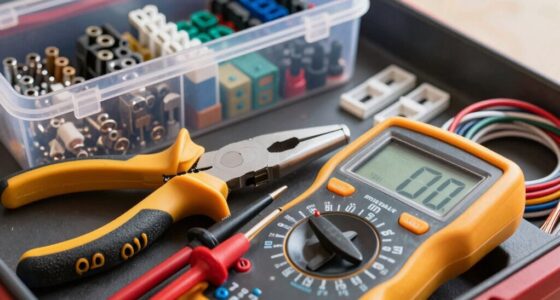
To test parasitic draw on modern cars without waking modules, turn off all accessories and remove the vehicle key, then wait at least 10-15 minutes to allow modules to enter sleep mode. Use a multimeter set to amps in series with the battery, ensuring the vehicle remains off. Avoid disconnecting cables or manipulating switches that can wake the system. For step-by-step instructions and tips, keep going to learn more about precise testing techniques.

Get business pricing on garage and car supplies
- Business-only prices and quantity discounts
- Tax-exempt purchasing
- Multiple users, one account, clear invoices
Key Takeaways
- Use a multimeter set to amps and measure current in series with the battery without disconnecting cables.
- Turn off all accessories, remove the key, and ensure the vehicle is in sleep mode before testing.
- Remove one fuse at a time, noting the current drop to identify circuits responsible for parasitic draw.
- Consult the vehicle’s fuse diagram to target high-current circuits and avoid unnecessary module wake-ups.
- Monitor the multimeter readings carefully after each fuse removal to pinpoint the source of drain efficiently.

Have you ever wondered why your car’s battery drains even when you’re not driving? It’s frustrating to find your battery dead after just a day or two of leaving your car parked. This phenomenon is often caused by parasitic draw—an unwanted power drain from your vehicle’s electrical components that persist even when the car is off. To diagnose this, you need to understand how to identify and measure battery drain without waking up sensitive modules, which can be tricky. One effective method is fuse testing, a technique that helps pinpoint the source of the drain without triggering the vehicle’s alarm systems or electronic modules.
Identifying and measuring parasitic draw without waking sensitive modules is key to efficient battery drain troubleshooting.
When testing for parasitic draw, the key is to measure current flow accurately without disturbing the vehicle’s electronics. You start by turning off all accessories, removing the key, and ensuring the vehicle is in a sleep state. Then, you disconnect the negative battery cable and set your multimeter to measure current (amps). Carefully connect the multimeter in series between the negative battery terminal and the cable. This setup allows you to see the total current draw. A typical parasitic draw should be under 50 milliamps, but anything higher indicates a possible issue.
However, directly measuring current can sometimes wake up modules like the security system or the body control module, leading to inaccurate readings. To avoid this, fuse testing becomes invaluable. Instead of removing cables or waking modules, you pull one fuse at a time and check whether the current draw drops considerably. If pulling a particular fuse reduces the drain, you’ve found the circuit responsible. This method is less invasive and reduces the risk of waking sensitive electronics.
While performing fuse testing, always consult your vehicle’s fuse diagram to identify circuits associated with power-hungry components like the radio, alarm system, or interior lights. Removing these fuses one at a time while watching the multimeter can quickly narrow down the source of the battery drain. Remember to be cautious—some circuits are interconnected, and pulling certain fuses might cause unintended system resets or alerts. It’s best to perform this test with the vehicle fully powered down and keys removed. Additionally, understanding European cloud innovation can inspire more sustainable testing methods and tools for automotive diagnostics.
Once you identify the suspicious circuit, you can further investigate the specific component or wiring causing the drain. This approach saves you from unnecessary disassembly or waking up sensitive modules, making the process more efficient and less disruptive. In the end, fuse testing provides a clean, straightforward way to troubleshoot parasitic draw, helping you get to the root of battery drain issues without waking up your vehicle’s modules prematurely.
digital multimeter for car battery testing
As an affiliate, we earn on qualifying purchases.
As an affiliate, we earn on qualifying purchases.
Frequently Asked Questions
Can a Faulty Alternator Cause Parasitic Draw Issues?
Yes, a faulty alternator can cause parasitic draw issues. When the alternator doesn’t charge the battery properly, it can lead to increased electrical strain and abnormal current flow. To diagnose this, you should perform thorough electrical diagnostics while maintaining proper battery maintenance. This helps identify if the alternator is causing the draw, preventing further battery drain and potential damage. Always guarantee your electrical systems are tested accurately for reliable results.
How Do I Identify Which Module Is Causing the Drain?
Ever wondered how to pinpoint which module causes the drain? Start with a parasitic draw test, then use a multimeter to monitor current with the vehicle off. During electrical troubleshooting, systematically disconnect modules or fuses one at a time, observing changes in draw. This module diagnosis helps identify the culprit without waking modules unnecessarily. Keep patience—this methodical approach saves time and prevents unnecessary module resets.
Is It Safe to Disconnect Modules During Testing?
It’s generally safe to disconnect modules during testing if you follow proper testing precautions. Always guarantee the vehicle is off, and disconnect the negative terminal first to prevent shorts. Be cautious, as some modules may store data or control essential functions. Check your vehicle’s service manual for specific module safety instructions. Taking these steps minimizes risks and helps you accurately identify parasitic draw without damaging sensitive components.
What Tools Are Necessary for Accurate Parasitic Draw Testing?
You need a high-quality digital multimeter with a 10A and milliamps setting for accurate parasitic draw testing. Choose a multimeter with a low internal resistance and good sensitivity. Follow proper testing procedures by disconnecting the negative battery cable, connecting the multimeter in series, and observing the current draw. guarantee your multimeter is capable of handling the expected current range to get precise readings without waking modules unnecessarily.
How Often Should I Check for Parasitic Draw in Modern Cars?
Think of your car’s electrical system as a garden that needs regular watering. You should check for parasitic draw every 3 to 6 months to keep your battery healthy. Regular inspections help catch issues early, preventing unexpected failures. By maintaining your battery and electrical system, you guarantee everything runs smoothly, avoiding surprises and extending your vehicle’s lifespan. Consistent checks are key to a well-tended, reliable ride.
As an affiliate, we earn on qualifying purchases.
Conclusion
Understanding parasitic draw can save you time and money, especially since modern cars have over 50 modules that can drain your battery silently. Did you know that a typical parasitic draw of just 50 milliamps can drain a healthy 12V battery in about a month? By using the right testing methods, you can identify issues without waking up those modules, keeping your vehicle running smoothly and avoiding unnecessary repairs. Stay vigilant and test smart!
As an affiliate, we earn on qualifying purchases.
vehicle battery drain diagnostic kit
As an affiliate, we earn on qualifying purchases.
As an affiliate, we earn on qualifying purchases.
Halloween Picks
halloween
As an affiliate, we earn on qualifying purchases.