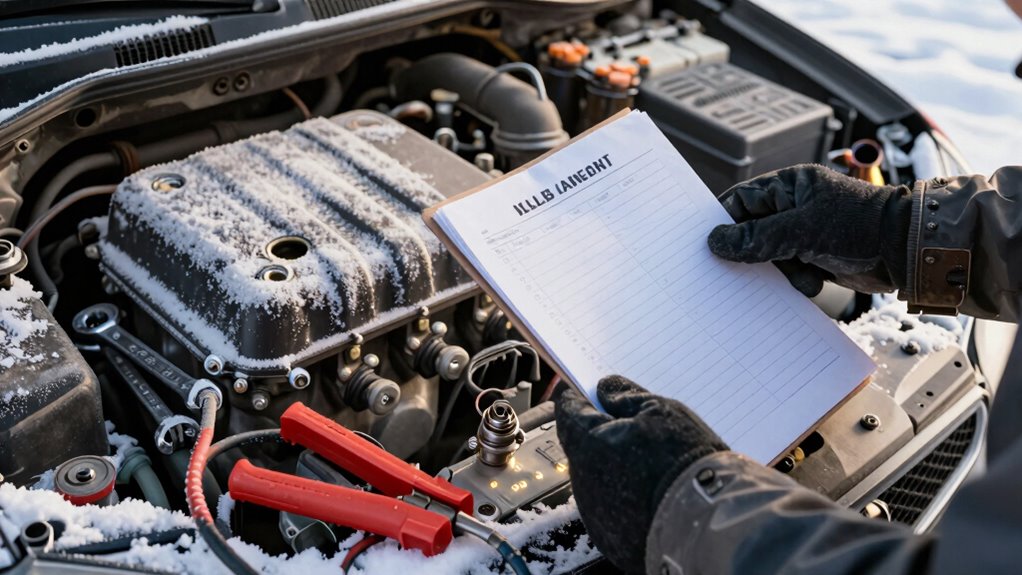

To get your vehicle started reliably in cold weather, first check your battery for corrosion, tight connections, and proper charge. Next, make sure your fuel tank is full and add fuel additives if needed. Verify that your oil is fresh and matches the right viscosity for cold temps. Then, inspect your coolant and antifreeze levels to prevent freezing. Finally, turn on the electrical system, listen for the fuel pump, and start the engine steadily. Keep going to discover more tips for winter starting success.

Get business pricing on garage and car supplies
- Business-only prices and quantity discounts
- Tax-exempt purchasing
- Multiple users, one account, clear invoices
Key Takeaways
- Ensure the battery is fully charged, terminals are clean, and connections are tight.
- Keep the fuel tank full and add fuel additives to prevent water buildup and freezing.
- Check oil viscosity and top up or replace with colder-weather suitable oil.
- Verify coolant antifreeze mixture and inspect the cooling system for proper function.
- Turn the key to “on,” listen for the fuel pump, and start the engine with steady cranking.
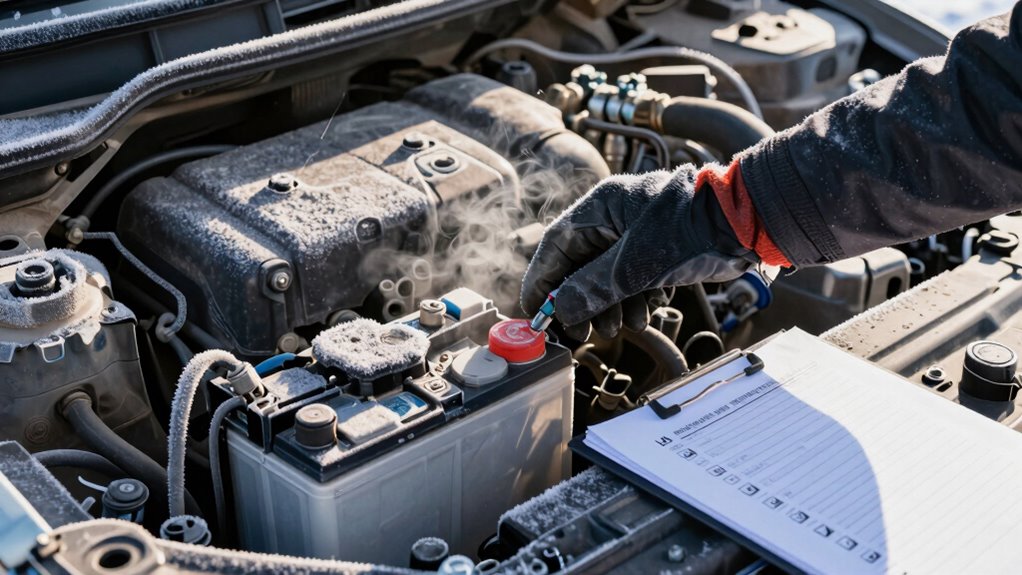
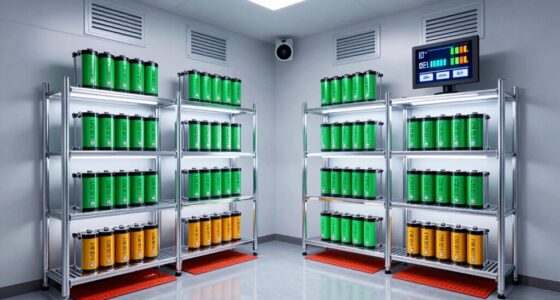
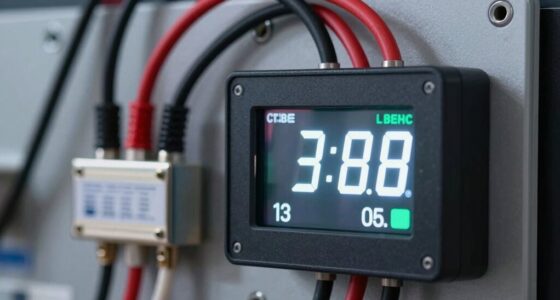
When temperatures drop, starting your vehicle can become more challenging. Cold weather thickens engine oil, reduces battery capacity, and can cause fuel lines to freeze, making it harder for your car to turn over smoothly. To prepare, you need a quick but thorough five-minute checklist to boost your chances of a successful start. First, focus on your battery. Cold temperatures sap battery power, so before you turn the key, inspect your battery’s condition. Check for corrosion around the terminals and ensure they’re tightly connected. If the terminals look corroded, clean them with a wire brush or a mixture of baking soda and water. Confirm that your battery is holding a proper charge; if it’s old or weak, consider a jump-start or replacement before the deep cold hits. A healthy battery is your first line of defense against starting problems. Regular battery maintenance can also help prevent unexpected failures in cold weather.
Next, shift your attention to the fuel system. Gasoline doesn’t usually freeze, but moisture in the tank can cause issues, and fuel lines can become clogged with ice if there’s water present. Make sure your fuel tank isn’t dangerously low, as a full tank helps prevent condensation buildup. If your vehicle has a fuel additive designed to remove water or prevent freezing, add it now. This simple step can be a game-changer in harsh weather. Also, check your fuel filter for clogs or dirt, as a blocked filter can restrict flow when it’s most needed. Keeping the fuel system clean and topped up ensures uninterrupted fuel delivery, making it easier for your engine to start. Proper fuel system maintenance can significantly improve cold-weather starting reliability. Additionally, understanding the importance of oil level and quality can help extend its lifespan and reliability in cold weather. In addition to these core checks, briefly examine your oil level and quality—thicker oil can slow engine startup, so if it’s due for a change, plan to do that soon. Properly checking engine coolant** and ensuring it has the right antifreeze mixture is crucial, as it prevents freezing and overheating. Ensuring the cooling system is in good condition also helps protect your engine in extreme temperatures. Using a battery tester can quickly give you a clear picture of your battery’s health, especially during cold months. Finally, turn the key to the “on” position to activate your vehicle’s electrical systems, including the fuel pump, and listen for the hum that indicates proper fuel pressure. Once all these steps are checked, turn the ignition and give your engine a steady crank**. With a well-maintained battery and a clean fuel system, you’ll maximize your chances of starting your vehicle smoothly, even in the coldest weather.
As an affiliate, we earn on qualifying purchases.
Frequently Asked Questions
How Do I Prevent My Battery From Dying in Cold Weather?
To prevent your battery from dying in cold weather, prioritize battery maintenance by keeping terminals clean and secure. Use a battery blanket or insulator for added warmth, and consider a trickle charger if your car sits idle. During cold weather troubleshooting, avoid short trips and start your engine gently to reduce stress. Regularly check the battery’s charge and replace it if it shows signs of weakness to guarantee reliable starts.
What Type of Oil Is Best for Winter Engine Starts?
For easier winter starts, opt for a thinner oil, like 5W-30 or 0W-20, that flows smoothly even in chilly conditions. Think of it as giving your engine a cozy blanket—engine insulation helps retain warmth, while winter fuel ensures efficient combustion. These choices help your engine start reliably, reducing strain and preventing cold-weather woes. Keep your vehicle prepared with the right oil, and you’ll glide through winter mornings effortlessly.
How Can I Improve Engine Heat Retention During Cold Mornings?
To improve engine heat retention during cold mornings, start by installing engine insulation around critical components to reduce heat loss. Additionally, consider fuel preheating methods, like using a fuel warmer or parking in a warmer spot, to guarantee easier starts. These steps help maintain ideal engine temperature, making cold starts smoother and reducing wear. Combined, they keep your engine warmer longer, improving performance and longevity in winter conditions.
Are There Specific Antifreeze Mixes Recommended for Cold Climates?
Imagine your engine’s insides wrapped in a cozy blanket—antifreeze types designed for cold climates do just that. For chilly mornings, use a 50/50 mix of ethylene glycol-based antifreeze and water, or opt for concentrated antifreeze rated for extremely low temperatures. These mixes prevent freezing and corrosion, ensuring your engine starts smoothly and stays protected, even when the thermometer dips well below freezing.
What’s the Safest Way to Jump-Start a Cold Engine?
To jump-start a cold engine safely, first check your battery maintenance—ensure terminals are clean and connections are secure. Use jumper cables correctly, connecting the positive to positive and negative to a grounded metal surface on the donor vehicle. Keep engine insulation in mind to prevent further cold-related issues. Avoid cranking too long, and once started, let the engine run to recharge the battery safely.
As an affiliate, we earn on qualifying purchases.
Conclusion
Now that you’ve got this checklist in your back pocket, starting your car in cold weather becomes a breeze rather than a battle. Think of it as your trusty shield against winter’s icy grip—ready to spring into action whenever you need it. Keep these steps in mind, and you’ll navigate chilly mornings with confidence, turning what once felt like a frozen obstacle into just another hurdle you’ve easily cleared. Stay prepared, stay warm, and keep moving forward.
As an affiliate, we earn on qualifying purchases.
As an affiliate, we earn on qualifying purchases.
Halloween Picks
halloween
As an affiliate, we earn on qualifying purchases.