
Relays are a safe and efficient way for beginners to control high loads with low-voltage signals. They act as electrically isolated switches, reducing wiring complexity and increasing safety. Proper wiring, selecting the right relay ratings, and adding noise suppression help guarantee reliable performance. Wireless integration offers remote control options, making automation more convenient. As you explore further, you’ll discover key safety tips and techniques to optimize your relay projects and keep everything working smoothly.
Key Takeaways
- Use appropriately rated relays to safely switch high-current loads without damage.
- Implement electrical isolation with relays to protect low-voltage control circuits.
- Follow proper wiring practices to prevent noise, false triggers, and relay chatter.
- Incorporate wireless modules for remote control, ensuring secure connections.
- Prioritize safety by adhering to datasheets, grounding, and disconnecting power during installation.
If you’re just starting to explore electronics, relays might seem complicated at first, but they’re actually straightforward devices that can control high-power circuits with low-power signals. Their main advantage is their ability to act as a switch that is electrically isolated from the circuit it controls, making them a safe and reliable choice for managing large loads. When you’re working with relays, especially in modern projects, wireless integration can be a game-changer. It allows you to control relays remotely via Wi-Fi, Bluetooth, or other wireless protocols, eliminating the need for complex wiring and making your setup more flexible. For example, you could turn on a lamp or a motor from your smartphone, which is both convenient and efficient.
However, when dealing with high loads and wireless control, safety precautions are essential. Always guarantee your relay is rated correctly for the current and voltage you plan to switch. Using a relay with insufficient ratings can lead to overheating, electrical failures, or even fires. Proper insulation and grounding are critical to prevent accidental shocks or short circuits. Additionally, when integrating wireless controls, double-check the security of your connections to prevent unauthorized access or interference. It’s wise to set up passwords and encryption where applicable, especially if your relay controls critical systems like home security or medical devices.
Another safety tip is to incorporate fail-safe mechanisms, such as manual override switches or backup power sources. This way, if the wireless connection drops or malfunctions, you can still operate your devices safely. Always keep in mind that relays switch high voltages or currents, so working with them requires respect and caution. Make sure to disconnect power before wiring or servicing your relay circuit, and use appropriate tools and protective equipment. Understanding relay ratings and specifications is essential to ensure your system’s safety and reliability. Being familiar with electrical safety practices can further prevent accidents and ensure your projects are both effective and secure. Additionally, paying attention to proper wiring techniques helps prevent common issues such as relay chatter or false triggering. Incorporating noise suppression components can also improve relay performance in electrically noisy environments. In addition, selecting relays with built-in flyback diodes can protect your circuits from voltage spikes caused by inductive loads.
In your projects, combining wireless integration with relays can streamline automation and remote control, but never overlook safety. Thoroughly read the relay datasheets and follow best wiring practices. This way, you’ll create a reliable, safe system that handles high loads efficiently. As you gain experience, you’ll learn to troubleshoot common issues, such as relay chatter or false triggering, which often stem from inadequate power supplies or interference. With patience and attention to safety precautions, relays will become a versatile tool in your electronics toolkit, empowering you to control high-power devices cleanly and safely.

irhapsody Relay 120A, 12V Continuous Duty SPST 4-pin High Power Relay
Coil power: 1.8w, and coil resistance is 80 ohms. It is more reliable than 2.4w((60 ohms) and 4.8w(30…
As an affiliate, we earn on qualifying purchases.
As an affiliate, we earn on qualifying purchases.
Frequently Asked Questions
Can Relays Be Used for AC and DC Loads Simultaneously?
Yes, you can use relays for AC and DC loads simultaneously if you choose a relay with appropriate voltage compatibility and coil specifications. Make certain the relay’s contact ratings match the load voltages and currents. Check the relay’s datasheet for voltage compatibility and verify that the coil is rated for the control circuit’s voltage. Using the right relay prevents damage and ensures safe, reliable switching for both AC and DC loads.
What Are the Common Failure Modes of Relays?
Imagine a relay as a tiny gatekeeper, but over time, coil insulation can degrade, causing shorts, and contact wear wears down the metal surfaces, making switching less reliable. These are common failure modes. You might see the relay stick open or closed unexpectedly, or it may fail to activate altogether. Regular checks and proper handling can help prevent these issues, keeping your control system running smoothly.
How Do I Choose the Right Relay for My Project?
You choose the right relay by considering the relay types suited for your project, like electromechanical or solid-state relays, based on your application needs. Check the coil ratings to guarantee compatibility with your control circuit, matching voltage and current specifications. Think about load type and switching frequency, and select a relay with appropriate contact ratings. This way, you’ll ensure reliable performance and long-term durability for your project.
Are Solid-State Relays Better Than Electromechanical Relays?
Solid-state relays are generally better than electromechanical relays because their switching mechanisms are faster and more reliable. With relay types, solid-state relays have no moving parts, which means less wear and tear, and they operate silently. Electromechanical relays, on the other hand, use physical contact and can wear out over time. If you need long-term durability and quick switching, solid-state relays are the smarter choice.
What Safety Precautions Are Necessary When Wiring Relays?
Wiring safety and insulation requirements are your first line of defense when working with relays—think of them as your armor against electrical chaos. You must always turn off power before wiring, use proper insulation, and double-check connections. Ensuring wires are securely insulated prevents shorts and shocks. Follow manufacturer instructions meticulously, and consider using protective enclosures for added safety. Your careful wiring safeguards your project and keeps you safe from electrical mishaps.

Ewelink WiFi Wireless Smart Relay Module USB 5v/12v/24v/48v Inching Selflock Remote ON Off Power Switch for Access Control,Turn on PC, Compatible with Alexa Google Home
【Product Overview】This is a wifi smart switch, users can remotely switch connected home appliances or devices through ewelink…
As an affiliate, we earn on qualifying purchases.
As an affiliate, we earn on qualifying purchases.
Conclusion
As you explore relays for beginners, you’ll find that mastering their use opens doors to safely controlling high loads, turning what once seemed complex into a straightforward task. Coincidentally, the more you learn about relays, the clearer it becomes that their simplicity is what makes them so powerful—allowing you to manage demanding applications without risking your equipment or safety. Embrace this knowledge, and you’ll discover that controlling high loads is not only easier but also more reliable than ever imagined.
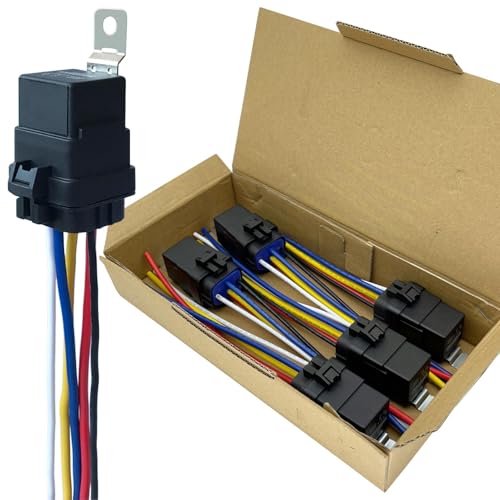
irhapsody 40/30AMP 12VDC Waterproof Relays with Built-in Diode, 5-pin Automotive Relay Kit, Pack of 5
Note: Pin 86 connects to the positive pole, and Pin 85 connects to the negative pole
As an affiliate, we earn on qualifying purchases.
As an affiliate, we earn on qualifying purchases.

AEDIKO 4pcs DC 5V Relay Module – 1 Channel Relay Switch Board with Optocoupler Isolation, High or Low Level Trigger
5V Relay Module: Working Voltage: DC 5V; Maximum Load: AC 250V/10A, DC 30V/10A; Trigger Current of Opto-Isolator: 5mA
As an affiliate, we earn on qualifying purchases.
As an affiliate, we earn on qualifying purchases.