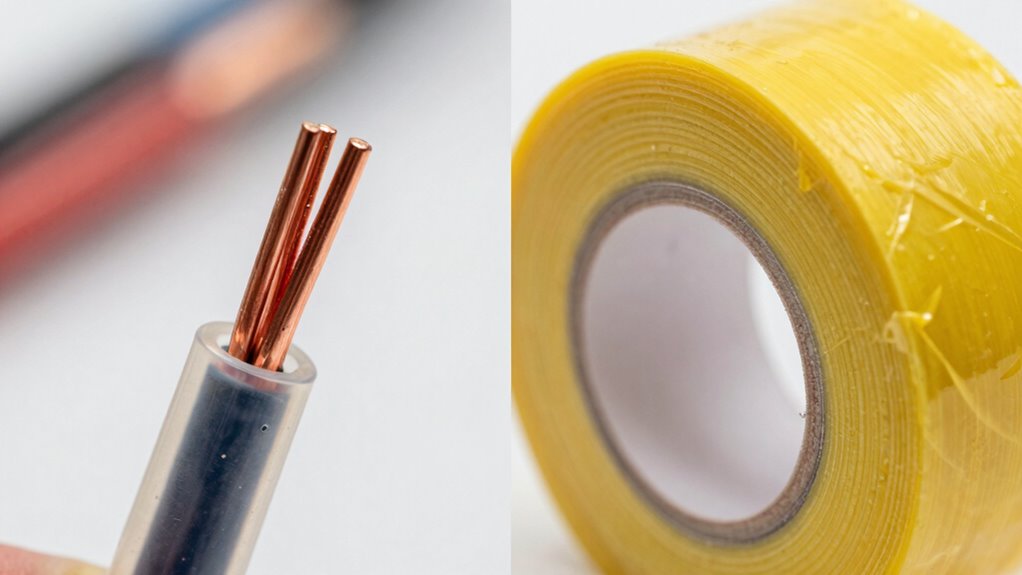
You’ll find heat shrink tubing offers superior durability over electrical tape, especially in harsh environments. It creates a tight, seamless barrier that resists moisture, chemicals, and mechanical damage, providing a long-lasting fix. Electrical tape is easier to apply but can peel or degrade over time, especially under stress or exposure to the elements. To discover how each option performs in different situations and what suits your project best, keep exploring the details.
Key Takeaways
- Heat shrink provides a permanent, airtight seal, offering superior long-term environmental resistance compared to tape.
- Electrical tape is more prone to peeling, unraveling, and degradation under harsh conditions over time.
- Heat shrink resists moisture, chemicals, and mechanical wear better than tape, ensuring lasting durability.
- Tape is suitable for temporary fixes, while heat shrink is designed for permanent, durable insulation.
- The continuous barrier of heat shrink makes it more reliable for demanding environmental and safety applications.
When it comes to insulating and protecting electrical connections, choosing the right solution can make a big difference. Whether you’re working on a small repair or a large project, understanding how heat shrink and electrical tape compare in durability is crucial. Both options serve to insulate wires and prevent short circuits, but they differ significantly in insulation effectiveness and application flexibility.
Heat shrink tubing offers superior insulation effectiveness. When heated, it tightly conforms to the shape of the wire or connection, creating a seamless, protective barrier. This ensures a consistent, high-quality insulation that resists moisture, chemicals, and mechanical damage. The material’s ability to shrink uniformly around the connection means fewer gaps or weak points, making it more reliable for long-term protection. You’ll find that heat shrink is especially effective in environments where durability and safety are priorities, such as automotive or industrial settings. Additionally, heat shrink can often provide a better sealing against environmental factors compared to tape. Its resistance to environmental factors is enhanced by the fact that it forms a continuous, airtight seal that tape might struggle to achieve over time. Proper application of heat shrink requires a heat source, but this process guarantees a more consistent insulation than tape can provide. Furthermore, selecting the appropriate type of heat shrink material can optimize performance based on specific environmental conditions.
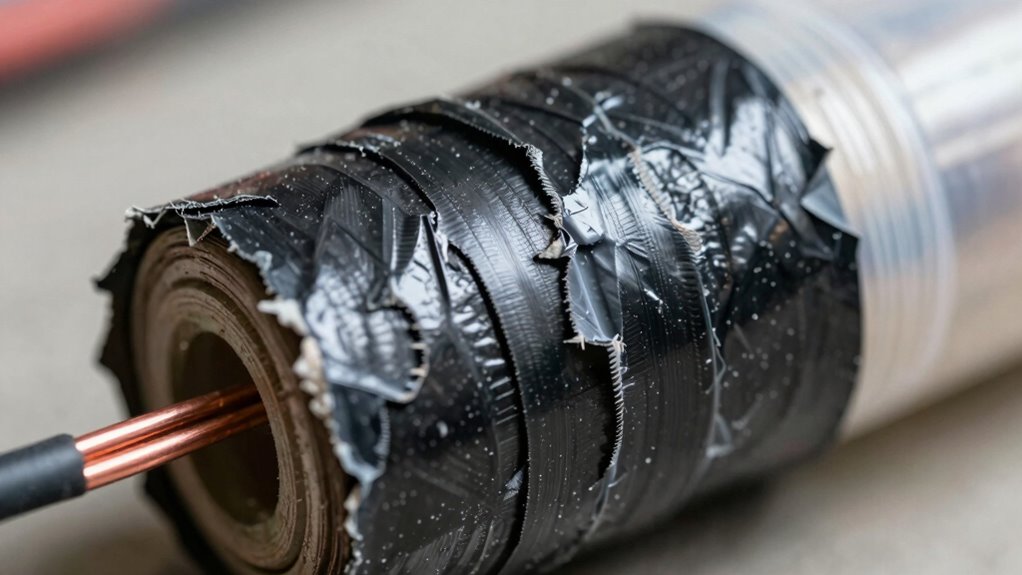
Electrical tape, on the other hand, provides a more flexible and versatile solution for many applications. Its application flexibility is one of its greatest strengths; you can easily wrap it around irregular shapes, tight spots, or awkward angles. Tape is quick to apply, doesn’t require any special tools, and can be easily removed or replaced if needed. However, its insulation effectiveness can vary depending on the quality of the tape and how well it’s applied. Over time, tape may degrade due to exposure to heat, moisture, or UV rays, which can compromise its protective qualities. If you’re working in an environment with harsh conditions, electrical tape might not offer the same long-term durability as heat shrink tubing. Additionally, the material composition of electrical tape influences its resistance to environmental factors.
In terms of durability, heat shrink generally outperforms electrical tape. Once applied, it forms a solid, permanent connection that’s resistant to environmental factors and physical wear. Tape, while convenient, can peel or unravel over time, especially if not applied correctly or if exposed to extreme conditions. For projects that demand a long-lasting, secure insulation, heat shrink provides a more robust solution. Still, if you need quick fixes or temporary insulation, electrical tape’s ease of use and application flexibility make it a practical choice. Understanding the different types of insulation materials can further help in selecting the most suitable product for specific environments.
Ultimately, your decision should depend on the specific needs of your project. If you prioritize long-term durability and consistent insulation effectiveness, heat shrink tubing is the better option. If flexibility and ease of application matter most, especially in tight or awkward spaces, electrical tape can be enough — at least for the short term. Both have their place, but understanding their strengths and limitations helps you choose what’s best for your electrical connections.

400 Pcs Heat Shrink Tubing Kit-3:1 Ratio Adhesive Lined,Marine Grade Shrink Wrap – Industrial Heat-Shrink Tubing – Black
3:1 SHRINK RATIO & FAST CONTRACTON SPEED: Shrinks to 1/3 of its original diameter and seals extremely tightly,…
As an affiliate, we earn on qualifying purchases.
As an affiliate, we earn on qualifying purchases.
Frequently Asked Questions
Can Heat Shrink Be Reused After Application?
No, heat shrink typically isn’t reusable after application because it shrinks tightly around the wire, making removal difficult without damage. If you’re seeking reusable insulation options, electrical tape is a better choice. Reusable insulation reduces environmental impact since you can remove and reapply it multiple times, unlike heat shrink. So, for ongoing projects or adjustments, electrical tape offers a more sustainable, versatile solution.
Which Is More Resistant to UV Rays?
You might think heat shrink is more UV resistant than electrical tape, but it depends on the material. Generally, heat shrink made from UV-stabilized plastics offers better UV resistance and enhances material durability over time. Electrical tape, especially if not designed for outdoor use, can degrade faster when exposed to sunlight. So, for long-lasting outdoor protection, UV-stabilized heat shrink wins, providing superior durability against sun damage.
How Does Temperature Affect Adhesive Properties?
Temperature considerably impacts adhesive properties due to its temperature sensitivity. As temperatures rise, adhesives tend to soften, increasing the risk of adhesive degradation and reducing their bonding strength. Conversely, cold temperatures can make adhesives brittle and less effective. You should consider the environment’s temperature range when choosing adhesives, ensuring they maintain their effectiveness without degrading, especially in applications exposed to extreme heat or cold.
Is Heat Shrink Easier to Apply in Tight Spaces?
Yes, heat shrink is easier to apply in tight spaces because it molds tightly around wires when heated, providing a smooth, secure fit. Its application ease allows you to work efficiently even in confined areas, unlike electrical tape, which can be cumbersome to wrap precisely. With heat shrink, you simply position it over the wire, apply heat, and watch it conform perfectly, making it the better choice for tight space jobs.
How Do Costs Compare Over Long-Term Use?
Over the long term, heat shrink tends to be more cost-effective despite higher initial costs, thanks to its durability and secure insulation. Its installation complexity is lower once you have the right tools, and it offers less material flexibility but fewer replacements needed. Electrical tape is cheaper upfront, but you might spend more over time on repairs or replacements, especially in tight spaces where tape may degrade faster.

Scotch Vinyl 700 Electrical Tape, 1 Roll, Black, 3/4-in x 66-ft, General Purpose, Commercial Grade, Rated for Temperatures Up to 194-Degree, Highly Flexible, Stretchy & Conformable (700)
PRIMARY ELECTRICAL INSULATION for all wire and cable splices rated up to 600 volts
As an affiliate, we earn on qualifying purchases.
As an affiliate, we earn on qualifying purchases.
Conclusion
As you wrap up your choice between heat shrink and electrical tape, picture yourself sealing a fragile wire. Heat shrink, like a snug sweater, molds perfectly, offering a sleek, durable shield against the elements. Electrical tape, with its bold, colorful stripes, wraps tightly but may loosen over time, exposing the vulnerable core. Ultimately, your decision depends on your needs—whether you want a seamless, long-lasting embrace or a quick, flexible fix. The right choice keeps your project safe and sound.
400 Pcs Heat Shrink Tubing Kit-3:1 Ratio Adhesive Lined,Marine Grade Shrink Wrap – Industrial Heat-Shrink Tubing – Black
3:1 SHRINK RATIO & FAST CONTRACTON SPEED: Shrinks to 1/3 of its original diameter and seals extremely tightly,…
As an affiliate, we earn on qualifying purchases.
As an affiliate, we earn on qualifying purchases.

3M Scotch Super 33+ Electrical Tape – 3/4 in x 52 ft, Premium Grade All-Weather Vinyl, Resistant to Abrasion, Moisture, Corrosion, Alkalies – Black, 1 Roll
PROFESSIONAL TAPE GRADE: Designed for above/below grade, indoor/outdoor, low and high voltage application and for harnessing cables. Primary…
As an affiliate, we earn on qualifying purchases.
As an affiliate, we earn on qualifying purchases.