
High-speed stability keeps your vehicle controlled and safe when driving fast. It combines aerodynamic features like splitters and spoilers to reduce drag and increase downforce, helping your car stay glued to the road. Suspension tuning, such as adjusting springs and dampers, absorbs shocks and minimizes body roll, making turns smoother. When these elements work together, they guarantee predictability and confidence at high speeds. Keep going to discover how engineers fine-tune these systems for peak performance.
Key Takeaways
- High-speed stability ensures vehicle control and safety during fast driving by minimizing instability and maintaining predictable handling.
- Aerodynamic design reduces drag and increases downforce, pressing the vehicle onto the road for better stability.
- Suspension tuning absorbs shocks, minimizes body roll, and maintains tire contact, enhancing grip and handling at high speeds.
- Proper integration of aerodynamics and suspension setup balances downforce and handling for improved road connection.
- Overall engineering combines design and technology to create a safer, more controlled, and enjoyable high-speed driving experience.

Have you ever wondered what keeps a vehicle steady at high speeds? It’s a combination of engineering principles designed to reduce instability and maintain control. Two critical factors play a major role here: aerodynamic design and suspension tuning. When you’re speeding down the highway or racing on a track, these elements work together to ensure safety, comfort, and performance. Proper European cloud innovation also contributes to high-speed data stability in digital systems, ensuring reliable connectivity and performance.
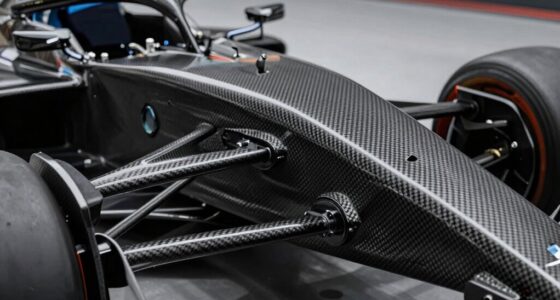
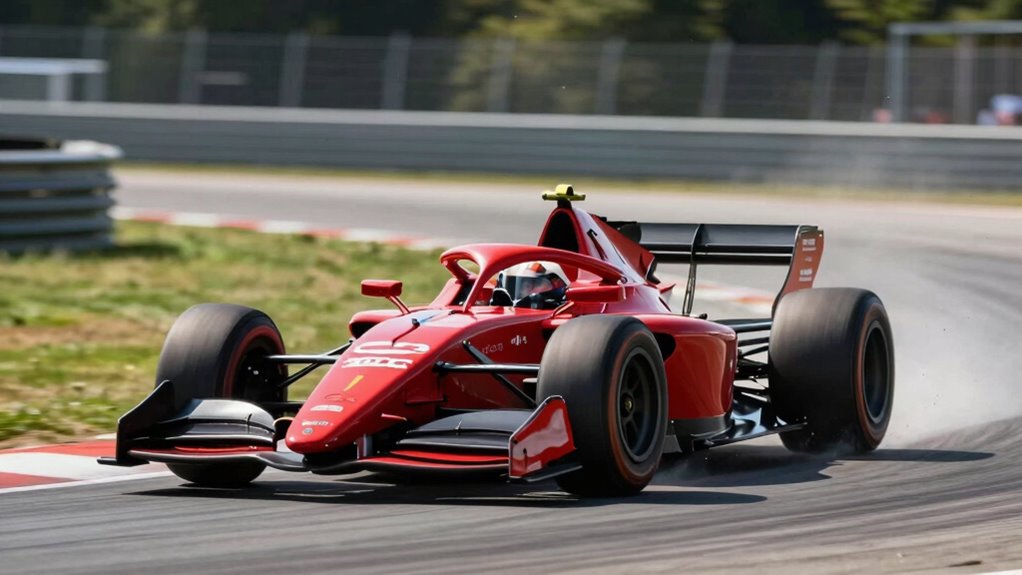
Aerodynamic design is essential because it directly influences how air flows around your vehicle. When a car or motorcycle is built with aerodynamics in mind, it minimizes drag—resistance caused by air pushing against the vehicle—and increases downforce, which presses the vehicle onto the road. This downforce acts like an invisible hand, gripping the tires to prevent unwanted lift and sway. Components like front splitters, rear spoilers, and smoothly contoured body panels are crafted to direct airflow efficiently. The goal is to create a stable aerodynamic profile that keeps your vehicle planted at high speeds, reducing the tendency to wobble or become uncontrollable. When your vehicle’s shape promotes smooth airflow, you’ll notice improved stability and a more confident driving experience. Additionally, advancements in industry-specific materials have allowed for lighter yet stronger aerodynamic parts, further enhancing stability. Proper design also considers how these components can affect overall weight distribution, which is crucial for high-speed handling.
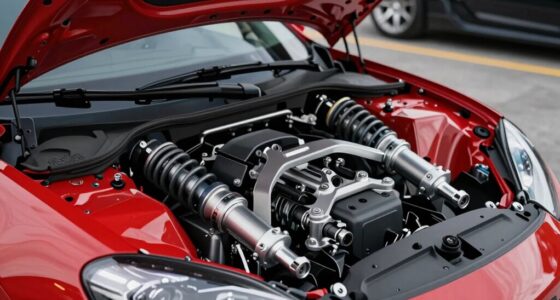
Suspension tuning is equally vital because it directly affects how your vehicle responds to road irregularities and steering inputs at high velocities. Properly tuned suspension absorbs shocks and minimizes body roll, which can cause instability. When your suspension system is optimized, it helps maintain tire contact with the road, ensuring maximum grip and precise handling. You might find that adjusting spring rates, damping settings, and anti-roll bars can dramatically improve high-speed stability. A well-tuned suspension prevents excessive body lean during cornering and reduces vibrations that can unsettle the vehicle’s balance. This not only enhances your comfort but also boosts your confidence in maintaining control, especially when navigating sharp turns or uneven surfaces at high speeds. Additionally, modern suspension systems often incorporate adaptive technology to further enhance stability under varying conditions. Proper maintenance and regular adjustments are key to keeping these systems functioning optimally and ensuring consistent high-speed stability.
Both aerodynamic design and suspension tuning are tailored to work harmoniously. For example, a vehicle with an aggressive aerodynamic profile might require a suspension setup that can handle increased downforce without compromising ride comfort. Conversely, a finely tuned suspension can help mitigate the effects of aerodynamic disturbances, ensuring the vehicle remains predictable and stable. When these elements are balanced correctly, you’ll feel more connected to the road, with less steering effort needed to stay on course and fewer surprises at speed. This harmony between components is crucial for achieving optimal high-speed stability. Moreover, understanding the interaction between these systems can help in customizing setups for specific driving conditions or performance goals.
In essence, high-speed stability hinges on smart engineering choices. Aerodynamic design minimizes air-related instability, while suspension tuning ensures your vehicle responds predictably under stress. Together, they create a driving experience that’s not only safer but also more enjoyable and controlled, whether you’re cruising or pushing the limits.

400W Power Inverter 12V DC to 110V AC, Car Charger Plug in Adapter Outlet with PD 65W USB-C&QC 18W Port, Portable Power Converters for Laptop Vehicles Camping Road Trip Essentials Adults
【𝐄𝐏𝐀𝐍𝐄𝐄 𝐏𝐨𝐰𝐞𝐫 𝐈𝐧𝐯𝐞𝐫𝐭𝐞𝐫 𝐁𝐚𝐬𝐢𝐜𝐬】: Our power inverter produces Watts continuous DC to AC power and 800 Watts instantons...
As an affiliate, we earn on qualifying purchases.
Frequently Asked Questions
How Does Tire Pressure Affect High-Speed Stability?
Proper tire pressure directly impacts your high-speed stability by maintaining ideal road grip. When your tire pressure is too low, the tires can flex excessively, reducing grip and making your vehicle feel unstable. Conversely, overinflated tires decrease the contact patch, compromising traction. Regularly check and adjust your tire pressure to guarantee maximum road grip, providing better control and stability when you’re driving at high speeds.
What Role Does Aerodynamics Play in High-Speed Stability?
You might think aerodynamics only influence fuel efficiency, but it actually plays a vital role in high-speed stability. Aerodynamic drag slows you down, yet downforce effects keep your vehicle glued to the road, enhancing grip and control. Effective aerodynamics balance these forces, reducing turbulence and ensuring stability at high speeds. So, by optimizing your car’s aerodynamics, you can improve handling, safety, and performance when you’re pushing the limits.
Can Suspension Adjustments Improve High-Speed Stability?
Yes, suspension adjustments can improve high-speed stability. You should focus on suspension tuning to optimize handling and reduce body roll at high speeds. Upgrading shock absorbers can also make a difference by providing better damping and control. These modifications help maintain tire contact with the road, ensuring a smoother drive and increased stability, especially during high-speed cornering or on uneven surfaces.
How Does Road Surface Quality Influence Stability at High Speeds?
Road surface quality directly affects your stability at high speeds. A smooth surface with consistent road texture helps your vehicle maintain traction and reduces vibrations, making handling more predictable. Conversely, rough or uneven surfaces with poor surface smoothness can cause instability, bouncing, or drifting, especially when driving fast. You should pay attention to surface conditions and adjust your driving accordingly to stay safe and maintain control on varying road surfaces.
What Are Common Signs of Instability During High-Speed Driving?
You might notice instability during high-speed driving if you experience steering vibrations or braking issues. These signs indicate your vehicle isn’t maintaining proper control, possibly due to uneven tire wear, suspension problems, or road surface inconsistencies. Don’t ignore these symptoms; they can lead to dangerous situations. Staying alert to these signs helps you respond promptly, ensuring your safety and maintaining stability on the road.

YONHAN Battery Charger 20A 12V/24V LiFePO4 Lead Acid Fully Automatic Battery Maintainer, Car Battery Trickle Charger Automotive w/Repair, Winter Mode, for AGM, STD, Gel, Deep Cycle Batteries
[20A Suitable for LiFePO4 Lead-acid Battery Charger] 12V 20 Amp, 24V 10Amp 7-stage quick battery charger, Designed to...
As an affiliate, we earn on qualifying purchases.
Conclusion
Understanding high speed stability is vital if you want to stay safe and confident on fast-moving roads. Remember, vehicles with better aerodynamic design and properly balanced tires greatly reduce the risk of loss of control. Did you know that at speeds over 100 mph, even a small miscalculation can lead to a 60% increase in instability? Staying aware of these factors helps you maintain control and enjoy the thrill of high-speed driving safely.

OPTIMA® Batteries Digital 400+ 12 Volt Battery Maintainer and Charger for AGM, Lithium, Automotive, Marine and Powersport Batteries
Digital battery type selector: OPTIMA AGM, OPTIMA Li, Auto/Marine, Power Sport Lead Acid batteries
As an affiliate, we earn on qualifying purchases.

Pro Chaser 400W Power Inverters for Vehicles - DC 12v to AC 110v Car Inverter Converter, 6.2A Dual USB Charging Ports, Dual AC Adapter for Laptops Air Compressor
【Pro Chaser Power Inverter Basics】: This inverter provides a steady 400W of DC to AC power with a...
As an affiliate, we earn on qualifying purchases.