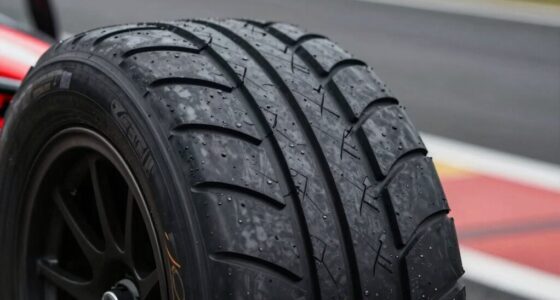
When comparing track tires to street tires, you’ll find that track tires are built for high grip and performance on racetracks, often using softer compounds and minimal tread design, which wear out faster. Street tires prioritize durability, comfort, and safety for everyday driving, featuring more tread patterns to handle wet conditions and longer lifespan. Understanding these differences helps you choose tires suited to your driving needs—keep exploring to learn even more.
Key Takeaways
- Track tires are designed for maximum grip and handling at high speeds, often featuring minimal tread patterns.
- Street tires prioritize durability, comfort, and water channeling with grooves and sipes for everyday road conditions.
- Track tires typically require lower tire pressures to increase contact patch and enhance cornering performance.
- Street tires use durable compounds for longevity and safety across diverse weather and road surfaces.
- Proper tire selection depends on driving environment, with track tires suited for racing and street tires for daily use.

When choosing tires for your vehicle, understanding the differences between track and street tires is essential. Your decision impacts performance, safety, and ride quality, especially if you’re balancing daily driving with high-performance needs. Track tires are designed specifically for racing environments, where maximizing grip and handling at high speeds take precedence. Street tires, on the other hand, are built for everyday use, prioritizing comfort, durability, and versatility. Recognizing these distinctions helps you select the right tires for your driving style and conditions.
Choosing between track and street tires affects your vehicle’s performance, safety, and ride comfort under different driving conditions.
One key factor that differentiates track from street tires is tire pressure. Track tires often require lower tire pressures to maximize the contact patch with the track surface, providing better grip and cornering ability. Lower pressure allows the tire to deform slightly, increasing the contact area and enhancing traction during aggressive maneuvers. Conversely, street tires need higher, more consistent tire pressures to ensure even wear, fuel efficiency, and a smooth ride over various road surfaces. Maintaining proper tire pressure is crucial; underinflated tires on the street can lead to poor handling and faster wear, while overinflated tires on the track may reduce grip and cause a harsher ride. Proper tire pressure management is essential for optimal performance and safety. Additionally, understanding the tire composition can help you further optimize your choice for specific driving conditions.
Tread design is another fundamental difference. Track tires typically feature minimal or slick tread patterns, emphasizing a smooth surface that maximizes rubber contact with the track. This design enhances grip but sacrifices wet-weather performance, as there’s little to channel water away. Street tires, however, come with intricate tread patterns that include grooves and sipes. These features are engineered to channel water away from the contact patch, reducing hydroplaning and providing reliable traction in various weather conditions. The tread design of street tires balances dry grip with wet-weather safety, making them more versatile for everyday use. Additionally, the tread pattern influences noise and comfort levels during regular driving. It’s also important to consider tread pattern differences when evaluating tire choices for varying conditions.
Another consideration is the material composition of the tire rubber. Track tires often use softer compounds that provide maximum grip at the expense of quicker wear, while street tires utilize more durable compounds suitable for prolonged use. When you’re choosing between these two types, consider your primary driving environment and goals. If you’re racing or frequently driving on a track, track tires with their optimized tread design and lower tire pressure will give you the performance edge you need. But if your daily commute involves varied weather and road conditions, street tires with their robust tread design and appropriate tire pressure will serve you better. Always remember, the right tire choice not only enhances your vehicle’s performance but also ensures your safety and comfort on the road.
Frequently Asked Questions
Can Track Tires Be Used Safely on Daily Streets?
You can technically use track tires on daily streets, but it’s not ideal. Track tires lack durability for regular road use and tend to wear out quickly. Plus, they compromise street tire comfort, offering less grip and a rougher ride. While they might save you some money in the short run, they won’t provide the same longevity or comfort as standard street tires, making them a less practical choice for everyday driving.
How Often Do Track Tires Need Replacement Compared to Street Tires?
On average, track tires need replacement after about 10-15 track days, considerably sooner than street tires, which often last 25,000 to 50,000 miles. Your tire lifespan depends on usage, but track tires wear out faster due to aggressive driving and high heat. Expect to replace them more frequently, roughly every few months if you hit the track regularly. Regular inspection helps catch wear before safety becomes an issue.
Are There Legal Restrictions for Using Track Tires on Public Roads?
You can’t legally use track tires on public roads because of tire regulations and legal restrictions. Track tires often lack the necessary tread and durability for everyday driving, making them unsafe and non-compliant with local laws. Authorities enforce tire regulations to ensure safety, so using track tires on city streets could result in fines or vehicle violations. Always verify local laws before switching to track tires outside the race track.
Do Track Tires Significantly Improve Lap Times Over Street Tires?
Sure, swapping to track tires will shave seconds off your lap times, thanks to their superior tire grip. But don’t be fooled—these tires wear rates skyrocket, making them costly and impractical for daily driving. So, while your ego might enjoy the boost, your wallet and the environment won’t thank you. Ultimately, unless you’re racing, street tires offer a sweet spot between performance and longevity.
What Is the Cost Difference Between Track and Street Tires?
You’ll find that track tires cost considerably more than street tires, often double or triple the price, mainly due to their specialized rubber compounds. Keep in mind, tire maintenance and proper tire storage can extend their lifespan, especially for track tires which wear out faster. While the initial investment is higher, their performance benefits may justify the cost if you frequently hit the track.
Conclusion
Ultimately, choosing between track and street tires is like selecting your own adventure—each path offers its own thrill and purpose. Track tires ignite your passion for speed, while street tires keep you grounded in everyday life. Remember, the right tire isn’t just rubber; it’s your trusted partner on the journey, guiding you through curves and straightaways alike. So, pick wisely, for your choice shapes every mile and memory—your ride’s story is written by the tires you trust.