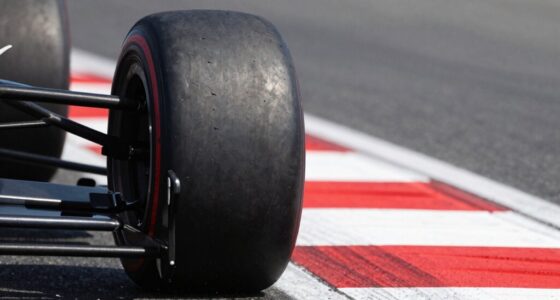
Wider tires increase the contact patch with the road, which boosts grip and traction at speed. This larger area offers more rubber to grip the pavement, improving acceleration, cornering, and braking response. You’ll notice better stability and confidence, especially during high-speed maneuvers. However, wider tires can also cause more resistance and hydroplaning if conditions aren’t ideal. Want to discover how tire technology advances influence these effects? Keep exploring for more insights.
Key Takeaways
- Wider tires increase the contact patch, enhancing grip and traction at higher speeds.
- Larger contact areas improve stability and responsiveness during fast cornering and abrupt maneuvers.
- Wider tires may experience increased hydroplaning risk in wet conditions, affecting traction at speed.
- Tire technology advancements help maintain traction for wider tires even at elevated velocities.
- Proper tire width selection balances traction, handling, and safety based on driving conditions and speed.
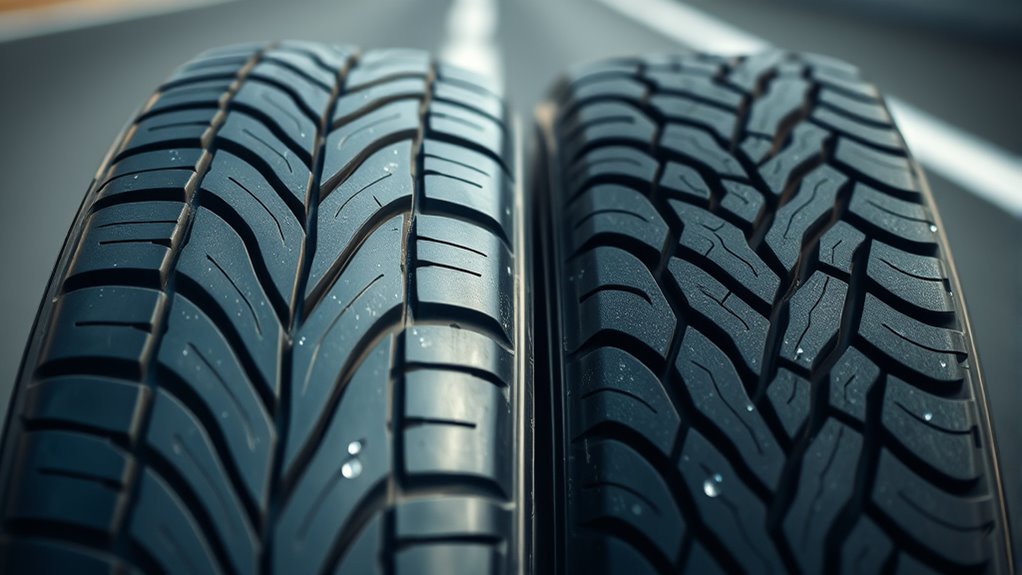
When it comes to tire performance, tire width plays a crucial role in determining traction. The width of your tires directly influences how well your vehicle grips the road, especially at higher speeds. Wider tires have a larger contact patch, meaning more rubber touches the pavement, which generally enhances tire width and traction. This larger contact area can improve your car’s ability to stick to the road during acceleration, cornering, and braking. However, it’s not just about going wider; the relationship between tire width and handling is nuanced. Wider tires tend to provide more stability and confidence when you’re pushing your vehicle through curves, as they resist side forces better. That said, they can also introduce drawbacks, such as increased rolling resistance and potential for hydrodynamic lift in wet conditions, where narrower tires might perform better.
Additionally, the choice of tire width can influence your vehicle’s overall ride comfort, as wider tires may transmit more road imperfections. Your choice of tire width impacts handling in several ways. When you select wider tires, you often notice a more responsive steering feel and a more planted ride. This is because the larger contact patch offers improved grip, allowing you to maneuver more precisely at speed. Conversely, narrower tires might give you quicker steering response in certain situations, especially on rough or uneven surfaces, but they generally offer less grip on smooth, dry pavement. So, understanding how tire width and handling relate helps you make better decisions based on your driving style and conditions. If you’re into spirited driving or racing, wider tires can give you that extra edge in handling, enabling you to take tight corners with more confidence.
But it’s important to recognize that increasing tire width isn’t always better. Wider tires can be more prone to aquaplaning in wet conditions because they tend to hydroplane more easily if the tread isn’t designed for high water dispersal. They can also put extra stress on suspension components and increase fuel consumption due to higher rolling resistance. Narrower tires, while offering less grip, often improve fuel economy and can perform better in snow or rain by cutting through water more effectively. It’s also worth noting that tire technology continues to evolve, offering better performance even for wider tires. Advances in tread design and rubber compounds help mitigate some of the drawbacks associated with wider tires. So, when considering tire width and traction, you need to evaluate your typical driving conditions and what balance of handling, grip, and efficiency suits your needs best. Ultimately, the right tire width strikes a balance between maximizing traction and handling without compromising safety or comfort at speed.
Frequently Asked Questions
How Does Tire Width Affect Fuel Efficiency at High Speeds?
A wider tire increases aerodynamic drag and rolling resistance, which can reduce your fuel efficiency at high speeds. The larger contact patch causes more air to push against your vehicle and creates more rolling friction. You might notice your engine working harder, consuming more fuel. To save fuel, consider narrower tires that cut down on drag and resistance, helping you maintain better fuel economy when driving fast.
Are Wider Tires More Prone to Hydroplaning?
Wider tires are indeed more prone to hydroplaning because their larger contact patch can struggle with water dispersal. When water builds up faster than the tire can channel it away, your hydroplaning risk increases, especially on wet surfaces. You might feel less grip and control at high speeds. To stay safe, consider tires with good tread patterns and proper inflation, which help improve water dispersal and reduce hydroplaning chances.
What Is the Ideal Tire Width for Racing Vehicles?
For racing vehicles, you should opt for a moderate tire width that balances grip and aerodynamic drag. Narrower tires tend to reduce drag, improving speed, while wider tires enhance tire grip for better traction. The ideal width depends on your car’s design and track conditions, but generally, racing tires range between 200-300mm. You want enough width to maximize grip without creating excessive aerodynamic drag that hampers top speed.
Does Tire Width Influence Handling on Uneven or Off-Road Surfaces?
Yes, tire width does influence handling on uneven or off-road surfaces. Wider tires increase tire grip and off-road traction by providing a larger contact patch, helping you maintain better control on rough terrain. However, they can also make steering heavier and reduce maneuverability. Narrower tires might improve agility but could compromise traction. Choose a width that balances your need for grip and handling depending on the terrain you encounter most often.
How Does Tire Width Impact Tire Wear Over Time?
Tire width affects tire wear over time by influencing tire longevity and wear patterns. Wider tires typically distribute weight more evenly, reducing uneven wear and extending lifespan. However, they can also experience faster tread wear if not properly aligned or inflated, leading to irregular wear patterns. Narrower tires tend to wear more evenly but may have less traction and durability on rough surfaces. Proper maintenance helps optimize tire longevity regardless of width.
Conclusion
So, when you choose a wider tire, you gain more grip, more stability, and a better hold on the road—like a trusted partner in every turn. But remember, wider isn’t always better; it’s about finding that perfect balance for your driving style. Think of your tire width as a dance partner—too wide, and the rhythm falters; too narrow, and the dance feels constrained. Find your groove, and let your tires lead the way.