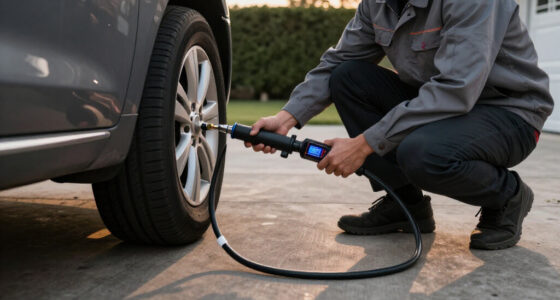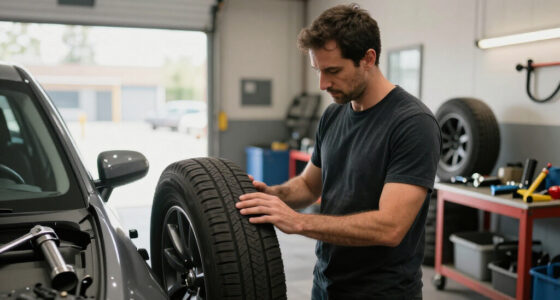

Sidewall stiffness plays a key role in your cornering precision by controlling how much your tires deform under lateral forces. Stiffer sidewalls provide better stability, quicker steering response, and consistent grip during sharp turns. Too soft, and your tires will flex excessively, causing vague handling and reduced control. Too stiff, and ride comfort suffers. Finding the right balance improves your confidence and accuracy in aggressive maneuvers. Keep exploring to uncover how ideal sidewall stiffness can truly elevate your driving experience.

Get business pricing on garage and car supplies
- Business-only prices and quantity discounts
- Tax-exempt purchasing
- Multiple users, one account, clear invoices
Key Takeaways
- Increased sidewall stiffness reduces tire deformation during cornering, enhancing steering response precision.
- Stiffer sidewalls maintain a consistent contact patch, improving grip and handling accuracy.
- Proper balance in sidewall stiffness prevents excessive deformation, ensuring predictable cornering behavior.
- Advanced tire materials and construction techniques optimize sidewall strength for sharp, stable turns.
- Overly stiff sidewalls can cause harsher rides, so optimal stiffness balances performance and comfort.
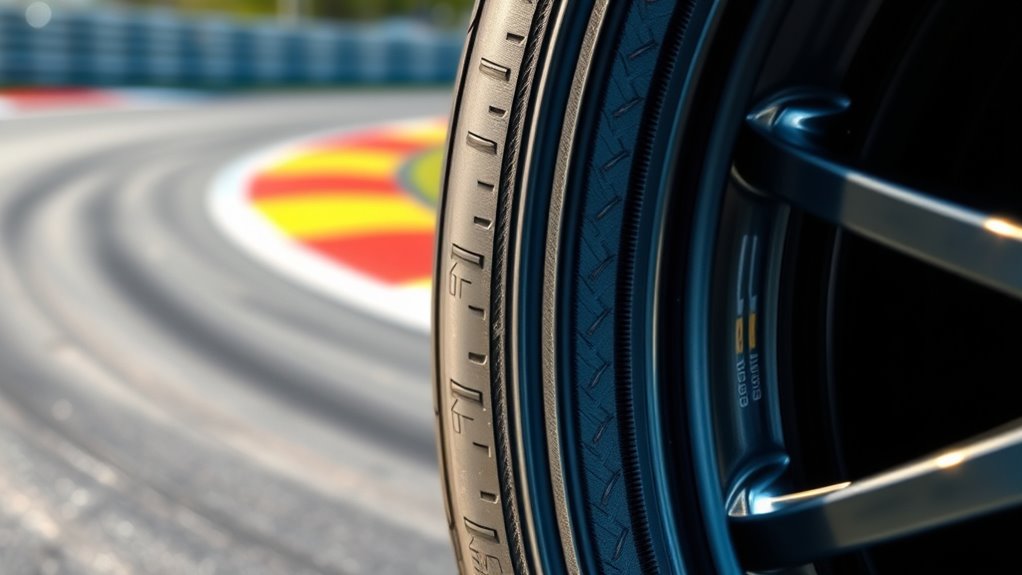
When you corner aggressively, the tire’s sidewall compresses slightly under lateral force, helping maintain contact patch and grip. If the sidewall is too soft, this deformation becomes excessive, leading to inconsistent grip as the contact patch fluctuates. This inconsistency can make your car feel vague or unstable during sharp turns, compromising your confidence and risking loss of control. On the other hand, a stiffer sidewall minimizes deformation, maintaining a stable contact patch, which translates into more predictable and immediate responses from your steering. Additionally, the sidewall stiffness influences how quickly your tires respond to steering inputs, especially during high-speed maneuvers. Grip consistency is essential for high-performance driving, and sidewall stiffness directly impacts it. When your tires have the right amount of stiffness, they deform just enough to adapt to road imperfections without sacrificing stability. This balance ensures that your tires maintain optimal contact with the road, delivering consistent grip through various cornering forces. You’ll notice smoother, more predictable handling and a greater sense of control, especially during spirited driving or on racetrack conditions. This consistency allows you to push your vehicle closer to its limits with confidence, knowing that your tires will respond reliably. Proper tire design and construction also play crucial roles in achieving the desired balance of stiffness and comfort. For example, advancements in tire construction materials can improve sidewall strength while maintaining ride comfort. Moreover, understanding how different material properties influence sidewall behavior can help in customizing tires for specific performance needs. Recognizing the importance of body-related factors, such as the vehicle’s weight distribution, can also influence how the tires perform during cornering. However, it’s necessary to strike the right balance. Excessively stiff sidewalls, while offering precise steering, can also lead to a harsher ride and increased wear. Too soft, and you lose the sharpness needed for high-performance cornering. When selecting tires, consider the stiffness level appropriate for your driving style and conditions. Performance-oriented tires often feature reinforced sidewalls designed to maximize grip without sacrificing too much comfort. Proper tire pressure also plays a role—overinflated tires can increase sidewall stiffness excessively, while underinflated ones may cause too much deformation, reducing grip consistency.
Products Worth Considering

NOCO Boost GB70 2000A UltraSafe Jump Starter, 12V Lithium Battery Booster

Autel MaxiCOM MK900BT Bidirectional Diagnostic Scanner with 40+ Services and CAN-FD & DOIP Protocols

Autel MaxiCharger Level 2 EV Charger, 40A, 240V, Indoor/Outdoor, 25‑Foot Flexible Cable, NEMA 14‑50 Plug (White)
As an affiliate, we earn on qualifying purchases.
Frequently Asked Questions
How Does Sidewall Stiffness Affect Tire Wear Over Time?
Higher sidewall stiffness can lead to uneven tire wear over time because it reduces tire deformation during use. You might notice specific wear patterns developing, especially on the edges or center, as the tire’s structure resists flexing. This stiffness can cause the tire to wear faster in certain areas, affecting overall tire lifespan and performance. Adjusting sidewall stiffness helps you manage wear patterns and extend your tire’s durability.
Can Adjusting Sidewall Stiffness Improve Overall Vehicle Handling?
Imagine your car hugging the road like a dancer’s graceful move—adjusting sidewall stiffness can definitely improve your vehicle’s handling. When you tweak tire flexibility, you enhance responsiveness and cornering precision, making every turn smoother. Plus, a balanced stiffness offers better ride comfort without sacrificing control. So, yes, fine-tuning sidewall stiffness helps your vehicle feel more agile and comfortable, giving you a confident driving experience every time you hit the road.
What Materials Are Used to Modify Sidewall Stiffness?
You can modify sidewall stiffness using materials like rubber compounds and reinforcement fibers. Rubber compounds with different formulations affect flexibility and firmness, allowing you to tailor stiffness. Reinforcement fibers, such as aramid or nylon, are embedded within the sidewall to increase strength and reduce flex during cornering. By choosing specific materials and their configurations, you actively enhance handling characteristics, improving your vehicle’s responsiveness and cornering precision.
How Does Tire Pressure Influence Sidewall Stiffness?
You can’t judge a book by its cover, but tire pressure tells a lot about handling. When you increase tire pressure, sidewall stiffness goes up, making the tire less flexible and more responsive during turns. Conversely, lower tire pressure softens the sidewalls, enhancing comfort but reducing precision. Adjusting tire pressure directly influences sidewall flexibility, so finding the right balance is key for ideal cornering and ride quality.
Is There an Optimal Sidewall Stiffness for Different Racing Conditions?
Yes, there is a ideal sidewall stiffness for different racing conditions. You should choose tire flexibility based on your track, as softer sidewalls allow more sidewall deformation, improving grip on smooth surfaces. Conversely, stiffer sidewalls reduce deformation, enhancing stability on rough or high-speed tracks. Adjust your tire setup accordingly to balance flexibility and stiffness, ensuring the best cornering precision and control for each racing scenario.
Conclusion
Think of your tires like the frame of a tightrope walker. When the sidewalls are stiff, they provide a firm, stable foundation, helping you navigate corners with confidence and precision. Softer sidewalls, like a sagging rope, make your ride less predictable and harder to control. By choosing the right sidewall stiffness, you’re fundamentally sharpening your balance, ensuring every turn feels as smooth and controlled as walking a perfectly taut tightrope.